


20+ AI Agent Builders: Microsoft, CrewAI, LangGraph and More

After reviewing the documentation and spending several hours testing these AI agent builders, we compiled a list of the best open-source frameworks and low-code/no-code platforms. To demonstrate AI agent builder use cases, we provided a tutorial on building a product-expert agent with CrewAI.
Low-code/no-code platforms
Low-code/no-code platforms with prebuilt tools are best for enterprise workflow automation tasks and rapid deployment.
Low-code/no-code platforms are proprietary software.
Creatio
Creatio lets business teams build AI agents without developer resources, focusing on sales, marketing, and service automation.
AI Agent Builder Features: Creatio’s AI agents handle customer interactions, automate processes, and analyze data. The platform uses pre-built templates for common scenarios, e.g., lead qualification, customer service responses, and order processing, that you customize through visual configuration rather than code.
The agent builder integrates directly with Creatio’s CRM data. An AI agent can access customer history, pull order information, check inventory status, and trigger workflows all from the same platform where your business data lives.
Workflow Automation: Drag-and-drop process designer creates multi-step workflows. Connect AI agents to business processes: when a lead reaches certain criteria, the agent automatically qualifies them, assigns them to sales reps, and schedules follow-ups.
Vertex AI Builder
A no-code agent builder for business use cases that allows you to create response templates. Supports integration with open-source frameworks like LangChain. A limitation is that the Vertex API, from authentication to endpoints, is complex to work with.
Beam AI
- Horizontal platform for creating several AI agents, such as:
- Compliance management agent
- Product return agent
- Customer service agent
- Data entry and billing agent
- Data extraction agent
- Order processing agent
Microsoft Copilot Studio Agent Builder
A low-code AI agent builder for a SaaS environment offers over 1,200 data connectors. Best for:
- Automating tasks such as sending notifications.
- Creating internal chatbots.
- Or, business operations such as order management
The platform introduced Agent Builder in 2026, enabling natural-language agent creation in which developers describe requirements, and the system automatically generates prompts, selects tools, configures subagents, and defines skills.1
2026 enhancements include the ability to copy agents created in Microsoft 365 Copilot into Copilot Studio to unlock multistep workflows and custom integrations.2 The platform added human-in-the-loop capabilities through a “request for information” action that pauses agent flows to collect details from designated reviewers via Outlook, then resumes execution using their responses as dynamic parameters.
Lyzr Agent Studio
Can be used by developers, enterprises, and business users. It is modular and useful for prototyping. Best for automating workflows across finance, HR, supply chain, and customer experience.
Glide
Offers no-code pre-designed themes, layouts, and components for agent creation. Best for automating workflows across Field sales, inspections, work orders, inventory, CRM, dashboards, and portals.
Postman AI Agent Builder
Best for prototyping and building AI agents in a collaborative environment. It offers tools like the Postman client, Collection Runner, and Postman Flows to test LLM responses, prompts, and inputs.
UiPath Agent Builder
A low-code agent development tool that is part of the UiPath Studio.
String
An AI agent builder that allows users to create task-specific agents without coding. Agents are built using pre-designed templates and a visual drag-and-drop interface. It connects with tools like SharePoint, Salesforce, and internal APIs to automate workflows. Data privacy is ensured through enterprise-grade compliance, and agents can run in both cloud and on-prem environments.
Relevance AI
Best for ops teams looking to build AI agents for incident management without relying on developer resources. No technical background is required.
Lindy
Specializes in automating several commercial operations, including medical paperwork, customer service, human resources, and sales. With Lindy, you can build a “personalized agent” for each task, attach it to tools like Gmail or Slack, and watch it function automatically via triggers.
Bricklayer AI
An autonomous AI system for creating agents that automate Security Operations Centers (SOCs). Can enhance various SOC tasks such as alert triage, incident response, and threat intelligence analysis. Enables SOCs to create multi-task workflows, similar to SOAR playbooks.
Vonage AI Studio
A visual agent builder in the Vonage AI Studio allows you to create automated design flows for chatbots or voice assistants across messaging and voice channels without having to write any code.
Trilex AI
A no-code agent builder that allows self-aware agents to work together as a team. It is interface-focused and not enterprise-ready.
Open source frameworks
Agentic frameworks are typically best for complex, AI-driven projects across development environments that require customization and coding. Some (e.g., Crew AI, AutoGen) can also offer low-code capabilities.
LangGraph is proprietary software, but it provides an open-source library for agent development.
LangGraph
LangGraph 1.0 is trusted by companies including Uber, LinkedIn, and Klarna for production workloads.3 It serves as a low-level orchestration framework for building durable, stateful agent workflows with automatic state persistence if a server restarts mid-conversation, workflows resume exactly where they left off. The framework provides first-class API support for human-in-the-loop patterns, enabling agents to pause execution for human review, modification, or approval.
LangGraph offers greater control and is well-suited to complex agentic workflows, particularly when using Retrieval-Augmented Generation (RAG) or orchestrating AI tasks across external APIs or databases.
LangGraph introduced pluggable sandbox integrations, including langchain-modal, langchain-daytona, and langchain-runloop, for secure code execution environments.4 The framework added model profiles exposing supported features and capabilities through a .profile attribute, enabling better context-aware decision making. Conversation history summarization now occurs in the model node via wrap_model_call events, retaining full message history in graph state for more accurate token counting.
LangChain Integration: LangChain v1.1.0 now leverages LangGraph’s runtime to enable branching, memory-enabled, durable agent workflows, with over 100 plug-and-play integrations via standardized abstractions, middleware support, and OpenTelemetry observability.5
AutoGen / Microsoft Agent Framework
AutoGen entered maintenance mode in October 2025 and was merged into Semantic Kernel as part of the new Microsoft Agent Framework. AutoGen remains available and will receive critical bug fixes and security patches, but no new features.6 Developers should migrate to Microsoft Agent Framework for future capabilities.
Key Features:
- Multi-agent workflows with durable state and persistent context sharing across long-running tasks
- Open standards support, including Model Context Protocol (MCP), Agent-to-Agent (A2A) messaging, and OpenAPI integration for cross-runtime portability
- Built-in responsible AI safeguards: Task Adherence (keeps agents aligned to tasks), PII Detection (alerts when agents access sensitive data), and Prompt Shields (protects against prompt injection)
- Cross-language support for Python and .NET with asynchronous, event-driven architecture
Enterprise Deployment: The framework supports local experimentation with deployment to Azure AI Foundry’s Foundry Agent Service, which provides multi-agent workflow orchestration, error handling, retries, and recovery at scale. Organizations like KPMG are using it to connect specialized agents to enterprise data while maintaining regulatory compliance.7
CrewAI
One of the easiest tools to start with, offering ready-made agent templates (e.g., meeting preparation agent) and a minimal learning curve with no-code options.
CrewAI stands apart as a lean, standalone, high-performance multi-agent framework that is completely independent of LangChain, offering faster execution and lower resource requirements.8
The framework now offers two complementary approaches: CrewAI Crews for autonomous, collaborative AI agents, and CrewAI Flows for event-driven, granular control over task orchestration, supporting both Crews natively and single-LLM calls for precise execution.9
The framework added Agent-to-Agent (A2A) task execution utilities, allowing agents to dynamically delegate tasks in structured workflows, multimodal file handling capabilities, and event ordering through parent-child hierarchies, ensuring deterministic workflow execution.10 Enterprise features include Keycloak SSO authentication and enhanced file store with fallback memory cache.
The trade-off is that it can be more difficult to dynamically adjust roles or delegate tasks to other agents mid-workflow because CrewAI’s Crews approach uses predefined roles and tasks, which are rigid. Flows provide more flexibility for complex orchestration patterns.
OpenAI Swarm
A lightweight solution, it is still in its experimental stage, and not yet “production-ready.” OpenAI explicitly describes Swarm as an educational framework and cookbook for exploring multi-agent patterns rather than an official product, and it will not be maintained for production use.11
2026 Status: OpenAI Swarm remains in the experimental phase as of February 2026, with no announced timeline for production release. It does not provide out-of-the-box solutions for every use case, but it allows developers to build and customize aspects such as workflow orchestration and agent interactions through lightweight “handoff” functions. It is suitable for prototyping and testing ideas, and is best suited to simple use cases or to those looking to integrate agentic processes into an existing LLM pipeline.
Key Limitation: Swarm is a completely stateless system that treats each new task as a blank slate with no memory of previous interactions. While this offers predictability and easier debugging, it comes at the cost of long-term adaptability.
Camel
A low-code multi-agent role-playing agent framework that enables AI agents to communicate. Best for workflow automation and synthetic data generation. Offer 20+ integrations with model platforms.
ChatDev
Includes AI agents (such as designers, developers, testers, and documenters) that interact and work together to accomplish complex tasks. ChatDev provides a browser-based visualizer for studying the interactions of each agent within its role and environment.
Pydantic AI
A Python agent framework does not require learning a new domain-specific language. Useful for structured data handling and prototyping. Integrates with logging tools such as LogFire for real-time data visualization.
Agent Zero
A GitHub-hosted autonomous AI agent framework. Can be used for full-stack app generation, coding, and RAG. Interacts with various tools and APIs through natural language commands.
Automatic Agents
A lightweight frameworkfor building Agentic AI pipelines and apps. Unlike frameworks like AutoGen and Crew AI, which use high-level abstractions, Atomic Agents takes a low-level, modular approach. This gives developers direct control over components like input handling, tool integration, and memory management, making each agent more controllable.
Bee Agent Framework
An open-source no-code toolkit developed by IBM Research. Implemented in TypeScript and Python. It offers sandboxed code execution for security, flexible memory management to optimize token usage (especially for models like Llama 3.1), and workflow controls, allowing complex branching, state pausing/resuming, and seamless error handling.
What are agents?
“Agent” can be defined in several ways:
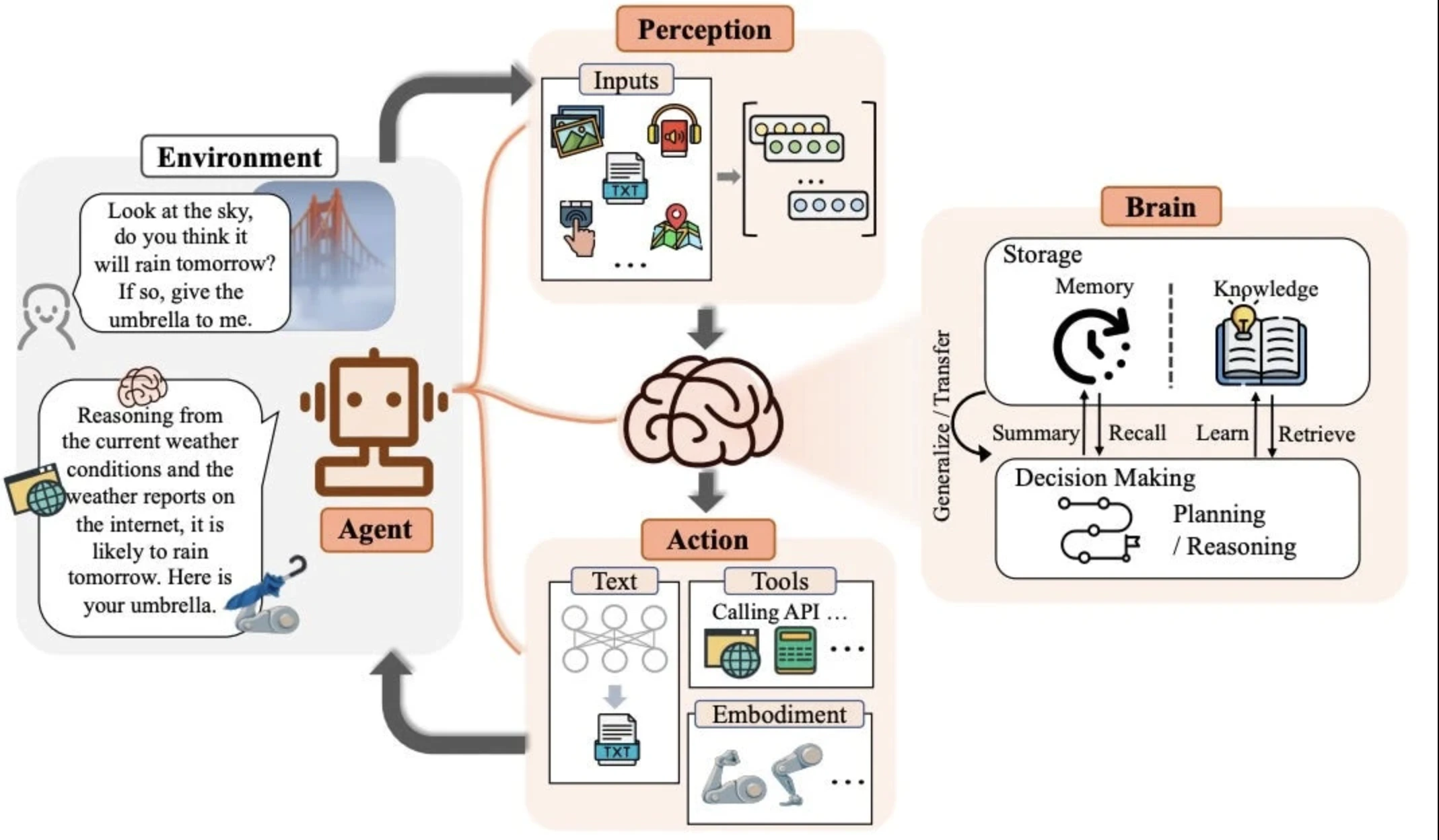
- Traditional AI defines agents as systems that can perceive their environment and act upon that environment.
- Some analyst firms define agents as fully autonomous systems that operate independently over long periods, utilizing tools like functions or APIs to interact with their environment and make decisions based on context and goals.12
- Others use the term to describe more prescriptive implementations that follow predefined workflows.13
Instead of providing a strict definition, we categorize these variations as agentic systems, but make a key architectural distinction between workflows and agents:
- Workflows are systems in which LLMs and tools are organized through predefined code paths.
- Agents are systems where LLMs independently:
- Manage their processes and tool usage.
- Decide when to use the provided tools iteratively to achieve the primary objective and determine
- How to complete tasks.
Why use AI agent builders?
Building agents from the ground up is a complex task due to the following issues:
- Reliability: Chaining multiple AI steps can compound AI hallucinations, especially for tasks requiring exact outputs.
- Integration capability: Several use cases necessitate agents to access data stores or external applications.
- Orchestration: Agents need to operate at the right time and in the correct order to achieve a common goal, requiring complex synchronization.
- State management: It is complex to ensure that agents keep track of each other’s status and that changes in one agent’s state do not disrupt the others.
Agent builders make this easier by allowing developers to focus on the application logic, rather than dealing with AI hallucinations, tool integrations, orchestration, etc.
Builders bring the required components needed to create more reliable and capable AI agents, including:
- Frameworks defining a specialization (e.g. workflow management) of the agentic AI model.
- Data templates that help increase the likelihood of an AI model generating exact outputs, reducing hallucinations.
- Data stores that enable access to external data, SQL, and NoSQL databases for data storage and querying.
- Built-in orchestration tools (e.g. communication protocols, etc.) that coordinate multiple agents.
- State management components to enable agents to remember past interactions and adjust their behavior in dynamic environments.
Read more
If you are looking into the infrastructure that powers web-capable agentic AI, here are our latest benchmarks:
- Remote browsers: How browser infrastructure enables agents to interact with the web securely.
- Browser MCP benchmark: Top MCP servers for tool use and web access.
Building a CrewAI agent tutorial
In this hands-on tutorial, we will build an AI agent with CrewAI to recommend laptops tailored to a CTO’s specific needs.
Scenario: Recommend the top 3 laptops for a Chief Technology Officer (CTO) who primarily works with email and performs extensive Python-based software development.
Installation
Let’s begin by installing the required libraries:
Why do we need the OpenAI API?
CrewAI uses an LLM, like OpenAI’s GPT models, to power agent reasoning and responses. The agent interprets tasks and generates outputs, requiring an OpenAI API key.
Note: The API key is needed to access OpenAI models like GPT-4. CrewAI can also work with open-source models, such as Llama 3.
Defining the agent
We will create a Product expert agent: An AI assistant knowledgeable about tech products. Since our scenario involves supporting a technical user (a CTO), we need an agent with strong product knowledge and analytical skills.
CrewAI defines an agent based on its relationship with tasks. For each agent, we must clarify its role, goal, backstory, and the tools that it can use:
- role: The area of expertise the agent represents; in this case, a tech-savvy product expert.
- goal: A clear and specific objective for the agent.
- backstory: Gives the agent character, depth, and domain knowledge.
Defining the task
In this part, we assign the agent the task of recommending three suitable laptops for the CTO, including their pricing and a brief one-sentence summary for each.
CrewAI handles reasoning and formatting based on your constraints, as specified by description, expected_output, and agent parameters.
- description: Explains what the agent should do.
- expected_output: Defines the output structure; this ensures clarity and quality.
- agent: Assigns the task to the agent we created.
Building the Crew & running the workflow
Next, we create the crew, a system in which agents are created, assigned tasks, and interact to complete their objectives.
CrewAI in action: Agent execution output
Once the crew.kickoff() method is called, CrewAI executes the task using the defined agent. Below is a sample output from the terminal, showing how the task is assigned, executed, and the final answer returned by the Product Expert agent:
Then the agent provides its output as follows:
This output showcases how an agent, when properly defined, can deliver structured, relevant, and high-quality answers for integrating into real-world tools or workflows.
 Add as preferred source
What Makes AI Agent Builders Different
Choosing between AI agent builders isn’t about finding the “best” tool – it’s about matching architectural tradeoffs to your team’s skills and project needs. Here’s what actually separates these platforms.
Control vs Convenience
Low-code platforms (Microsoft Copilot Studio, Beam AI) let you drag and drop components to build agents. No coding required. The platform handles orchestration, state management, and error handling automatically.
The upside: Non-technical teams can build working agents in hours. Perfect for standard business workflows like order processing, customer service routing, or data entry automation.
The limitation: You can’t customize core logic. Need a novel coordination pattern or specific optimization? You’re stuck with what the platform offers. These tools work great until your use case diverges from their templates.
Open-source frameworks (LangGraph, Atomic Agents) give you complete control. You write code that defines exactly how agents think, coordinate, and execute.
The upside: Unlimited customization. Build any coordination pattern, optimize for edge cases, implement custom reasoning loops. LangGraph’s explicit state management works for complex multi-step processes. Atomic Agents lets you control input handling, tool integration, and memory at a granular level.
The limitation: Requires serious development expertise and time. What takes hours in a low-code platform takes weeks in a framework.
Hybrid options like CrewAI try to split the difference – templates for quick starts, code-level customization when needed. But CrewAI’s rigid role structure makes dynamic mid-workflow changes difficult. You get easier initial development at the cost of adaptability.
Further reading
Cite this research
Pick the format that matches where you're publishing. Pasting the link version into your CMS preserves the backlink.
@misc{dilmegani2026,
  author = {Dilmegani, Cem and Sezer, Sena},
  title  = {{20+ AI Agent Builders: Microsoft, CrewAI, LangGraph and More}},
  year   = {2026},
  month  = mar,
  howpublished    = {\url{https://aimultiple.com/ai-agent-builders}},
  note   = {AIMultiple. Retrieved March 27, 2026}
}
Changelog
21 updatesRemoved Stack AI from the list of low-code platforms.
Added Creatio to the list of AI Agent Builders.
Reference Links
Cem's work at AIMultiple has been cited by leading global publications including Business Insider, Forbes, Morning Brew, and Washington Post, global firms like Deloitte and HPE, NGOs like World Economic Forum, and supranational organizations like European Commission. [1], [2], [3], [4], [5]
Throughout his career, Cem served as a tech consultant, tech buyer and tech entrepreneur. He advised enterprises on their technology decisions at McKinsey & Company and Altman Solon for more than a decade. He also published a McKinsey report on digitalization.
He led technology strategy and procurement of a telco while reporting to the CEO. He has also led commercial growth of deep tech company Hypatos that reached a 7 digit annual recurring revenue and a 9 digit valuation from 0 within 2 years. Cem's work in Hypatos was covered by leading technology publications like TechCrunch and Business Insider.
Cem regularly speaks at international technology conferences. He graduated from Bogazici University as a computer engineer and holds an MBA from Columbia Business School.













Be the first to comment
Your email address will not be published. All fields are required. Comments are left in their original language.