


We Benchmarked the Best Datacenter Proxy Providers

We evaluated top datacenter proxy providers with 15,000 requests to assess speed, reliability, and cost across search, e-commerce, and social media sites.
Review the performance of leading datacenter proxies by success rate and response time. Results update every 15 minutes for major sites.
More info in the methodology.
Price comparison of the top datacenter proxies
The table includes both shared datacenter proxies and private datacenter proxies to serve different use cases.
Fixed monthly charges mean some datacenter plans cost $5/GB at 10 GB while others cost $0.60/GB, see the low-volume cost comparison.
The best datacenter proxy providers of 2026
Bright Data offers a versatile, three-tiered pricing model for datacenter proxies that caters to different scraping needs and budgets:
- Shared (pay per GB): Access a shared pool of 1.6 million+ rotating IPs.
- Shared unlimited: Offer access to a fixed set of IPs, paid per proxy. These IPs are shared with other users.
- Dedicated unlimited: Provides a fixed set of exclusive IPs (not shared with anyone else) with unlimited bandwidth and volume discounts.
Bright Data supports SOCKS5 across its proxy networks, including datacenter proxies. For high-volume users, the provider offers datacenter plans with unlimited bandwidth, with a 100 GB fair-use limit per IP per month on pay-per-IP plans. This is a meaningful differentiator for users comparing cost structures across proxy providers.
The platform provides built-in features to ensure scraping operations run smoothly without constant manual intervention:
- Automatic failover: If a proxy drops or becomes unavailable, the system automatically reroutes the request to the nearest available proxy.
- Automatic IP replacement: Remove an IP; the user can choose whether to have it automatically replaced or manually add new ones.
Double your first deposit, up to $500
Visit WebsiteWebshare offers three datacenter plans: shared (accessible by more than two users), private (shared with 1-2 users), and dedicated (exclusively for your use). By default, datacenter proxies are static, but they can be rotated per request.
While it is often categorized as a cheap datacenter proxy option, Webshare outperformed more expensive competitors in our response time benchmarks.
Webshare enables users to select the number of proxies and establish a bandwidth limit.
Webshare offers a package of 10 shared datacenter IPs
Visit WebsiteOxylabs offers both shared and dedicated datacenter proxies. Shared datacenter proxies are available from 24 countries and come in two plans: semi-dedicated (up to 3 users) and traffic-based shared proxies. These support country-level targeting.
Dedicated datacenter proxies from 8 countries offer more precise targeting at the city and state level. Oxylabs runs a permanent free datacenter plan with 5 US IPs and 5 GB per month, no card required. See all free proxy offers compared.
Choose Oxylabs for dedicated datacenter proxies used in large-scale web scraping
Visit WebsiteDecodo offers shared and dedicated datacenter IP addresses. It provides 100,000 traffic-based shared IPs across the US and Europe, as well as IP-based proxies from eight countries. Their dedicated data center pool includes 400,000 U.S. IP addresses. Rotation is available with every connection request.
Decodo offer a 3-day free trial with 100MB
Visit WebsiteDataImpulse datacenter proxies include rotating IP pools, allowing targeting at the country, state, city, ASN, and ZIP code levels.
They provide proxies from over 194 locations worldwide and support both HTTP(S) and SOCKS5 protocols. A paid trial is available for $5, offering 10GB of data to test the proxy service.
Datacenter traffic is $0.50/GB pay-as-you-go and does not expire
Visit WebsiteByteful sells dedicated datacenter proxies with unlimited bandwidth, priced per IP: $2.00 at 10 addresses, $1.80 at 25 and $1.60 at 100, with annual billing taking another 20% off. There is no shared datacenter tier.
Locations include New York, Miami and Germany, in ISO 27001 certified facilities.
Get dedicated datacenter proxies with unlimited bandwidth from $1.60/IP
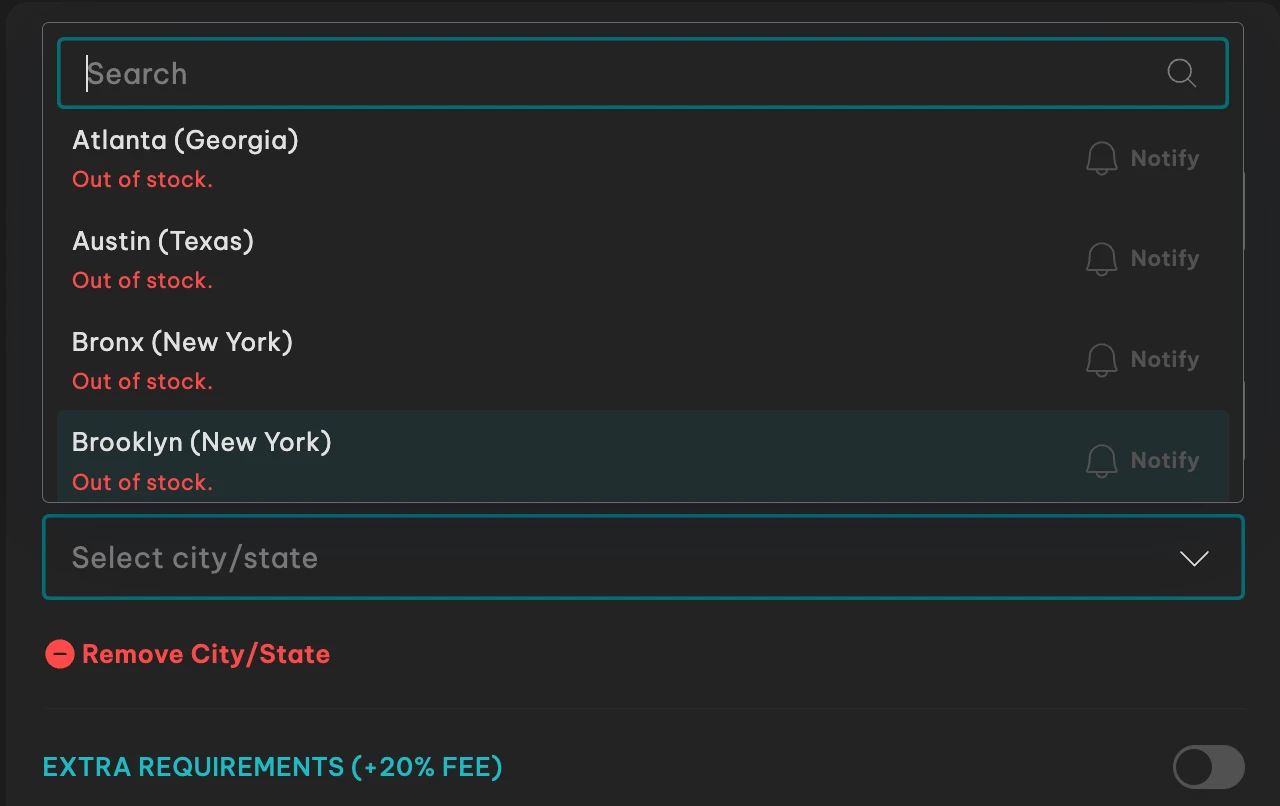
Visit WebsiteIPRoyal offers city and state-level targeting, but many cities are frequently out of stock. Proxy rotation is not supported, and each plan allows targeting one country. Additionally, IPRoyal does not provide access to its full IP pool.
The datacenter proxy provider is an affordable solution, offering $1.80 per IP for a 30-day plan. However, datacenter proxies have a restriction that allows targeting one country per plan.
LimeProxies offers both premium and private dedicated datacenter proxies. Private proxies are available in Miami, San Jose, Long Beach, and Germany; however, they do not support the SOCKS protocol.
On the other hand, premium proxies help the SOCKS protocol and are available in 17 countries. The provider doesn’t offer the city-based proxies.
Infatica offers both shared and dedicated datacenter IPs. Shared datacenter proxies include a pay-as-you-go option but do not support the SOCKS protocol.
For shared proxies, users can choose from three rotation options: timed rotation (up to 60 minutes), per-request rotation, or sticky sessions.
Rayobyte provides rotating, shared, and dedicated datacenter proxies. Rotating datacenter proxies support geo-targeting within the United States.
These proxies are shared and can be set to rotate to a new IP every 10 to 120 minutes. Dedicated datacenter proxies support SOCKS connectivity. Rayobyte offers a 2-day money-back guarantee on any 5-proxy package.
Proxy-Seller provides dedicated IPv4/IPv6 IPs in its data centers. Dedicated datacenter proxies are available from approximately 50 locations, with country- and city-level targeting.
However, city-level targeting is not yet supported in all countries. When purchasing a datacenter plan, you can select a specific country or opt for one of the provider’s mixed-location packages.
Datacenter proxy benchmark methodology
We compared leading data center proxies on real desktop endpoints across search (Google/Bing/Yahoo/Yandex), e-commerce (Amazon/eBay/Walmart product pages), and social (Instagram, X, view/login surfaces).
Every 15 minutes, all vendors are hit concurrently with identical HTTP/2 settings, 10-second connections, and 20-second total timeouts, desktop user agents, and randomized target URLs.
What “success” means
A request is considered valid if it returns a 2xx/3xx status code and displays the expected desktop page structure (e.g., a search box/results container, or a product title) with a non-trivial body size and no CAPTCHA or “unusual traffic” blocks. Anything else is a fail.
What we record
Vendor, proxy type=datacenter, target/domain, HTTP status/cURL errors, success flag, TTFB and total time, user-agent, and a small content sample. Results are rolled up daily into Success Rate (%) and Average Response Time (seconds), with p50/p95 views for latency variability.
Which datacenter proxy provider should you choose?
Bright Data remains the top choice among datacenter proxy providers for large-scale automation and high-traffic data collection. If affordability is your priority, Webshare offers some of the best datacenter proxies for small teams, while Oxylabs provides enterprise-grade datacenter proxy servers with dedicated IPs.
When deciding where to buy datacenter proxies, consider these factors:
- Performance: Response time under 2 seconds for the fastest providers
- Coverage: Choose providers with city or ASN-level targeting
- Budget: Avoid unlimited claims, look for transparent per-GB pricing.
Why does performance vary across providers?
1. IP pool quality and ASN diversity
Providers that have bigger and more varied IP pools usually see better and more reliable success rates.
- Zyte regularly has the highest success rates (80–90%), which shows strong IP reputation management and a wide ASN distribution in different regions.
- Webshare and Apify show moderate but less steady results. This could mean they face more temporary rate limits or IP fatigue on busy sites.
2. Routing efficiency and network latency
- Zyte has the fastest median response times, about 2 ms, showing it uses efficient routing and high-quality data-center connections.
- Decodo also has low latency and was faster than Apify and Webshare on several days during the benchmark.
Small differences in latency matter more at scale, especially for scraping tasks with thousands of requests in a row.
3. Anti-bot detection handling
- Top vendors, such as Zyte, usually have stricter quality controls for outbound headers, TLS fingerprints, and IP behavior patterns.
- Providers like Apify sometimes see performance drops, which may be linked to how sensitive target sites are, especially during busy periods on e-commerce sites or search engines.
What are datacenter proxies?
Datacenter proxies, also known as datacenter proxy servers or data center proxies, are IPs hosted on servers in data centers.
They replace the user’s original IP address with a temporarily leased IP address from a data center for web scraping, SEO tracking, and large-scale data collection.
 Add as preferred source
FAQs
Datacenter proxies route your requests through servers in data centers. These proxy servers hide your original IP address and forward your requests to the target websites, then return the data to you.
1. Shared datacenter proxies involve IP addresses used concurrently by multiple users. The proxy server handles each user’s request individually and then forwards it to the target website using the shared IP address.
2. Dedicated datacenter proxies, also known as private proxies, are assigned to one user. Since IP addresses aren’t shared, these proxies offer better performance, faster speeds, and greater reliability.
3. Rotating datacenter proxies: These proxies automatically change IP addresses at set intervals or after each user request. They can have either shared or dedicated IPs.
Yes. Many datacenter proxy providers offer city-level targeting, which means you can select IP addresses from specific cities or regions.
Based on benchmark testing, Bright Data and Oxylabs provide the lowest latency and most stable speeds. Both companies operate large-scale proxy data centers optimized for performance.
Yes. Datacenter proxies are good for web scraping tasks that require fast connections. They are typically cheaper than residential proxies. However, residential proxies may perform better when scraping websites with strict bot detection.
Services like Webshare and Decodo offer flexible pricing for datacenter proxies, making them suitable for smaller scraping or automation workloads.
Based on our response-time benchmarks, Bright Data had the lowest average latency (0.9–2.0 seconds), making it one of the best datacenter proxy providers for speed-sensitive tasks.
Yes. Some providers, including Bright Data and IPRoyal, offer pay-as-you-go data center proxy plans, letting you pay for the bandwidth or IPs you use.
Our benchmarks found Bright Data and Oxylabs to be the most reliable datacenter proxy providers for high-volume data collection.
A shared datacenter proxy allows multiple users to access the same IP pool, offering low cost but higher block rates compared to private datacenter proxies.
The primary difference between residential proxies and data center proxies lies in the origin of the IP addresses.
Residential proxies utilize IP addresses assigned by ISPs to individual homes, whereas datacenter proxies utilize IP addresses assigned to data centers.
Since residential IPs come from real ISPs (Internet Service Providers), they tend to appear more “legitimate” to websites.
In contrast, datacenter proxies are more easily identified and blacklisted because their IP addresses are linked to data centers.
Cite this benchmark
Pick the format that matches where you're publishing. Pasting the link version into your CMS preserves the backlink.
@misc{karatas2026,
  author = {Karatas, Gulbahar and Dogan, Sedat},
  title  = {{We Benchmarked the Best Datacenter Proxy Providers}},
  year   = {2026},
  month  = sep,
  howpublished    = {\url{https://aimultiple.com/datacenter-proxy}},
  note   = {AIMultiple. Retrieved September 22, 2026}
}Results and timestamps of 116.1 thousand data points. Download the summary data shown in this article's charts and tables as a ZIP file containing 6 CSV files and a README.
Want the granular data behind it? Join Premium
Changelog
13 updatesAdded Oxylabs' permanent free datacenter proxy plan to the provider section.
Removed NetNut's dedicated datacenter proxy details, including IP count and pricing.
Updated the introduction to the datacenter proxy providers section.

- Has 20 years of experience as a white-hat hacker and development guru, with extensive expertise in programming languages and server architectures.
- Is a board advisor at a VC investing in early-stage technology firms and at Ödeal, a regional digital payment platform serving 125,000 merchants.
- Has led the technology infrastructure and cybersecurity of seven national elections, and has been recognized in the cybersecurity Hall of Fame by global technology leaders including Twitter.













Be the first to comment
Your email address will not be published. All fields are required. Comments are left in their original language.