


Top 10+ DSPM Vendors to Enhance Data Security

As a technology and information security leader, I selected the top 10 DSPM solutions to discover, classify, and protect sensitive data across IaaS, SaaS, and DBaaS environments. Explore the rationale behind each choice through the links below:
Security features
Vendors with:
- DDR (data detection and response) can monitor cloud environments, storing data to:
- Compare security events that contain high-risk sensitive data.
- Prioritize risk based on the data security posture and context.
- A high number of data classifiers offers broader data categorization (e.g., PII, confidential data, or authorization levels).
- Petabyte-scale support store and process petabytes of big data.
Security service integrations
Vendors with:
- IAM integrations can verify and identify the people & devices trying to log in or access resources. For more: RBAC
- DLP (data loss prevention) integrations can enforce rules to prevent data exfiltration.
- UEBA (user and entity behavior analytics) integrations can provide data-driven insights into user and device activity rather than relying on policy-based approaches.
Coverage
Pricing
Vendors indicate that pricing varies based on the number of data sources, apps, and connectors, deployment type, and level of services and support.
Insights come from AWS Marketplace1.
*A dimension (e.g., Varonis for AWS) may contain multiple features and quantities (for example, a single dimension may represent five users and 10GB of storage).
Top 10+ DSPM vendors reviewed
Data security posture management (DSPM) vendors help companies by providing network visibility into where sensitive data resides, who has access to it, and how it is used across the cloud.
These vendors focus on discovering your data, whether it is structured or unstructured, and whether it resides in shadow data repositories.
Druva Data Security Cloud is a cloud-native platform designed for enterprise data protection and management. It offers features such as data backup, recovery, archiving, and governance across various environments, including cloud applications (Microsoft 365, Google Workspace, Salesforce), endpoints (laptops, mobile devices), and virtual machines (VMs).
How Druva handles sensitive data:
Druva lets you define sensitive data using custom rules or predefined compliance templates (e.g., HIPAA, PCI). It then scans backed-up data across endpoints and cloud apps to detect policy violations. When issues are found, it flags them and enables actions such as quarantining or disabling restores/downloads.
Features:
- Automated backups with rapid recovery
- Archiving for compliance
- Malware and ransomware detection
- Data loss prevention (DLP)
Pros
Efficient incremental backups: Detects file changes and performs incremental backups, saving time and bandwidth.
Cloud-based file recovery: Enables full file restoration from the cloud in cases of laptop loss or theft.
Cons
Not a dedicated “data labeling” service; no deep data discovery or classification capabilities.
No multi-cloud visibility
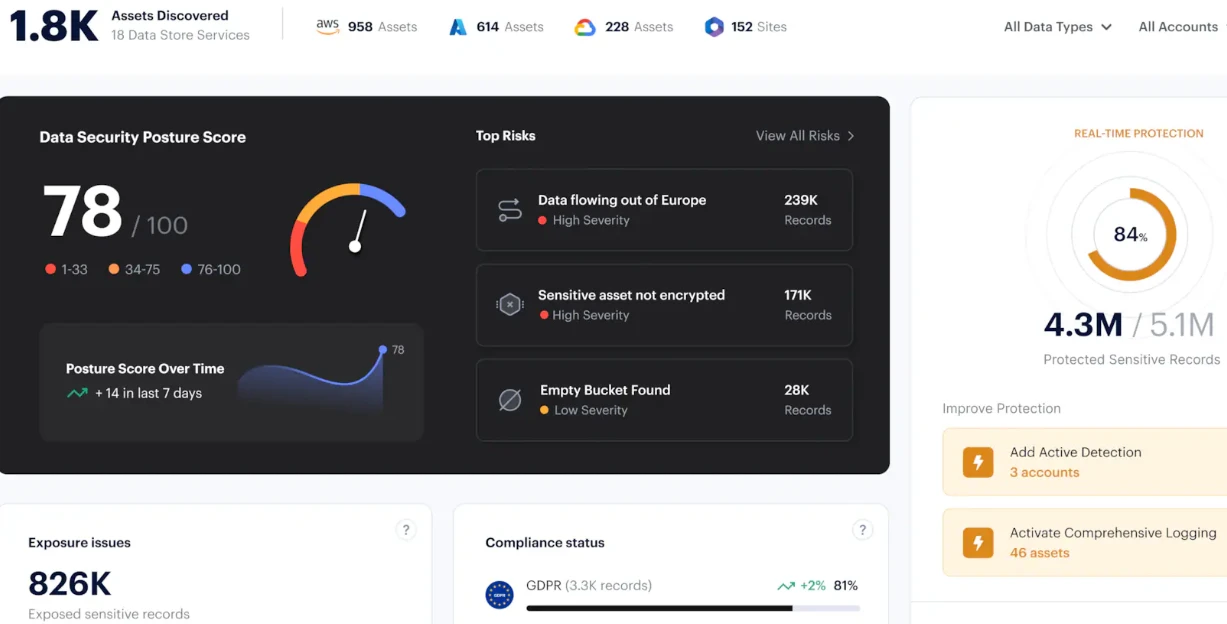
Sentra is a cloud data security posture management (DSPM) solution. It is widely used in the financial services, healthcare, retail, and logistics industries. With Sentra, SecOps can use 20 prebuilt or custom integrations to enhance data security (e.g., Datadog for enterprise monitoring, Trellix for data loss prevention).
Organizations can leverage Sentra to:
- Protect their sensitive data
- Personal data covered by global privacy regulations (GDPR, HIPAA, PCI, and NIST) requires protection, including PII, PCI, and PHI.
- Proprietary data such as customer data, HR data, or intellectual property.
- Leverage automated data discovery and classification to gain valuable insights from data at a petabyte scale.
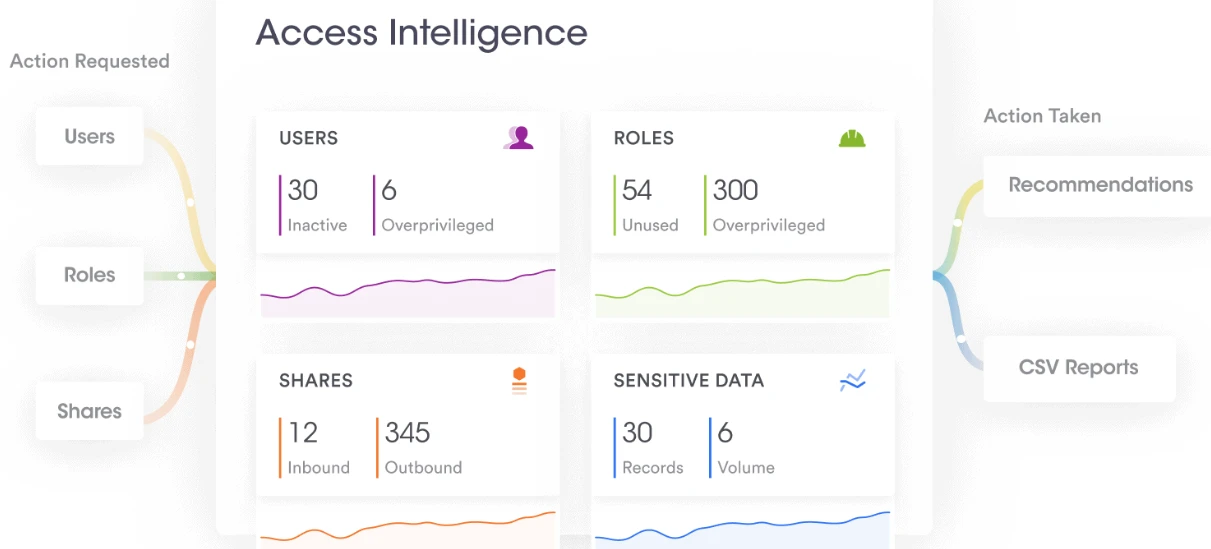
- Establish data access governance (DAG) to manage excessive permissions and unauthorized access. For more: RBAC.
Sentra provides broad coverage for IaaS, PaaS, SaaS, and on-premises settings. This enables security and IT teams to get access to their data repositories, reduce shadow data, and ensure compliance.
Microsoft ecosystem:
- Cloud Services: Azure
- Collaboration Tools: Microsoft 365, Teams
- File storage: OneDrive, SharePoint
Amazon AWS ecosystem
- Cloud services: Amazon AWS, EC2
- Storage solutions: S3
Google ecosystem
- Cloud services: Google Cloud Storage
- Database solutions: BigQuery, Cloud Bigtable, Cloud SQL, Cloud Spanner
- Data processing: Dataflow
Data warehousing and analytics:
- Data warehouses: Snowflake, Databricks, Amazon Redshift
- NoSQL Database: MongoDB Atlas
Varonis Data Security (DSPM) platform identifies insider threats and cyberattacks by analyzing data, account activity, and user behavior. Varonis Data Security (DSPM) identifies where sensitive data is concentrated and automatically corrects overexposure, enabling users to operate at the least privilege without manual intervention.
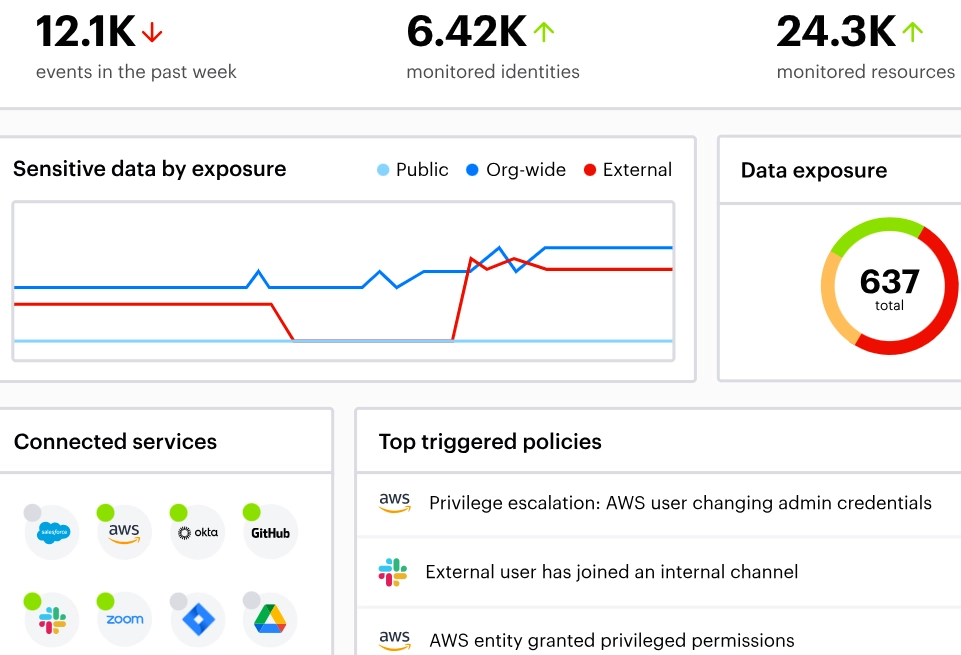
Features:
- Data discovery and classification: Continuously search cloud and on-premise data storage using built-in and custom classifiers. The solution displays data exposure details, enabling users to prioritize cleaning at-risk sensitive data.
- Access intelligence: Get a real-time visual picture of who has access to sensitive data. Determine a user’s impact radius based on their access permissions.
Integrations: Salesforce, GitHub, Zoom, Active Directory, Azure AD, Nasuni, NetApp, IBM QRadar, Panzura, NETGEAR, Splunk, CorteXSOAR, CyberArk.
Deployment: Cloud, on-premise Windows, on-premise Linux, Red Hat Enterprise Linux, Oracle Solaris.
Pros
DSPM: Some customers appreciate that the platform can quickly provide information on large datasets, including key classifications to help assess the environment’s security posture.
Transparent data flow reporting: Some IT specialists conclude that the platform offers a transparent reporting system that enables users to consolidate data flows into a single view.
Cons
Sluggish data management: Some users report that the software is slow, particularly when retrieving data and loading it into the management panel.
Complex usage: Some reviews highlight that the product is complex to use.
Cortex Cloud (DSPM) enables enterprises to leverage data discovery, categorization, and monitoring capabilities. Palo Alto Networks rebranded Prisma Cloud and merged it with its Cortex Cloud Detection and Response (CDR) capabilities to form Cortex Cloud. Cortex Cloud (DSPM) offers a privacy and compliance posture by identifying how sensitive data is copied or consumed across your cloud environments. With Cortex Cloud (DSPM), administrators can analyze how regulated data moves via various cloud services.
Features:
- Automatic data classification: Use over 100 pre-built classifiers to detect, customize, and create personally identifiable information (PII), financial information, health records, developer secrets, and compliance-related data.
- Malware prevention: Cortex Cloud DSPM detects malware through automated scanning of cloud storage data.
Integrations: Splunk, Tenable, Webhook, Qualys, ServiceNow, PagerDuty, Okta, Jira.
Deployment: Cloud, SaaS, Web-based.
Pros
DSPM: Users report that Cortex Cloud (DSPM)’s ability to visualize the posture of cloud accounts across platforms is highly valuable for day-to-day operations.
Creating rules: Some users mention that setting up rules is easy.
Cons
Cloud scanning performance: Some critics note that scanning large cloud systems can be slow.
Internal documentation: Some IT users claim that understanding the documentation takes significant time and effort.
Securiti by Veeam (DSPM) enables enterprises to discover shadow and cloud-native data assets across more than 200 platforms. It is part of Veeam, and the combined platform is shipping integrated AI-risk functionality via Agent Commander2. Securiti (DSPM) has received numerous industry and analyst awards, including “Cool Vendor in Data Security” by Gartner and “Privacy Management Wave Leader” by Forrester. Securiti (DSPM) Data Command Center helps enterprises to:
- Classify sensitive data at scale, including both structured and unstructured data.
- Use over 700 predefined criteria and sensitive data to prioritize and reduce misconfigurations.
Features:
- Data streaming: Control over sensitive data as it flows across cloud streaming systems, including Confluent, Kafka, Amazon Kinesis, and GCP PubSub.
- Data privacy graph: Track an individual’s data via a People Data Graph.
Integrations: AWS, Microsoft 365, Salesforce, WorkDay, GCP, Intercom, Oracle, MongoDB, IBM, Asana Premium, Presto, Okta, Drift.
Deployment: Cloud, on-premises Windows, on-premises Linux.
Pros
Data scanning: IT users indicate that the product can connect to and scan several data sources. The visualizations are simple to understand.
Deployment: Security managers note that they quickly deployed thousands of structured and unstructured data repositories in public cloud environments in days.
Cons
Scanning unstructured data stores: Technical managers say scanning these data stores needs improvement. The software could be more effective with scanning undetected file types or large data stores (e.g., S3 buckets).
Data scan results: Users expect to see incremental changes at each scan, not the full results.
Cyera (DSPM) is an AI-powered platform that discovers, analyzes, and categorizes data across your organization’s data landscape.
Cyera announced the full integration of its Identity-Centric DSPM module, which now links data sensitivity directly to specific user behavioral patterns to predict data blast radius.3
On February 26, 2026, Cyera made DSPM available through a new extended plan for AWS Security Hub, and on March 24, 2026, the vendor announced Browser Shield for AI, Data Lineage for files, and Cyera MCP to close AI-adoption security gaps.3
Features:
- Data Detection and Response (DDR): Get alerts when data is moved, used, or located improperly.
- Data Access Governance (DAG): Enforce data access policies with customized controls over which identities have access to specific data.
Integrations: Google Cloud Platform, Slack, AWS, Bitbucket, Splunk APM, ServiceNow, Collibra, IBM Security QRadar SIEM, Oracle Cloud Infrastructure, Wiz.
Deployment: Cloud, SaaS, Web-based.
Pros
Data management: Cybersecurity consultants argue that the most valuable features are data discovery, data categorization, and data security posture management (DSPM).
Data matching: Users report that Cyera (DSPM) can match and identify large, complex datasets, including Canadian-specific health data, US patient data, and other mixed business data from over 17 businesses.
Cons
On-premises coverage: Users believe the solution may expand its data security services to on-premises environments.
Reporting: Some users complain that reporting is still in its early stages and that there isn’t enough helpful dashboarding/KPI information.
OneTrust Privacy & Data Governance Cloud (DSPM) helps companies continuously analyze data and their security posture, ensuring data posture is understood by data type and location.
Features:
- Data scanning and mapping: Apply scanning and data mapping to monitor changes and spot data movement.
- Data discovery: Identify unknown data and determine whether it is sensitive or poses a data security risk.
- Data minimization: Identify and eliminate redundant, outdated, and trivial data.
Integrations: ALTR, Amazon Athena, Amazon DynamoDB, Apache Hive, Apache Kafka, Auth0, Broadcom, HubSpot, Google Cloud Platform, IBM Security, MongoDB, Okta.
Deployment: Cloud, on-premises Windows, on-premises Linux.
Pros
Customizable DSPM procedures: IT directors credit customizable DSPM procedures that align with our organization’s privacy and regulatory standards for managing data assets.
Data flow audits: Customers report that the product maintains a comprehensive audit database for data flows, making it easy to set data management policies.
Cons
Integrations: Some software engineers report that integrating the platform with existing systems can be complex, requiring time and effort to explore and execute effectively.
Navigating workflows: Some reviewers report that the product’s navigation is not intuitive and takes time to grasp the flow.
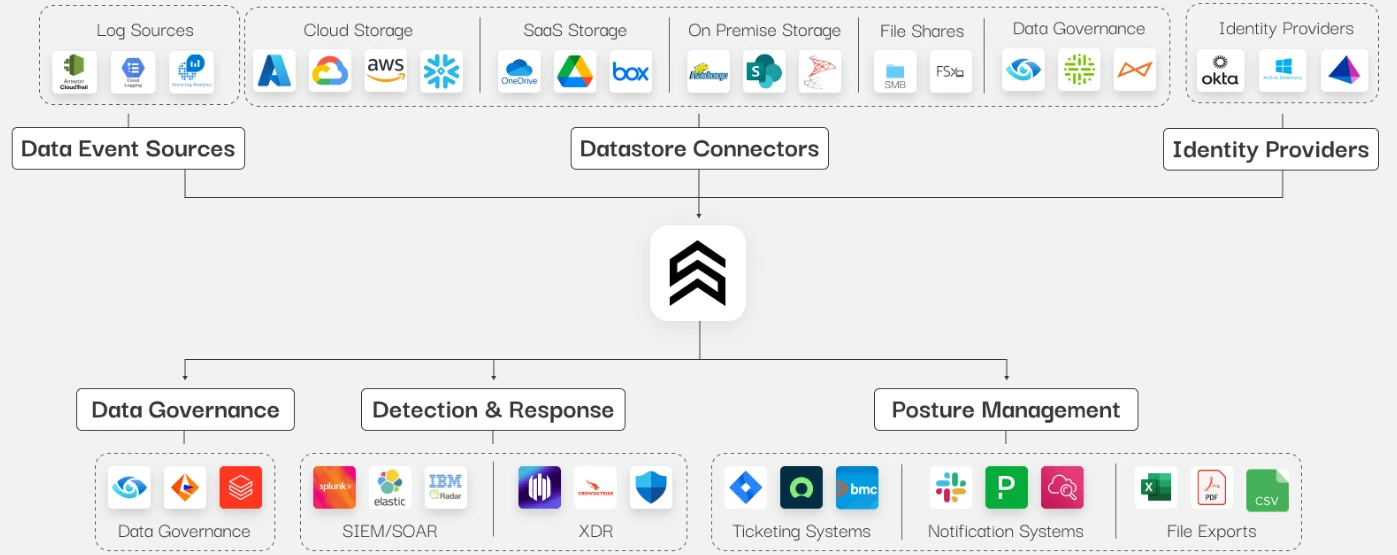
With Symmetry DataGuard, companies can deliver data detection, categorization, and protection capabilities to gain network visibility into their organization’s data risk posture.
Companies can also implement access controls, monitoring, and automation features through Symmetry DataGuard (DSPM) to mitigate the risk posed by frequent security events.
Integrations:
Features:
- Data detection and response: Monitor unexpected data access patterns.
- Access controls: Manage data maps using role-based access control (RBAC) or mandatory access control (MAC).
Integrations: Asana, Azure, IBM Radar, Splunk, Elastic, OneDrive, AWS, and Google Cloud Platforms.
Deployment: Cloud, on-premise Windows, on-premise Linux, air-gapped (deploying software by physically isolating a secure computer network).
Pros
Data classification: CISOs note that Symmetry DataGuard (DSPM) supports a broad range of sensitive data types.
Data visibility: Customers express that Symmetry Data Guard (DSPM) provides clear insights on where sensitive data is, who can access it, and how it is used.
Cons
Performance: Some reviews note that Symmetry DataGuard (DSPM) introduces latency that may place additional load on your database and system.
Integrations: Some users report limited support for integrations, including Azure.
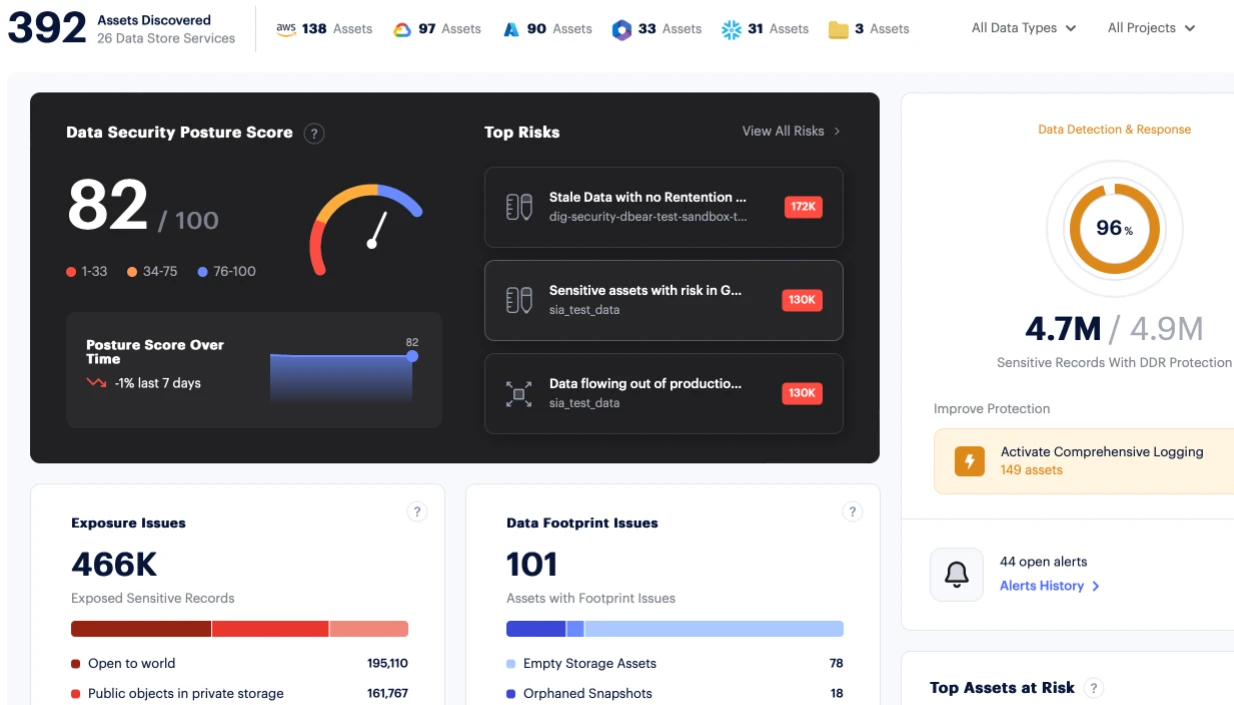
Cortex Cloud’s Dig Security Platform, acquired by Palo Alto Networks in 2023, prioritizes data risk, analyzes data flows, and visualizes access governance to manage the data security posture across any cloud.
Features:
- Microsoft 365 data security: Gain transparency into where sensitive data is stored, how it’s classified, and who has access to it across several OneDrive accounts and SharePoint sites.
- Audit your organization’s categorization and encryption method.
- Connect with Azure Information Protection to discover mislabeled files.
- File share scanning: Scan and classify documents in your on-premises file shares to gain insights into folder structure.
Integrations: AWS, Azure, Google Cloud Platform, Oracle Cloud, and Snowflake.
Deployment: Cloud-native.
Pros
Data discovery: Users argue that the product eliminates the need for laborious data-asset searches and provides cloud-native flexibility.
Threat detection: Audit managers emphasize that threat detection capabilities provide strong protection against cybersecurity threats.
Cons
Data source connectors: Reviewers expect to see more data source connectors for data discovery and classification (e.g., Amazon FSx, Amazon EFS).
On-premises data server support: Some customers report no support for local data stores, such as on-premises servers.
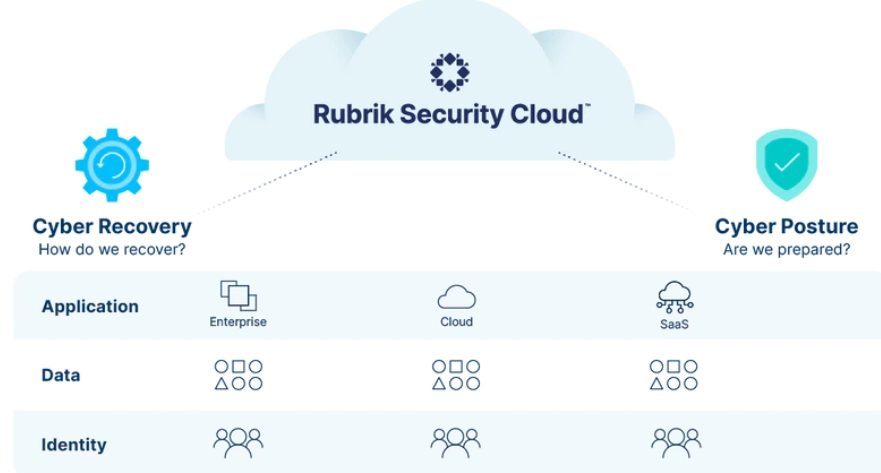
Laminar by Rubrik delivers DSPM solutions by enhancing data visibility and control to reduce the risk of data exfiltration and mitigate the impact of cyberattacks.
Features:
- Data geolocation mapping: Gain visibility on data store geolocations and data mobility between cloud environments and geographies.
- Data-centric network segmentation: Receive notifications when a user inserts sensitive or restricted data into untrusted or unauthorized environments, and either delete the data from the segment or authorize the new environment.
Integrations: Microsoft 365, Microsoft SQL Server, NetApp, Microsoft Azure, AWS, SAP HANA, Zscaler.
Deployment: Cloud, on-premises Windows, on-premises Linux.
Pros
Data discovery and classification: An IT specialist complimented Laminar’s data discovery and classification features, stating that the product accurately acquires and updates their company’s sensitive data.
Automated reporting: VPs conclude that Laminar’s automated reporting tools provide valuable, add-on features.
Cons
Pricing: Some engineers have indicated that the product is expensive and not suitable for small companies.
Integrations: Some users report strong coverage across Snowflake, but Laminar could further integrate with other data warehouse providers, such as Databricks and Dremio.
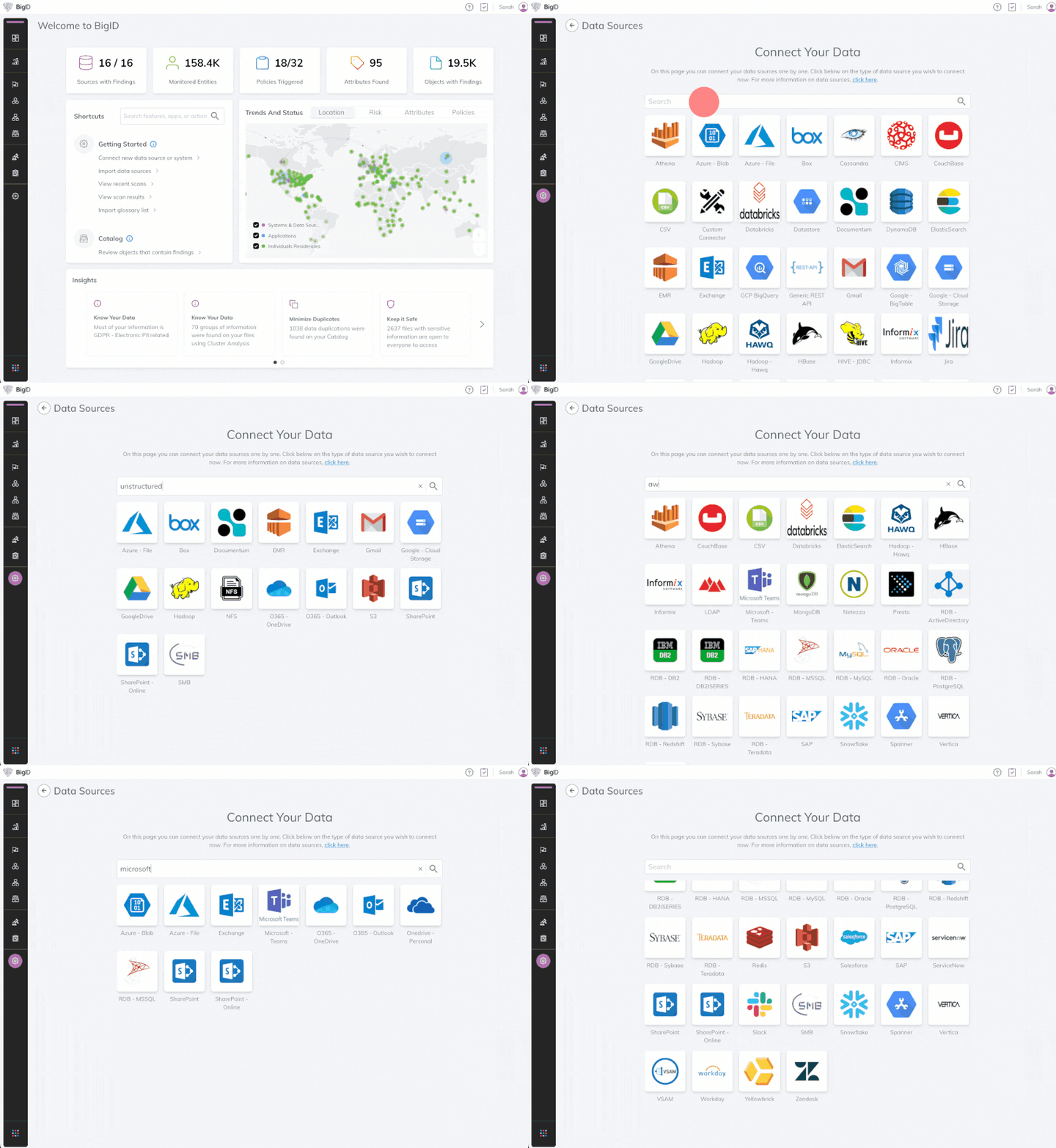
BigID can be deployed on several environments, including IaaS, PaaS, SaaS, code repositories, big data, and NoSQL pipelines, and on-premises.
Features:
- AI-augmented discovery: Find, inventory, and categorize all of your data using agentless, AI-augmented data discovery and NLP customization to detect shadow data.
- BigID AI Copilot:
- Gather all data relevant to the business.
- Receive recommendations for data mappings.
- Use Generative AI to generate table descriptions.
Integrations: Hadoop, GitLab, AWS, Oracle Database, SAP HANA, Kafka, Microsoft MySQL, Hive, Google Cloud Platform, and MongoDB.
Deployment: Cloud, on-premises Windows, on-premises Linux.
Pros
Data discovery: Users report that BigID provides a valuable approach to securely managing their company’s data and identifying data gaps and duplicates.
Ease of use: Reviews indicate the product is easy to use and delivers a smooth user experience through its Microsoft integrations.
Cons
Data visibility: Some developers assert that BigID offers lower visibility than other cloud and shadow IT applications. They stated that some of their SaaS platforms were not connected to BigID.
Pricing: Customers report that BigID is more expensive than alternatives.
How to select the right DSPM tool
1. Coverage
In the current DSPM industry, attention is focused on data associated with infrastructure platforms such as Azure Blob Storage, S3, data lakes, and databases, where developers build various products and solutions.
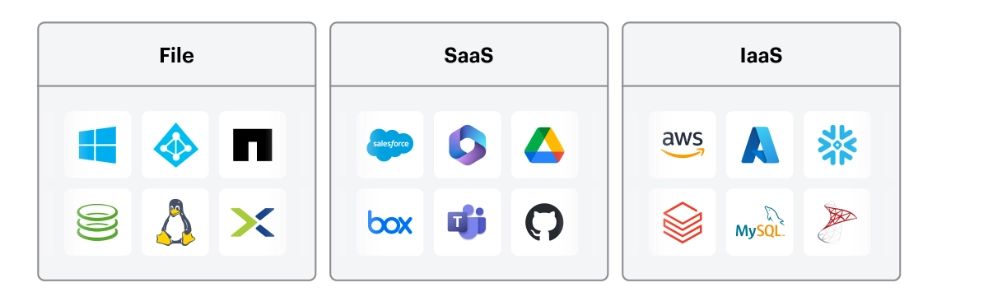
However, DSPM encompasses more, since sensitive data can be spread throughout SaaS, PaaS (e.g., Amazon RDS), and IaaS (e.g., virtual machines running databases) systems.
Organizations with multi-purpose apps might have their “sensitive data” in workflows between these apps. These organizations may select a DSPM tool that covers IaaS, PaaS, and SaaS environments.
Figure: Three key domains: File, SaaS, and IaaS, where sensitive data is stored
Source: Varonis4
2. Accuracy
Some DSPM tools offer basic policy-based alerts, which may yield insufficient analytical results. Some DSPM vendors may offer more comprehensive capabilities and deliver more accurate results.
For example, DSPMs with a user and entity behavior analytics (UEBA) capability will learn and baseline normal behavior while also generating notifications for unusual activity.
Thus, selecting a DSPM tool that offers integrated UEBA or threat intelligence integrations can help your organization gain more accurate data insights.
3. Scale
Organizations assessing large volumes of data (e.g., banks, retailers, insurance companies, Fortune 1000) should select a DSPM tool capable of performing classification or permission scans at a petabyte scale.
4. AI coverage
Sensitive data reaches AI tools as well as apps and storage. Staff paste files into chatbots. Agents read documents on a person’s behalf. A DSPM tool blind to that path reports an incomplete view of risk.
Four checks separate working AI coverage from a line on a datasheet:
- Unapproved AI use: The tool identifies which AI apps staff reach, including services the company never sanctioned.
- Prompt-level control: The tool flags or blocks sensitive data before it enters an AI prompt.
- Agent inventory: The tool lists AI agents, the data each agent can reach, and the person accountable for it. Agents with no named owner are a common gap.
- Audit records: The tool logs AI activity in a format auditors accept.
Coverage varies between vendors. Some detect AI use but stop short of blocking it. A demo run against a live environment shows which of the two a tool delivers.
 Add as preferred source
3 DSPM-like solutions to watch out for
1. Vendors specializing in data privacy
Discovery DSPMs lack the context required to determine whether sensitive data is at risk. These solutions assess data security posture by counting sensitive data findings, but they do not account for exposure levels, issue resolution, or data threat detection. Discovery DSPMs are data catalogs.
2. IaaS DSPM
Several DSPM companies focus on the top three IaaS platforms (AWS, Azure, and GCP) while ignoring other essential data domains such as cloud file storage, on-premises file shares, SaaS apps, and email. Coverage of databases across multi-cloud systems is critical; look for a DSPM vendor that covers all your data domains.
3. DSPM without real-life cybersecurity expertise
Data security vendors should have research teams and real-world case studies dedicated to identifying vulnerabilities, tracking threat actors, and developing new threat models.
For guidance on choosing the right tool or service, check out our data-driven sources: network security policy management (NSPM) tools and incident response tools.
DSPM now covers AI agents and shadow AI
The important question has changed. Teams once asked where sensitive data sits. They now ask which AI tools and agents can reach it.
Two problems drive the shift:
- Shadow AI describes staff pasting company data into unapproved chatbots and writing assistants.
- Agent access describes AI agents that read files and act on a person’s behalf, sometimes reaching documents the person was never meant to open.
DSPM tools answer both by tying data sensitivity to who or what has access. An agent that can read a restricted SharePoint folder becomes a visible risk rather than an invisible one. Vendors now ship AI posture modules, often labeled AI-SPM, alongside their DSPM features.
A practical test for buyers: ask whether the tool builds an inventory of AI agents, records the data class each agent touches, and names an owner for each one. Agents without an owner are a common blind spot.
DSPM market evolution
The DSPM market experienced consolidation between 2023 and 2025 as established security vendors acquired specialized data security capabilities. Notable transactions include IBM’s acquisition of Polar Security in 2023, CrowdStrike’s purchase of Flow Security in 2024, Fortinet’s acquisition of Next DLP in 2024, Netskope’s purchase of Dasera in 2024, Cyera’s acquisition of Trail in 2024, Forcepoint’s purchase of GetVisibility in 2025, Fortra’s acquisition of Lookout in 2025, and Concentric AI’s consolidation of Swift Security and Acante in 2025.5
In 2026, the category has expanded decisively into AI security, AI observability, AI-agent governance, and AI-runtime controls. Microsoft Purview, Varonis Atlas, Cyera’s March launch, Cyberhaven, SentinelOne, and Veeam Agent Commander all reflect that shift.
Cyera bought Trail, Otterize, Ryft, and Genie Security, extending the platform into agentic AI data access and endpoint data loss prevention.6
Rival platforms formed through acquisition. Veeam bought Securiti,2 and Commvault bought Satori.7 Independent DSPM startups are becoming modules inside larger data platforms.
The market demand shifted from finding data (DSPM) to responding to its movement (Data Detection and Response). Users now expect these to be a single platform.
Cite this research
Pick the format that matches where you're publishing. Pasting the link version into your CMS preserves the backlink.
@misc{dogan2026,
  author = {Dogan, Sedat and PhD., Ezgi Arslan,},
  title  = {{Top 10+ DSPM Vendors to Enhance Data Security}},
  year   = {2026},
  month  = jul,
  howpublished    = {\url{https://aimultiple.com/dspm-vendors}},
  note   = {AIMultiple. Retrieved July 22, 2026}
}Results and timestamps of 40 data points. Download the summary data shown in this article's charts and tables as a ZIP file containing 4 CSV files.
Want the granular data behind it? Join Premium
Changelog
14 updatesAdded a DSPM market evolution section detailing recent vendor acquisitions.
Updated the Securiti by Veeam product description.
Added Druva Data Security Cloud to the list of DSPM vendors.
Reference Links
- Has 20 years of experience as a white-hat hacker and development guru, with extensive expertise in programming languages and server architectures.
- Is a board advisor at a VC investing in early-stage technology firms and at Ödeal, a regional digital payment platform serving 125,000 merchants.
- Has led the technology infrastructure and cybersecurity of seven national elections, and has been recognized in the cybersecurity Hall of Fame by global technology leaders including Twitter.


















Be the first to comment
Your email address will not be published. All fields are required. Comments are left in their original language.