


Top 15 Accounting AI Agents

Tools like Dext, AutoEntry, and Hubdoc have automated data extraction and transaction posting. But these systems are fundamentally still rule-based, often requiring accountants to jump between spreadsheets. Thus, after reviewing the documentation and watching demos, we picked the top 15 AI-based accounting agents:
- Commercial accounting AI agents that autofill forms for daily bookkeeping and the month-end close.
- Open-source ERP / accounting frameworks that can be integrated with low-code/no-code automation platforms.
Commercial accounting AI agent examples
Accounting AI agent | Category | Focus |
|---|---|---|
Full-cycle bookkeeping | End-to-end bookkeeping automation | |
Full-cycle bookkeeping | AI-driven compliance & invoice classification | |
Full-cycle bookkeeping | AP automation | |
Full-cycle bookkeeping | Accounting, tax, and audit for firms. | |
Specialized workflow automation | Financial close & reconciliations | |
Specialized workflow automation | Audit prep, reconciliations | |
Specialized workflow automation | Bookkeeping automation | |
Specialized workflow automation | Basic close management automation with checklists | |
Specialized workflow automation | Spend & expense automation | |
Specialized workflow automation | Bookkeeping automation |
Real-world accounting agent demos
The demos below show how accounting agents handle different tasks.
Automating invoice workflows:
In this demo, the accounting agent streamlines the data processing system.
- A Google Drive folder is typically the entry point, where incoming invoices are stored. Alternatively, invoices can be received via a dedicated email inbox, either sent directly by contractors or forwarded from a general business address.
- Once received, the AI agent extracts all relevant data, similar to how a human in an accounts department would.
- The extracted data is converted into XML, a format compatible with most accounting software.
- From there, the data is either added to a spreadsheet or automatically transferred into an ERP system, QuickBooks, Xero, or another destination system.
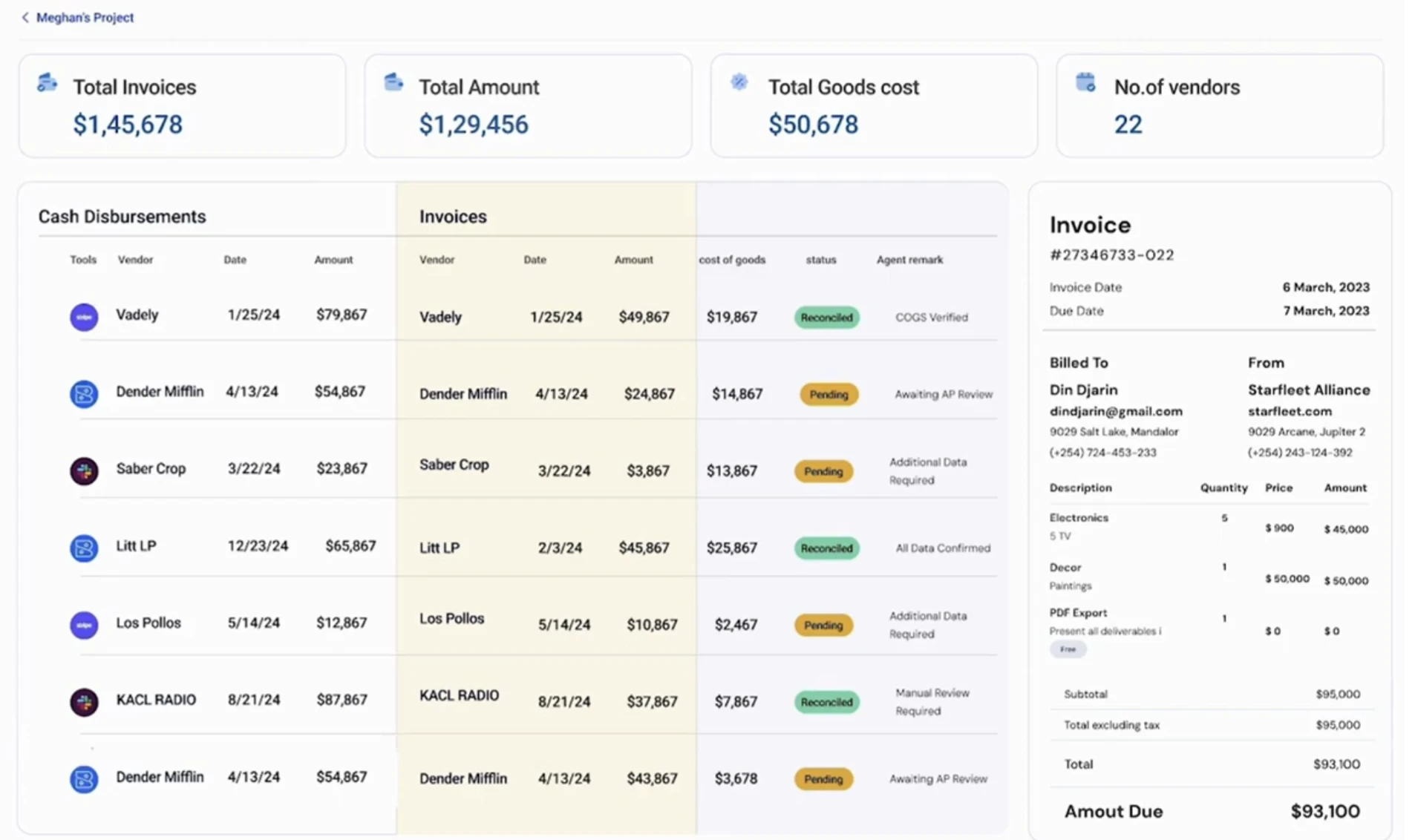
Here is a GUI-based example of cash disbursements and invoices:
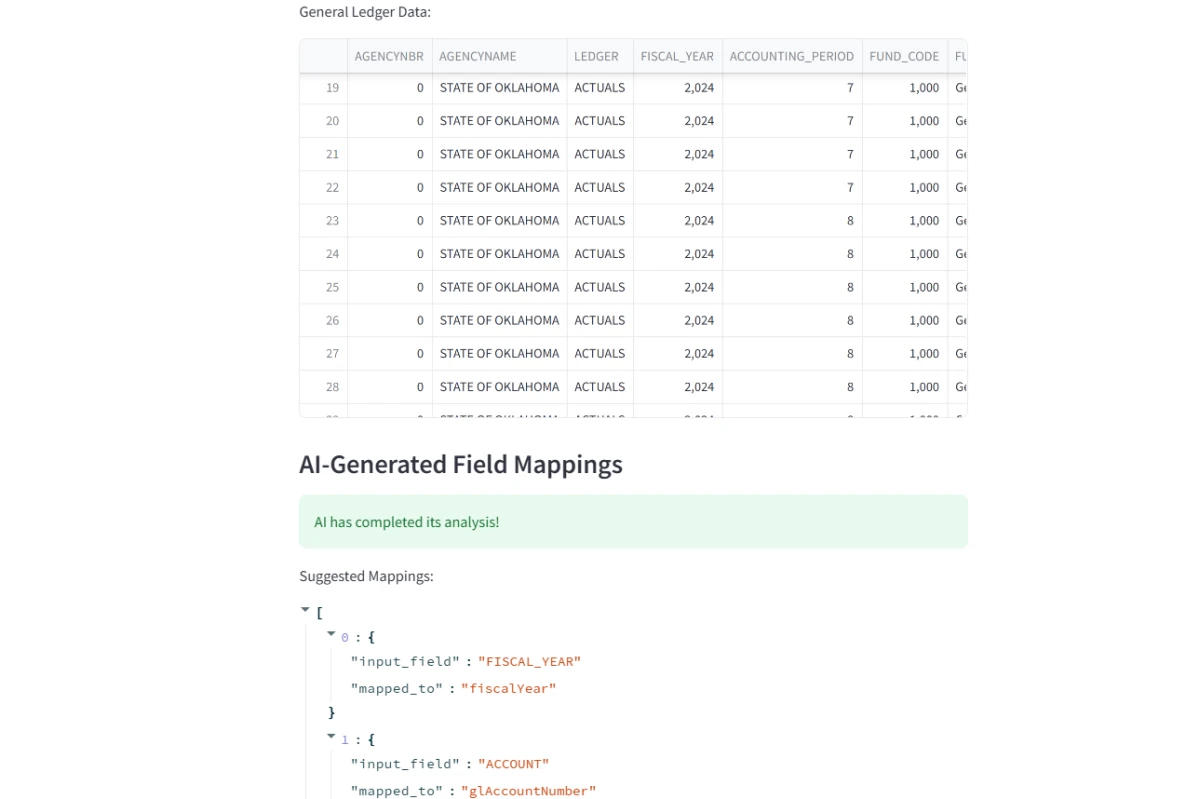
General ledger transformation:
In this example, an accounting AI agent allows users to upload a raw ledger file, view AI-suggested account mappings, and make adjustments using intuitive dropdown menus.
Once finalized, clicking ‘Transform’ instantly generates a preview of the cleaned data, which can be downloaded as a CSV file for integration into accounting systems.
Categorizing chart of accounts:
This example shows Google’s LLMs used as a co-pilot voice assistant to categorize chart accounting in QuickBooks.
Commercial accounting AI agents reviewed
Docyt
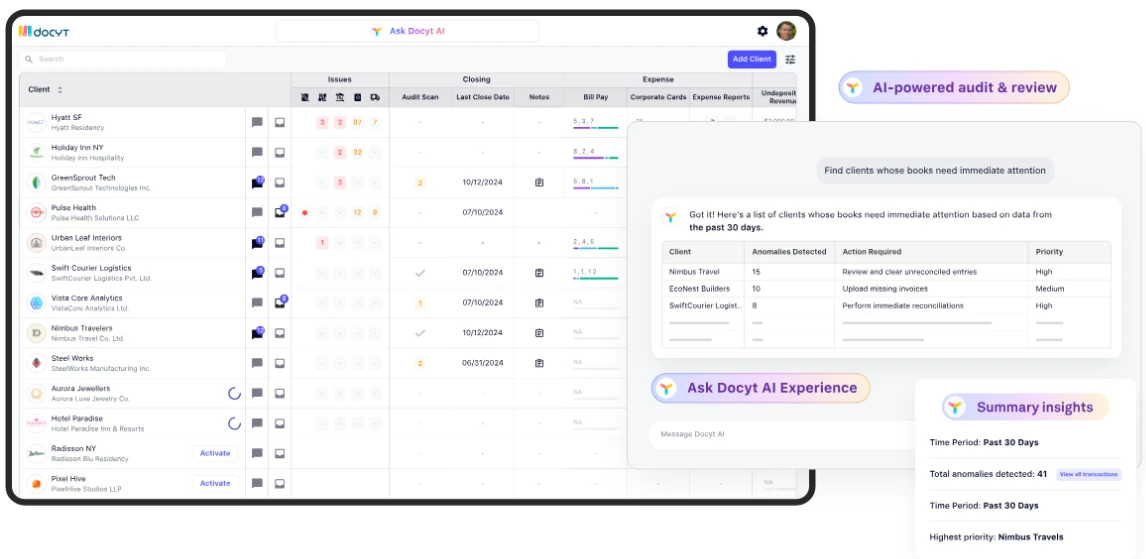
Docyt AI targets small to mid-sized businesses, accounting firms, and multi-entity organizations that need end-to-end bookkeeping automation.
Docyt connects directly to bank feeds, QuickBooks Online, and over 30 POS systems. Its agents like GARY (Generative Accounting Retrieval System) and Docyt Copilot automate tasks like document extraction to financial variance analysis. Docyt Copilot is especially helpful for flagging P&L anomalies and preparing KPI dashboards.
Key features:
- End-to-end bookkeeping automation
- GARY handles workflows, tasks, and approval coordination
- Docyt Copilot for variance analysis and financial anomaly detection
- Forecasting with predictive AI models
- Multi-entity and departmental reporting
Pricing
Custom pricing based on feature scope
Accy.ai
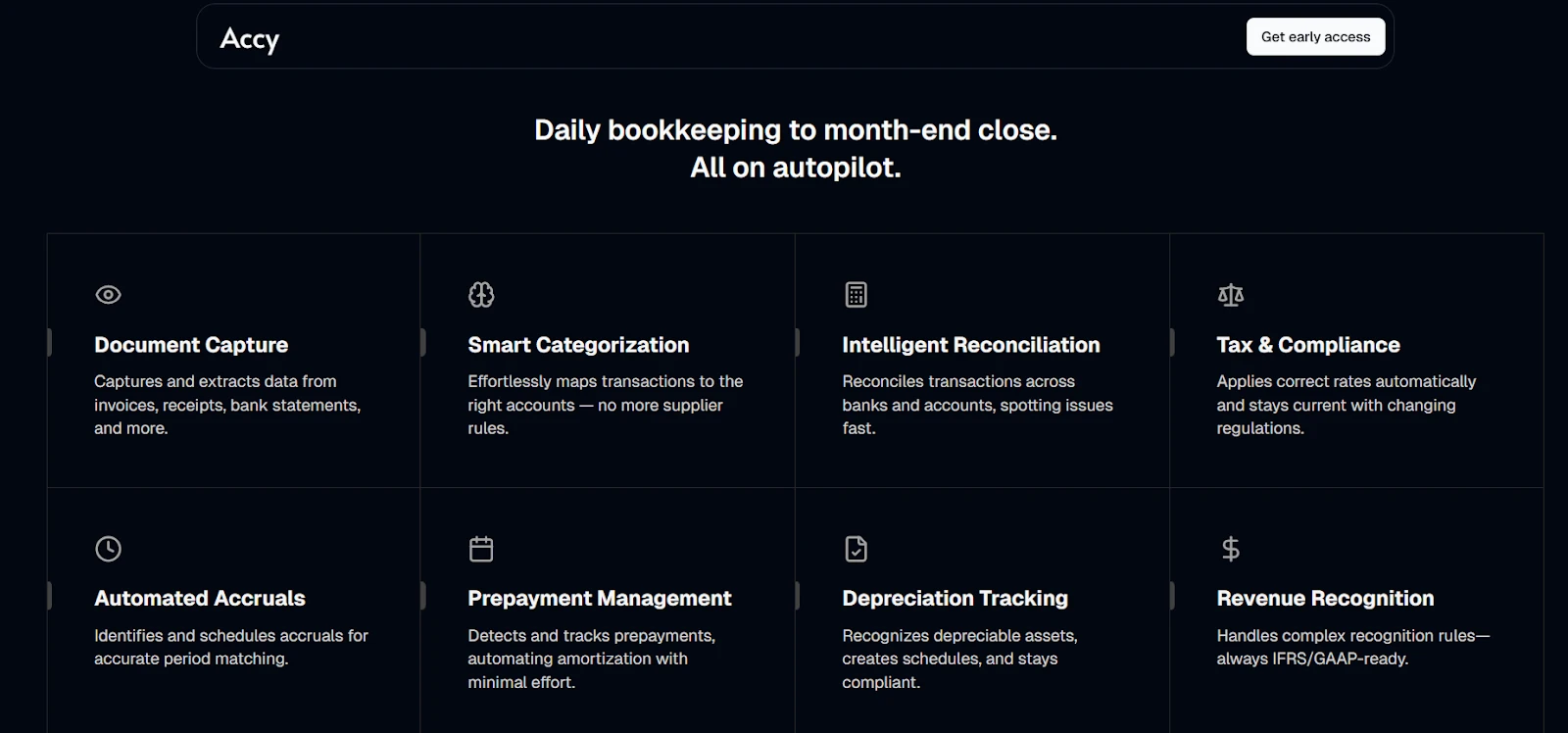
Accy.ai can ingest invoices via email or manual upload, analyze them using AI, and apply relevant tax codes based on jurisdiction. For example, it recognizes that a UK company’s purchase from a US vendor is “Out of Scope of VAT” and categorizes it.
Each AI agent can be refined to handle specific compliance needs like UK GAAP, US GAAP, or IFRS.
Pricing:
Custom pricing based on the number of agents, ERP integrations, and volume.
Vic.ai
Vic.ai handles high-volume accounts payable for mid-sized and enterprise organizations.
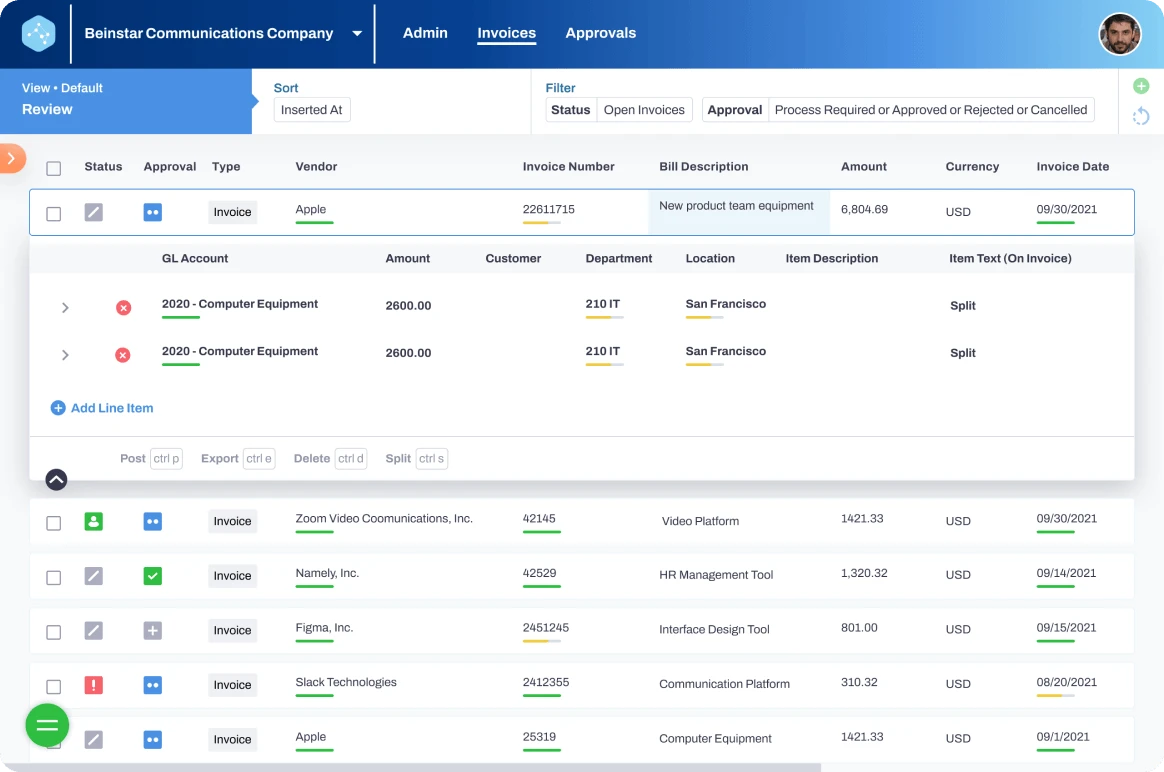
It automatically pulls in and categorizes hundreds of invoices without requiring manual PDF uploads. The system learns a company’s GL coding preferences, reducing corrections and freeing up more time for forward-looking financial planning. Provides an open API.
Key features:
- VicInbox™ for AI-powered invoice ingestion and categorization
- VicPay™ for payment approvals, rebate tracking, and scheduling
- VicCard™ for controlled company spending
- VicAnalytics™ for AP performance and productivity dashboards
- PO matching with automated discrepancy alerts
- Open API for integration with ERP, procurement, and finance systems
- Autopilot processing for no-touch invoice handling
- SOC 2 certified
Pricing:
Custom pricing based on invoice volume, features, and organization size.
Basis AI
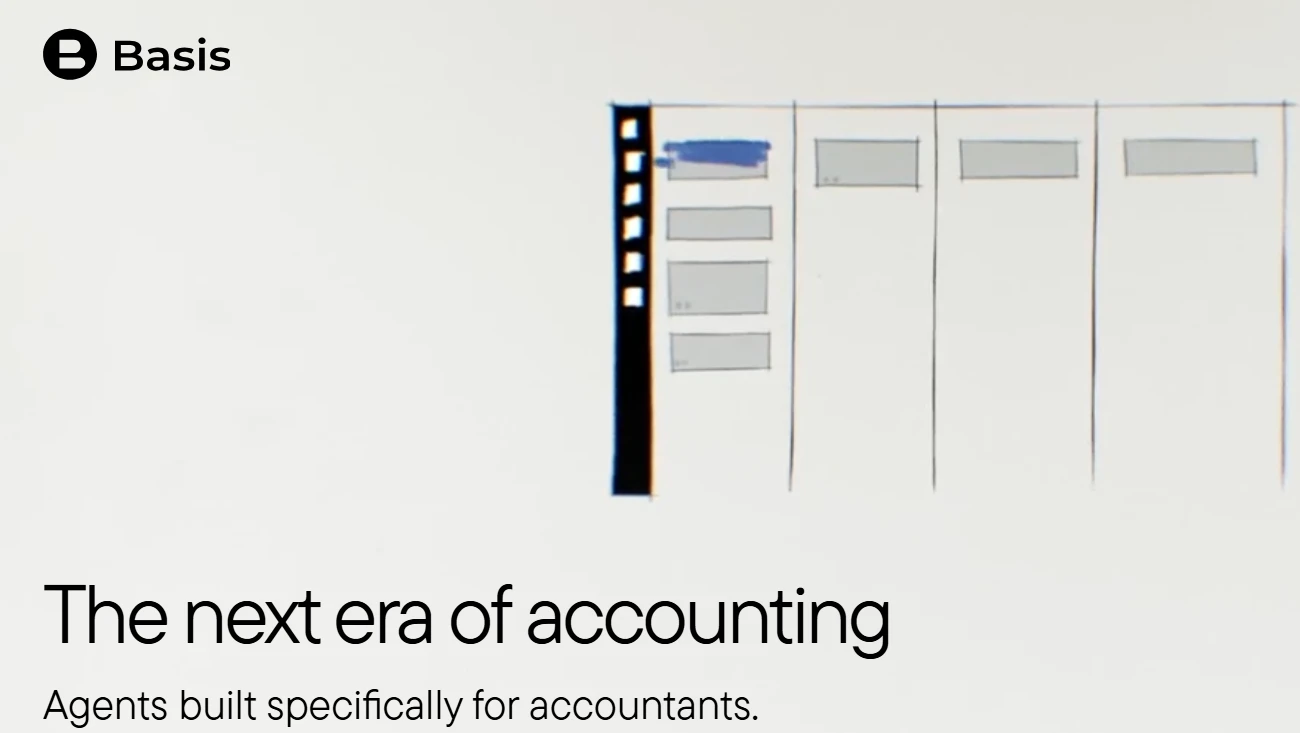
Basis serves accounting firms rather than businesses directly. Its agents cover accounting, tax, and audit work.
The platform combines large language models with rules-based controls and accounting logic, so each agent follows a fixed set of constraints rather than reasoning freely. Agents pull structured and unstructured data from client documents, ledgers, and ERP systems, then analyze records, extract fields, run calculations, and produce output for review.
Key features:
- Document review and data extraction from client files
- Account reconciliation and transaction entry
- Tax preparation across federal, state, and local jurisdictions
- Financial statement preparation
- Integration with QuickBooks and Xero
- Human review at each decision point
Stacks
30-day free trial available
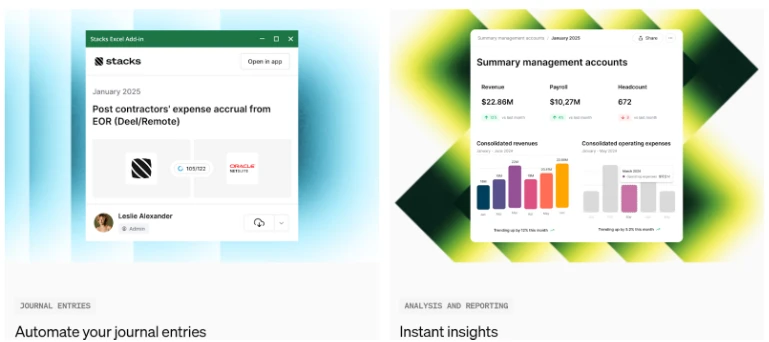
Stacks is for accounting teams that need to automate their financial close and streamline reconciliations. It integrates with Google Sheets, Databases, and ERP systems, giving teams live access to data trends, variances, and contextual explanations.
Key features:
- AI-powered close management
- Automated account reconciliations
- Journal entry automation
- Real-time financial analysis (e.g., consolidated revenues/expenses)
Pricing:
Custom pricing, quote-based.
FloQast
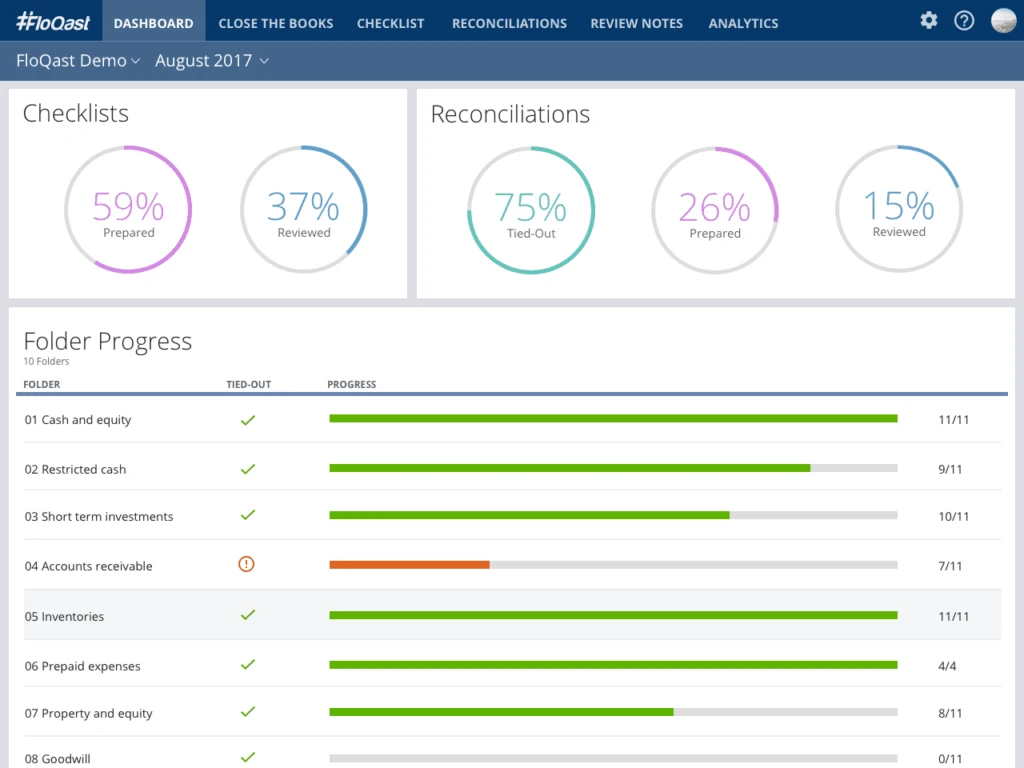
Best for small to medium-sized teams, FloQast automates reconciliations and financial close. It covers month-end close, audit trail, and reconciliation automation.
The platform also provides a feature called flux analysis (used for analyzing changes in operating expenses, revenue, and departments), which is useful for teams with complex reconciliation needs.
Pricing:
- Pricing starts around $22,000/year
QuickBooks
QuickBooks Intuit AI is designed to automate day-to-day accounting while allowing SMEs to retain full control over financial decisions. It works across bookkeeping, taxes, payments, and reporting inside a unified system.
It uses multiple AI agents that handle specific finance tasks and support accountants instead of replacing them.
Key capabilities:
- Accounting AI: Keeps books updated by organizing transactions and resolving missing details with accountant input
- Business Tax AI: Identifies tax-saving opportunities and suggests deductions throughout the year
- Sales Tax AI: Applies correct sales tax rates and flags filing issues with suggested corrections
- Payments AI: Sends personalized invoice reminders to help improve payment speed and cash flow
- Finance AI: Speeds up month-end close and generates financial summaries and insights
Pricing
- Simple Start ($19/mo): Entry-level plan for expense tracking and invoicing.
- Plus ($58/mo): Adds basic bookkeeping and payment automation.
- Advanced ($138/mo): Designed for larger teams needing automation, custom reporting, and AI-driven insights.
In February 2026, Intuit announced a multi-year partnership with Anthropic, the company behind the Claude models.4
Numeric
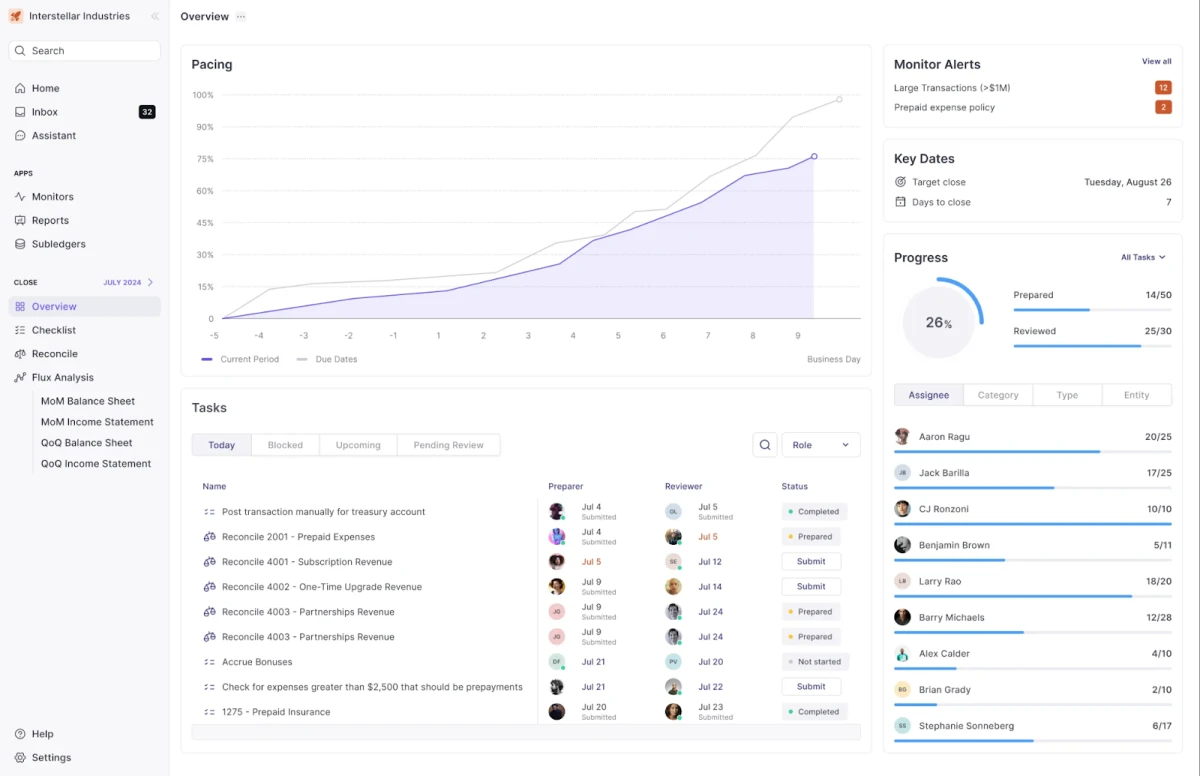
Numeric is best for a structured financial close process before scaling to more automation-heavy tools like FloQast or Stacks. It provides a free month-end checklist, flux analysis, and month-end close checklist.
The trade-off is that it is less robust than enterprise tools and provides limited workflow automation in the free plan.
Pricing:
- Free – Includes checklist module
- Paid – Usage-based (depends on ERP integration and user count)
BILL AI Agent
BILL recently expanded its suite of AI agents to automate W-9 collection and expense reconciliation.5 Its AI-powered W-9 Agent autonomously collects and validates vendor tax forms, which BILL claims eliminates over 80% of manual steps in the W-9 collection process.5 Similarly, a Reconciliation Agent automatically codes expense receipt transactions so they reconcile themselves, reducing manual coding.5
The company reports that in early rollout the share of transactions fully processed by AI increased by 533% with approximately 92% accuracy.6
Pilot AI Accountant
In February 2026, Pilot announced what it calls the world’s first fully autonomous “AI Accountant” for SMBs, which runs the entire bookkeeping process (onboarding through monthly close) with zero human intervention.7 Pilot claims this represents a step toward applying artificial general intelligence to accounting tasks.7
 Add as preferred source
Akira AI
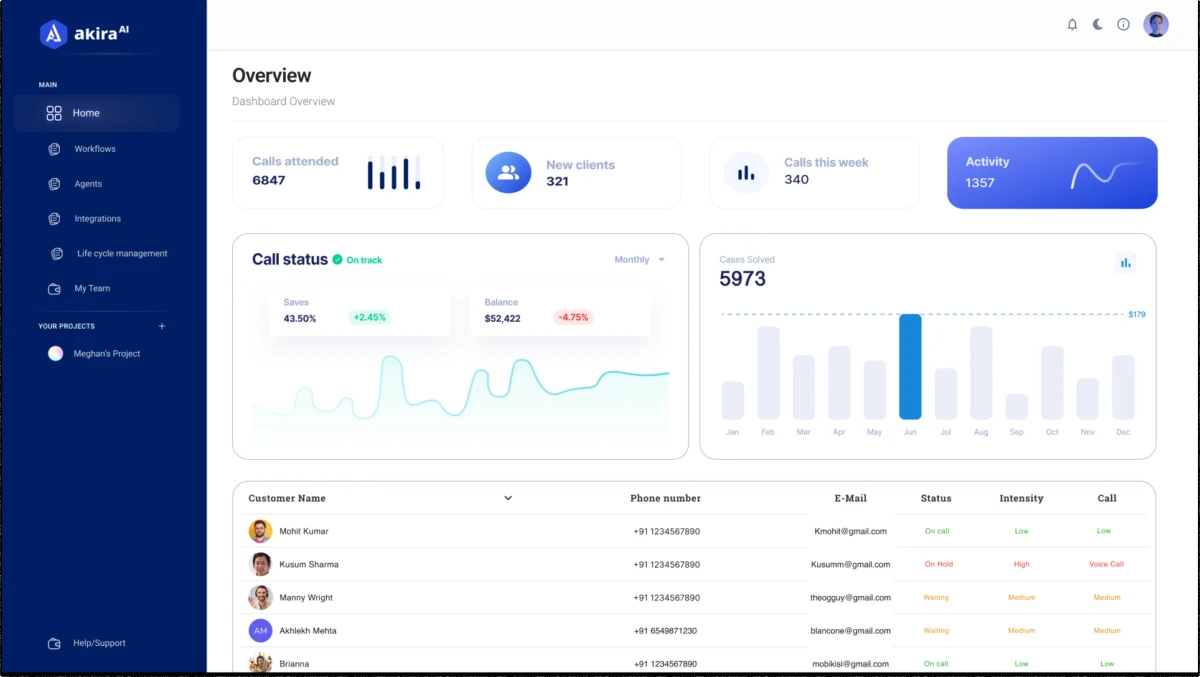
Akira AI is an agentic platform for agent orchestration, automation, and analytics. It provides a set of specialized AI agents, like data & invoice processing agents, designed to auto-generate invoices and automate accounting workflows.
Pricing:
Custom pricing, quote based on the number of agents
Circit
Circit offers an AI general ledger transformation agent. It is built with agent-building frameworks (LangChain, Streamlit, GitHub Copilot).
It streamlines the data mapping and normalization process, transforming raw CSV or Excel ledger files into structured, standardized formats with an AI-assisted, human-in-the-loop workflow:
- Upload – User selects a raw general ledger file (CSV/Excel).
- AI analysis – The agent scans and suggests column-to-schema mappings.
- Human review – Users confirm or adjust AI-suggested mappings via dropdown menus.
- Transformation – A cleaned, standardized ledger file is generated for download.
Pricing:
Free: Access to the basic GL transformation tool.
Open source accounting frameworks
These web-based ERP frameworks can be used for bookkeeping and integrated with low-code/no-code automation platforms (e.g., Beam AI) to enable autonomous bookkeeping.
- ERPNext: An open-source ERP with a full double-entry accounting module, covering the general ledger, receivables, payables, and financial statements. Written in Python on the Frappe framework.
- Frappe: The low-code framework underneath ERPNext, built in Python and JavaScript. Teams use it to build custom accounting workflows rather than adopt a finished ledger.
- Tryton: An open-source ERP with a double-entry accounting module and a modular design, so a company can install accounting without the rest of the suite.
None ships with an AI agent. Each provides the data layer and API that an automation platform can drive.
What are accounting AI agents?
AI agents are LLM-enhanced software components, and task automation frameworks that can assist with accounting tasks with minimal human intervention.
In accounting these systems can orchestrate complex workflows such as month-end close, reconciliations.
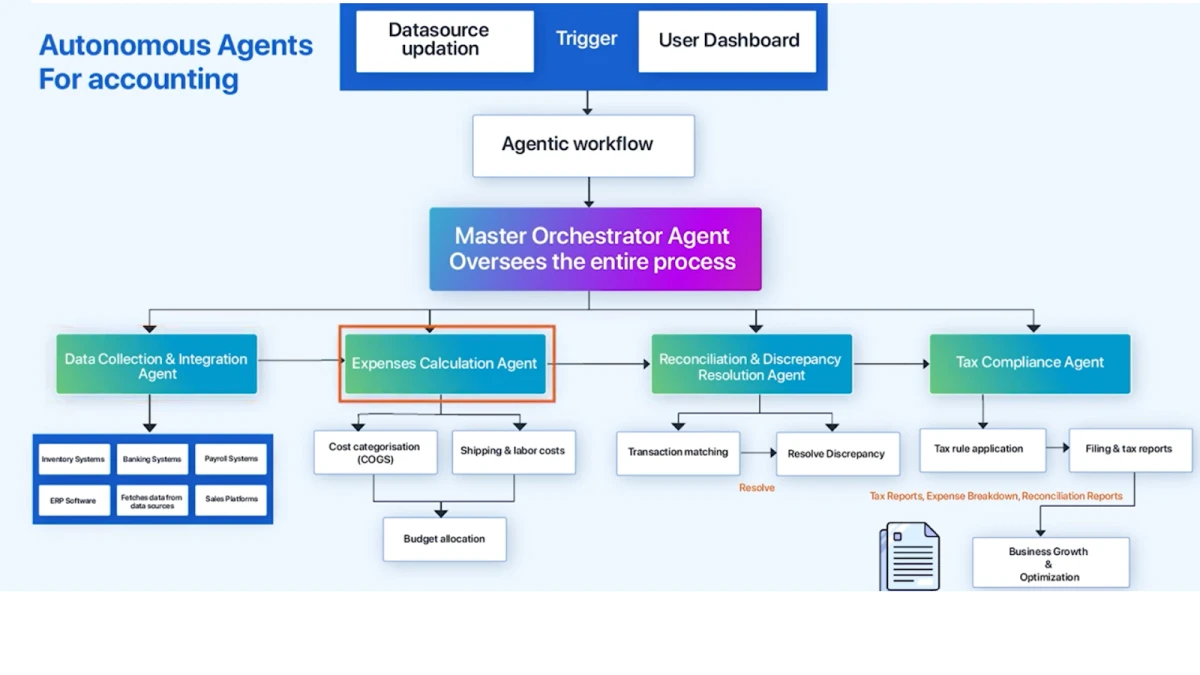
- Master orchestrator agent: Coordinates all agents.
- Data & invoice processing agent: Retrieves and auto-generates invoices for both payables and receivables.
- Verification & matching agent: Cross-checks vendor invoices with POs and matches incoming payments to customer invoices.
- Payment & cash flow agent: Schedules vendor payments.
A January 2026 Deloitte study found that 63% of finance organizations have fully deployed AI in their operations.9 Nearly 50% of CFOs also report having fully integrated AI-driven agents into parts of the finance function (for example, forecasting or expense management).9
Key capabilities of AI accounting agents
- Document parsing: Extracts structured data from invoices, receipts, bank statements, and tax forms.
- Autonomous data classification: Automatically categorize transactions based on learned patterns and vendor context (e.g., classify an AWS charge as IT expenses).
- Reconciliation automation: Match invoices to payments, identify discrepancies.
- Accrual and journal scheduling: Handle deferred expenses or revenue schedules by automatically generating monthly journal entries.
- Contextual research: Search online or internal sources to understand unknown vendors or services for proper GL assignment and tax treatment.
- Anomaly detection: Identify unusual transactions, duplicates, or fraud risks through pattern recognition and outlier detection.
- Client communication automation: Draft personalized emails to clients and stakeholders.
- Integration with ERP systems: Use APIs to receive and transfer data from platforms like QuickBooks, Xero, NetSuite, or custom ERPs.
The auditability gap
AI models are probabilistic. The same input can produce different outputs because token sampling is randomized.10 Financial regulators expect every automated decision to be reproducible on demand. The two do not sit together comfortably.10
No binding standard resolves this yet. The PCAOB had issued no AI-specific auditing standard as of mid-2026, and its June 2024 technology-assisted analysis amendments excluded AI from scope.11 A standard-setting research project on technology-based tools remains open.
Existing standards still apply. Auditors work under AS 2110 for risk assessment, AS 1215 for documentation, and AS 2201 for internal control reliance.12 None was written with autonomous agents in mind.
The unresolved question is where professional skepticism sits. A PCAOB speech in January 2026 stated that independence, professional skepticism, and responsibility must survive in an AI-augmented audit. If an agent identifies a risk, designs a test, runs it, and documents the result, the location of that skepticism in the chain is undefined.
Practical steps for finance teams:
- Keep fixed audit logs and version control for every agent action.
- Ask an AI vendor whose system touches financial reporting for a SOC 1 Type II report.
- Treat model updates as IT changes, with approval, testing, and documentation.
- Keep a human review step on anything that posts to the books.
Use cases of accounting AI agents
- Bookkeeping: Documenting all financial transactions.
- Financial close: Automates account reconciliation, flags discrepancies, and suggests adjustments.
- Expense categorization: Classifies receipts and invoices using pattern recognition and past behavior.
- Financial forecasting: Uses historical and external data to generate accurate projections.
- Financial reporting: Generates statements like balance sheets and income statements.
- Tax preparation: Applies updated tax rules, identifies deductions, and calculates liabilities.
- Audit preparation: Compiles documents, cross-references data, and drafts preliminary reports.
The role of agentic AI in accounting
Source: 13
Agentic AI could automate the grunt work in the accounting and tax profession.
However, accounting regulations and annual financial plans often involve multiple interpretations and analytical decision-making. Agentic AI lacks the moral judgment and reasoning framework to make decisions on accounting policies. In such cases, it cannot make decisions and evaluate complex contextual nuances and ethical considerations.
AI-Natives vs AI-Powered: Comparing agent architecture
AI-powered accounting tools can be distinguished by whether they are built around AI or bolt AI onto an existing system. AI-native platforms are designed from the ground up for automation, while legacy systems add AI-based features on top. One industry expert notes that with an AI-native ledger, “you can see and trace everything natively inside the system,” enabling full auditability of each step. Legacy platforms lack this integrated traceability.
Further reading
- Compare 20 LLM Security Tools & Open-Source Frameworks
- Top 15 AI Financial Research Platforms for Investors
- Agentic AI Finance Benchmark
Cite this research
Pick the format that matches where you're publishing. Pasting the link version into your CMS preserves the backlink.
@misc{dilmegani2026,
  author = {Dilmegani, Cem and Arslan, Ezgi},
  title  = {{Top 15 Accounting AI Agents}},
  year   = {2026},
  month  = aug,
  howpublished    = {\url{https://aimultiple.com/accounting-ai-agent}},
  note   = {AIMultiple. Retrieved August 4, 2026}
}Results and timestamps of 15 data points. Download the summary data shown in this article's charts and tables as a ZIP file containing 2 CSV files.
Want the granular data behind it? Join Premium
Changelog
6 updatesReplaced QuickBooks Plus and Advanced plan prices in the accounting AI agents list.
Added open-source accounting frameworks section covering ERPNext, Frappe, and Tryton.
Added QuickBooks Intuit AI, with capabilities and pricing, to the commercial accounting AI agents section.
Added BILL AI Agent and Pilot AI Accountant to the commercial accounting AI agents list.
Reference Links
Cem's work at AIMultiple has been cited by leading global publications including Business Insider, Forbes, Morning Brew, and Washington Post, global firms like Deloitte and HPE, NGOs like World Economic Forum, and supranational organizations like European Commission. [1], [2], [3], [4], [5]
Throughout his career, Cem served as a tech consultant, tech buyer and tech entrepreneur. He advised enterprises on their technology decisions at McKinsey & Company and Altman Solon for more than a decade. He also published a McKinsey report on digitalization.
He led technology strategy and procurement of a telco while reporting to the CEO. He has also led commercial growth of deep tech company Hypatos that reached a 7 digit annual recurring revenue and a 9 digit valuation from 0 within 2 years. Cem's work in Hypatos was covered by leading technology publications like TechCrunch and Business Insider.
Cem regularly speaks at international technology conferences. He graduated from Bogazici University as a computer engineer and holds an MBA from Columbia Business School.






Be the first to comment
Your email address will not be published. All fields are required. Comments are left in their original language.