


Top 10 Agentic AI ERP Systems & 6 Solutions

Agentic AI ERP integrates AI agents into Enterprise Resource Planning systems. For example, an ERP agent might detect a shipping delay and autonomously reroute deliveries, notify customers, and update inventory.
Explore agentic AI ERP systems for enterprise-level and smaller and mid-sized businesses (SMBs):
The list includes a mix of enterprise, and smaller and mid-market tools. Within each category, vendors are presented in alphabetical order.
Enterprise ERP platforms with agentic AI
Large ERPs are leveraging agentic AI to automate complex, multi-step workflows with AI agents, such as:
IFS Cloud
IFS targets asset-intensive industries with AI agent orchestration. Through TheLoops’ Agent Development Lifecycle (ADLC), IFS allows companies to design, deploy, and monitor multiple agents. The AI agents can
- Schedule technicians, optimizes routes, and communicates with customers.
- Replenish inventory, adjust production.
- Predict failures, sources spare parts, and triggers repairs.
Infor CloudSuite Industry
Infor CloudSuite is an AWS-native Industry Cloud ERP pre-configured with industry-specific databases and workflows to manage core finance, supply chain, and operational data. The core platform utilizes Infor Velocity Suite as its comprehensive integration package to deliver automation engines, process mining tools, and artificial intelligence models under a flat-fee deployment framework with Full-Time Equivalent (FTE/FDE) implementation services.
Core capabilities in these layers include:
- Infor GenAI & assistant: Utilizes foundation models via Amazon Bedrock to parse unstructured text, summarize documentation, and execute natural language database queries within the user interface.
- Infor industry AI agents: Deploys role-based, autonomous workflows that connect via Model Context Protocol (MCP). Under a supervisor framework, these agents coordinate to automate multi-step administrative processes, such as extracting email data for sales orders or conducting compliance check, across Infor and third-party systems without manual entry.
- Embedded process mining: Algorithms analyze system logs to map workflows, isolate operational bottlenecks, and identify financial variances. Learn more on process mining.
- Data governance: Features a centralized semantic layer that links private documentation to the AI interface, alongside an immutable audit log that tracks all automated and human system modifications. For more on other tools with data governance capabilities.
Microsoft Dynamics 365
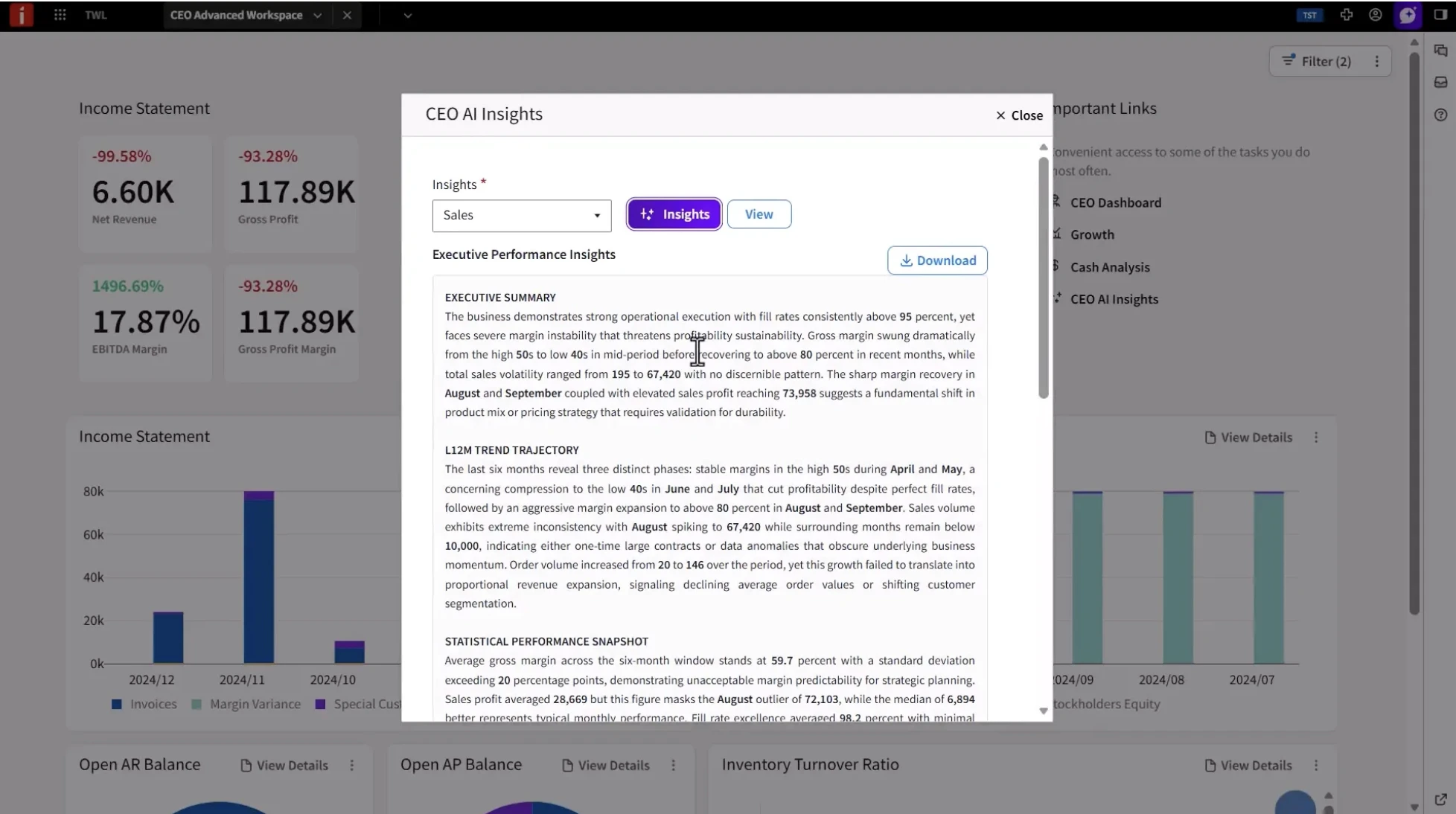
Microsoft integrates Copilot across Dynamics ERP and CRM. Copilot agents operate with human-in-the-loop or autonomous modes, powered by Azure OpenAI. This allows businesses to offload repetitive processes like vendor follow-ups.
- Supplier Communication Agent autonomously emails vendors, parses replies, and updates ERP orders.
- AI highlights anomalies in demand planning and rescheduling.
- Copilot provides instant answers on ERP data (e.g., overdue invoices).
- Drafts responses and summarizes support cases.
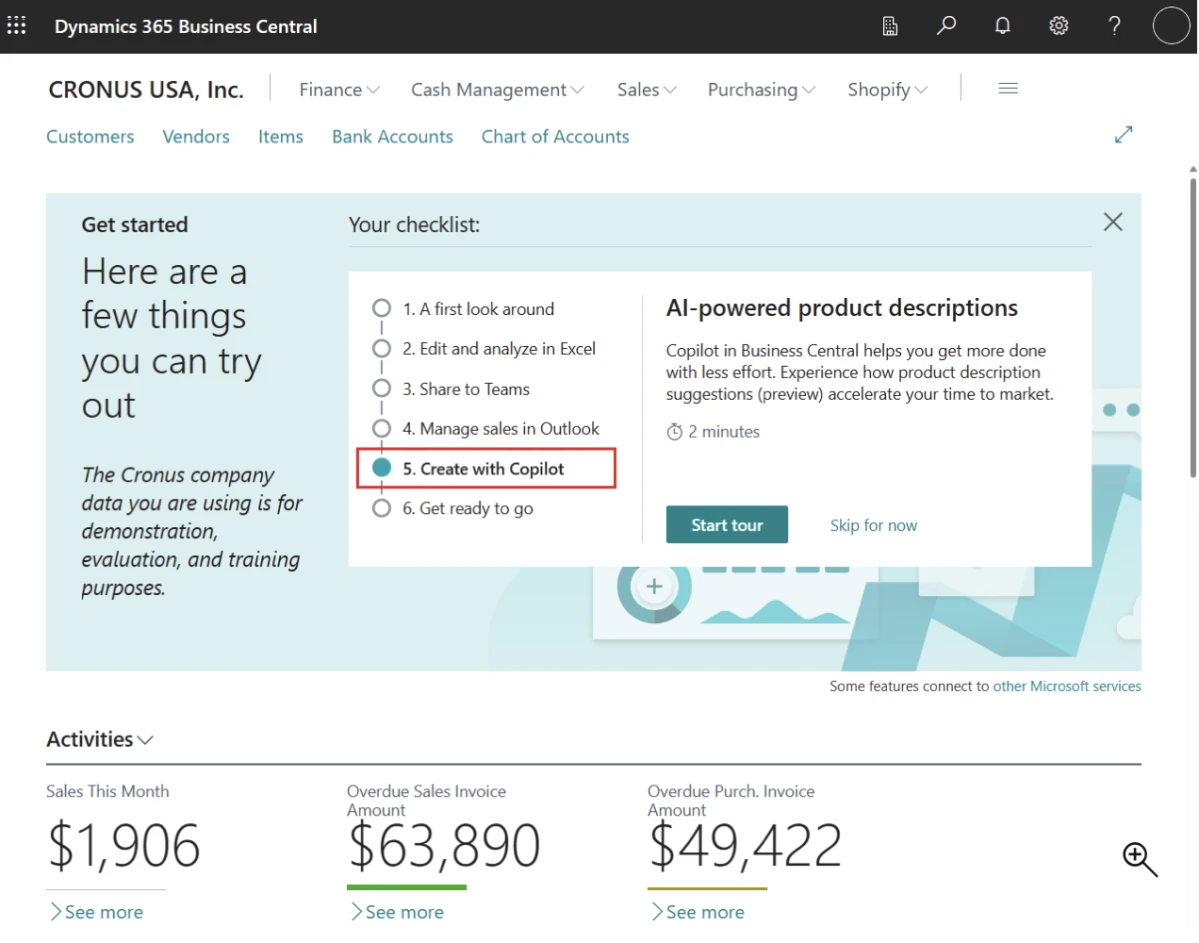
Microsoft also plans to introduce built-in Business Central AI agents, including a sales order creation agent and payables reconciliation agent that manage multi-step processes.2
Oracle Fusion Cloud ERP
Oracle has embedded 600+ Oracle AI agents (including 400 in Fusion Apps and 200+ in Industry apps) across Fusion Cloud ERP, SCM, HCM, and CX.3
Powered by Oracle Cloud Infrastructure (OCI) GenAI, these agents combine LLMs with retrieval-augmented generation (RAG) to ensure responses are accurate and secure. Oracle AI agents can:
- Generate anomaly explanations, variance narratives, and predictive forecast drivers.
- Draft project reports and plans by mining historical data.
- Auto-generate product descriptions and negotiation summaries.
- Provide personalized job fit explanations and Q&A.
- Summarize chat sessions for faster support.
SAP Joule AI
SAP introduced SAP AI agents across finance, supply chain, HR, and procurement. Joule operates as both a copilot(conversational interface) and a network of autonomous agents. These agents leverage SAP’s Business Data Cloud and Knowledge Graph, ensuring they act across SAP and non-SAP data.
- Accounts Receivable Agent automatically analyzes overdue invoices and initiates follow-ups.
- Sourcing Agent creates sourcing events by analyzing supplier history.
- Maintenance Planner Agent adjusts schedules based on predictive signals.
- Performance Management Agent provides coaching insights for reviews.
Workday
Workday defines agentic AI as systems that initiate, plan, and act autonomously.
- Recruiting: AI shortlists candidates, schedules interviews, and chats with applicants.
- Finance: Reconciles accounts, flags anomalies, and adjusts forecasts.
- HR: Agents provide personalized employee development paths.
Workday emphasizes augmentation which AI initiates tasks while humans retain oversight.
SMB ERP Platforms with Agentic AI
For smaller and mid-sized businesses (SMBs), agentic AI is becoming an accessible and cost-effective tool, as their ERP platforms are leveraging natural language interfaces and pre-built automations to streamline operations without the need for large IT teams:
Microsoft Business Central
Business Central now includes AI Copilot that can deliver:
- Conversational Q&A on sales, inventory, and finance data.
- Suggested reordering points, flags anomalies, and auto-drafts product descriptions.
- Integrated with Power Automate + AI Builder for custom bots.
Odoo
Odoo integrates an AI assistant directly into its ERP apps (CRM, Accounting, Inventory). The assistant is LLM-agnostic, supporting OpenAI, Gemini, or open-source models. Odoo Agentic ERP:
- Automates lead assignment, overdue invoice reminders, and weekly summaries.
- Generates marketing copy, product descriptions, and task assignments.
- Takes smart actions to auto-detect patterns and automate workflows.
QuickBooks
QuickBooks uses Intuit GenOS AI interface to:
- Auto-categorize transactions.
- Predict cash flows and flags anomalies.
- Answer financial queries with chat assistant.
Sage Intacct
Focused on finance automation by:
- Auto-categorizing bills, matches POs, and posts AP entries.
- Reconciling subledgers and flags variances.
- Learning from corrections, acting as a “junior accountant.”
- Finance Intelligence conversational agent.
- Cash flow intelligence dashboards
Zoho Zia Agents
Zoho transformed its assistant into a full agentic AI platform with capabilities like:
- Pre-built agents, such as customer Support, Inventory Manager, HR Interview Scheduler.
- Custom agents to built via low-code Agent Studio.
- Agent marketplace to deploy agents with one click.
- Agents orchestrator across 50+ apps, handling multi-step workflows (e.g., onboarding + invoicing).
Here is a Zoho Zia agent example:
Technical integration of agentic AI in ERP
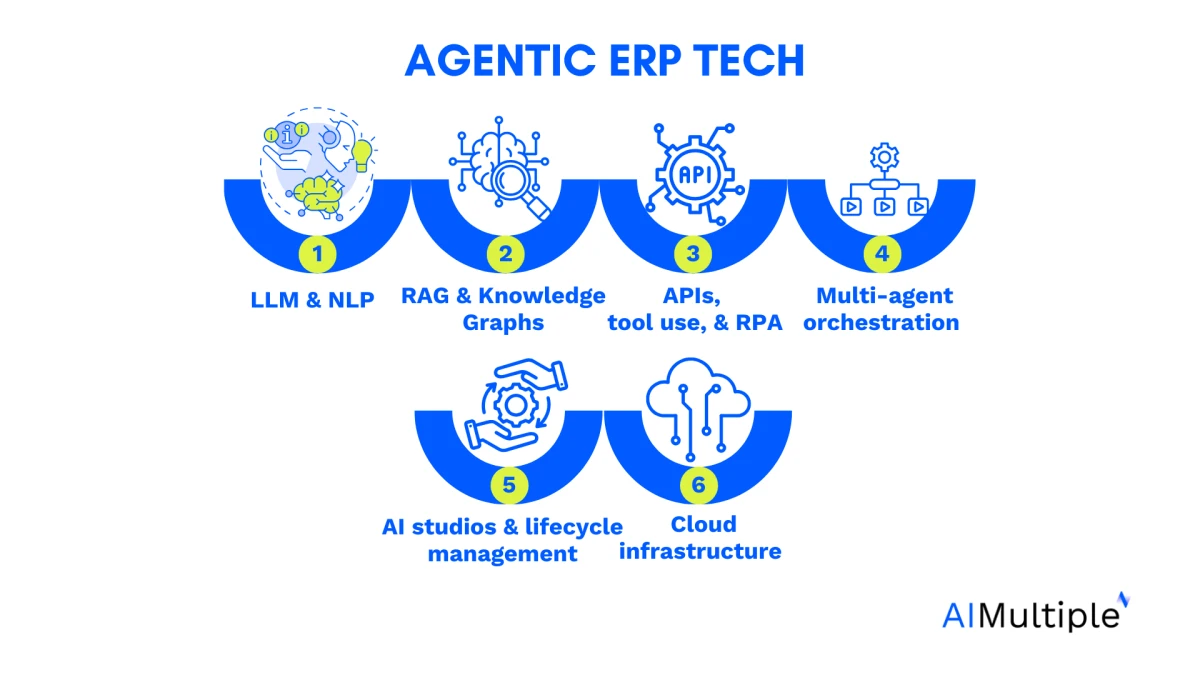
Gartner predicts that by 2028, one-third of enterprise software will include agentic AI, making up to at least 15% of daily decisions autonomous. 5 Here are the 6 ways this technology integrates:
Large language models and natural language interfaces
Most agentic AI capabilities are powered by large language models (LLMs), which enable conversational AI experiences in ERP systems. These models interpret natural-language queries and generate human-like outputs, allowing users to interact with the ERP by asking questions or issuing instructions.
Unlike older tools, modern LLMs support complex reasoning, enabling them to help with sophisticated business processes such as multi-step financial forecasting or personalized HR development plans.
Retrieval-augmented generation and knowledge graphs
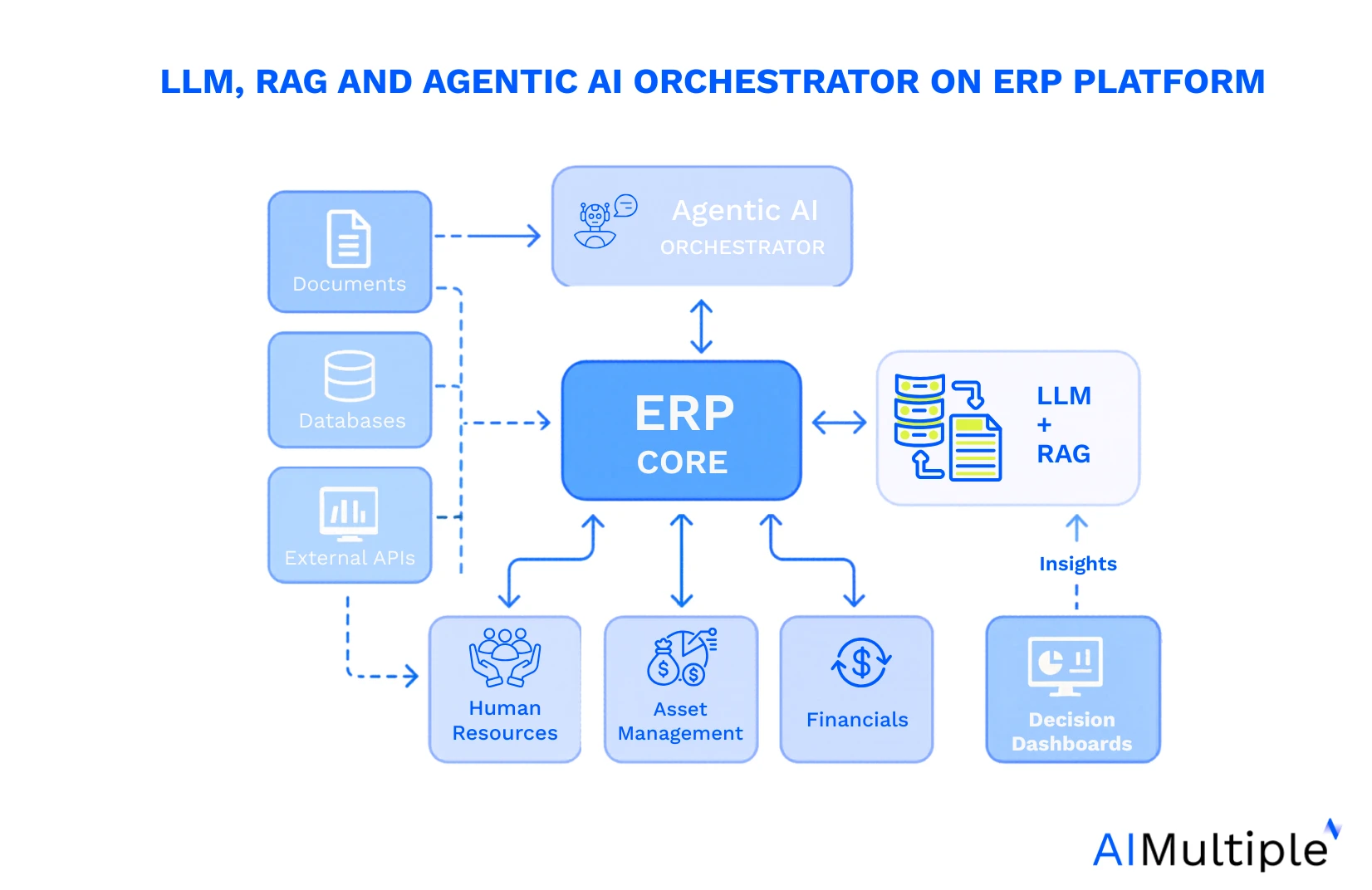
Since LLMs lack direct access to enterprise data, ERPs use retrieval-augmented generation (RAG) to ground AI responses in organizational records. This involves combining artificial intelligence with real-time data retrieval from ERP databases, document repositories, or knowledge graphs.
For example, SAP’s Knowledge Graph links customers, invoices, and supply chain data so that AI agents can reason across relationships. Oracle applies a similar method through secure RAG pipelines on OCI, ensuring accuracy without exposing sensitive data.
APIs, tool use, and Robotic Process Automation (RPA)
For AI to go beyond advice and take action, it must interact with ERP functions through APIs and robotic process automation. APIs allow AI to create transactions such as purchase orders, update supplier records, or schedule jobs.
Where legacy modules lack API access, RPA bridges the gap by mimicking user interactions in the interface. This combination empowers AI agents to act autonomously, handling both modern integrations and legacy systems seamlessly.
Multi-agent orchestration
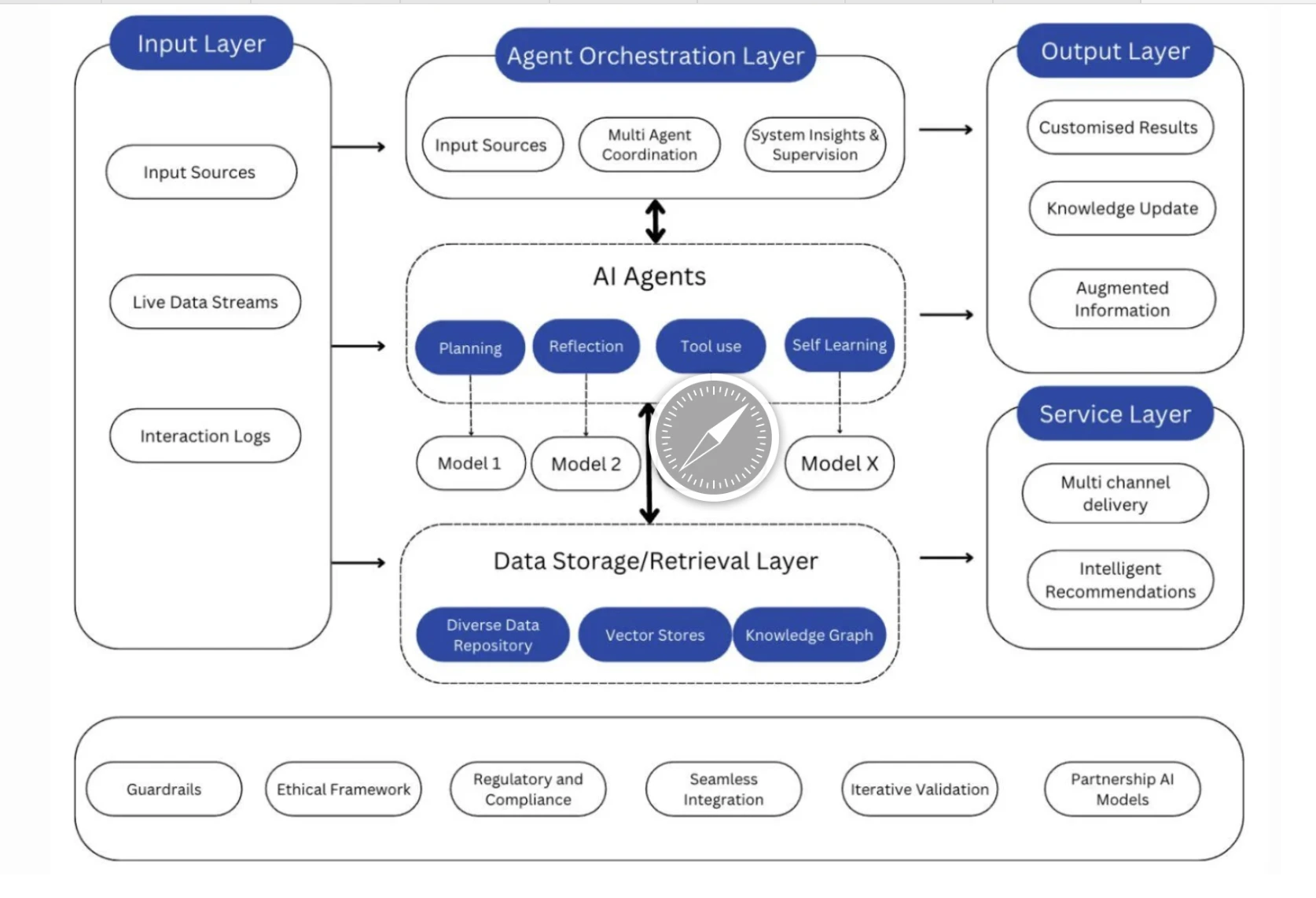
Many Agentic AI systems rely on multiple specialized agents collaborating to complete workflows. Agentic orchestration frameworks manage delegation, communication, and escalation among agents.
For example, in supply chain management, one agent detects a predicted shortage, another creates a procurement order, and a third updates production schedules. These platforms provide frameworks for coordinating these agents so business processes remain cohesive and transparent, even when distributed across departments.
Multi-agent systems increasingly operate beyond internal environments, making web execution and interoperability essential:
- Explore browser MCP benchmarks to identify MCP server infrastructures that support web-enabled agents.
- Compare remote browsers to evaluate how agents interact with the open web.
Distributed agent architectures
Recent architectures extend multi-agent orchestration using event-driven microservices. Approaches such as microagentic stacking decompose agents into independent services responsible for LLM inference, tool execution, and routing.
These services communicate asynchronously through event-streaming systems such as Apache Kafka, allowing agents to be deployed, modified, or scaled independently.
AI studios and lifecycle management
ERP vendors provide low-code development studios to help customers design, test, and monitor their own AI agents. These tools allow business users to define goals in natural language and deploy agents into production.
These platforms include compliance checks, testing sandboxes, and usage monitoring, ensuring agents behave predictably. They also support cost control by tracking how resources like LLM tokens are consumed, which is essential for scaling agentic AI.
Security testing
As autonomous AI agents gain access to enterprise systems and user credentials, organizations increasingly require testing frameworks to evaluate safe behavior. For example, 1Password’s Security Comprehension Awareness Measure (SCAM) assesses whether agents can safely perform common workplace tasks(e.g. opening emails, clicking links or completing login forms) without falling for phishing attempts or exposing sensitive data.6
Cloud infrastructure
Behind these tools lies the backbone of cloud computing, which provides the scale and reliability needed for AI to run within ERP systems. Vendors ensure that sensitive ERP data is never shared outside the organization, maintaining trust while still enabling advanced analytics.
Role-based access extends into the AI layer, guaranteeing that AI actions remain aligned with corporate security policies. This ensures that agentic AI systems meet compliance and security requirements for mission-critical operations.
Use cases for Agentic AI in ERP
Supply chain and operations
Agentic AI revolutionizes supply chain management by bringing adaptive intelligence to workflows. AI agents constantly monitor stock, supplier reliability, and logistics. They then act autonomously to prevent disruptions by rerouting shipments, updating customers, and adjusting production schedules in real time.
AI agents can also predict demand to optimize replenishment and rescheduling with minimal human oversight, resulting in a more resilient and proactive supply chain.
Finance and accounting
In finance, AI agents automate reconciliation, reporting, and compliance. They can automatically extract and match invoice data, post entries, and flag anomalies. They also address manual reconciliation work that persists in many organizations despite ERP adoption, where finance teams still export transactions into spreadsheets and use functions such as VLOOKUP to align figures across files.
By automating these spreadsheet-based tasks, agents help reduce the manual effort involved in reconciling data across ERP, CRM, and billing systems. For month-end processes, agents reconcile ledgers and generate explanations, providing clear context.
They also accelerate cash flow by following up with customers on overdue payments. This streamlines processes, leading to faster and more accurate reporting.
Human resources
Agentic AI automates both administrative and strategic HR tasks. Recruiting agents can shortlist candidates and schedule interviews. For current employees, AI agents monitor engagement and performance to suggest tailored development opportunities, which is valuable for retention.
Routine tasks like onboarding paperwork, leave requests, and benefits inquiries are also automated, allowing HR professionals to focus on strategic initiatives.
Procurement
Procurement is ideal for Agentic AI because of its repetitive nature. AI agents automate vendor communication by sending reminders and updating records.
They also manage sourcing by analyzing supplier data and drafting RFPs. This ensures compliance and prevents delays. By integrating with various systems, AI can execute complex tasks, making procurement faster and more consistent.
Customer service and sales
Agentic AI enhances customer-facing operations. AI-driven service agents can answer questions 24/7 using real-time data. Sales assistants can draft proposals, generate personalized offers, and nurture leads.
These systems use conversational AI to engage directly with customers and prospects, improving satisfaction and sales productivity by offloading repetitive communication from human staff.
Data and analytics
Agentic AI adds significant value to data management. AI agents ensure data quality by identifying and automatically cleaning duplicates, inconsistencies, and missing information.
For analytics, managers can query data in natural language and receive narrative explanations and recommended actions. By using predictive modeling, agents can highlight trends and anomalies, turning the ERP from a passive tool into an intelligent advisor.
Agentic AI ERP market interest and adoption
Specialized AI agents reduce manual ERP implementation effort by at least 50%, cutting total project duration in half.7 Yet, market familiarity varies widely by vendor. Here is the 12-month search market share of leading ERP solutions that integrates AI agents:
 Add as preferred source
Further reading
Explore more on how AI agents used in other systems, solutions and industries:
Cite this research
Pick the format that matches where you're publishing. Pasting the link version into your CMS preserves the backlink.
@misc{simsek2026,
  author = {Şimşek, Hazal},
  title  = {{Top 10 Agentic AI ERP Systems & 6 Solutions}},
  year   = {2026},
  month  = aug,
  howpublished    = {\url{https://aimultiple.com/agentic-ai-erp}},
  note   = {AIMultiple. Retrieved August 4, 2026}
}Results and timestamps of 0 data points. Download the summary data shown in this article's charts and tables as a ZIP file containing 0 CSV files.
Want the granular data behind it? Join Premium
Changelog
3 updatesExpanded the Infor CloudSuite Industry entry with its Velocity Suite, GenAI assistant, industry AI agents, process mining, and data governance layers.
Added a market share chart of leading agentic AI ERP tools to the introduction.
Removed data analysis, prediction, and autonomous actions from the definition of Agentic AI ERP.
Reference Links





Be the first to comment
Your email address will not be published. All fields are required. Comments are left in their original language.