

Playwright vs Selenium: Differences & When to Use Each 2026

Playwright is a browser automation framework released by Microsoft in 2020. Selenium is an open-source project, active since 2004, that supports a wide range of browsers and languages.
Playwright vs Selenium comparison table
Aspect | Playwright | Selenium |
|---|---|---|
Initial release | 2020 | 2004 |
Maintainer | Microsoft | SeleniumHQ / open-source community |
Language support | JavaScript/TypeScript, Python, Java, .NET (C#) | Java, Python, C#, JavaScript (Node.js), Ruby |
Browser support | Chromium (Chrome/Edge), Firefox (Gecko), WebKit (Safari) | Chrome, Firefox, Safari, Edge (no IE support) |
Latest version | 1.52.0 (May 2026) | 4.44.0 (May 2026) |
Key differences explained
Architecture and performance
- Playwright communicates with browsers directly via the Chrome DevTools Protocol (CDP), giving it fine-grained, low-latency control over browser internals.
- Selenium uses the W3C WebDriver protocol, which adds a communication layer between the test script and the browser. While this has historically made Selenium slightly slower, ongoing WebDriver BiDi (bidirectional) enhancements, actively shipped across the 2025 and 2026 releases, are closing this gap considerably.
Language support
- Playwright officially supports JavaScript/TypeScript, Python, Java, and .NET (C#). There is no official support for Ruby or PHP.
- Selenium officially supports Java, Python, C#, JavaScript (Node.js), and Ruby, giving it a broader language footprint. Community bindings for PHP and other languages exist but are not officially maintained by SeleniumHQ.
Ease of setup
- Recent releases have enhanced debugging and observability with APIs like and an improved HTML test report with timeline views. Playwright also includes an experimental AI-assisted test-generation tool, Playwright codegen.
- Selenium historically required users to manage browser driver executables (e.g., ChromeDriver for Chrome). Selenium 4 introduced Selenium Manager, which automatically downloads and manages the correct driver version for your browser.
Community and ecosystem
Playwright offers fine-grained control for scraping dynamic sources, including single-page applications that load content through AJAX, and supports request interception. Selenium is also used for data collection, runs headless, and scales across machines through Selenium Grid. For large-scale scraping, both are often paired with proxy rotation and CAPTCHA handling.
Browser support
- Playwright supports three browser engines: Chromium (covering Chrome, Edge, and Brave), Firefox (Gecko), and WebKit (Safari’s engine). This covers the vast majority of the modern web. It does not support Internet Explorer in any form.
- Selenium supports all major modern browsers: Chrome, Firefox, Safari, and Edge. Internet Explorer is no longer supported. Microsoft retired IE in June 2022, and Selenium dropped direct IE support accordingly. Edge’s IE compatibility mode is the remaining path for legacy IE scenarios.
Advantages and disadvantages
Playwright advantages:
- Supports modern web features: network interception, WebSockets, shadow DOM, isolated browser contexts.
- Mobile device emulation built in (100+ device profiles).
- Built-in test runner with parallelization, retries, and rich HTML reporting.
- One script targets Chromium, Firefox, and WebKit.
Playwright disadvantages:
- No official Ruby or PHP support.
- Cannot automate native mobile apps; real-device support is experimental.
Selenium advantages:
- Selenium continues to release frequent updates (latest: 4.41), while Playwright’s rapid growth is reflected in strong adoption trends on GitHub and npm.
- Supports a wide range of programming languages, allowing users to write test scripts in their preferred language.
- Recent updates (Selenium Grid 4.41+) introduce features such as event-driven test artifacts (e.g., video recordings) and a Session Event API for better observability.
Selenium disadvantages:
- Selenium scripts may run more slowly due to the additional communication layer required by WebDriver compared to Playwright.
- Managing browser drivers (though Selenium Manager helps) and configuring test frameworks.
What is Playwright?
Playwright is an open-source framework for automating web browsers. It is open-sourced by Microsoft (initially released in 2020) and primarily used for cross-browser end-to-end testing of web applications.
Key features:
- Drives all three engines with the same code, enabling cross-browser testing without separate setups.
- The Playwright API is available in multiple programming languages, including JavaScript/TypeScript, Python, Java, and C#/.NET.
- Each test can run in a separate browser context and doesn’t share state (cookies or cache) with other tests.
- It also includes mobile device emulation. You can simulate browsers on devices like iPhones and Androids.
Choose Playwright if
- The project is a modern, JavaScript-heavy web app (React, Angular, Vue).
- The team works primarily in JavaScript/TypeScript or Python.
- Built-in parallelization, auto-waiting, and trace-based debugging are priorities.
 Add as preferred source
What is Selenium?
Selenium is an open-source framework for automating web browsers. Instead of manual testing, developers and QA engineers use Selenium to automate web browser actions (clicking links, filling forms, navigating pages, etc.). The Selenium project includes Selenium WebDriver, Selenium Grid, and Selenium IDE.
Key features:
- Supports multiple programming languages for writing test scripts. Official language bindings include Java, Python, JavaScript (Node.js), C#, Ruby, and other languages such as PHP or Perl.
- Works with all modern browsers, as well as legacy Internet Explorer.
- Selenium WebDriver (Core API) allows programmatic control of web browsers, enabling navigation to pages, finding HTML elements, clicking buttons, and entering text.
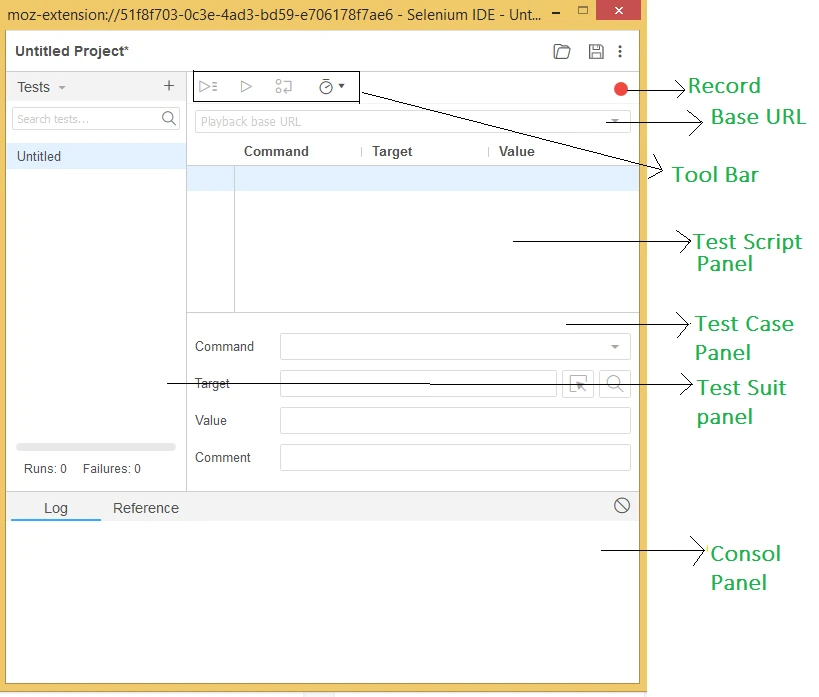
- Selenium IDE (Record & Playback)-Selenium IDE is a browser extension (available for Firefox and Chrome). It enables you to create test scripts without programming, as you click and type in the browser, Selenium IDE records those steps.
Choose Selenium if
- An existing Selenium suite and infrastructure are already in place.
- Tests must run in Ruby, or across legacy browser configurations.
- Native mobile app automation is required (through Appium).
FAQs
Yes. Selenium releases regularly (e.g., 4.44.0 in May 2026) and continues to add WebDriver BiDi support and Grid improvements.
Selenium automates mobile browsers and, through Appium, native iOS and Android apps. Playwright only emulates mobile browsers and viewports.
Playwright covers Chromium, Firefox, and WebKit with one API. Selenium covers a broader set, including Safari and legacy environments.
Cite this research
Pick the format that matches where you're publishing. Pasting the link version into your CMS preserves the backlink.
@misc{karatas2026,
  author = {Karatas, Gulbahar},
  title  = {{Playwright vs Selenium: Differences & When to Use Each 2026}},
  year   = {2026},
  month  = jun,
  howpublished    = {\url{https://aimultiple.com/playwright-vs-selenium}},
  note   = {AIMultiple. Retrieved June 10, 2026}
}


Be the first to comment
Your email address will not be published. All fields are required. Comments are left in their original language.