

LLM Fine-Tuning Guide for Enterprises

Follow the links for the specific solutions to your LLM output challenges. If your LLM:
- Doesn’t have access to the facts needed in your domain, either train a new LLM, switch to a domain-specific one, or use RAG to retrieve facts
- Has relevant facts but needs to answer in a different style and tone, follow certain output formats, or use certain tools, then:
- First, leverage prompt engineering or prompt chaining to improve results
- If they don’t work, LLM fine-tuning is the right approach. You can use your LLM provider’s service or fine tune open source LLMs on-prem.
The widespread adoption of large language models (LLMs) has improved our ability to process human language. However, their generic training often results in suboptimal performance for specific tasks.
To overcome this limitation, fine-tuning methods are employed to tailor LLMs to the unique requirements of different application areas.
What is LLM fine-tuning?
Fine-tuning a large language model adjusts a pre-trained model to perform specific tasks or to cater to a particular domain more effectively. The process involves training the model further on a smaller, targeted dataset that is relevant to the desired task or subject matter.
The original large language model is pre-trained on vast amounts of diverse text data, which helps it to learn general language understanding, grammar, and context. Fine-tuning leverages this general knowledge and refines the model to achieve better performance and understanding in a specific domain.
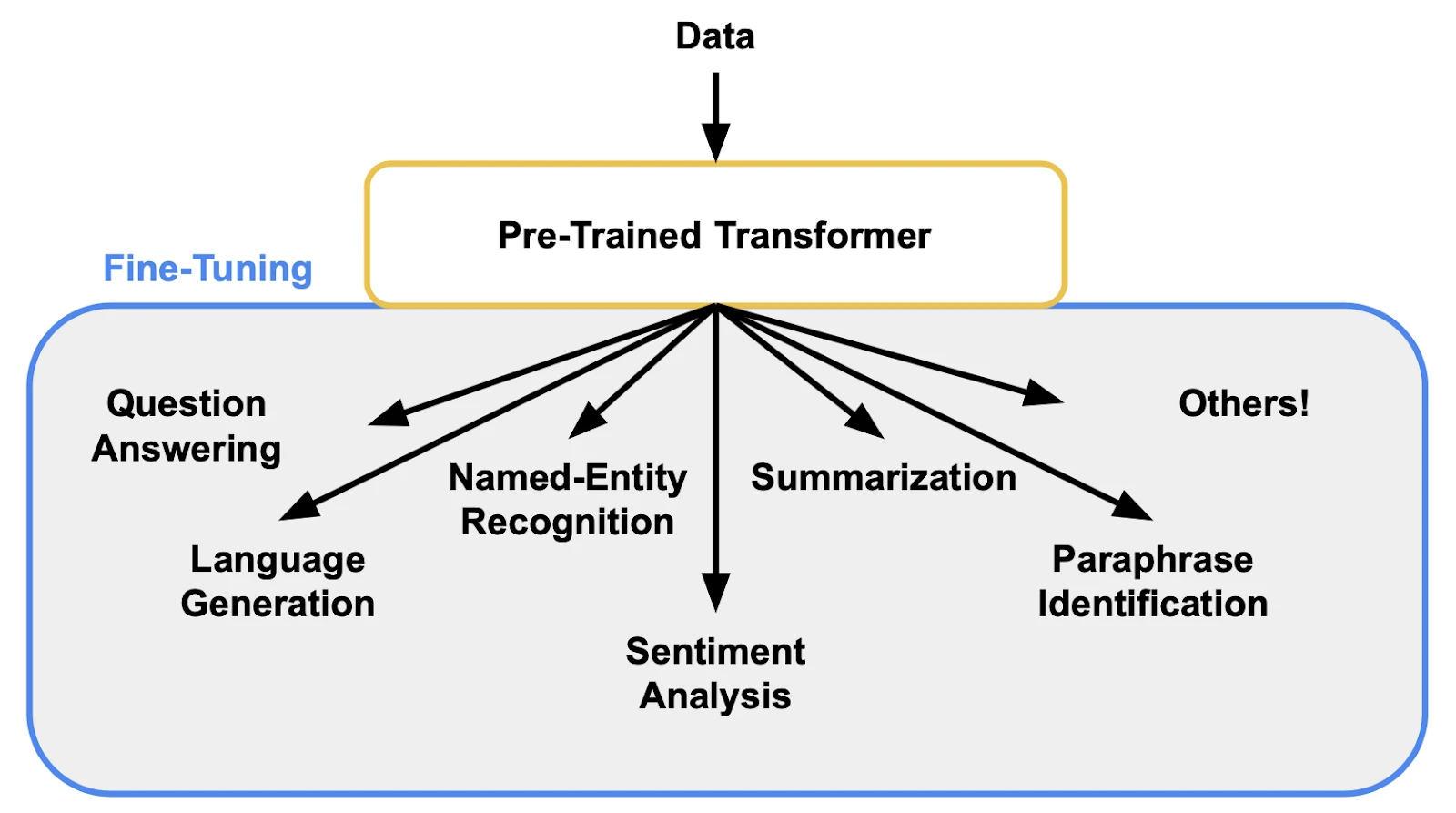
Figure 2: Capabilities of an LLM after fine-tuning.1
For example, a large language model might be fine-tuned for tasks like sentiment analysis in product reviews, predicting stock prices based on financial news, or identifying symptoms of diseases in medical texts.
This process customizes the model’s behavior, allowing it to generate more accurate and contextually relevant outputs for tasks such as:
- Sentiment analysis.
- Chatbot development.
- Question answering.
How to fine-tune LLMs
1. Preparing the dataset
Since LLMs are pre-trained on a fixed dataset, they are not aware of real-time events. To keep these models up-to-date and improve their performance on specific, evolving topics, businesses use real-time web data. This data is critical for two main reasons: it helps with domain alignment and reduces hallucination.
1.1. Domain alignment and relevance:
Using web-sourced data allows companies to fine-tune LLMs on the most current and relevant information for their industry. For example, a legal tech company could use web crawlers to collect recent court rulings and legal blogs.
This domain-specific data ensures the fine-tuned model understands up-to-date terminology and industry context, which is often missing from static, publicly available datasets. This process is key to making a general-purpose pre-trained model an expert in a specific field.
1.2. Reducing hallucination:
Hallucination occurs when an LLM generates plausible but factually incorrect information. By fine-tuning an LLM with high-quality, real-world data from the web, you provide it with a reliable source of truth.
This makes the model less likely to invent information during inference and helps it generate more accurate and trustworthy responses.
Businesses either use in-house web scraping tools or third-party providers to gather data from websites. This collected training data is then prepared and used to fine-tune the LLM.
By continuously incorporating fresh web data, businesses can ensure their fine-tuned models remain relevant and accurate, providing a significant competitive advantage.
2. Choosing a foundation model and a fine-tuning method
Selecting the appropriate base model and fine-tuning method depends on the specific task and data available. There are various LLM providers to choose from, including Alphabet and Meta, each with its own strengths and weaknesses. The fine-tuning method can also vary based on the task and data, such as transfer learning, sequential fine-tuning, or task-specific fine-tuning.
While choosing the base model, you should consider:
- Whether the technical infrastructure is suitable for the computing power required for fine-tuning
- Whether the model fits your specific task
- Input and output size of the model
- Your dataset size
3. Fine-tuning
Fine-tuning adapts pretrained LLMs to specific tasks or organizational needs, whether through managed services offered by model providers or by directly modifying open-source models using task-specific data and MLOps tooling.
Fine-tuning as a service for closed-source models
Major LLM providers offer managed fine-tuning, though the landscape shifted in 2026. Google (Gemini via Vertex AI) and Anthropic (Claude via Amazon Bedrock) remain the primary closed-source options for new fine-tuning workloads. OpenAI, which historically offered fine-tuning on GPT models, is winding down its fine-tuning platform, meaning that it is closed to new users, and existing users have a limited window to create new training jobs.2
For example, Vertex AI supports multiple model tuning approaches, allowing developers flexibility in how they customize model behavior beyond basic fine-tuning:
- Supervised fine-tuning: Train a model with labeled examples so it learns to produce desired outputs for specific tasks.
- Preference tuning: A distinct tuning approach that builds on supervised fine-tuning using human preference data to teach models to generate more preferred outputs based on pairwise feedback rather than explicit labels.
- Tuning checkpoints & continuous tuning: Tools to save progress or extend an existing tuned model with more data or training passes.3
Pricing: Managed fine-tuning is typically priced per training token, with inference priced separately at a premium over the base model.
Fine-tuning open source models
Since the weights of the model are available in open source models, enterprises can fine-tune open source models on-prem without exposing their datasets to LLM providers.
Steps to fine-tune open source models include:
- Loading the pre-trained model: Once the LLM and fine-tuning method have been selected, the pre-trained model needs to be loaded into memory.
- This step initializes the model’s weights based on the pre-trained values, which speeds up the fine-tuning process and ensures that the model has learned general language understanding.
- Fine-tuning involves training the pre-trained LLM on the task-specific dataset. The training process involves optimizing the model’s weights and parameters to minimize the loss function and improve its performance on the task.
The fine-tuning process typically involves iterative rounds of training. To optimize performance, developers must adjust configurations like learning rate or batch size. Tools like Weights & Biases (Sweeps) automate this hyperparameter search, visualizing how different variables impact model convergence so teams can select the best configuration without manual trial-and-error.
For example, Llama models can be fine-tuned economically with Parameter Efficient Fine Tuning (PEFT) approaches.4
Enterprises can leverage their MLOps or LLMOps platforms to fine-tune models.
For example, using a platform that acts as a system of record (like Weights & Biases) allows enterprises to track every training run, log system metrics (GPU usage), and version the resulting model checkpoints in a central registry. This ensures that even when training open-source models on-premise, the workflow remains reproducible and collaborative.
Fine-tuning open weights models
Open-weight models are publicly available for users to download and run them locally (or on their cloud infrastructure) without relying on an API.
They differ from open-source models because open-source typically implies the full training code, data details, and licensing terms allow modification and redistribution. Open-weight models may release the weights but keep parts of the training pipeline, dataset, or usage rights restricted.
Because the weights are accessible, open-weight models can be fine-tuned directly by continuing training on custom datasets (e.g., supervised fine-tuning, LoRA/PEFT methods), allowing organizations to customize behavior while keeping data and deployment fully under their control.
For example, Liquid AI’s LFM2.5 family serves as a set of open-weight foundation models. They are released for on-device and edge AI deployments, with checkpoints available on Hugging Face and the Liquid AI LEAP platform.
The series includes variants such as LFM2.5-1.2B-Base (a pretrained base model) and LFM2.5-1.2B-Instruct, which has received supervised fine-tuning and reinforcement learning in its post-training pipeline.
As the weights are publicly accessible, developers can take the base checkpoint and perform their own fine-tuning: training the model on proprietary datasets, adapting it to language-specific or domain-specific tasks, or experimenting with other training methods (such as supervised fine-tuning with adapters or preference alignment).
LFM2.5 is highly suitable for task-specific customization on local hardware or edge devices, where controlling the training and inference workflow is important.5
Another example is Thinking Machines Lab’s Tinker, which is an API designed to make fine-tuning open-weight language models more accessible for researchers and developers.
Tinker allows users to adapt a wide range of open-weight models from smaller architectures to large mixture-of-experts models like Qwen-235B-A22B. Users can apply LoRA-based fine-tuning or other post-training methods to tailor models for specific tasks, whether through supervised learning or reinforcement-style approaches.
After tuning, developers can download the resulting checkpoints and use them independently, allowing control over both the model and the customized behavior.6
4. Evaluating fine-tuned models
Once the fine-tuning process is complete, the model’s performance needs to be evaluated on the test set. This step helps to ensure that the model is generalizing well to new data and is performing well on the specific task. Common metrics used for evaluation include accuracy, precision, recall, and F1 score.
However, for generative tasks, traditional metrics are often insufficient. Modern evaluation requires tracing the model’s reasoning and verifying the quality of the generated text. Tools like W&B Weave enable this by allowing developers to trace inputs and outputs, debug prompts, and run systematic evaluations (using an LLM-as-a-judge) to score the fine-tuned model on nuances like tone, faithfulness, and safety.
5. Deployment
Once the fine-tuned model is evaluated, it can be deployed to production environments. The deployment process may involve integrating the model into a larger system, setting up the necessary infrastructure, and monitoring the model’s performance in real-world scenarios.
What are the methods used in the fine-tuning process of LLMs?
Fine-tuning methods
Fine-tuning is a process that involves adapting a pre-trained model to a specific task or domain by training it further on a smaller, task-specific dataset. Several fine-tuning methods can be used to adjust a pre-trained model’s weights and parameters to improve its performance on the target task:
- Transfer learning involves reusing a pre-trained model’s weights and architecture for a new task or domain. The pre-trained model is usually trained on a large, general dataset, and the transfer learning approach allows for efficient and effective adaptation to specific tasks or domains.
- Sequential fine-tuning: The pre-trained model is fine-tuned on multiple related tasks or domains sequentially. This allows the model to learn more nuanced and complex language patterns across different tasks, leading to better generalization and performance.
- Task-specific fine-tuning: The pre-trained model is fine-tuned on a specific task or domain using a task-specific dataset. This method requires more data and time than transfer learning, but can result in higher performance on the specific task.
- Multi-task learning: The pre-trained model is fine-tuned on multiple tasks simultaneously. This approach enables the model to learn and leverage the shared representations across different tasks, leading to better generalization and performance.
- Adapter training involves training lightweight modules that are plugged into the pre-trained model, allowing for fine-tuning on a specific task without affecting the original model’s performance on other tasks.
Reinforcement Fine-Tuning (RFT)
Reinforcement Fine-Tuning (RFT) is a model customization technique that adapts a pretrained language model using reward-driven feedback rather than traditional labeled training examples.
Instead of training on fixed/correct outputs, RFT uses a reward signal or grader function to evaluate model responses and iteratively optimize the model to maximize these rewards.
This approach is rooted in reinforcement learning principles, where the model behaves like an agent that learns which kinds of outputs lead to higher reward scores and adjusts its parameters accordingly. Unlike supervised fine-tuning, RFT excels in scenarios where precise, correct outputs are hard to define, but quality can be judged or scored.
For example, Amazon Bedrock’s reinforcement fine-tuning capability automates this process for developers to customize models based on feedback signals (reward functions).
In Bedrock, users define what makes a response accurate through rule-based or AI-based reward functions, and the model is trained to maximize these rewards.7
Another example is OpenAI’s RFT. It allows developers adapt reasoning models by defining a programmable grader that scores candidate responses. During training, the model is updated so that high-scoring outputs become more likely in future generations.
This makes RFT particularly useful for tasks where output quality is subjective or best judged by scoring rather than exact reference answers.8
Few-shot learning method
Few-shot learning (FSL) involves improving model performance without changing model weights. In this approach, the model is provided with a limited number of examples (i.e., “few shots”) from the new task, and it uses this information to adapt and perform better on that task. It can be considered as a
- Lower-cost alternative to fine-tuning. The cost is the input tokens for a few examples.
- Meta-learning problem where the model learns how to learn to solve the given problem.
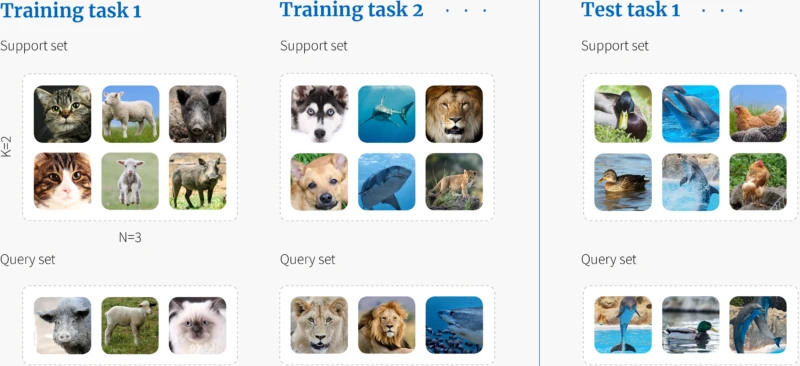
Figure 3: Few-shot learning scenario where the model learns to classify a set of images from the tasks it was trained on.9
This is particularly useful when there’s not enough data available for traditional supervised learning. In the context of LLMs, fine-tuning with a small dataset related to the new task is an example of few-shot learning.
Differences between few-shot learning & fine-tuning
The primary difference is the amount of task-specific data required for the model to adapt to a new task or domain. Fine-tuning methods require a moderate amount of task-specific data to optimize the model’s performance, while few-shot learning methods can adapt models to new tasks or domains with a few labeled examples.
Fine-tuning examples
Fine-tuning achieved significant performance increases in finance
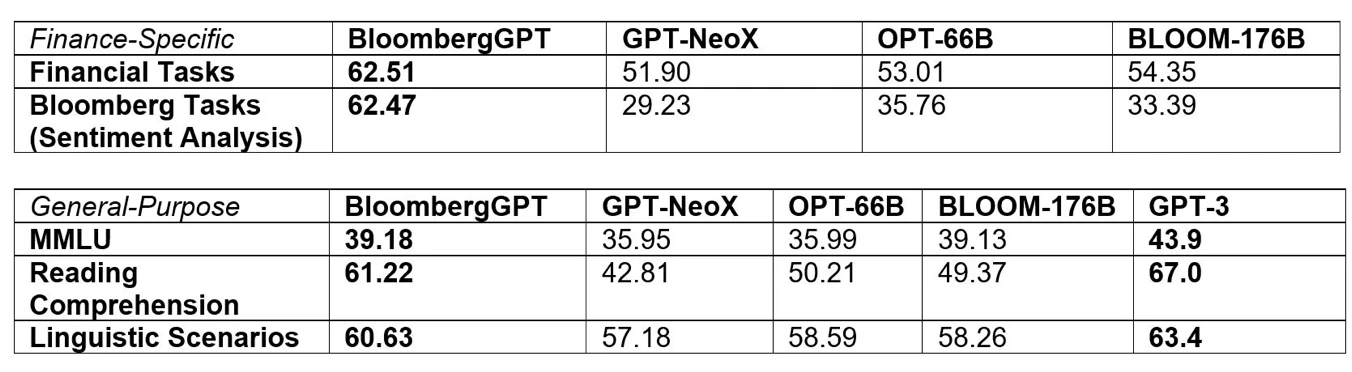
Bloomberg has developed BloombergGPT, a large-scale language model tailored for the financial industry. This model focuses on financial natural language processing tasks such as sentiment analysis, named entity recognition, and news classification.
The BloombergGPT was created using a combination of finance and general-purpose datasets, and led to high scores in benchmark tests (Figure 4).
Figure 4: Image showing how BloombergGPT performs across two broad categories of NLP tasks: finance-specific and general-purpose.10
Why or when does your business need a fine-tuned LLM?
Businesses may need fine-tuned large language models for several reasons, depending on their specific requirements, industry, and objectives. Here are some common reasons:
1. Customization
Businesses often have unique needs and goals that a generic language model may not address. Fine-tuning enables them to tailor the model’s behavior to suit their specific objectives, such as generating personalized marketing content or understanding user-generated content on their platform.
Discover how fine-tuning LLMs enables the creation of customized products and marketing strategies, ultimately enhancing the generative AI experience in retail, marketing, and insurance.
2. Data sensitivity and compliance
Businesses handling sensitive data or operating under strict regulatory environments might need to fine-tune the model to ensure it respects privacy requirements, adheres to content guidelines, and generates appropriate responses that comply with industry regulations.
3. Domain-specific language
Many industries use jargon, technical terms, and specialized vocabulary that may not be well-represented in the general training data of a large language model. Fine-tuning the model on domain-specific data allows it to understand and generate accurate responses within the context of the business’s industry.
4. Enhanced performance
Fine-tuning improves the model’s performance on specific tasks or applications relevant to the business, such as:
- Sentiment analysis
- Document classification
- Information extraction
This can lead to better decision-making, higher efficiency, and improved outcomes.
5. Enabling agentic AI capabilities
Fine-tuning is critical for developing agentic AI systems, which are designed to act autonomously, make decisions, and interact with external tools or environments to achieve specific goals.
By finetuning an LLM, businesses can enhance their ability to perform function calling, enabling the model to select and execute appropriate tools (e.g., APIs, databases) with accurate parameters.
For example, a finetuned LLM can power an agentic AI that autonomously manages customer inquiries by integrating with a CRM system or retrieves real-time data via web APIs. This customization ensures the model understands domain-specific contexts and tool interactions, making agentic AI more effective and reliable in enterprise applications.
6. Improved user experience
A fine-tuned model can offer a better user experience by generating more accurate, relevant, and context-aware responses, leading to increased customer satisfaction, in applications like:
- Chatbots
- Virtual assistants
- Customer support systems
 Add as preferred source
What is a large language model (LLM)?
A large language model is an advanced artificial intelligence (AI) system, more specifically an enterprise generative AI model, designed to process, understand, and generate human-like text based on massive amounts of data. These models are typically built using deep learningtechniques, such as neural networks. They are trained on extensive datasets that include text from a broad range, such as books and websites, for natural language processing.
One of the key aspects of a large language model is its ability to understand context and generate coherent, relevant responses based on the input provided. The size of the model, in terms of the number of parameters and layers, allows it to capture intricate relationships and patterns within the text. This enables it to perform various tasks, such as:
- Answering questions
- Text generation
- Summarizing text
- Translation
- Creative writing
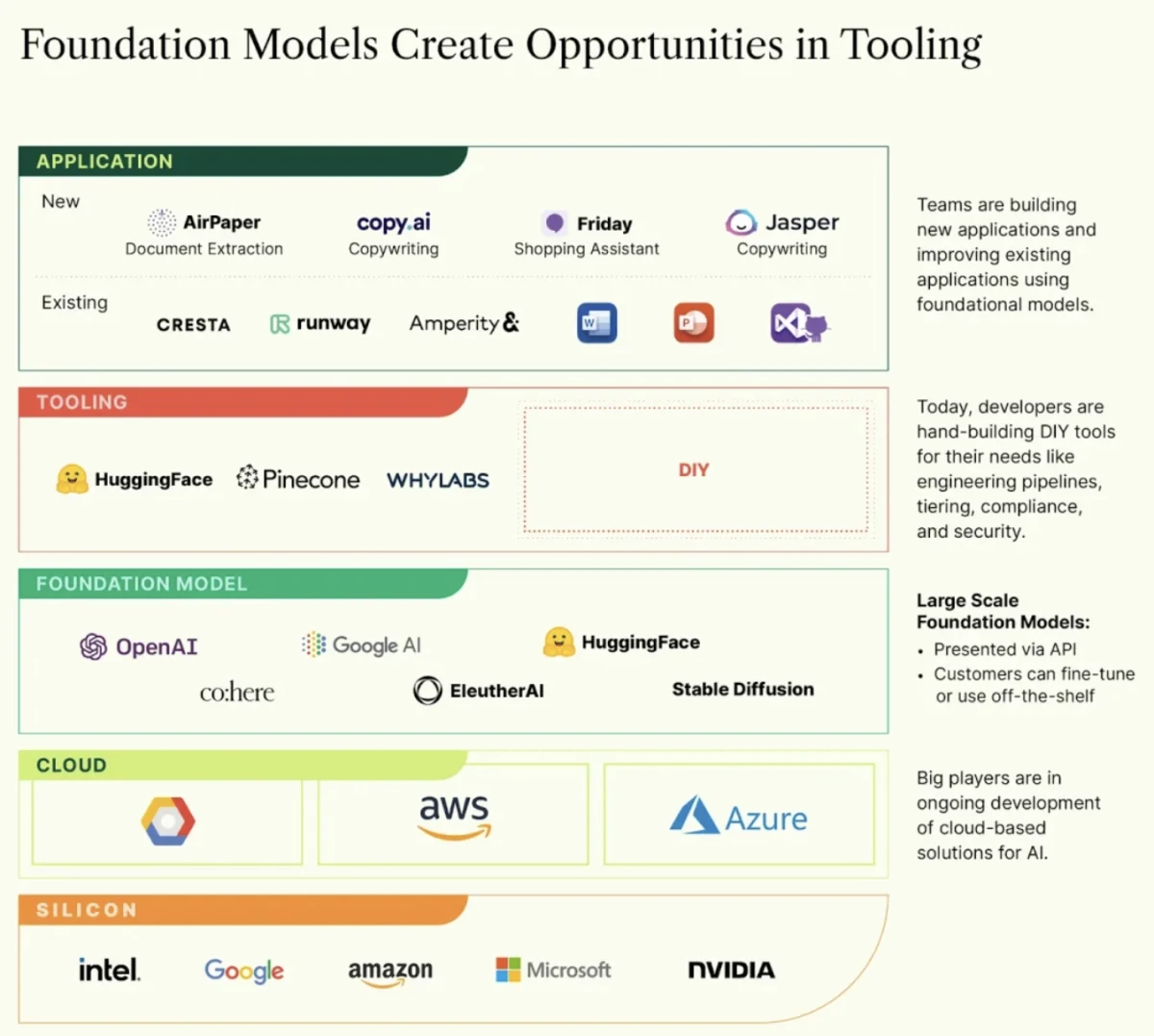
Foundation models, like large language models, are a core component of AI research and applications. They provide a basis for building more specialized, fine-tuned models for specific tasks or domains.
Figure 5: Examples of foundation models.11
Further reading
- While fine-tuning improves the efficacy of large language models, it’s essential to address the Risks of Generative AI.
- Fine-tuning large language models comes with legal considerations. Explore the legal landscape surrounding these advanced AI systems in gen AI copyright.
Cite this research
Pick the format that matches where you're publishing. Pasting the link version into your CMS preserves the backlink.
@misc{dilmegani2026,
  author = {Dilmegani, Cem},
  title  = {{LLM Fine-Tuning Guide for Enterprises}},
  year   = {2026},
  month  = jun,
  howpublished    = {\url{https://aimultiple.com/llm-fine-tuning}},
  note   = {AIMultiple. Retrieved June 22, 2026}
}
Reference Links
Cem's work has been cited by leading global publications including Business Insider, Forbes, Washington Post, global firms like Deloitte, HPE and NGOs like World Economic Forum and supranational organizations like European Commission.
Throughout his career, Cem served as a tech consultant, tech buyer and tech entrepreneur. He advised enterprises on their technology decisions at McKinsey & Company and Altman Solon for more than a decade. He also published a McKinsey report on digitalization.
He led technology strategy and procurement of a telco while reporting to the CEO. He has also led commercial growth of deep tech company Hypatos that reached a 7 digit annual recurring revenue and a 9 digit valuation from 0 within 2 years. Cem's work in Hypatos was covered by leading technology publications like TechCrunch and Business Insider.
Cem regularly speaks at international technology conferences. He graduated from Bogazici University as a computer engineer and holds an MBA from Columbia Business School.




Be the first to comment
Your email address will not be published. All fields are required. Comments are left in their original language.