


Cloud LLM vs Local LLMs: Examples & Benefits

Cloud LLMs, powered by advanced models like GPT-5.5 and Claude Opus 4.7, offer scalability and accessibility. Conversely, Local LLMs, driven by open-source models such as Llama 4, DeepSeek V4, and Qwen3.6-Plus, ensure stronger privacy and customization.
Explore what are cloud LLMs, strengths and weaknesses, most common case studies with real-life examples, and how they differ from local LLMs.
What is the Cloud Large Language Model (LLM)?
Cloud LLMs (cloud-based large language models) are hosted and run on cloud infrastructure instead of being installed and managed on a company’s local servers. These models, such as the GPT-5 family, Google’s Gemini 3 Pro/Flash series, and Anthropic’s Claude Opus 4.7 and Claude Sonnet 4.6, are AI systems with advanced language understanding and generation capabilities.
Cloud LLMs are:
- Accessed over the internet via APIs.
- Scalable and managed by the provider.
Instead of buying and maintaining expensive hardware (GPUs, servers, storage), businesses connect to these models through the cloud and use them on demand.
How cloud LLMs work
- The LLM runs on remote cloud servers.
- A business sends text/data to the model via an API.
- The model processes the request in the cloud.
- The response is returned over the internet.
Cloud LLM providers often use a pay-as-you-go pricing model based on usage, which can be more cost-effective for many applications. However, costs can escalate with increased usage.
They are most suitable for:
- Teams with low tech expertise: Cloud LLMs are often accessible through user-friendly interfaces and APIs, requiring less technical know-how to implement and utilize effectively.
- Teams with limited tech budget: Crating or training an LLM is a costly endeavor. Cloud LLMs eliminate the need for significant upfront hardware and software investments. Users can pay for cloud LLM services on a subscription or usage basis, which may be more budget-friendly.
Popular models
OpenAI GPT-5.5
OpenAI introduced GPT-5.5 as its most advanced model for agentic work, coding, research, data analysis, document creation, spreadsheet tasks, computer use, and multi-step workflows.
Key improvements include:
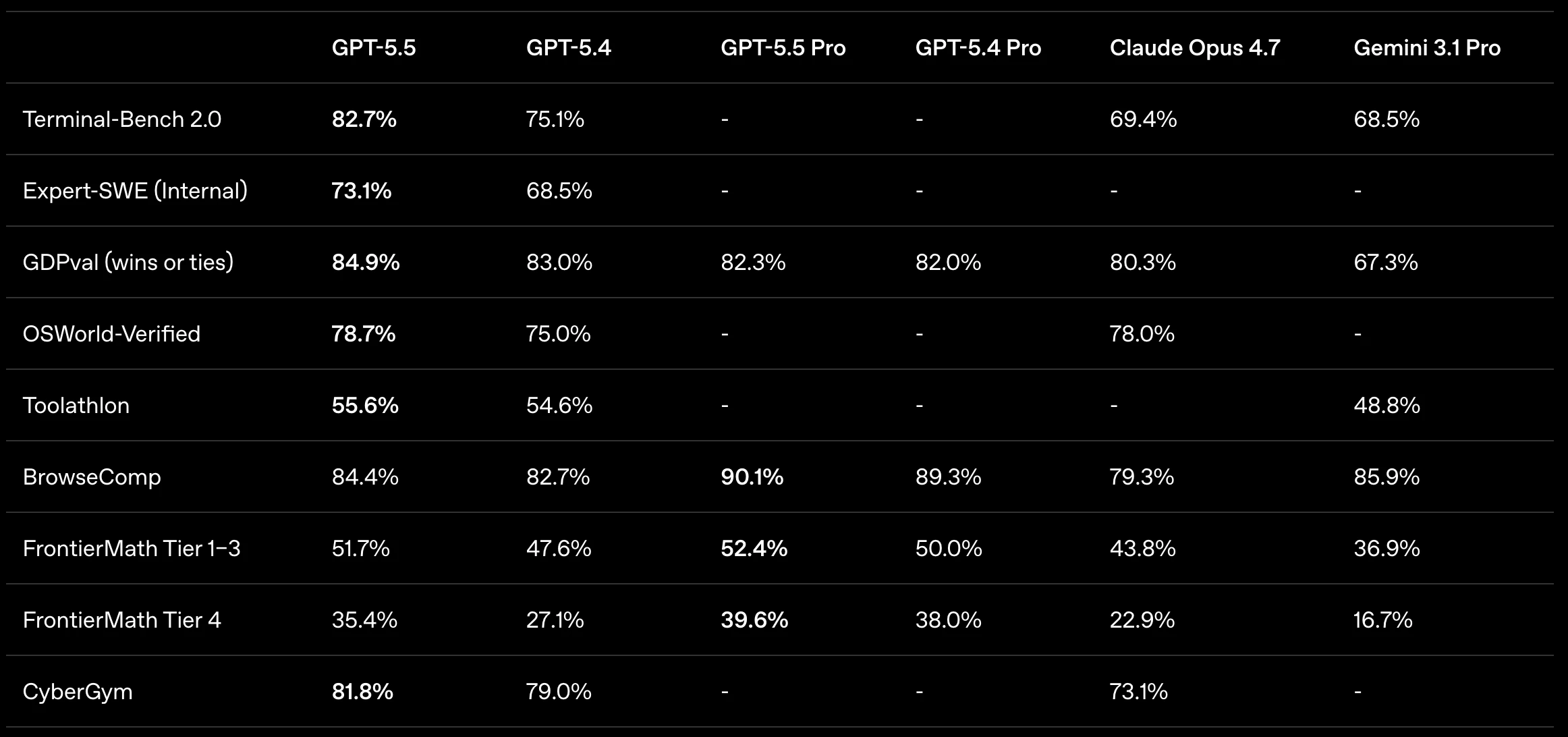
- Coding and software engineering: GPT-5.5 is OpenAI’s strongest agentic coding model to date. It reached 82.7% on Terminal-Bench 2.0 and 58.6% on SWE-Bench Pro, outperforming GPT-5.4 on several coding evaluations while using fewer tokens.
- In practice, this means GPT-5.5 can better understand large codebases, reason through ambiguous failures, test assumptions, and carry changes across related files.
- Knowledge work and computer use: GPT-5.5 is designed for broader professional tasks, including online research, data analysis, document generation, spreadsheet modeling, and slide creation. OpenAI states that the model is better at understanding user intent, using tools, checking outputs, and turning messy inputs into usable work products.
- The model also improved on benchmarks for professional and computer-use tasks, including 84.9% on GDPval and 78.7% on OSWorld-Verified.
- Scientific research: OpenAI highlights GPT-5.5’s stronger performance in scientific and technical workflows, especially tasks that require exploring evidence, testing assumptions, analyzing data, and producing research outputs. The model improved over GPT-5.4 on GeneBench and achieved strong results on BixBench, a bioinformatics and data analysis benchmark.
- Inference efficiency: GPT-5.5 aims to deliver higher intelligence without a major latency penalty. It matches GPT-5.4’s per-token latency in real-world serving and uses fewer tokens for the same Codex tasks. It also reports infrastructure improvements that increased token generation speeds by more than 20%.
- Safety and cybersecurity: GPT-5.5 includes stronger safeguards for cybersecurity and biological or chemical risk areas.
Figure 1: OpenAI GPT 5.5 benchmark performance.1
Anthropic Claude Opus 4.7
Claude Opus 4.7 is designed for demanding enterprise and developer use cases. It is available through Claude products, the Claude API, Amazon Bedrock, Google Cloud Vertex AI, and Microsoft Foundry.
Claude Opus 4.7 improves on previous Claude models in areas such as:
- Software engineering: Stronger performance on complex coding tasks, debugging, code review, and long-running engineering workflows.
- Instruction following: More precise execution of user prompts, which may require teams to adjust prompts built for earlier models.
- Vision capabilities: Support for higher-resolution image understanding, helping with screenshots, diagrams, dense documents, and technical visuals.
- Professional work: Better outputs for interfaces, documents, presentations, financial analysis, and enterprise workflows.
- Memory usage: Improved ability to use file-system-based memory across longer, multi-session tasks.
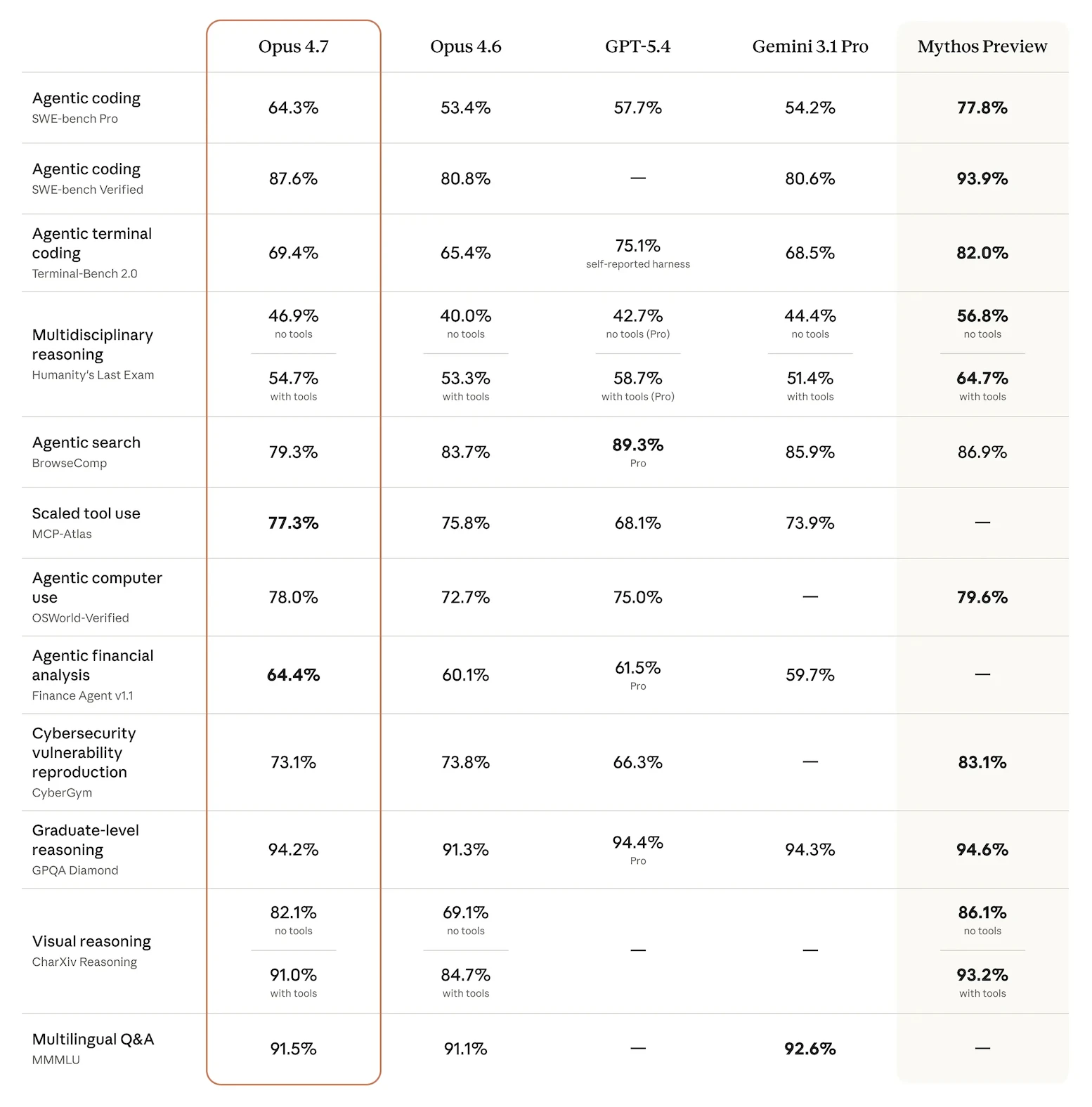
Figure 2: Claude Opus 4.7 benchmark performance.2
Anthropic Claude Sonnet 4.6
Anthropic Claude Sonnet 4.6 is positioned as the default model for both free and paid Claude users, as of February 2026. It represents a significant upgrade over Sonnet 4.5, bringing broad improvements across real-world capabilities without changing pricing for users:
- Enhanced capabilities: Sonnet 4.6 brings improved coding skills, better long-context reasoning, agent planning, general knowledge work, and computer use, making it capable across diverse professional workflows (see Figure 2).
- Large context window: It supports a 1 million-token context window (beta), enabling the model to handle long inputs without losing track of earlier content.
- Balanced performance and cost: Designed to be faster and more affordable than flagship models like Opus 4.6 while still delivering strong performance on complex tasks.
- Use cases: Well-suited for coding assistance, agentic workflows, document and spreadsheet tasks, and professional applications via the Claude API.
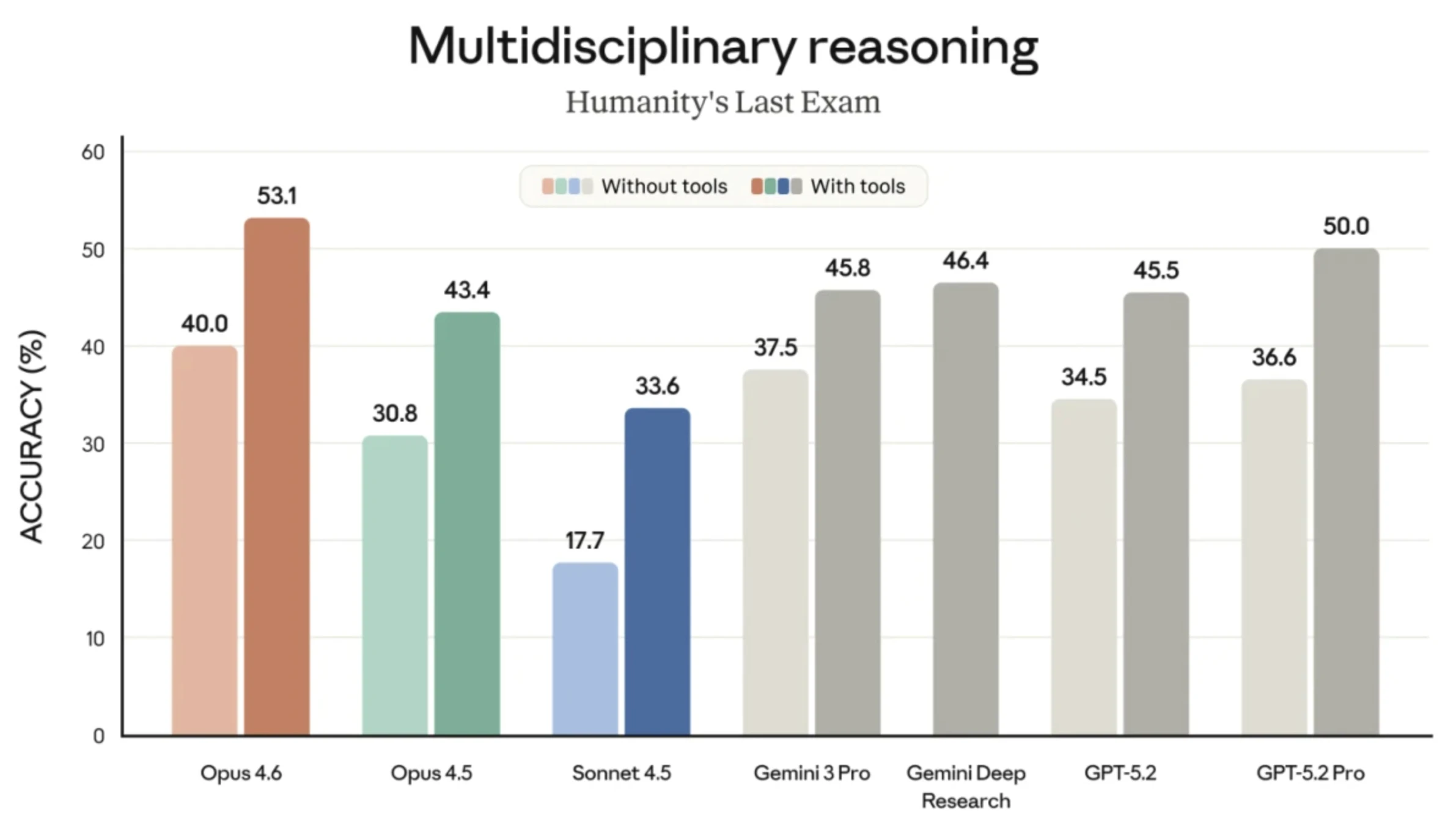
Figure 3: Results from major LLMs on Humanity’s Last Exam benchmark.3
Google Cloud
Google Cloud provides a comprehensive suite of cloud services for building, deploying, and operating applications:
Vertex AI Studio
Vertex AI Studio is designed for prototyping, testing, and customizing generative AI models. It provides a graphical interface where developers and teams can design prompts, test model behavior, and fine-tune generative workflows.
Vertex AI Studio supports access to advanced models from Google’s Model Garden and helps accelerate developing chatbots, content generators, and multimodal assistants.
Vertex AI Agent Builder
Vertex AI Agent Builder provides developers tools and frameworks to create AI agents that can reason, take actions, integrate with backend systems, and operate at global scale.
Customer Engagement Suite with Google AI
The Customer Engagement Suite is an end-to-end solution focused on enhancing customer service and contact center operations using generative AI.
It combines conversational AI (such as chatbots and real-time assistance tools) with omni-channel contact center functionalities to deliver consistent and personalized experiences across web, mobile, voice, and email.
Note: As of April 2026, Google consolidated Vertex AI capabilities into the Gemini Enterprise Agent Platform, merging model-building, DevOps, security, and agent orchestration into a unified interface rather than maintaining separate tools such as Vertex AI Studio and Agent Builder.4
Strengths of cloud LLMs
Low maintenance efforts
Users of cloud LLMs are relieved from the burden of maintaining and updating the underlying infrastructure, as cloud service providers handle these responsibilities, and the costs are added in the subscription prices.
Operational reliability
Cloud providers offer multiple layers of redundancy, backup, and failover, often resulting in higher uptime than local deployments.
Connectivity
Cloud LLMs can be accessed from anywhere with an internet connection, enabling remote collaboration and use across geographically dispersed teams.
Additionally, providers continuously refine their models, add features, and provide tooling, including monitoring dashboards, logging, and security integrations, thereby enhancing connectivity.
Lower financial costs
Users can benefit from cost-effective pay-as-you-go pricing models, reducing initial capital expenditures associated with hardware and software procurement and enabling on-demand access.
Weaknesses of cloud LLMs
Security risks
Storing sensitive data or using LLMs may raise cloud security concerns due to potential data breaches or unauthorized access. This might be a burden for companies with strong privacy concerns as they might be vulnerable to sophisticated social engineering attacks.
Dependency & vendor lock-in
Relying on a single cloud provider can create lock-in. If the provider changes pricing, API terms, or model access, adapting can be difficult.
Latency
Cloud LLMs require network connectivity. For real-time or latency-sensitive applications, this can be a bottleneck compared with local processing.
Limited customization
Teams choosing cloud LLMs may benefit from access to managed inference (e.g., GPT-5.5, Gemini 3 Pro, Claude Opus 4.7) and evolving tooling, however, customization remains limited versus self-hosted alternatives.
Regulatory compliance challenges
Storing or processing personal data in the cloud must comply with GDPR, HIPAA, and other regulations, which may constrain usage or require additional safeguards.
Cloud LLM use cases
Due to their ease of use and lower initial costs, cloud LLMa are widely applied across key business and industry domains:
Chatbots & customer support
Cloud LLMs power virtual assistants and chatbots that understand and respond to customer queries in natural language. These systems can operate 24/7, handle thousands of requests simultaneously, and provide personalized, context-aware replies without fixed scripts.
They reduce wait times, free human agents from routine inquiries, and improve customer satisfaction by delivering fast and accurate support at scale.
Content generation
LLMs can generate text and enable creative and repetitive writing task automation:
- Marketing: Drafting email campaigns, blog posts, social media copy, and ad content.
- Documentation: Summarizing reports, generating help articles, or creating internal knowledge base content.
Fraud detection
LLMs can assist in analyzing text and patterns within large datasets to flag fraud or anomalies.
For example, in finance, LLMs analyze transaction histories and communication logs to identify unusual activity that may signal fraud.
Though traditionally machine learning models are effective in fraud detection, LLMs add value by understanding narrative and context in unstructured text, which can help detect social engineering or scam patterns embedded in communications.
Healthcare assistance
LLMs support a range of healthcare workflows in addition to administrative tasks:
- Patient interaction: Virtual assistants can respond to patient questions, remind medication, or guide through care plans.
- Clinical documentation: Automating medical transcription of clinician-patient conversations and summarizing charts or notes.
- Decision support: Providing evidence-based insights to clinicians by synthesizing medical literature or patient records.
- Patient engagement and risk assessment: LLM based conversational AI can be used in risk-screening tools for specific conditions like COVID-19 severity.
Education
LLMs assist learning by offering:
- Tutoring and tutoring support: Providing explanations, practice exercises, or feedback on student questions.
- Personalized study guides: Adapting content to individual learning styles or pacing.
- Automated grading and feedback: Scoring written responses and delivering constructive comments.
What are Local LLMs?
Local LLMs are installed and run on an organization’s own servers or infrastructure. These models offer more control and potentially enhanced security but require significant expertise and maintenance.
Flagship examples include Qwen 3.6 (with reasoning-optimized variants like Qwen3-Max-Thinking), DeepSeek V4, and Llama 4.
Local LLMs are suitable for:
- Teams with high-tech expertise: Organizations with a dedicated AI department, such as major tech companies (e.g., Google, IBM) or research labs that have the resources and skills to maintain complex LLM infrastructures.
- Industries with specialized terminology: Sectors like law or medicine, where customized models trained on specific jargon are essential.
- Businesses invested in cloud infrastructure: Companies that have made significant investments in cloud technologies. (i.e., Salesforce) can set up in-house LLMs more effectively.
Strenghts of local LLMs
High security operations
It allows organizations to maintain full control over their data and how it is processed, ensuring compliance with data privacy regulations and internal security policies.
Speed
While cloud latency can be a bottleneck, Local LLMs can provide more streamlined workflows.
For example, Diffblue, an Oxford-originated company, compared OpenAI’s cloud LLMs with its own product, Diffblue Cover, which uses local reinforcement learning.
In tests for automatically generating unit tests for Java code, LLM-generated tests required manual review to meet specific criteria and were slower, taking 20-40 seconds per test on cloud GPUs. In contrast, Diffblue Cover’s local approach took 1.5 seconds per test.5
Weaknesses of local LLMs
Initial costs
Significant investment in GPUs and servers is needed, akin to a scenario where a mid-size tech company might spend a few hundred thousand dollars to establish a local LLM infrastructure.
Scalability & hardware needs
Difficulties in scaling resources to meet fluctuating demands, such as fine-tuning the model.
Environmental concerns
AI training is highly energy-intensive, with estimates suggesting GPT-4 training required around 50 GWh of electricity, while GPT-3 training consumed about 1,287 MWh.
Generative AI training clusters can also use up to 8 times more energy than typical computing workloads, showing how power demand rises sharply with model scale. Read AI energy consumption to learn more.
Comparison of on-premise vs cloud LLMs
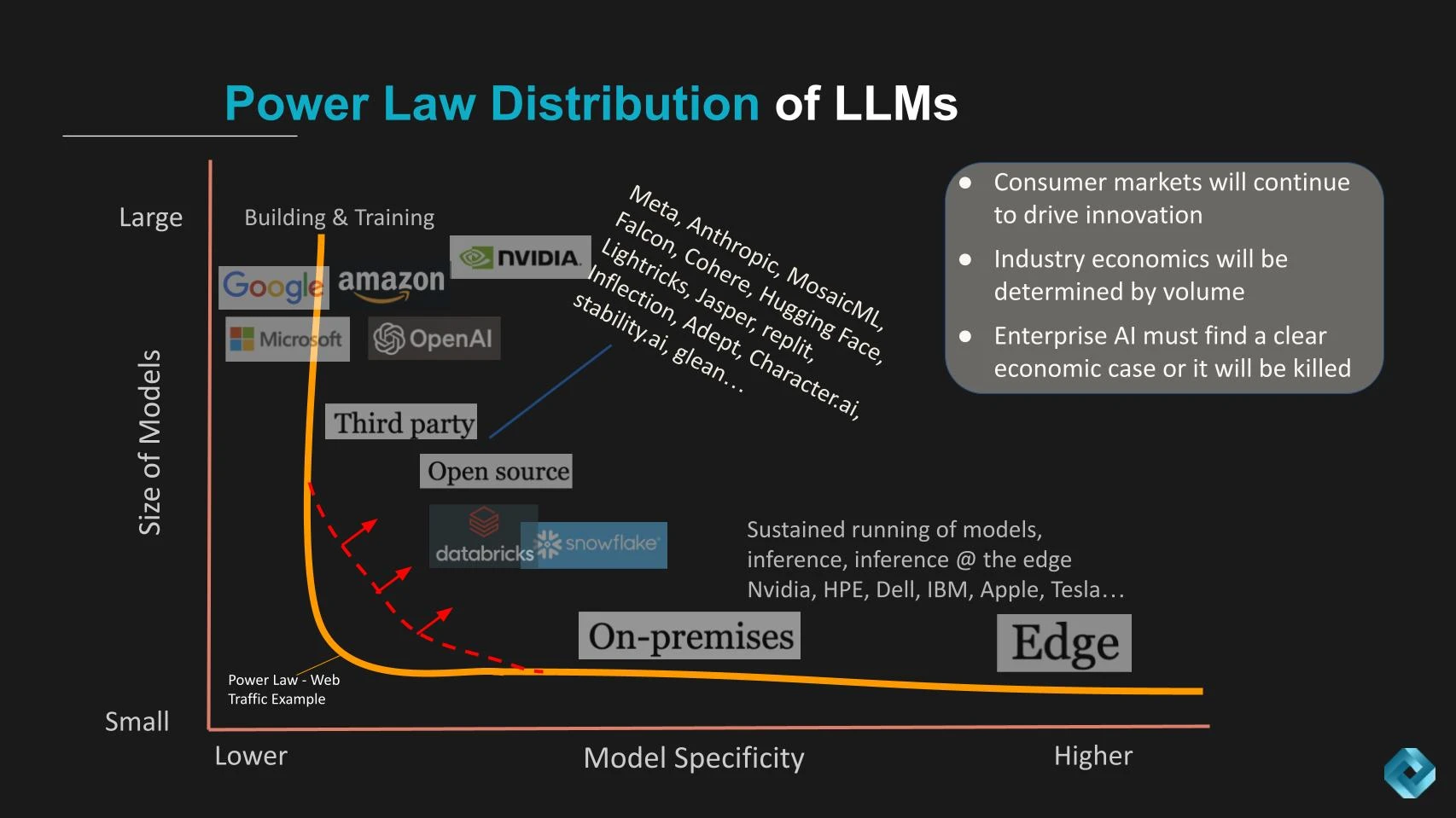
Figure 4: Image showing the power of distribution of LLMs.6
Cloud LLMs are broad-scale, flexible solutions, typically developed by large tech companies for general applications. In contrast, on-premises LLMs are customized for specific enterprise needs, where control and security are crucial.
This highlights a market distinction: cloud LLMs focus on volume and innovation, while on-premises LLMs are selected for specialized, secure applications with clear economic objectives.
Here is a comparison of local and cloud LLMs based on different factors:
*Overall costs can accelerate depending on business needs.
Local LLMs on cloud hardware
Another option would be to build LLMs on-premise and run these models using cloud hardware. This way, organizations can maintain control over their models and data while leveraging the computational power and scalability of cloud infrastructure.
 Add as preferred source
How to choose between local vs cloud LLM?
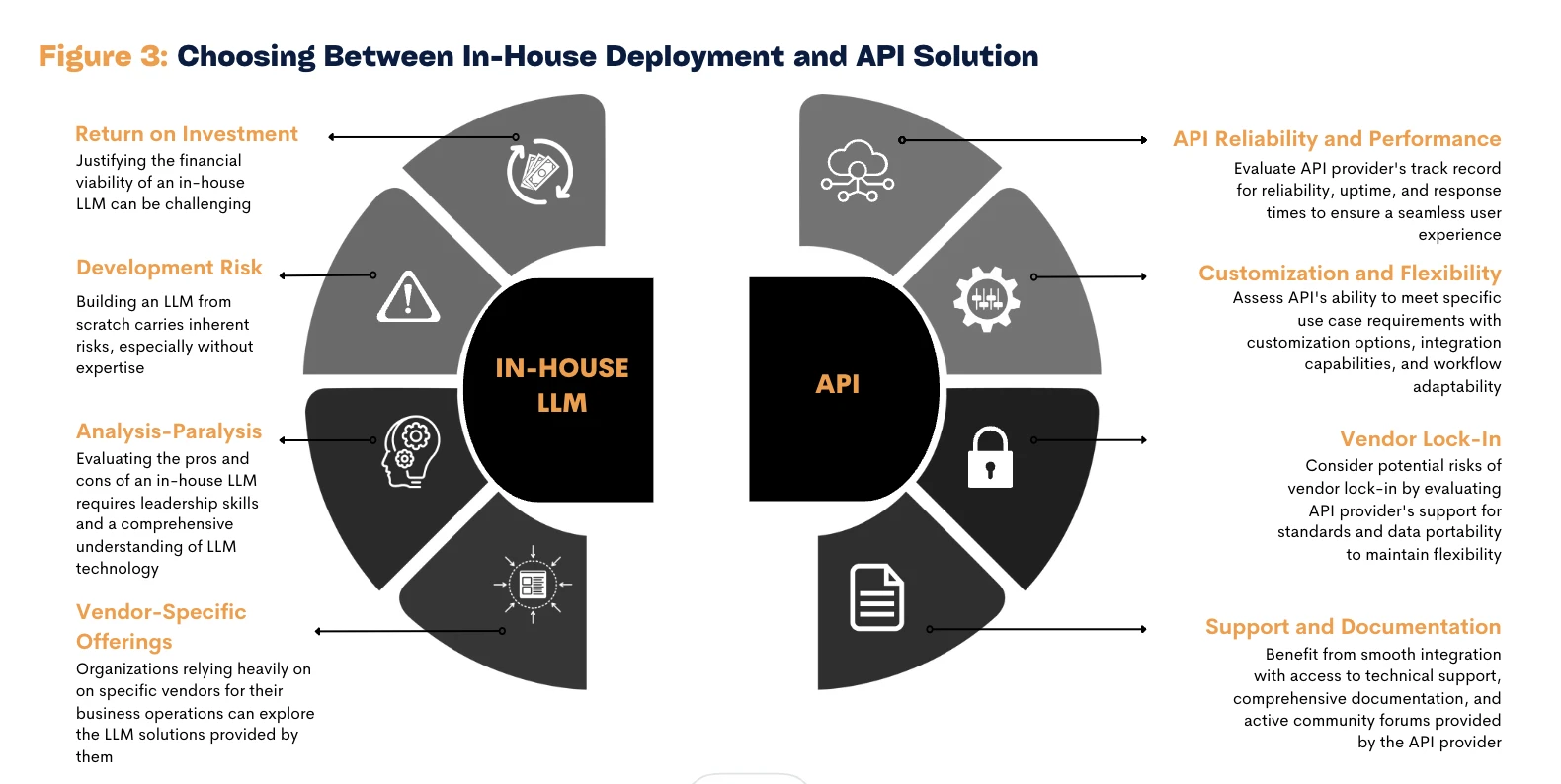
Figure 5: Image showing the differences between in-house vs API LLMs.
While choosing between local or cloud LLMs, there are some questions you should consider:
1. Do you have in-house expertise?
Running LLMs locally requires significant technical expertise in machine learning and managing complex IT infrastructure. This can be a challenge for organizations without a strong technical team.
On the other hand, cloud-based LLMs offload most of the technical burden to the cloud provider, including maintenance and updates, making them a more convenient option for businesses lacking specialized IT employees.
2. What are your budget constraints?
Local LLM deployment involves significant upfront costs, mainly due to the need for powerful computing hardware, especially GPUs. This can be a major hurdle for smaller companies or startups. Cloud LLMs, conversely, typically have lower initial costs with pricing models based on usage, such as subscriptions or pay-as-you-go plans.
3. What are your data size & computational needs ?
For businesses with consistent, high-volume computational needs and the infrastructure to support them, local LLMs can be a more reliable choice. However, cloud LLMs offer scalability that is beneficial for businesses with fluctuating demands.
The cloud model allows for easy scaling of resources to handle increased workloads, which is particularly useful for companies whose computational needs may spike periodically (e.g., Cosmetics company on Black Friday season).
4. What are your risk management assets?
While local LLMs offer more direct control over data security and may be preferred by organizations handling sensitive information (such as financial or healthcare data), they also require robust internal security protocols. Cloud LLMs, while potentially posing higher risks due to data transmission over the internet, are managed by providers who typically invest heavily in security measures.
Cloud LLMs case studies
Manz & deepset Cloud
Manz, an Austrian legal publisher, employed deepset Cloud to optimize legal research with semantic search.7 Their extensive legal database necessitated a more efficient way to find relevant documents. They implemented a semantic recommendation system through deepset Cloud’s expertise in NLP and German language models. Manz significantly improved research workflows.
Cognizant & Google Cloud
Cognizant and Google Cloud are collaborating to use generative AI, including Large Language Models (LLMs), to address healthcare challenges.8 They aim to streamline healthcare administrative processes, such as appeals and patient engagement, using Google Cloud’s Vertex AI platform and Cognizant’s industry expertise. This partnership demonstrates the potential of cloud-based LLMs to optimize healthcare operations and improve business efficiency.
Allied Banking Corporation & Finastra
Allied Banking Corporation, based in Hong Kong, has transitioned its core banking operations to the cloud and upgraded to Finastra’s next-generation Essence solution.9 They’ve also implemented Finastra’s Retail Analytics for enhanced reporting. This move reflects a strategic shift toward modern, cost-effective technology, enabling future growth and efficiency gains.
Cite this research
Pick the format that matches where you're publishing. Pasting the link version into your CMS preserves the backlink.
@misc{dilmegani2026,
  author = {Dilmegani, Cem},
  title  = {{Cloud LLM vs Local LLMs: Examples & Benefits}},
  year   = {2026},
  month  = may,
  howpublished    = {\url{https://aimultiple.com/cloud-llm}},
  note   = {AIMultiple. Retrieved May 18, 2026}
}Results and timestamps of 7 data points. Download the summary data shown in this article's charts and tables as a ZIP file containing one CSV file.
Want the granular data behind it? Join Premium
Changelog
3 updatesAdded a "Latest models" subsection covering OpenAI GPT-5.5 and Anthropic Claude Opus 4.7 with their benchmark figures.
Updated the Cloud Large Language Model (LLM) section with new models and providers.
Reference Links
Cem's work at AIMultiple has been cited by leading global publications including Business Insider, Forbes, Morning Brew, and Washington Post, global firms like Deloitte and HPE, NGOs like World Economic Forum, and supranational organizations like European Commission. [1], [2], [3], [4], [5]
Throughout his career, Cem served as a tech consultant, tech buyer and tech entrepreneur. He advised enterprises on their technology decisions at McKinsey & Company and Altman Solon for more than a decade. He also published a McKinsey report on digitalization.
He led technology strategy and procurement of a telco while reporting to the CEO. He has also led commercial growth of deep tech company Hypatos that reached a 7 digit annual recurring revenue and a 9 digit valuation from 0 within 2 years. Cem's work in Hypatos was covered by leading technology publications like TechCrunch and Business Insider.
Cem regularly speaks at international technology conferences. He graduated from Bogazici University as a computer engineer and holds an MBA from Columbia Business School.





Be the first to comment
Your email address will not be published. All fields are required. Comments are left in their original language.