


Compare 9 Large Language Models in Healthcare

We benchmarked 9 LLMs using the MedQA dataset, a graduate-level clinical exam benchmark derived from USMLE questions. Each model answered the same multiple-choice clinical scenarios using a standardized prompt, enabling direct comparison of accuracy.
We also recorded latency per question by dividing total runtime by the number of MedQA items completed.
Healthcare LLMs benchmark results
Benchmark methodology: This benchmark evaluates the supervised fine-tuning performance of healthcare LLMs vs. large general-purpose models (GPT-4) on medical question-answeringtasks. See benchmark data sources.
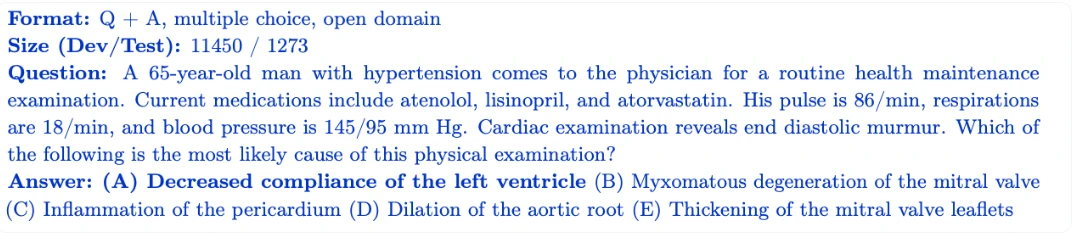
MedQA: Multiple-choice medical exam questions based on the United States Medical Licensing Examination.
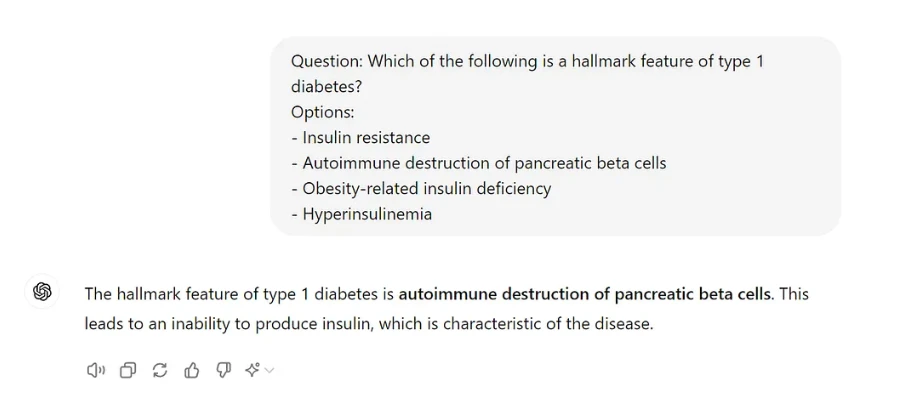
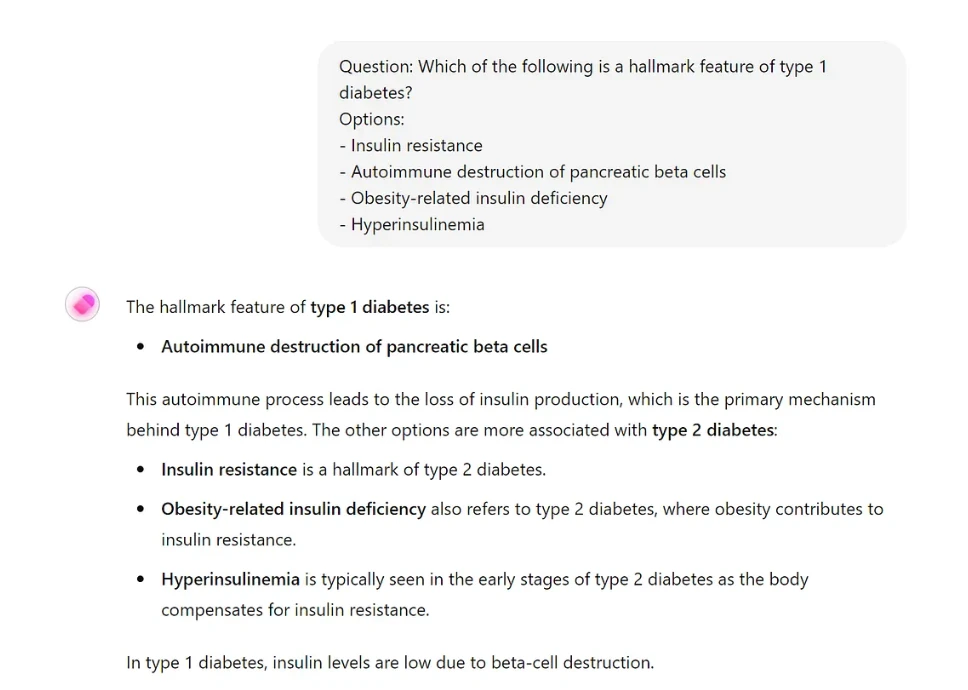
Figure 1: USMLE-style multiple-choice clinical question example.
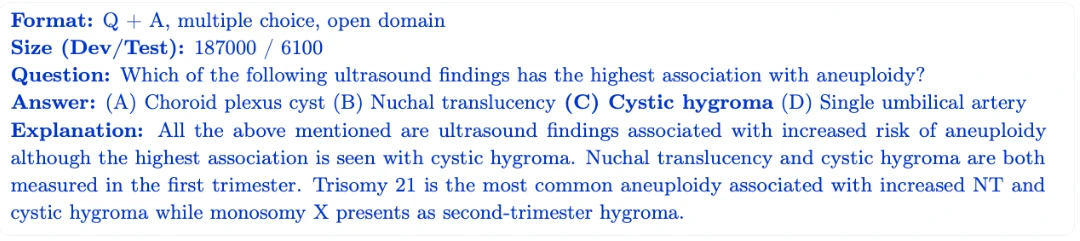
MedMCQA: Large-scale, Multiple-Choice Question Answering (MCQA) dataset designed to address real-world medical entrance exam questions.
Figure 2: A large-scale medical entrance-exam multiple-choice question requiring the model to select the correct answer and interpret associated explanations about clinical findings.
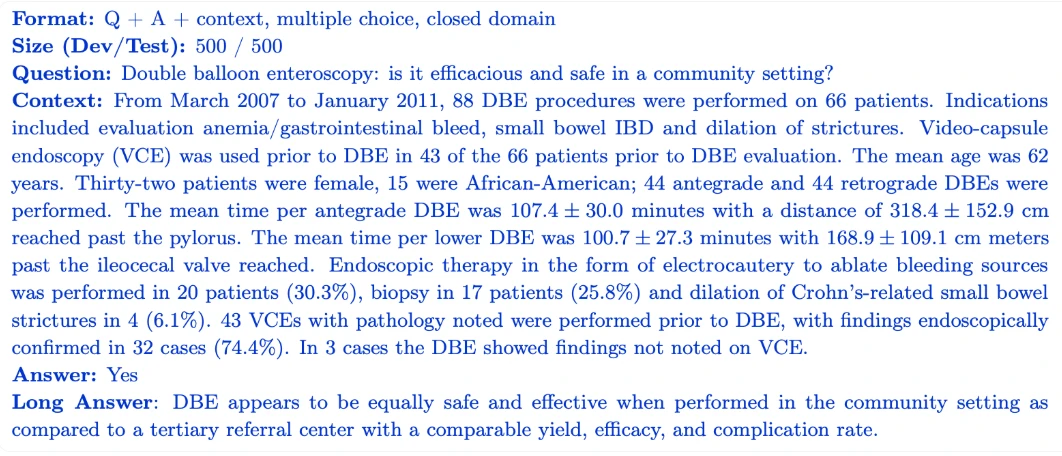
PubMedQA: Biomedical question-answering benchmark using yes/no/maybe answers.
Figure 3: A biomedical yes/no/maybe question, where the model must judge the correctness of a clinical claim using the provided study context.
Healthcare LLM examples
BERT-like (Encoder-only)
Optimized for encoding and representing biomedical text, these models excel at extracting features for tasks such as classification.
ChatGPT / LLaMA-like (Decoder, instruction/chat-tuned)
Based on LLaMA-style architectures and optimized for interactive tasks and clinical dialogues.
GPT / PaLM-like (Decoder-only, generative)
Built similarly to GPT-3 or PaLM, these models are fine-tuned for general-purpose text generation and summarization.
General-purpose LLMs in healthcare
*Llama 3.1 Instruct Turbo with 405B parameters. See benchmark methodology.
Key takeaways:
- o1: Best-performing model
- 03 mini: Best budget option
- GPT 4.1: Best speed and response time
- Beyond accuracy and input cost, models also differ in their underlying approaches to medical question answering
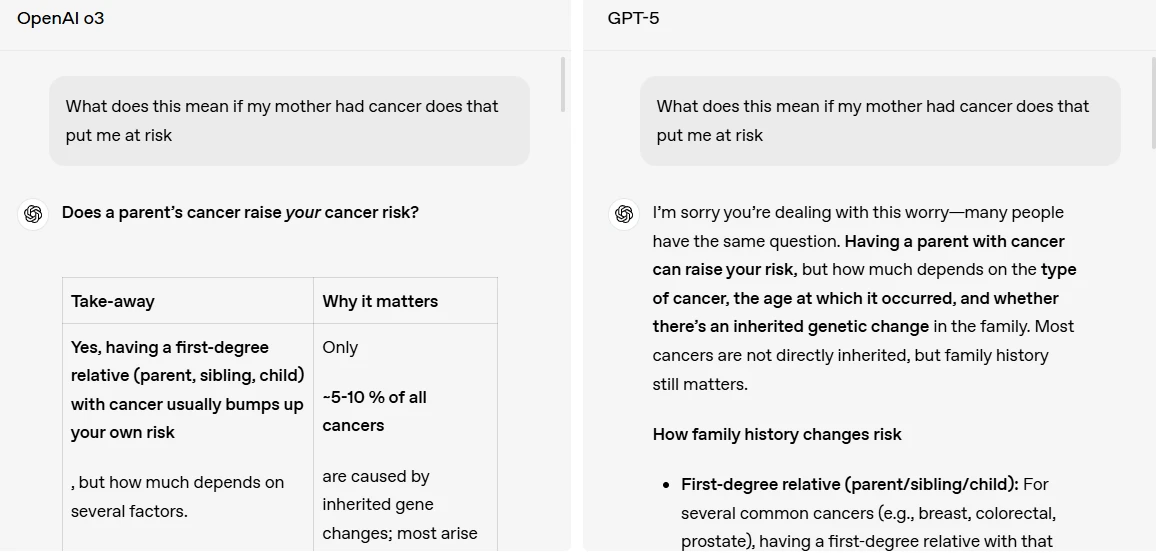
Figure 4: Figure showing the differences between the GPT-5 and o3 answers.
Fine-tuning medical LLMs
The performance of the default ChatGPT (4o model) is compared with the existing ‘Clinical Medicine Handbook’ assistant. Both models are given the same prompt, and their responses are analyzed:
GPT 4o
Figure 5: The figure shows that the answer of GPT 4o default model is accurate but also highly summarized.1
Fine-tuned medical LLM
Figure 6: The figure shows the answer from the specialized agent.1
Applications of general-purpose LLMs
You can use these models in healthcare by leveraging:
- Continual pretraining on medical data to help the model better identify medical language by exposing it to clinical notes and biomedical literature (like PubMed).
- RAG to pull data from verified clinical documents to produce accurate responses at runtime.
- Instruction fine-tuning to enable the model to learn how to answer clinical questions or extract symptoms from text.
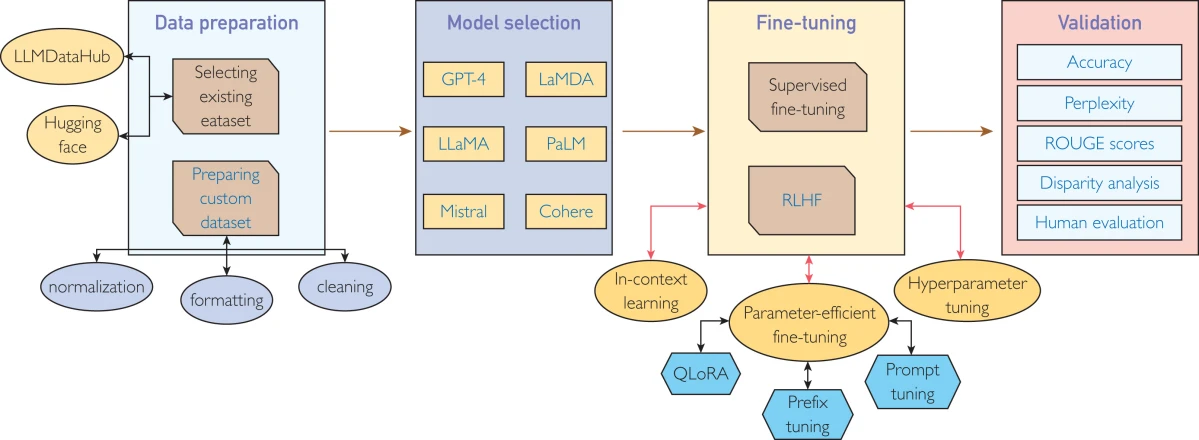
Figure 7: A general workflow of LLM fine-tuning for specialized use cases.
Where healthcare organizations use LLMs
Healthcare organizations are testing LLMs across both clinical and administrative workflows. Common applications include clinical documentation and transcription, EHR summarization, literature search, patient-message drafting, medical coding, prior authorization, clinician education, and patient-facing explanations.
The appropriate model depends less on the use-case label than on the workload requirements. Patient-facing and clinical decision-support applications generally require stronger medical accuracy, safety evaluation, auditability, and data-protection controls, while administrative workloads may place more weight on cost, latency, context length, and integration with existing systems.
 Add as preferred source
Large language models in healthcare methodology
Benchmark methodology: This benchmark evaluates 9 popular general LLMs on graduate-level medical questions using the MedQA dataset, which draws its content from the United States Medical Licensing Examination (USMLE). Each question includes a clinical scenario and multiple-choice answer options.
LLM outputs: Each model was prompted to return a structured answer (e.g., “Answer: C”).8
Latency: The average time a model takes to generate a response to a single MedQA prompt. For example, if 100 questions take 1,115 seconds total to complete, the average latency is 11.15 seconds per question.
LLMs in healthcare benchmark data sources
Cite this research
Pick the format that matches where you're publishing. Pasting the link version into your CMS preserves the backlink.
@misc{dilmegani2026,
  author = {Dilmegani, Cem and Ermut, Sıla},
  title  = {{Compare 9 Large Language Models in Healthcare}},
  year   = {2026},
  month  = sep,
  howpublished    = {\url{https://aimultiple.com/large-language-models-in-healthcare}},
  note   = {AIMultiple. Retrieved September 4, 2026}
}Results and timestamps of 62 data points. Download the summary data shown in this article's charts and tables as a ZIP file containing 6 CSV files.
Want the granular data behind it? Join Premium
Changelog
15 updatesAdded three use cases: drug discovery and development, radiology and medical imaging, and health literacy.
Expanded the "Clinical decision support" section with MedGemma and a new figure.
Reference Links
Cem's work at AIMultiple has been cited by leading global publications including Business Insider, Forbes, Morning Brew, and Washington Post, global firms like Deloitte and HPE, NGOs like World Economic Forum, and supranational organizations like European Commission. [1], [2], [3], [4], [5]
Throughout his career, Cem served as a tech consultant, tech buyer and tech entrepreneur. He advised enterprises on their technology decisions at McKinsey & Company and Altman Solon for more than a decade. He also published a McKinsey report on digitalization.
He led technology strategy and procurement of a telco while reporting to the CEO. He has also led commercial growth of deep tech company Hypatos that reached a 7 digit annual recurring revenue and a 9 digit valuation from 0 within 2 years. Cem's work in Hypatos was covered by leading technology publications like TechCrunch and Business Insider.
Cem regularly speaks at international technology conferences. He graduated from Bogazici University as a computer engineer and holds an MBA from Columbia Business School.

She previously worked as a recruiter in project management and consulting firms. Sıla holds a Master of Science degree in Social Psychology and a Bachelor of Arts degree in International Relations.



Be the first to comment
Your email address will not be published. All fields are required. Comments are left in their original language.