


Top 10 des logiciels de découverte de médicaments

Le marché des logiciels de découverte de médicaments se divise en trois catégories : les suites de chimie computationnelle pour la conception basée sur la structure, les plateformes natives d'IA pour la chimie générative et l'identification de cibles, et les systèmes de gestion des données de R&D pour l'ELN, le LIMS, le suivi de synthèse, l'analyse de données et l'enregistrement des composés.
Nous avons comparé les 10 principales plateformes de découverte de médicaments en termes de fonctionnalités, de tarification et de modèles de déploiement.
Comparaison du déploiement et de la tarification des 10 principaux logiciels de découverte de médicaments
Produit | Déploiement | Prix de départ | Cas d'utilisation |
|---|---|---|---|
AIDDISON | Cloud | N/A | Génération moléculaire assistée par IA, criblage virtuel, prédiction ADMET, docking et planification de synthèse |
BIOVIA Discovery Studio | Cloud/Sur site | N/A | Plateforme de simulation de bout en bout couvrant de l'identification de cibles à l'optimisation de têtes de série avec ELN intégré via 3DEXPERIENCE |
BioSolveIT | Bureau/Sur site | N/A | Conception visuelle de médicaments, docking moléculaire, criblage virtuel et exploration d'espaces chimiques ultra-larges |
ChemAxon | Cloud/Sur site | N/A | Boîte à outils de chimio-informatique avec l'éditeur Marvin et l'enregistrement JChem |
Cresset Flare | Bureau | N/A | Plateforme de conception de ligands basée sur les champs électrostatiques avec champ de force XED |
Dotmatics | Cloud | N/A | Plateforme d'informatique scientifique avec ELN, biorépertoire et gestion des données d'essais |
OpenEye Orion | Cloud uniquement | N/A | Plateforme Orion native du cloud avec criblage basé sur la forme et boîte à outils OEChem |
Recursion OS | Cloud/Interne | N/A | Plateforme de phénomique avec imagerie à haut contenu et supercalcul BioHive |
Schrödinger Suite | Bureau/Sur site | $7 500/an (30 tokens) | Suite de chimie computationnelle basée sur la physique avec FEP+ pour la prédiction d'affinité de liaison |
StarDrop | Bureau/Cloud | $10 000/an/utilisateur | Plateforme d'optimisation multiparamétrique avec visualisation Glowing Molecule |
Remarque : les produits sont listés par ordre alphabétique. Aucun des produits ne propose d'offres gratuit ni d'essais.
Comparaison des fonctionnalités des logiciels de découverte de médicaments
AIDDISON
AIDDISON est une plateforme de découverte de médicaments native du cloud qui combine l'IA générative et les outils de conception de médicaments assistée par ordinateur. Elle prend en charge la génération moléculaire, le criblage virtuel, la prédiction ADMET, les recherches par pharmacophore et par similarité, le docking moléculaire et la planification de rétrosynthèse.
Ses principales capacités incluent :
- Conception moléculaire générative : Crée de nouvelles petites molécules et les optimise pour la médicamentabilité, les propriétés ADMET, l'affinité de liaison et la synthétisabilité.
- Recherche dans l'espace chimique : Recherche plus de 60 milliards de molécules connues et virtuelles à l'aide de méthodes de similarité, de sous-structure et de pharmacophore.
- Docking moléculaire : Visualise les interactions protéine-ligand, identifie les poches de liaison et évalue la liaison des candidats.
- Planification de synthèse : Relie la conception de molécules virtuelles à la rétrosynthèse et aux matières premières disponibles dans le commerce.
- Prédictions personnalisées : Permet aux équipes d'utiliser des modèles d'IA/ML existants ou d'entraîner des modèles avec leurs propres données.
AIDDISON est particulièrement adapté aux équipes de chimie médicinale recherchant un flux de travail intégré et assisté par l'IA, de la conception de molécules à la planification de la synthèse.
BIOVIA Discovery Studio
BIOVIA Discovery Studio propose un pipeline de bout en bout, de l'identification de cibles à l'optimisation de têtes de série. L'outil s'intègre à la plateforme 3DEXPERIENCE de Dassault Systèmes pour la gestion des données d'entreprise et la conformité réglementaire.
BIOVIA Discovery Studio couvre les principales parties de la découverte de médicaments computationnelle :
- Simulations : Dynamique moléculaire, calculs d'énergie gratuit et autres outils de simulation pour étudier le comportement et les interactions moléculaires.
- Conception basée sur la structure : Outils pour le docking protéine-ligand, la conception basée sur des fragments et l'optimisation de composés à l'aide d'informations structurelles 3D.
- Conception basée sur les ligands et les pharmacophores : Méthodes de conception de médicaments de novo, de profilage d'activité, de conception multi-cibles et de recherche de molécules présentant les motifs d'interaction souhaités.
- Biothérapeutiques et modélisation d'anticorps : Outils in silico pour la modélisation d'anticorps, l'ingénierie des protéines et l'optimisation des produits biologiques.
- Conception et analyse de macromolécules : Outils pour analyser et concevoir des protéines, des acides nucléiques et d'autres grandes molécules biologiques.
- QSAR, ADMET et toxicologie prédictive : Aperçus prédictifs pour la pharmacocinétique, la sécurité, la toxicité et les propriétés médicamentaires.
- Visualisation : Un visualiseur de conception moléculaire gratuit pour visualiser, manipuler et analyser des structures biologiques et chimiques.
BIOVIA Discovery Studio est particulièrement adapté aux grandes entreprises qui exigent une conformité réglementaire.
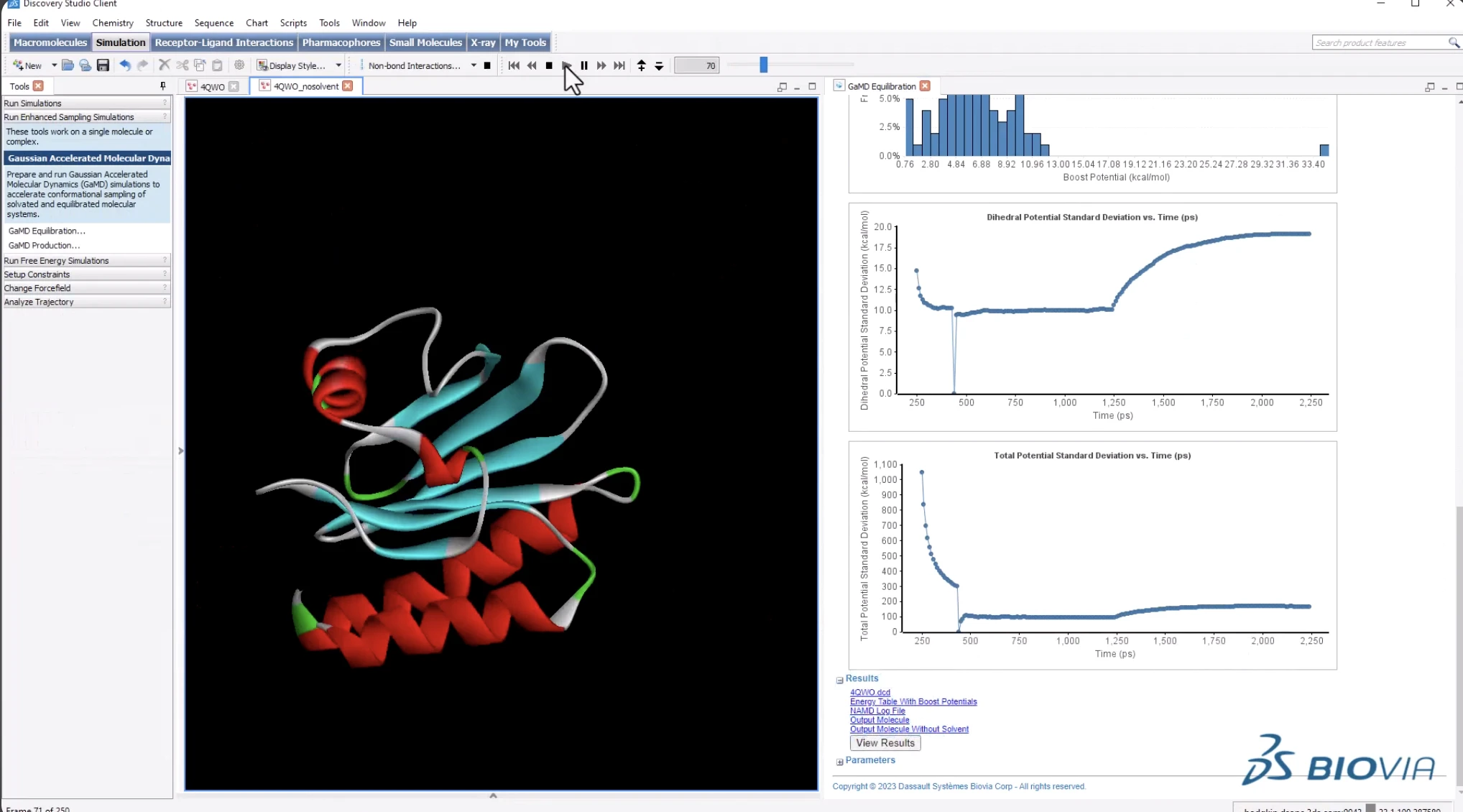
Figure 1 : Tableau de bord des simulations de BIOVIA Discovery Studio.1
BioSolveIT
BioSolveIT propose une suite d'outils visuels de découverte de médicaments computationnelle. Ses produits incluent SeeSAR pour la conception moléculaire, infiniSee pour la navigation dans l'espace chimique et HPSee pour le criblage virtuel haute performance.
Ses principales fonctionnalités incluent :
- Conception visuelle de médicaments : SeeSAR prend en charge le docking moléculaire, l'optimisation de composés, la conception basée sur des fragments et l'analyse des interactions protéine-ligand.
- Exploration de l'espace chimique : infiniSee recherche dans des collections de composés ultra-larges des molécules structuralement ou pharmacophoriquement similaires.
- Docking à grande échelle : Chemical Space Docking explore des milliards de composés à l'aide d'un criblage basé sur la structure.
- Flux de travail haute performance : HPSee répartit les charges de travail de criblage et de docking sur une infrastructure de calcul dédiée.
- Outils de modélisation spécialisés : La suite comprend des outils pour le docking, la notation, l'alignement moléculaire, l'exploration de poches, la génération de conformères et le scaffold hopping.
BioSolveIT est particulièrement adapté aux chimistes médicinaux et computationnels qui privilégient les flux de travail visuels, le docking moléculaire et l'exploration de grands espaces chimiques.
ChemAxon
ChemAxon fournit une infrastructure de chimio-informatique, notamment son éditeur de structures chimiques Marvin et les moteurs JChem, pour la standardisation des données chimiques. La plateforme prend en charge le déploiement cloud et sur site avec des APIs Java et REST pour l'intégration.
Exemple concret de Marvin de Chemaxon :
Une grande entreprise pharmaceutique mondiale a utilisé l'éditeur chimique Marvin de Chemaxon pour améliorer la gestion des données chimiques dans une application de bureau de visualisation et d'analyse de données.
L'entreprise avait besoin d'un outil de dessin chimique capable de s'intégrer facilement à son infrastructure existante avant une échéance de mise en service imminente. Les exigences comprenaient la prise en charge de la notation SMILES/SMARTS, le mappage de réactions, la gestion de la stéréochimie, l'énumération de structures Markush et une API .NET robuste pour l'intégration.
Chemaxon a mis en œuvre Marvin pour plus de 300 utilisateurs et a fait passer un plus petit groupe d'utilisateurs de Marvin JS vers le nouvel environnement Marvin. L'entreprise a intégré le module complémentaire API .NET dans son système existant, et l'intégration complète avec l'application de bureau d'analyse a été réalisée en une à deux semaines environ.
Le projet a aidé l'entreprise à respecter son calendrier de lancement sans compromettre les exigences fonctionnelles, techniques ou commerciales. Il a également simplifié l'octroi de licences en regroupant les licences Chemaxon en une seule durée de 19 mois, réduisant ainsi la complexité des achats.2
Chemaxon est idéal pour les organisations ayant besoin de standardisation des données chimiques et d'intégration d'API.
Cresset Flare
La modélisation de ligands basée sur les champs électrostatiques de Cresset Flare, utilisant le champ de force XED, permet le scaffold hopping et la conception de ligands sans dépendre des structures cristallines des protéines. Flare prend en charge les calculs RBFE et la génération de conformères macrocycliques dans son framework FEP.
- 2D Cartes d'interaction : Résume les interactions ligand-protéine dans une vue 2D claire pour une interprétation plus facile.
- Activity Atlas : Fournit des aperçus qualitatifs de SAR pour aider à comprendre comment les modifications moléculaires affectent l'activité.
- Activity Miner : Identifie les falaises d'activité et de sélectivité dans les datasets SAR.
- FieldTemplater : Aide à prédire les modes de liaison lorsque les données de structure protéique cristallographique ne sont pas disponibles.
- Free Energy Perturbation (FEP) : Prend en charge l'optimisation des têtes de série en prédisant quelles modifications de ligand sont les plus susceptibles d'améliorer la liaison.
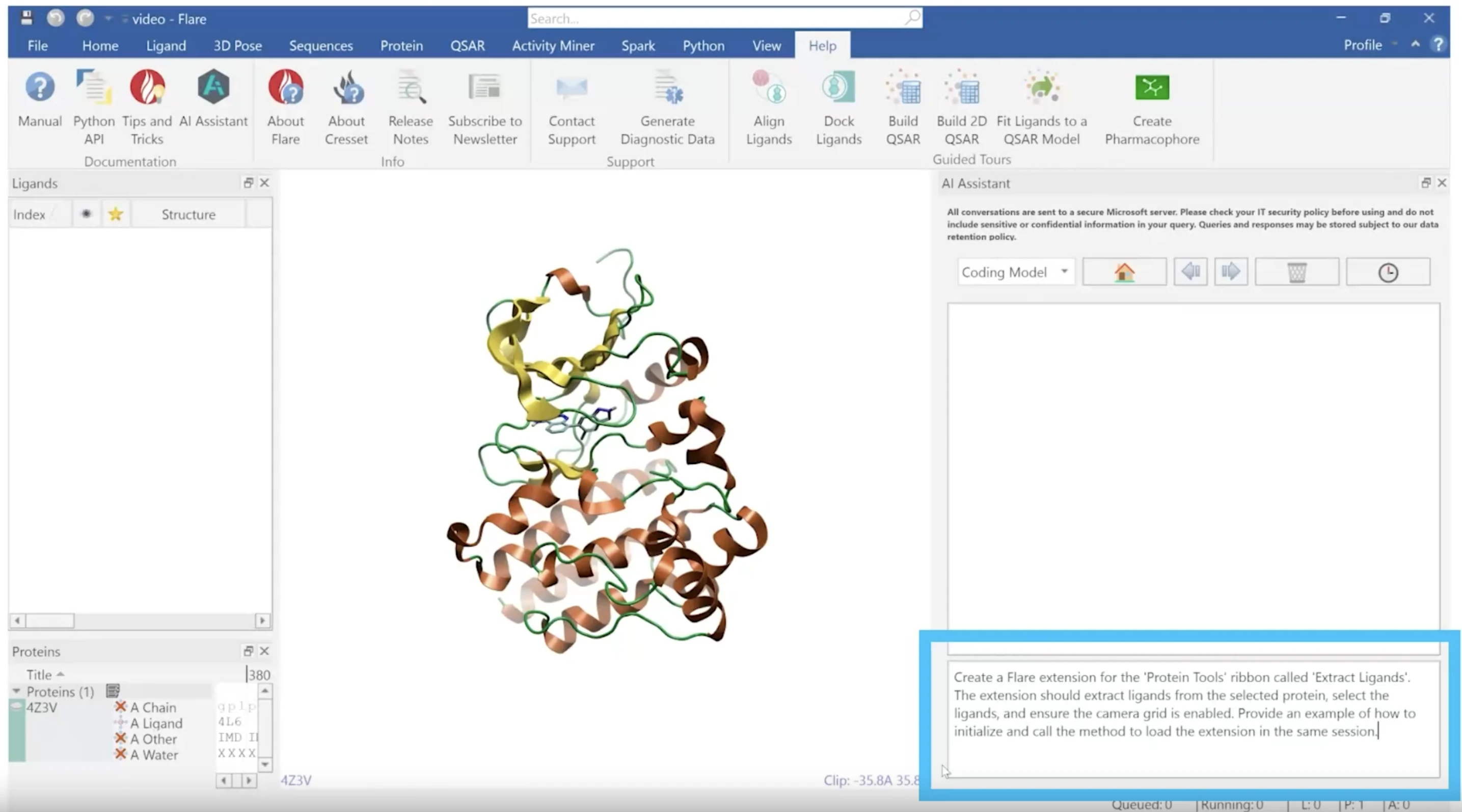
- Assistant de codage IA : Prend en charge le scripting, l'automatisation des flux de travail et la personnalisation des méthodes en aidant les utilisateurs à écrire ou à affiner du code pour les flux de travail d'analyse liés à Flare.
Cresset Flare est particulièrement adapté aux chimistes médicinaux travaillant sans structures cristallines.
Figure 2 : Exemple d'assistant de codage IA de Flare.3
Dotmatics
Dotmatics fournit une plateforme d'informatique scientifique intégrée couvrant l'ELN, BioRegister, l'enregistrement des composés et la gestion des données d'essais, avec les visualisations Studies et Vortex. La plateforme offre une intégration à travers le portefeuille Dotmatics, notamment Geneious et Prism.
Dotmatics Luma est une plateforme de R&D multimodale et native d'IA qui intègre les données scientifiques, les flux de travail, l'analytique et les outils d'IA dans un environnement unique. Elle est conçue pour aider les équipes de recherche à passer plus rapidement des données brutes de laboratoire à des informations scientifiques exploitables. Luma fonctionne en quatre étapes principales :
- Capture de données : Luma se connecte aux instruments de laboratoire, aux ELN, aux registres, aux téléversements CRO, aux fichiers, aux applications scientifiques et aux systèmes externes. Luma Lab Connect peut collecter des données à partir d'instruments basés sur des fichiers, de dossiers Windows ou Linux, de buckets S3, d'APIs et de sources SQL/JSON/CSV.
- Traitement des données : Une fois les données capturées, Luma analyse les fichiers bruts, extrait les métadonnées et convertit les sorties d'instruments en formats structurés et analysables.
- Harmonisation et gestion des données : Luma rassemble différents types de données, notamment structurées, semi-structurées, non structurées, de séquence, numériques, textuelles, d'images et de métadonnées.
- Analyse et informations assistées par l'IA : Les chercheurs peuvent rechercher, visualiser, interroger, modéliser et analyser les données harmonisées au sein de la plateforme ou via des APIs. Luma prend également en charge l'interrogation en langage naturel et les cas d'usage d'IA générative, aidant les scientifiques à explorer des relations complexes entre les datasets.
Dotmatics est idéal pour les grandes entreprises biopharmaceutiques et les CRO qui ont besoin d'un système d'enregistrement gouverné.
OpenEye Scientific Suite Orion
OpenEye Scientific, qui fait désormais partie de Cadence Molecular Sciences, se différencie par sa plateforme Orion native du cloud et sa boîte à outils OEChem axée sur les développeurs. La suite comprend ROCS pour le criblage basé sur la forme, EON pour la comparaison électrostatique, OMEGA pour la génération de conformères et FRED pour le docking.
Orion fonctionne sur AWS et Cadence OnCloud sans option d'installation sur site, ciblant les organisations qui construisent des pipelines computationnels personnalisés.
OpenEye Scientific Suite Orion est particulièrement adapté aux développeurs qui construisent des pipelines personnalisés.
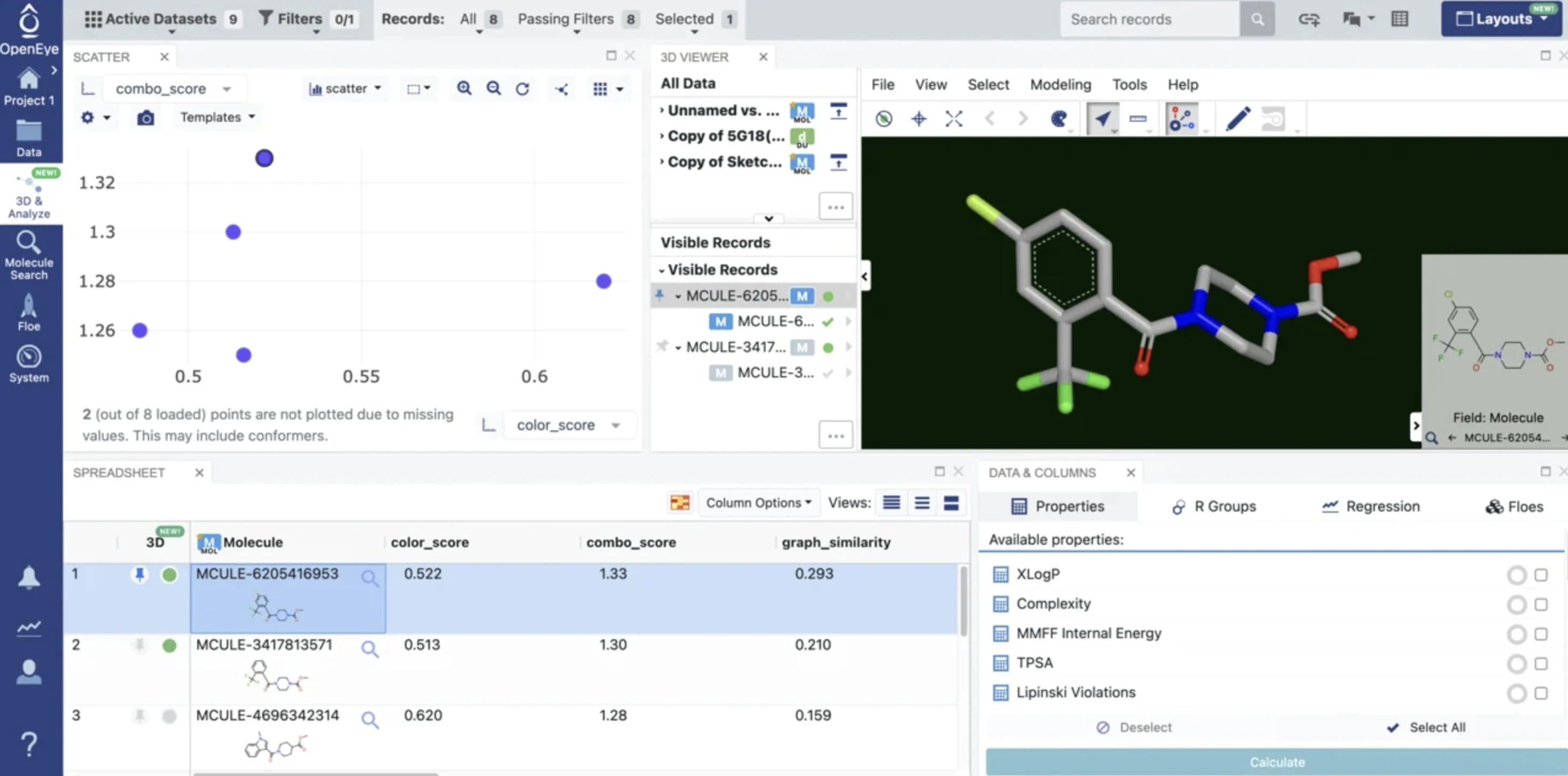
Figure 3 : Tableau de bord de simulation et d'analyse 3D d'Orion.4
Recursion OS
Recursion OS exploite un dataset phénotypique massif généré par l'imagerie automatisée à haut débit de phénotypes cellulaires, traitée par vision par ordinateur et l'infrastructure de supercalcul BioHive. La plateforme comprend la Map of Biology, qui visualise les relations biologiques, et a généré environ 65 pétaoctets de données propriétaires.
Recursion LOWE :
LOWE est le moteur de workflow orchestré par LLM de Recursion, un système basé sur l'IA au sein de la plateforme Recursion OS conçu pour prendre en charge des flux de travail complexes de découverte de médicaments par interaction en langage naturel.
Il permet aux chercheurs d'interroger les datasets biologiques et chimiques de Recursion, d'explorer les relations potentielles médicament-cible, de générer et de prioriser de nouveaux composés, d'évaluer des propriétés telles que l'ADMET et la solubilité, et de coordonner les activités en aval, notamment la planification de la synthèse et l'exécution expérimentale.
LOWE fonctionne comme une couche intelligente d'orchestration des flux de travail qui relie les datasets propriétaires de Recursion, les modèles prédictifs, les capacités de chimie générative et les opérations de laboratoire.5
Recursion est idéal pour les maladies rares et les programmes de repositionnement de médicaments.
Suite de découverte de médicaments pour petites molécules de Schrödinger
Schrödinger se différencie par des calculs de Free Energy Perturbation (FEP+) basés sur la physique qui prédisent l'affinité de liaison. La suite intègre Glide pour le docking, WaterMap pour la thermodynamique d'hydratation et Prime pour la prédiction de la structure des protéines au sein de l'interface graphique Maestro.
Exemple concret du programme propriétaire de Schrödinger :
La plateforme de chimie numérique de Schrödinger a permis d'identifier SGR-1505, un nouvel inhibiteur de MALT1, comme candidat de développement en 10 mois. Le programme s'est concentré sur MALT1, une cible impliquée dans la régulation des lymphocytes et pertinente dans les hémopathies malignes à cellules B en rechute ou réfractaires, notamment la leucémie lymphoïde chronique. Les approches antérieures d'inhibiteurs de MALT1 rencontraient des problèmes de propriétés médicamentaires ; l'objectif était donc de trouver une petite molécule puissante présentant un meilleur équilibre entre puissance, perméabilité, solubilité et développabilité globale.
L'équipe a utilisé un flux de travail concevoir-prédire-fabriquer-tester-analyser soutenu par la modélisation basée sur la physique, le machine learning, des modèles ADMET prédictifs et l'analyse de données. Elle a évalué par calcul plus de 8 milliards de composés, utilisé WaterMap pour analyser le site de liaison, appliqué la conception de novo et l'énumération sensible à la synthèse pour générer des idées, et utilisé FEP+ pour prédire l'affinité de liaison relative. LiveDesign a été utilisé pour centraliser les données modélisées et expérimentales afin de faciliter la prise de décision collaborative.
Au cours des trois premiers mois, l'équipe a évalué plus de 1 700 molécules à l'aide d'Active Learning FEP+ et identifié deux nouvelles séries d'inhibiteurs puissants de MALT1 après avoir synthétisé moins de 50 composés. Ensuite, elle a utilisé l'optimisation multiparamétrique pour équilibrer la puissance, la solubilité et la perméabilité. L'équipe a évalué plus de 5 000 idées, et 43 composés ont répondu aux critères du programme, et un sous-ensemble plus restreint est passé à la synthèse et aux tests.
Le résultat a été SGR-1505, sélectionné en 10 mois après que 78 composés ont été synthétisés dans la série principale et 129 composés sur l'ensemble du programme. Schrödinger présente ce cas comme la preuve que la combinaison du criblage computationnel à grande échelle, de la prédiction basée sur la physique, du machine learning et de l'informatique collaborative peut réduire le nombre de composés à synthétiser tout en accélérant le passage de la découverte de hits à un candidat de développement.6
Schrödinger est particulièrement adapté aux équipes pharmaceutiques et biotechnologiques ayant besoin d'une modélisation de puissance de haute précision.
Optibrium StarDrop
Optibrium StarDrop se spécialise dans l'optimisation multiparamétrique (MPO) pour l'optimisation des têtes de série. La plateforme propose à la fois un déploiement sur bureau et cloud avec une tarification modulaire pour les modules d'ADMET, de chimie générative et de conception 3D.
Exemple concret d'adMare avec StarDrop :
Les travaux d'adMare, une entreprise canadienne de sciences de la vie, s'étendent de l'identification précoce de têtes de série à la sélection de candidats cliniques, ce qui exige des chimistes qu'ils évaluent la puissance des composés, les caractéristiques ADME, les propriétés physico-chimiques, la sélectivité et les relations structure-activité plus larges. StarDrop soutient ce processus en aidant les chercheurs à organiser, visualiser et interpréter plus efficacement des datasets complexes de composés.
Une application notable est l'analyse de brevets. Lorsque les chimistes extraient de grands nombres de composés de la littérature brevets, les fonctionnalités de clustering, d'analyse de similarité, de visualisation de l'espace chimique et de Card View de StarDrop aident à identifier des points de départ pertinents et à comprendre comment les séries de composés ont été optimisées.
L'équipe utilise également StarDrop pour examiner les tendances SAR, comparer les valeurs pIC50, prédire des propriétés telles que logP et logD à l'aide d'ADME QSAR, préparer des bibliothèques de composés pour les études de docking et cribler des bibliothèques virtuelles avec eSim3D.7
Optibrium StarDrop est particulièrement adapté aux chimistes médicinaux qui privilégient l'ADMET et l'optimisation des têtes de série.
 Ajouter comme source préférée
Considérations réglementaires et de conformité pour la découverte de médicaments assistée par l'IA
Les agences de réglementation ont commencé à formaliser des recommandations pour l'IA/ML dans le développement de médicaments. En janvier 2025, la FDA a publié un projet de recommandations intitulé « Considerations for the Use of Artificial Intelligence To Support Regulatory Decision-Making », proposant un cadre d'évaluation de crédibilité fondé sur le risque pour les modèles d'IA utilisés dans des contextes non cliniques, cliniques et de fabrication.8Ces recommandations excluent explicitement les activités de découverte de médicaments, en se concentrant sur les données à l'appui des décisions réglementaires.9
En janvier 2026, la FDA et l'EMA ont publié conjointement « Guiding Principles of Good IA Practice in Drug Development », établissant dix principes de haut niveau couvrant la conception centrée sur l'humain et des exigences de validation proportionnées tout au long du cycle de vie des médicaments.10Les agences ont souligné que les systèmes d'IA doivent soutenir, et non remplacer, le jugement humain, avec des exigences de validation adaptées à l'impact potentiel du système d'IA.
Citer cette recherche
Choisissez le format qui correspond à votre lieu de publication. Coller la version avec lien dans votre CMS préserve le lien retour.
@misc{ermut2026,
  author = {Ermut, Sıla},
  title  = {{Top 10 des logiciels de découverte de médicaments}},
  year   = {2026},
  month  = jul,
  howpublished    = {\url{https://aimultiple.com/drug-discovery-software}},
  note   = {AIMultiple. Consulté le 22 juillet 2026}
}Résultats et horodatages de 20 points de données. Téléchargez les données de synthèse présentées dans les graphiques et les tableaux de cet article sous forme de fichier ZIP contenant 2 fichiers CSV.
Vous voulez les données détaillées derrière ? Rejoindre Premium
Journal des modifications
1 mises à jourAjout d'AIDDISON et de BioSolveIT à la comparaison des logiciels de découverte de médicaments.
Liens de référence
Elle a précédemment travaillé comme recruteuse dans des cabinets de gestion de projet et de conseil. Sıla est titulaire d’un master en psychologie sociale et d’une licence en relations internationales.
À lire ensuite
Comparez les logiciels de contrôle à distance: NinjaOne & Acronis


Top 6 des outils open source de découverte de données sensibles


Découvrez les 6 dernières intégrations d'IA de SAP Datasphere


Soyez le premier à commenter
Votre adresse courriel ne sera pas publiée. Tous les champs sont obligatoires. Les commentaires sont laissés dans leur langue d'origine.