


30+ Industrial IA Agents to Watch

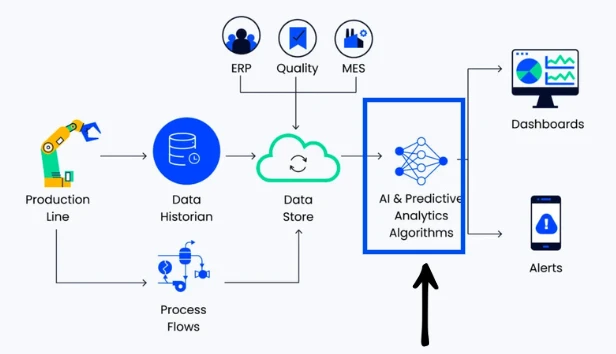
Industrial IA agents address the limitations of siloed data by autonomously integrating and deriving actionable insights from IoT, controls systems (e.g. SCADA), and connected assets.
- Some (e.g., Nexus) have goal-oriented behavior, where they actively adjust key variables such as throughput/quality metrics.
- Others are designed for semi-autonomous tasks, such as fault detection or automated scheduling, where they support human decision-making by providing operational insights.
Below is a categorized review of over 30 key vendors offering IA agent platforms and tools:
To explore each section and discover the relevant vendors, tools, platforms, capabilities, and focus areas, click the links below:
Manufacturing operations agents
- Production planning & scheduling agents
- Adaptive process control agents
- Equipment diagnostics & predictive control agents
Supply chain & fulfillment agents
- Procurement intelligence agents
- Supply chain optimization agents
- Logistics optimization agents
- Autonomous execution agents
- Control system orchestration agents
Quality & inspection intelligence
- Machine vision quality control
- Defect detection
Inside the industrial IA agent landscape
The deployment and impact of industrial IA agents are still developing. What follows is a grounded assessment of their current state, structured around seven observable trends, with representative examples from industry deployments.
General-purpose agent control planes are emerging; industrial stacks may adopt them with additional OT safety layers.1
1. From general purpose to verticalized systems
In industrial operations, the focus is on IA agents that are narrowly scoped and domain-specific systems.
These agents operate within well-defined boundaries, using structured industrial data to solve targeted problems where context and feedback are clear.
Adoption typically begins with vertical embedding in areas like manufacturing, logistics, procurement before expanding into adjacent functions.
Examples from your list include:
• Praxie for production scheduling
• Mandel IA for logistics optimization
• Arkestro for procurement automation
• Phaidra for energy control
• Juna IA for continuous process tuning
Real world example:
Praxie’s IA-based production scheduling system focuses specifically on adjusting schedules. It does not control machinery directly or attempt to manage the entire production lifecycle.
2. Where IA agents & tools are delivering value
One of the most value where IA agents and tools are in settings with abundant feedback and clear reward signals, such as throughput or defect reduction.
Real-world example:
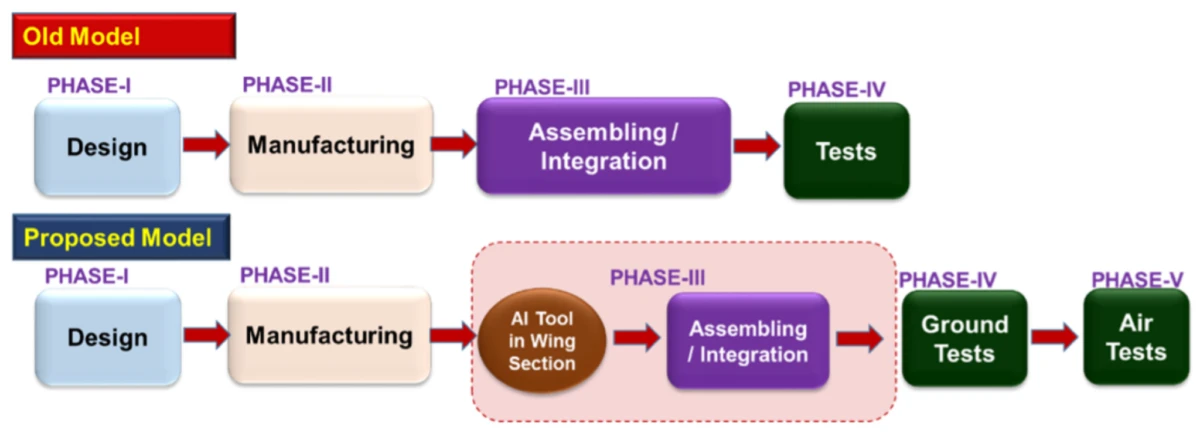
Deep learning defect detection in aerospace:
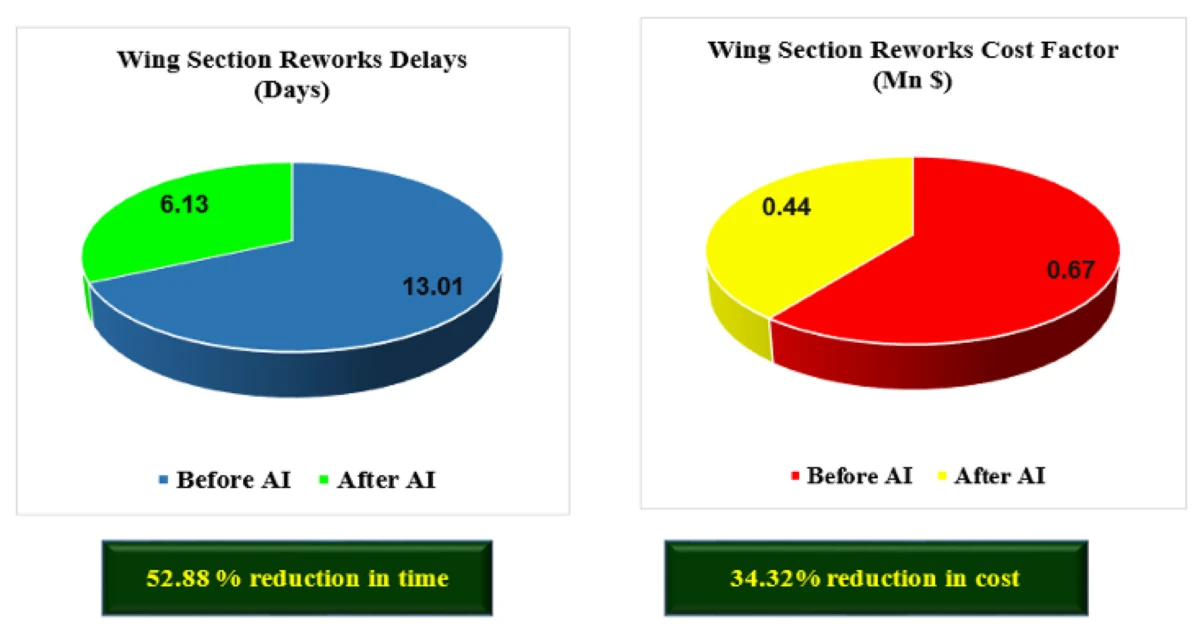
In aerospace component manufacture, a defect detection system was used early in the assembly process to catch faulty parts before integration. This reduced rework delays ~50 %.
Use of IA tool that detect faults in the integration phase and enables the manufacturing factory to optimize its processes at an early timeframe3
The induced delay before applying the IA defect detection model was 13.01 days, which improved to 6.13 days3
3. Architectures pursuing full-loop control
Some industrial systems now incorporate agents capable of performing sensing, planning, and actuation within the same architecture. While such agents are often limited to advisory or semi-autonomous roles, they signal a shift toward integrating IA across the full control loop.
Real world example:
Microsoft’s Azure AI Foundry features factory agents that analyze shop-floor telemetry, plan parameter adjustments, and either surface recommendations or trigger workflows within production systems.
This setup brings sensing and planning closer to execution, even if full-loop autonomy is not yet the norm.4
4. Modular, task-specific tools
Most industrial IA systems today take the form of single-purpose, modular agents embedded within broader IT or control architectures. These tools are typically designed for a specific function such as predictive maintenance, diagnostics, or scheduling.
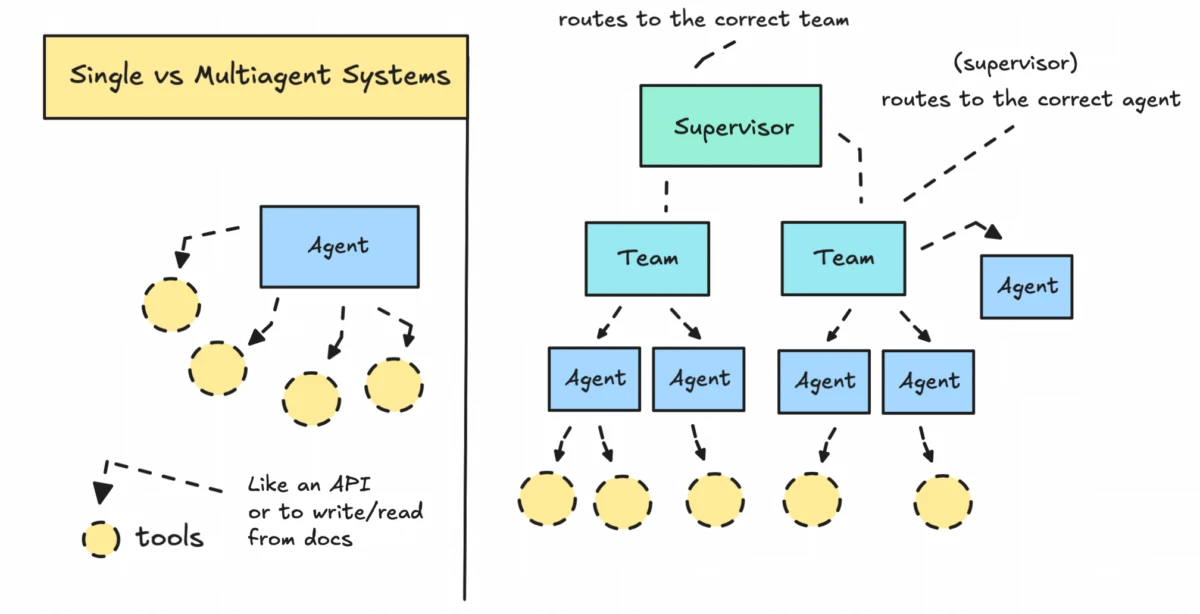
However, these do not operate as multi-agent systems and this modularity also limits their ability to orchestrate complex workflows.
Real-world example:
MakinaRocks offers sensor-driven agents focused on predictive maintenance and anomaly detection. It integrates with existing SCADA layers to inform control systems, but stops short of fully autonomous execution.
5. Incremental integration over system replacement
Contrary to early predictions, industrial autonomy is not arriving through wholesale system redesign.
Instead, agents are being incrementally layered into existing infrastructure. Most deployments focus on supplementing, not replacing, traditional control systems.
Real-world example:
Waltero’s Mímir platform adds IA-eanbled tools on top of existing SCADA systems without replacing the original control infrastructure.7
6. Extending agents to higher-level operations
Some IA agents are being developed for use cases beyond the control layer, including scheduling, inventory management, and procurement. These are not real-time systems but operate in conjunction with ERP software to align business logic with operational data.
Real-world examples:
- Ameba IA offers an ERP-embedded planning agent that adjusts production schedules based on inventory levels and live factory signals.
- Juna IA uses reinforcement learning to optimize across multiple operational targets such as energy use, quality, and throughput.
- C3 IA provides inventory and production schedule optimization tools that analyze enterprise data to adjust reorder levels, model supply risk, and optimize production sequences.
7. Agents are starting to talk to each other
Until recently, every agent platform used its own way of connecting to tools and other agents. That is changing. Two open standards now anchor most new deployments: the Model Context Protocol (MCP), which connects an agent to tools and data, and the Agent2Agent (A2A) protocol, which lets agents from different vendors hand work to each other.9
Real-world example:
Google Cloud’s 2026 IA Agent Trends report frames the core 2026 industrial workflow as several specialized agents working together, with A2A handling agent-to-agent coordination and MCP connecting agents to live data sources, rather than relying on a model’s frozen knowledge.10
30+ industrial IA agents & platforms
Manufacturing operations
1. Production planning & scheduling
IA agents/platforms that generate, refine, and adjust production schedules based on rules, constraints, and real-time factory signals.
- Aitomatic (Expert-informed production planning agent): Uses embedded operational rules and domain-specific constraints to generate context-aware production schedules aligned with manufacturing requirements.
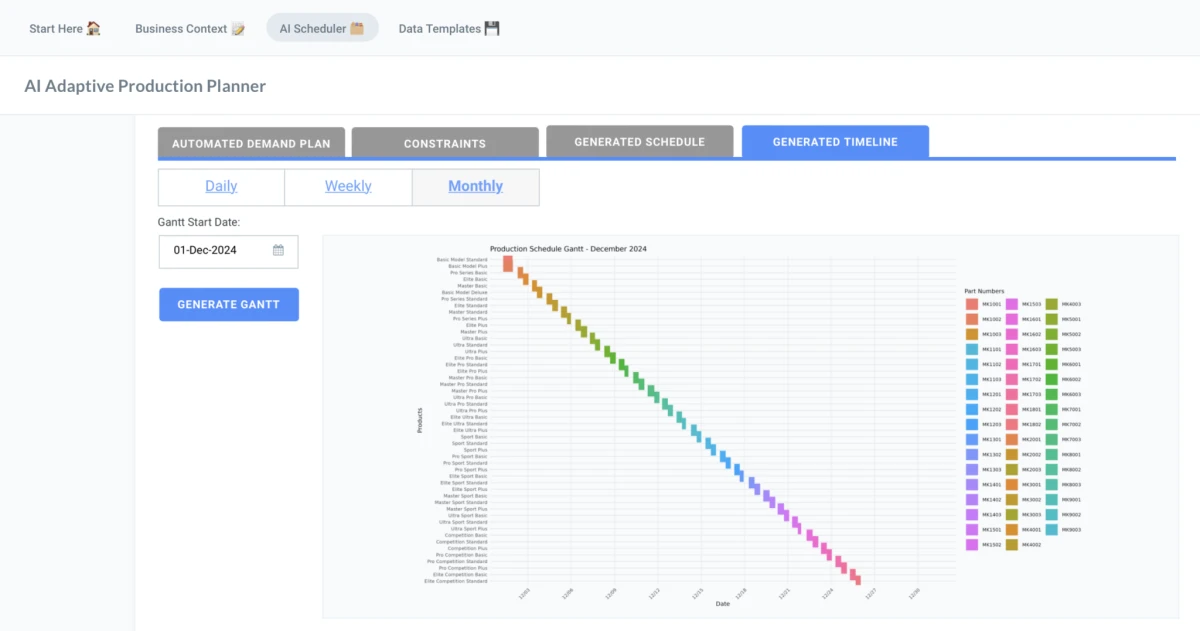
- Limitless AI (Real-time rescheduling agent): Monitors live factory signals and autonomously adjusts production schedules in response to disruptions such as equipment downtime or material shortages.
- Ameba (ERP-embedded planning & scheduling agent): Integrates planning, scheduling, and inventory optimization within ERP systems to synchronize procurement with live production requirements.
- Praxie (IA-based production scheduling agent): Focuses on improving uptime and throughput without directly controlling machinery or upstream planning systems.
2. Adaptive process control
IA agents or platforms that actively control and optimize industrial systems in real time through ML/RL-based feedback loops.
- Nexus (Autonomous process optimization agent): Integrates with industrial controllers for continuous tuning of production systems across efficiency, quality, and energy.
- Imubit (Closed-loop process optimization agent): Connects real-time analytics with setpoint adjustments to autonomously optimize continuous operations.
- Nexxa IA (Multivariable process optimization agent): Performs real-time adjustments across multiple variables to meet operational goals.
- Phaidra (Energy-efficient process control agent): Uses reinforcement learning to minimize energy consumption while maintaining stable process outcomes.
- MakinaRocks (Sensor-driven control optimization agent): Leverages sensor and time-series data for stable, high-performance control strategies. Also, an equipment diagnostics & predictive control agent.
- Luffy IA (for embedded control applications): Controllers for real-time low-data, low-compute control at the edge.
- Juna IA (for control applications): Trains control policies to balance multi-objective goals (e.g. energy, throughput, and quality).
3. Equipment diagnostics & predictive control
Agents focused on identifying deviations, anomalies, or likely failures through passive monitoring and analysis, often without directly controlling the process.
- MakinaRocks (Predictive maintenance agent): Offers predictive maintenance through anomaly detection and sensor data analytics to anticipate failures and reduce unplanned downtime.
- Retrocausal (ML-based diagnostics agent): Applies ML models for anomaly detection and root cause analysis in process workflows.
- Uptake (Predictive maintenance agent): Monitors machine signals to predict degradation and schedule proactive maintenance.
- Avathon (Failure prediction agent): Utilizes data analytics to forecast failure probabilities and enable preventative actions.
- Augury (Machine health monitoring agent): Analyzes vibration and acoustic data to detect potential mechanical failures.
- C3 IA (Enterprise asset monitoring agent): Centralizes asset monitoring and forecasts maintenance needs at scale.
Supply chain & fulfillment
4. Procurement intelligence
Tools and agents that handle supplier negotiation, sourcing optimization, and contract automation.
- Pactum (Autonomous procurement negotiation agent): Manages supplier negotiations to optimize contract terms without human input.
- Nnamu (Contract and sourcing automation agent): Automates creation and management of contracts using LLM-based generation.
- Soff (Sourcing evaluation agent): Automates bid evaluation and supplier selection.
- Arkestro (Procurement prediction agent): Applies predictive analytics to improve sourcing performance in real time.
- Rivio (Procurement workflow agent): Automates enterprise-level procurement actions using internal data.
5. Supply chain optimization
5.1 Inventory & replenishment:
- Kavida IA (Inventory & supply‑chain risk agent): Predicts stockouts, tracks supplier risks, and automates replenishment to prevent disruptions.
5.2 Planning & simulation:
- Oii IA (Supply chain planning agent): Uses demand forecasting, simulation, and modeling to minimize inventory risk and improve planning.
5.3 End-to-end orchestration:
- Regrello (Supply chain orchestration agent): Coordinates procurement, inventory, and logistics workflows to streamline supply operations.
6. Logistics
IA agents and platforms that manage routing, warehouse operations, and delivery logistics.
- Mandel IA (Logistics route optimization agent): Optimizes transportation routes and delivery schedules by dynamically adjusting to traffic, delays, and capacity constraints.
- Deepvu (Warehouse & delivery optimization agent): Improves warehouse throughput and delivery efficiency using predictive models that simulate order flows, inventory movement, and fulfillment timing.
- HappyRobot (Warehouse robotics coordination agent): Coordinates robotic agents and warehouse task planning.
- Pando IA (End-to-end logistics automation agent): Manages routing, exceptions, and fulfillment across logistics pipelines.
Automation stack
7. Autonomous execution agents
Agentic systems embedded in physical systems or digital workflows that carry out tasks independently.
- Agent Brick (Databrick mosaic IA agent): Production-grade execution agents for enterprise workflows, with MLflow-based evaluation, Unity Catalog governance, IA Gateway model support, and an integrated MCP catalog for tool and context management as of 2026.11
- Rios (Robotic task execution agent): Embeds IA agents in robotics for adaptive shop floor task execution.
8. Control system orchestration
Agentic platforms that coordinate control systems, workflows, and enterprise systems.
- Amesa (Industrial orchestration agent): Connects control systems, workflows, and operations across distributed systems.
- Tomorrow Things (Agentic orchestration platform): Manages asset-level and system-wide interactions via API and logic coordination.
- Exlens IA (Industrial orchestration agent): Integrates diagnostics and controls across systems through agentic coordination.
- Middleware / Factory OS (Agent-based orchestration layer): Unifies disparate control systems into a centralized layer for orchestration and automation.
 Ajouter comme source préférée
Quality & inspection intelligence
9. Visual inspection agents
IA agents/platforms using computer vision for quality inspection, defect detection, and anomaly spotting.
9.1 Machine vision quality control:
- Cognex Vision IA (Machine vision quality inspection agent): Uses deep learning to autonomously detect complex visual defects on the production line in real time.
9.2 Defect detection & QA:
- Zoho Creator (Defect detection agent): Detects and flags anomalies in production output using pattern recognition.
- Instrumental (Automated QA agent): Detects defects and learns from production data to catch new failure modes, includes analytics and feedback.
Further readings
- Agentic AI for Cybersecurity: 10 Use Cases & Examples
- IA-Based Stock Trading: Which Gen AI Tool Is Better
- Agentic AI Finance Benchmark: FinRobot vs FinRL vs FinGPT
- IA Agent Traps: 20 Real-Life Incidents
Citer cette recherche
Choisissez le format qui correspond à votre lieu de publication. Coller la version avec lien dans votre CMS préserve le lien retour.
@misc{dilmegani2026,
  author = {Dilmegani, Cem and Arslan, Ezgi},
  title  = {{30+ Industrial IA Agents to Watch}},
  year   = {2026},
  month  = jul,
  howpublished    = {\url{https://aimultiple.com/industrial-ai-agents}},
  note   = {AIMultiple. Consulté le 29 juillet 2026}
}
Journal des modifications
3 mises à jourAjout d'une septième section de tendances sur les normes d'interopérabilité MCP et A2A au paysage des agents d'IA industrielle.
Ajout d'une nouvelle tendance à l'introduction.
Remplacé « Agents d'inspection visuelle » dans la section « Intelligence qualité et inspection ».
Liens de référence
Le travail de Cem chez AIMultiple a été cité par des publications mondiales de premier plan, notamment Business Insider, Forbes, Morning Brew et Washington Post, par des entreprises mondiales comme Deloitte et HPE, par des ONG comme World Economic Forum et par des organisations supranationales comme European Commission. [1], [2], [3], [4], [5]
Tout au long de sa carrière, Cem a été consultant en technologies, acheteur de technologies et entrepreneur technologique. Il a conseillé des entreprises sur leurs décisions technologiques chez McKinsey & Company et Altman Solon pendant plus de dix ans. Il a également publié un rapport McKinsey sur la digitalisation.
Il a dirigé la stratégie technologique et les achats d'un opérateur télécom, sous la responsabilité du PDG. Il a également dirigé la croissance commerciale de l'entreprise de technologie profonde Hypatos, qui a atteint un revenu récurrent annuel à 7 chiffres et une valorisation à 9 chiffres, passant de 0 à ce résultat en deux ans. Le travail de Cem chez Hypatos a été couvert par des publications technologiques de premier plan comme TechCrunch et Business Insider.
Cem intervient régulièrement lors de conférences technologiques internationales. Il est diplômé de Bogazici University en tant qu'ingénieur informatique et titulaire d'un MBA de la Columbia Business School.
















Soyez le premier à commenter
Votre adresse courriel ne sera pas publiée. Tous les champs sont obligatoires. Les commentaires sont laissés dans leur langue d'origine.