

We analyzed ~20 AI governance tools and ~40 MLOps platforms delivering AI governance capability and identified more than 30 market leaders. Click the links below to explore their profiles:
Compare AI governance software
AI governance tools landscape below shows the relevant categories for each tool mentioned in the article. Businesses can select solutions from these categories based on their AI initiatives and governance needs.
Some of these tools include:
Top MLOps tools
MLOps tools are individual software tools that serve specific purposes within the entire machine learning process. For example, MLOps tools can focus on ML model development, monitoring or model deployment. A data science team can deliver responsible AI products by applying these tools to machine learning algorithms to:
- Monitor and detect biasses
- Check for availability and transparency
- Ensure ethical compliance and data privacy.
Weights & Biases
Weights and Biases is an MLOps platform that helps teams track, manage, and reproduce machine learning experiments and models. Its Registry module provides governance-focused features including:
- Model and dataset registry to centralize and share ML assets across teams.
- Versioning and lineage tracking to ensure reproducibility and traceability of models and experiments.
- Lifecycle management to label and manage models across stages such as development, staging, and production.
- Access control and audits to restrict usage and track changes for compliance purposes.
- CI/CD integration to automate model evaluation, deployment, and reproducibility in production pipelines.
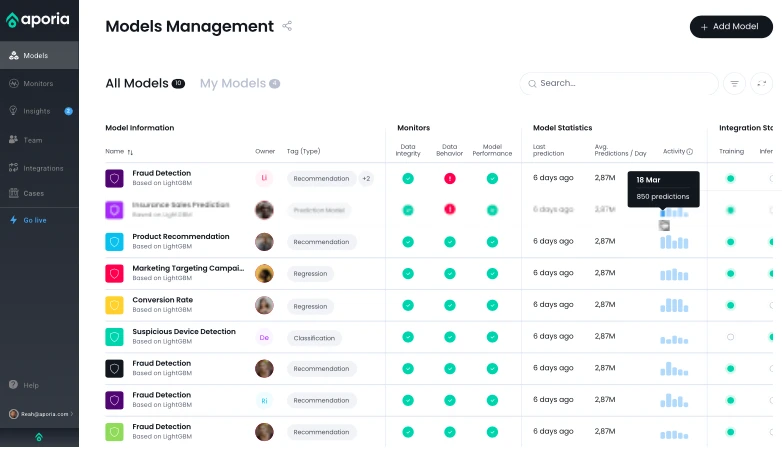
Aporia AI
Specialized in ML observability and monitoring to maintain the reliability and fairness of their machine learning models in production. It employs model performance tracking, bias detection, and data quality assurance.
Aporia now offers AI control platform which expand these MLOps capabilities into a dedicated gateway for agentic behavior by offering capabilities like:
- AI policy gateway: A no-code interface where security teams can set global no-go zones for agent behavior without modifying the underlying code.
- Real-time anomaly detection: Identifies drift in agent reasoning or sudden spikes in hallucinatory tool calls.
- Prompt injection defense: Catches jailbreak attempts that try to hijack an agent’s system instructions to take unauthorized actions.
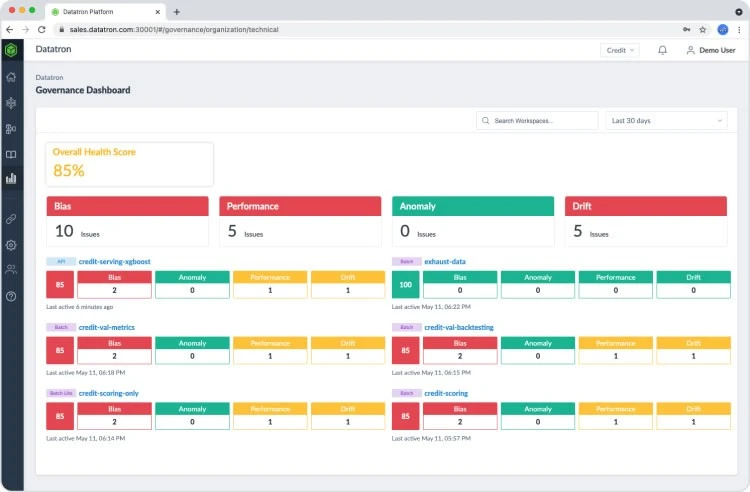
Datatron
Provides visibility into model performance, Enables real-time monitoring, and Ensures compliance with ethical and regulatory standards, thus promoting responsible and accountable AI practices.
Snitch AI
An ML observability and model validator which can track model performance, troubleshoot and continuously monitor.
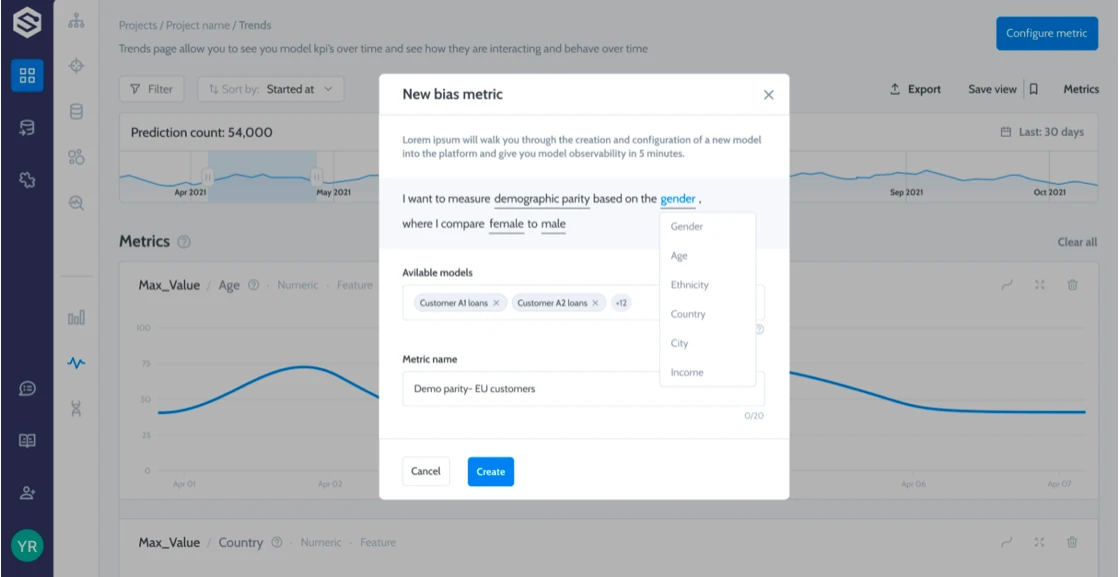
Superwise AI
Monitor AI models in real-time, detect biases, and explain model decisions, thereby promoting transparency, fairness, and accountability in AI systems.
Why Labs
An LLMOps tool that monitors LLMs data and mode to identify issues.
- Implementing security measures
- Staying in line with regulatory requirements and laws
- Managing model documentation.
Top data governance and runtime privacy platforms
This category integrates static data catalogs with packet-level guardrails to address two critical operational layers:
- Data Governance (Data at rest): Automatically catalogs data assets, tracks dataset lineage, and maps metadata to ensure RAG knowledge bases and training models remain compliant before processing begins.
- Runtime Privacy (Data in motion): Acts as an inline firewall during active AI inference cycles, intercepting data packets to mask PII or block proprietary data exfiltration before it reaches external providers.
The following market-leading platforms demonstrate this convergence:
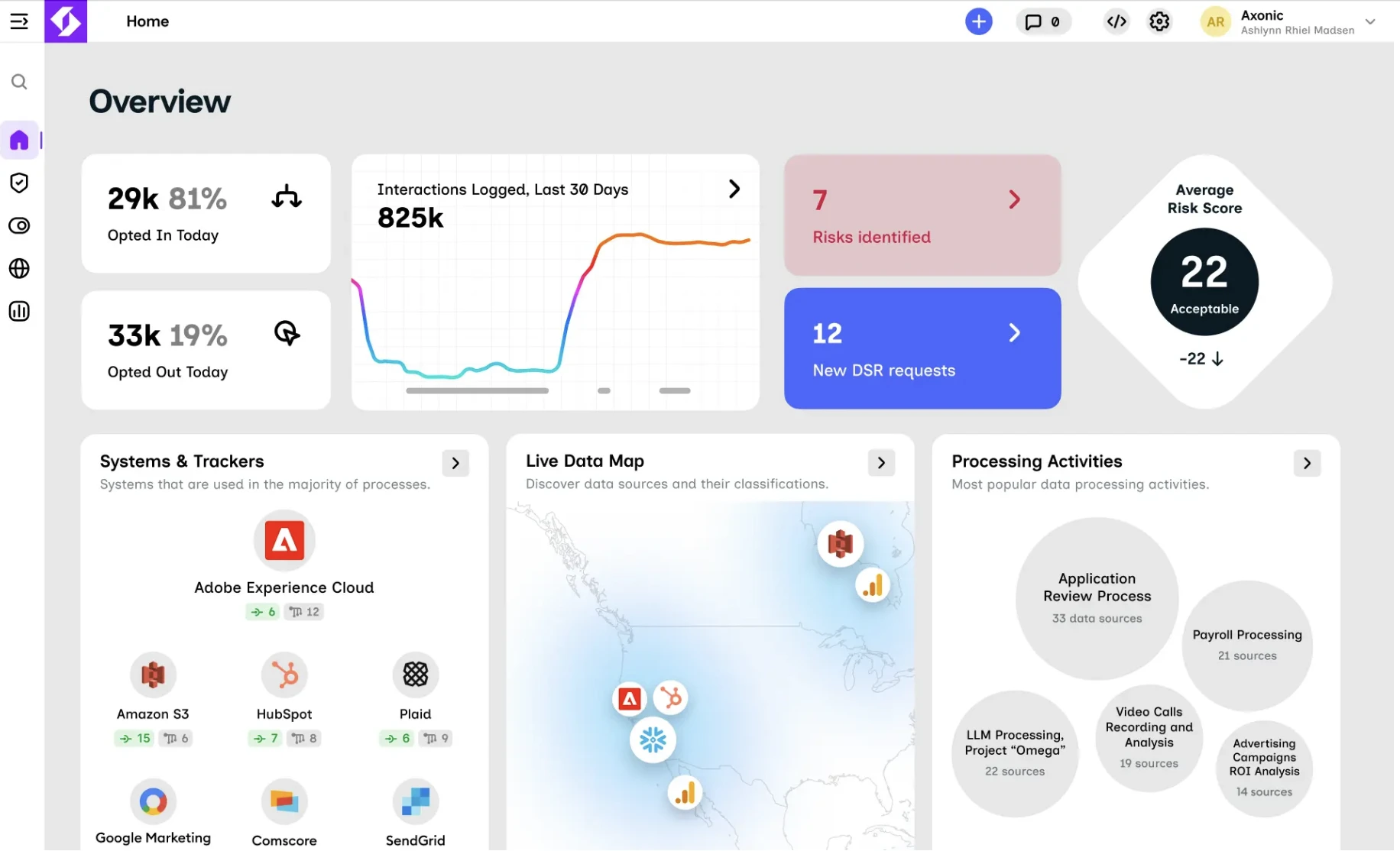
Ketch
Ketch is a data control platform that enforces compliance policies directly at the data layer during live operations. It automates data protection across frontends, backends, and large language models (LLMs).
- Packet-level enforcement: Intercepts live AI prompts and responses to block or redact PII, social security numbers, and unauthorized data segments before they interact with third-party LLMs.
- Automated discovery: Deploys continuous software agents to scan SaaS environments down to individual data cells, automatically generating on-demand Records of Processing Activities (ROPA).
- Automated assessments: Uses active system telemetry to pre-populate required impact assessments, such as DPIAs and PIAs, while flagging internal policy contradictions before submission.
- Defensible audit trails: Logs all system events, providing immutable logs tracking who, what, when, and why for every allowed or redacted query.
Cloudera
Cloudera provides data lifecycle management across hybrid environments, extending tracking and security parameters to machine learning and generative AI workflows.
- Hybrid model serving: Deploys and auto-scales models across cloud or on-premises infrastructure while maintaining unified administrative control over prompts and outputs.
- Agentic isolation: Restricts autonomous workflows within isolated runtimes to enforce secure tool execution, sandbox directory limits, and precise service account boundaries.
- Lineage and traceability: Maps data transformations across hybrid data estates while automatically logging inference query metadata to ensure compliant traceability for training sets and model decisions.
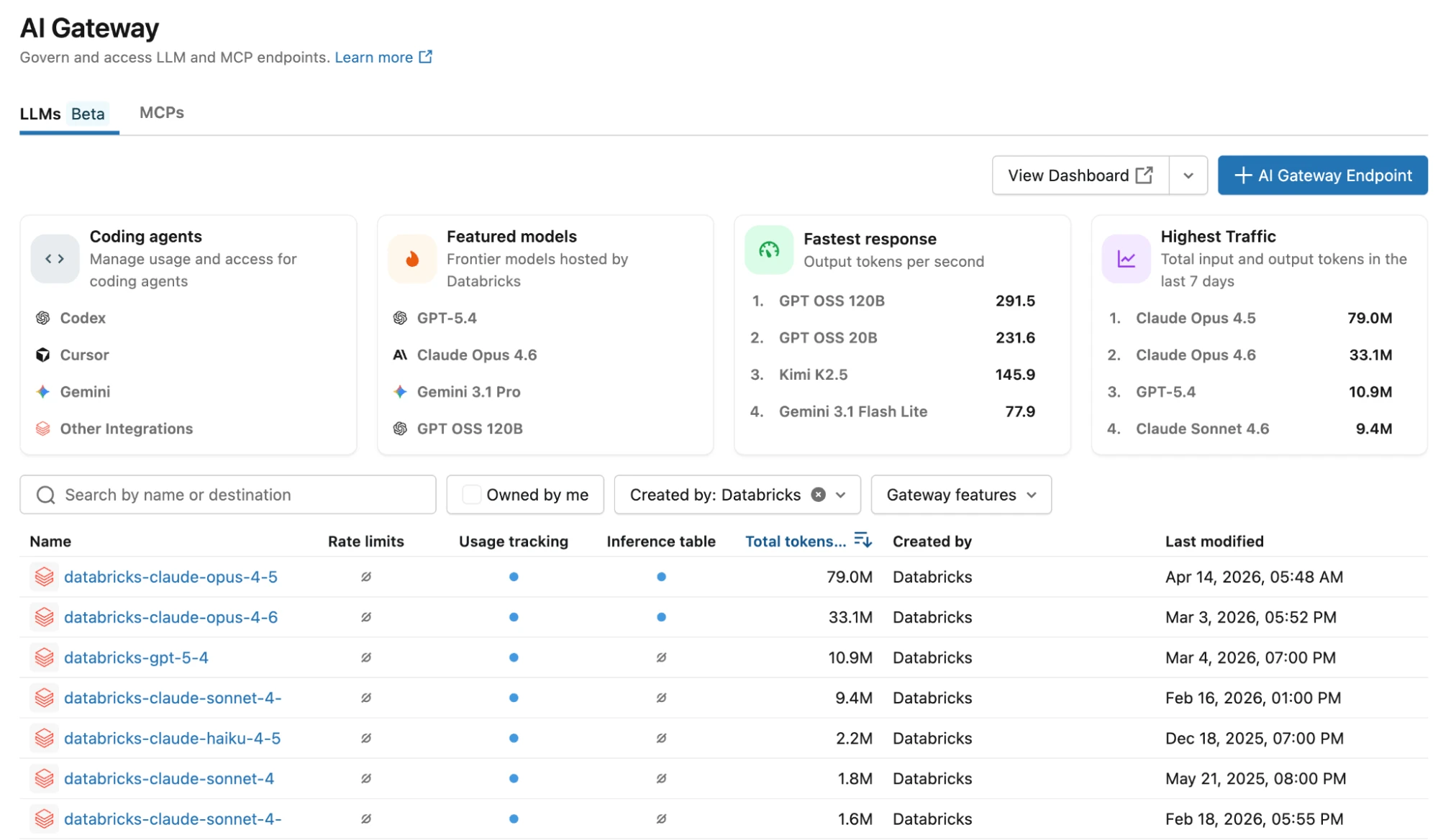
Databricks
Databricks provides unified data and AI management by extending its central cataloging framework into active model endpoints through Unity AI Gateway.
- Agent and MCP governance: Enforces fine-grained permissions when autonomous agents interact with external tools and Model Context Protocol (MCP) servers, using user-specific contexts to prevent unauthorized access.
- Inline guardrails: Evaluates live inference payloads to detect and redact PII, block toxic content, and catch prompt injection attempts before data leaves the system.
- Unified observability: Routes all model transaction logs into central system tables, converting token usage into exact cost metrics grouped by team, provider, or user.
- Production resilience: Standardizes model access via an OpenAI-compatible API featuring automated failover routing and request rate limiting.
Devron AI
Devron AI delivers a decentralized data science platform designed to build and train machine learning models across siloed repositories while maintaining compliance.
- Privacy-preserving compliance: Enforces local regulatory policies, such as GDPR, CCPA, and the EU AI Act, by utilizing anonymization and differential privacy techniques during training.
- Federated model training: Trains algorithms directly where the data resides across disparate environments, eliminating the need to centralize or move raw records.
IBM Cloud Pak for Data
IBM Cloud Pak for Data is a modular data fabric and AI platform that connects hybrid data estates to automate enterprise-grade metadata management and compliance tracking.
- Automated factsheets: Captures model metadata automatically throughout the development lifecycle to compile audit-ready model documentation without manual intervention.
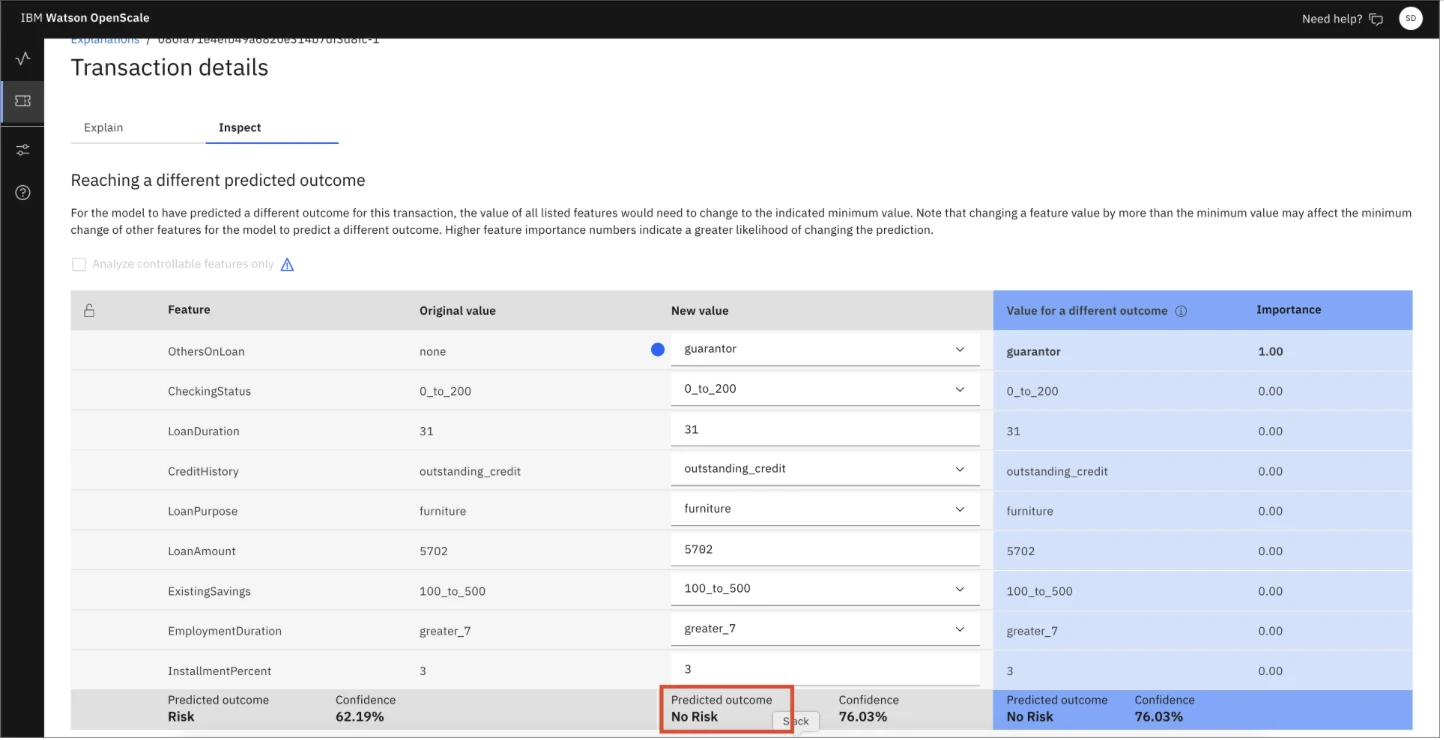
- Operational monitoring: Leverages integrated tools (Watson OpenScale) to continuously track production models for accuracy drift, performance anomalies, and algorithmic bias.
Snowflake
Snowflake delivers central data governance and risk mitigation through its Horizon Catalog, which serves as a unified compliance layer for data assets, apps, and agents.
- Context governance: Manages how external models and AI agents interact with corporate data structures by exposing unified business definitions via MCP integrations.
- Runtime agent guardrails: Applies machine learning-driven detection to live workflows, automatically blocking jailbreak attempts, prompt injections, and anomalous behaviors.
- Dynamic data masking: Utilizes automated classification algorithms to identify, mask, or restrict sensitive corporate data fields across live applications.
- Consumption tracking: Records execution costs and compute consumption for AI functions within central dashboards to enforce spending controls.
Top MLOps platforms
Leading MLOps platforms provide tools and infrastructure to support end-to-end machine learning workflows, including model management and oversight.
Amazon Sagemaker
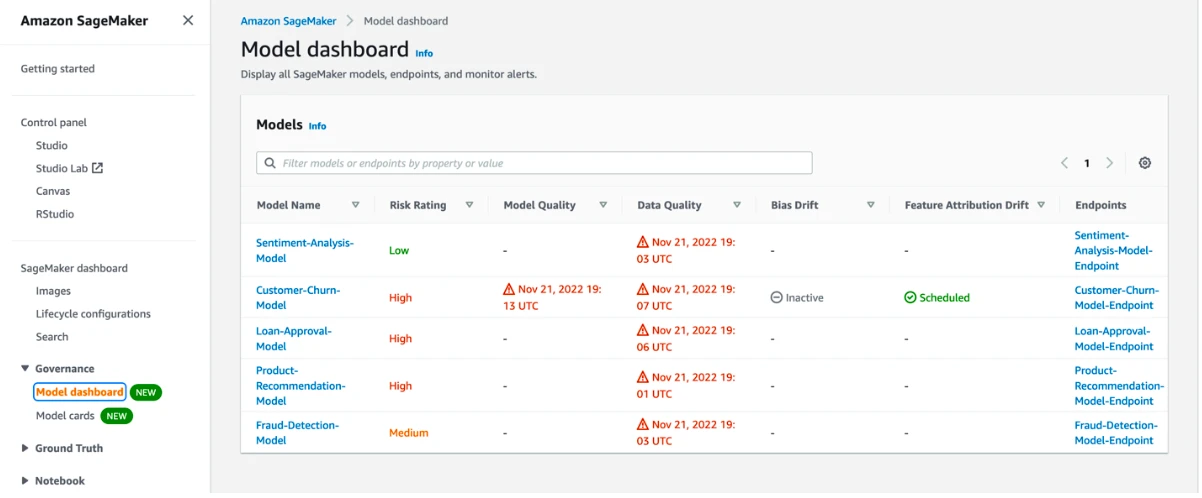
Amazon SageMaker is an end-to-end managed AWS service that unifies data engineering, machine learning, and generative AI development. It bridges the gap between raw data storage (such as S3 or Redshift) and production-grade AI agents. The core of this ecosystem is SageMaker Unified Studio, a centralized web-based workspace that integrates separate AWS services into a single, governed interface by providing capabilities like:
- SageMaker catalog: Centralizes data governance by using metadata tags (e.g., PII sensitivity) to automatically enforce access policies across the entire workspace.
- VPC-only standard: Hardens the environment by routing all traffic through AWS PrivateLink, ensuring complete network isolation for model training and inference.
- Bedrock AgentCore integration: Manages agentic behavior by separating reasoning from execution, giving you strict control over which tools an AI agent can invoke.
- Universal MLflow tracing: Provides a granular “Agent Trace” which is a chronological audit log of every decision and tool call made by an autonomous agent for total transparency.
Azure ML
Azure Machine Learning is a cloud-based MLOps platform by Microsoft that supports the full machine learning lifecycle, from data prep to model training, deployment, and monitoring. It offers AI governance-related capabilities for ML models, including:
- Model registry and versioning to track experiments and production models.
- Lineage tracking to ensure reproducibility of models and experiments.
- Lifecycle management and CI/CD integration to orchestrate model evaluation, retraining, and deployment.
Datarobot
Delivers a single platform to deploy, monitor, manage, and govern all your models in production, including features like trusted AI and ML governance to provide an end-to-end AI lifecycle governance.
Vertex AI
Offers a range of tools and services for building, training, and deploying machine learning models with AI governance techniques, such as model monitoring, fairness, and explainability features.
Compare more MLOPs platforms in our data-driven and comprehensive vendor list.
Top LLMOps tools
LLMOps tools include LLM monitoring solutions and tools that assist some aspects of LLM operations. These tools can deploy AI governance practices in LLMs by monitoring multiple models and detecting biases and unethical behavior in the model. Some of them include:
Akira AI
Runs quality assurance to detect unethical behavior, bias or lack of robustness.
Calypso AI
Delivers monitoring considering control, security and governance over generative AI models.
Arthur AI
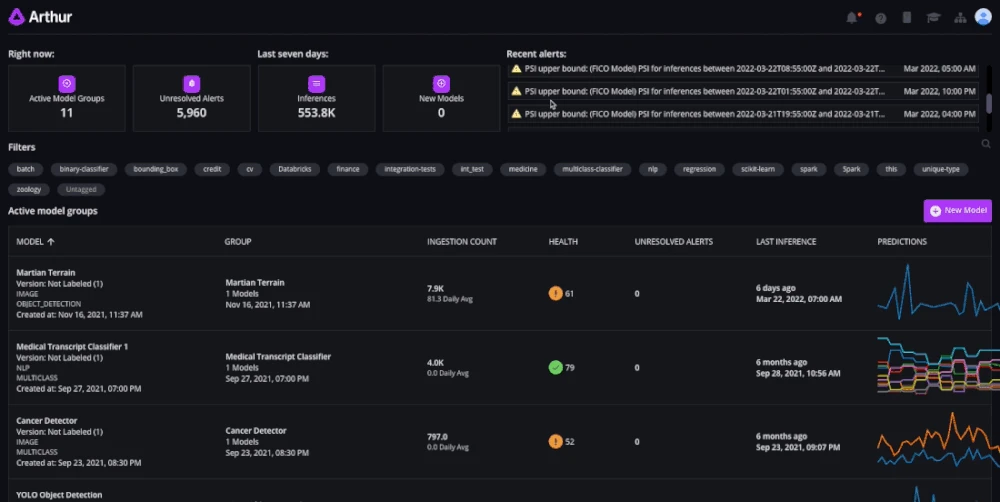
Arthur has transitioned from a standard LLMOps tool into a governance platform for the Agentic Development Lifecycle (ADLC). While it retains core model-monitoring functions, its focus is now the management of autonomous systems through the following capabilities:
- Real-time policy enforcement: Provides active guardrails to block non-compliant agent actions or data leaks before they occur in production.
- Agent discovery & inventory: Catalogs all active AI agents across an organization for real-time visibility and oversight.
- End-to-end traceability: Logs every “hop” of a task (e.g. reasoning steps and API calls) to identify specific points of failure.
- Automated ADLC evaluations: Uses automated metrics to validate tool-calling accuracy, brand alignment, and PII protection throughout the development cycle.
Compare more LLMOps tools in our data-driven and comprehensive vendor list.
AI governance tools for government and public policy
While most AI governance tools serve the private sector, a new class is emerging for government. These tools:
- Automate public functions, from service delivery to regulatory oversight.
- Present unique governance challenges, including public trust and legal interpretation.
- Highlight a critical area for study in the future of AI.
SweetREX Deregulation AI
The SweetREX Deregulation AI is a tool developed for the Department of Government Efficiency (DOGE) that uses Google AI models to:
- Scan and flag federal regulations that are outdated or not legally required.
- Automate deregulation, aiming to eliminate a significant number of rules with minimal human input.
- Drastically reduce labor, with a nationwide rollout planned for 2026.
It is currently in its early stages of deployment, with its use raising concerns about the AI’s ability to accurately interpret complex legal language and its compliance with legal procedures.
Top AI governance platforms
These tools tend to focus on an aspect of AI governance, unlike platforms that manage the entire AI lifecycle. Such tools can be useful for small-scale projects or best-of-breed approaches.
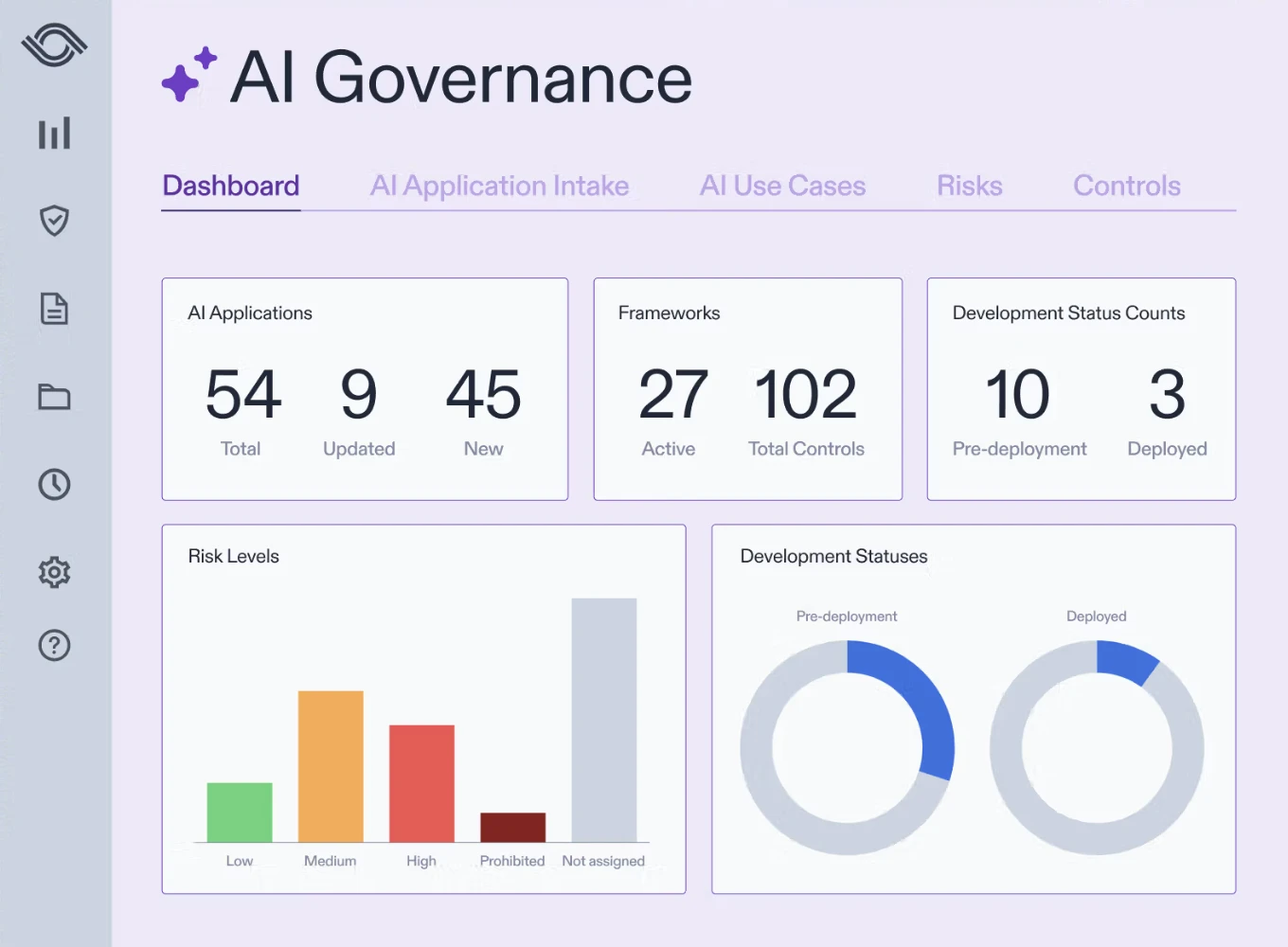
For example, they can focus on ensuring that AI systems comply with responsible AI best practices, industry regulations and security standards. They help organizations mitigate AI risk by:
Asenion (formerly Fairly AI & Anch.AI)
Asenion is a unified AI Governance platform formed by the acquisition of Anch.AI and Fairly AI. The platform can help manage risks, streamline compliance and simplify AI trust, safety and security across the AI lifecycle with core capabilities like:
- AI governance to establish policies and controls to ensure AI systems are reliable and secure.
- AI risk management to cover the full process of identifying, assessing, mitigating, and monitoring risks throughout the AI system lifecycle.
- AI compliance to guarantee adherence to applicable regulations, ethical guidelines, and internal organizational policies, notably offering a reliable fast-track to the EU AI Act.
- Risk & compliance that combines legal and technical expertise.
Asenion offers an easy API-integration for technical teams and automated AI assurance for business leaders.
Anthropic
Anthropic offers a suite of AI tools and frameworks designed to support enterprise, government, and research users with a focus on safety, alignment, and governance.
Core AI governance tools and features
- Sabotage evaluation suite tests models against covert harmful behaviors, such as hidden sabotage, sandbagging, and evasion. The suite simulates real-world deployment scenarios and potential attack vectors to help organizations identify and address vulnerabilities before the models are released or scaled.
- Agent monitoring tools can analyze actions, internal reasoning, and decision-making processes for signs of misalignment or anomalies. Monitoring is integrated with periodic audits and risk assessment protocols, offering comprehensive visibility into model behavior and compliance at all times.
- Red-team framework involves systematic adversarial testing, where expert teams attempt to provoke unsafe or manipulative outputs from the models. Results from these red-team exercises can help inform mitigation strategies and strengthen the resilience of AI deployments in production environments.
Claude model features for governance
Claude is an AI language models designed by Antrhopic for text understanding and generation across diverse applications. Its
- Constitutional AI alignment: Trains models according to a transparent set of ethical principles to ensure consistent, self-regulated alignment.
- Claude GOV models: Specialized Claude model variants built for government use with enhanced compliance and security features.
- Multi-agent safeguards: Implements deterministic controls such as checkpoints and retry logic to govern agent behavior in complex environments.
Credo AI
Credo AI is a unified governance platform purpose-built to help enterprises discover, monitor, and manage AI systems. It delivers AI model risk management, model governance and compliance assessments with an emphasis on generative AI and agentic AI governance to facilitate the adoption of AI technology.
Credo AI delivers:
- Regulatory compliance to streamline adherence to regulations and enterprise policies, including preparations for new laws like the EU AI Act.
- Risk mitigation to assess AI models for factors such as bias, security, performance, and explainability.
- Governance artifacts to generate AI-related documentation, including audit reports, risk analyses, and impact assessments.
Optro (Formerly FairNow)
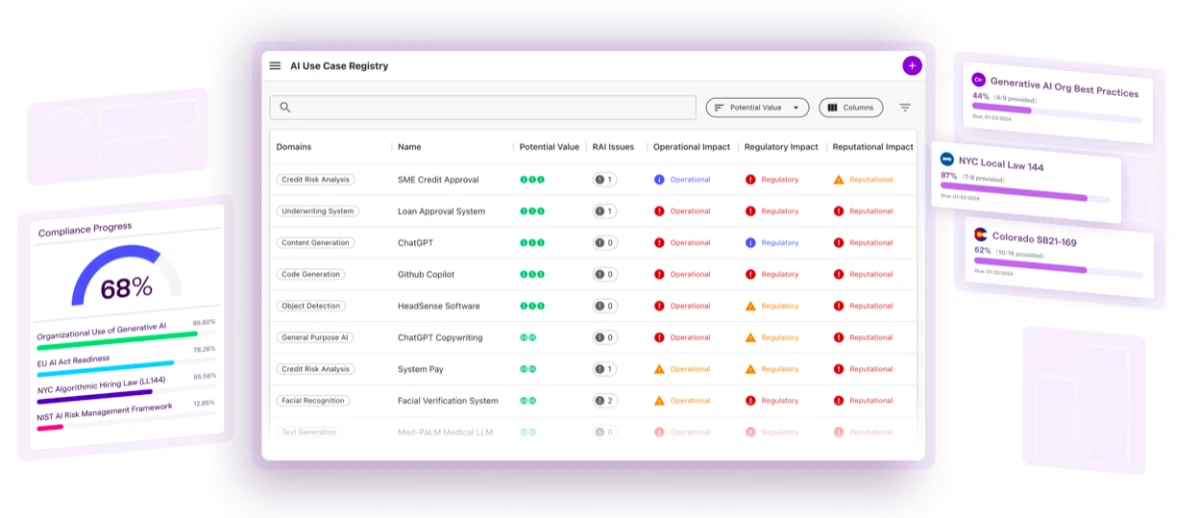
Optro, which recently rebranded from AuditBoard and acquired FairNow, is an AI-powered Governance, Risk, and Compliance (GRC) platform that unifies enterprise risk, internal audit, and AI safety protocols into a single system of action.
- Centralized AI intake and registry: Replaces manual tracking sheets with a unified intake portal to inventory all corporate AI models, automated agents, and third-party vendor applications.
- Framework compliance mapping: Connects documented AI usage workflows directly to pre-configured assessment templates for major standards, including ISO 42001, the NIST AI RMF, and the EU AI Act.
- Intelligent risk scoring: Evaluates active use cases against corporate policies to assign automated risk scores and suggest actionable mitigation steps for compliance teams.
Fiddler AI
An AI observability tool that provides ML model monitoring and relevant LLMOps and MLOPs features to build and deploy trustable AI, including generative AI.
Harmonic Security
Harmonic Security is an enterprise AI governance and security platform that provides visibility, control, and protection for AI usage across the organization. Its core capabilities include:
- AI usage monitoring to track employee interactions with AI tools and agentic systems in real time.
- Data protection to detect and block sensitive or high-risk information from being shared with AI systems.
- Policy enforcement to define and implement access controls and usage restrictions across teams.
- Shadow AI discovery to identify unsanctioned AI tools and agentic workflows in the organization.
- Auditing and reporting to generate logs and reports for compliance and governance reviews.
Holistic AI
Holistic AI is a governance platform that helps enterprises manage AI risks, track AI projects and streamline AI inventory management. It can help users assess systems for efficacy and bias and continuously monitor global AI regulations to keep their AI applications, such as LLMs compliant.
With Holistic AI, users can facilitate:
- Policy and risk management for policy implementation, incident control, and operational risk management.
- Auditing and compliance to environmental and disaster recovery standards.
- EU AI Act support to comply with EU AI regulations, allowing businesses to focus on core objectives while the platform handles regulatory complexities.
IBM watsonx.governance
IBM watsonx.governance is an enterprise AI governance platform that enables organizations to audit, monitor, and ensure compliance of AI and ML models across the organization. Its main governance capabilities include:
- Model catalog and metadata management for centralized oversight of AI systems.
- Lifecycle governance to manage models from development through deployment and retirement.
- Bias, fairness, and risk monitoring to identify and mitigate compliance issues.
Mind Foundry
Monitor and validate AI models, maintain transparency in decision-making, and align AI behavior with ethical and regulatory standards, fostering responsible AI governance.
ModelOp Center
ModelOp Center is an enterprise AI governance platform that focuses on auditing, controlling, and ensuring compliance of AI models throughout their lifecycle. Its core capabilities include:
- Model inventory and lifecycle management to track AI models from development to retirement.
- Governance policies and enforcement to ensure models comply with internal rules and regulatory requirements.
- Integration with MLOps pipelines to enforce governance controls without disrupting operations.
Monitaur
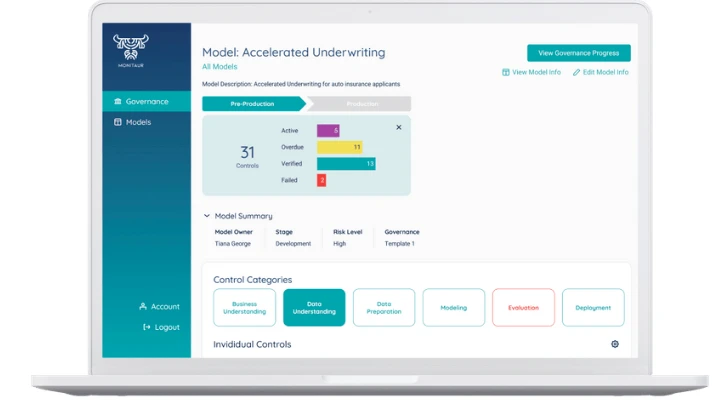
Monitaur specializes in AI governance with its Monitaur ML Assurance platform, a SaaS solution for monitoring and managing AI models. The platform enables businesses to enhance oversight, improve collaboration, and implement scalable governance frameworks. Its key features include:
- Real-time monitoring: Tracks AI algorithms continuously and records real-time insights.
- Governance framework: Supports the creation of evidence-based, transparent AI governance programs.
Sigma Red AI
Detects and mitigates biases, ensuring model explainability and facilitating ethical AI practices.
Solas AI
Checks for algorithmic discrimination to increase regulator and legal compliance.
Top AI agent governance platforms
AI agent governance is an emerging domain focused on overseeing autonomous AI systems and multi-agent setups. It ensures agents operate safely, ethically, and within organizational or regulatory boundaries. The core pillars of AI agent governance include policy enforcement, behavior monitoring, risk assessment and management, auditing and transparency, and access controls.
Full-stack AI governance platforms, data governance tools or security and compliance focused platforms can deliver AI agent governance capabilities. Here we cover agent-focused governance platforms, such as:
AgentOps
It is a specialized supervisor tool that tracks agent trajectories and multi-agent interactions to deliver oversight of agentic systems. AgentOps delivers:
- Action audit trails: Maintains a permanent, legal-grade log of every tool call, external API interaction, and autonomous decision made by an agent.
- Compliance dashboard: Offers pre-built reporting for security teams to verify that agents are operating within their defined “rulebooks.”
- Safety evaluations: Provides simulation environments to test how an agent handles edge cases or “malicious” prompts before it is granted access to live production systems.
Guardrails AI
It specializes in runtime enforcement and validation, acting as a real-time “firewall” between the agent and the world. Guardrails AI facilitates:
- Input/output validation: Define structured schemas that prevent agents from leaking PII or generating toxic content.
- Deterministic controls: Force a retry or a human-in-the-loop approval if a confidence threshold isn’t met.
- Safety wrappers: Can be wrapped around any model (OpenAI, Anthropic, Llama) to provide a consistent governance layer across fragmented vendor environments.
- Brand safety filters: Detects and blocks responses that deviate from corporate tone or include competitor mentions.
Check out our agentic monitoring benchmark to learn more about these tools and compare more than 15 AI agent observability tools.
Why does AI agent governance matter?
The need for dedicated agent governance is increasing due to new risks, including:
- Unintended actions (e.g. deleting data, sending emails, placing orders)
- Tool misuse or privilege escalation
- Hallucinated but executed decisions especially for high-impact autonomous decisions
- Unpredictable behavior in multi-agent interactions.
- Non-compliance with regulations (GDPR, AI Act, HIPAA, etc.)
- No clear accountability (“why did the agent do this?”)
AI agent governance vs. AI governance
AI agent governance shares principles with general AI governance, such as risk assessment, compliance, auditing, and ethical oversight. The differences include:
- Dynamic vs. static systems: Traditional AI governance focuses on static models, while agent governance manages autonomous systems that act and plan in real time.
- Runtime oversight: Agent governance emphasizes real-time monitoring and control rather than development-time checks.
- Emergent behavior management: Multi-agent interactions can produce unpredictable outcomes, which require additional safeguards.
What is AI governance & why is it important?
AI governance refers to establishing rules, policies, and frameworks that guide the development, deployment, and use of artificial intelligence technologies. It aims to ensure ethical behavior, transparency, accountability, and societal benefit while mitigating potential risks and biases associated with AI systems.
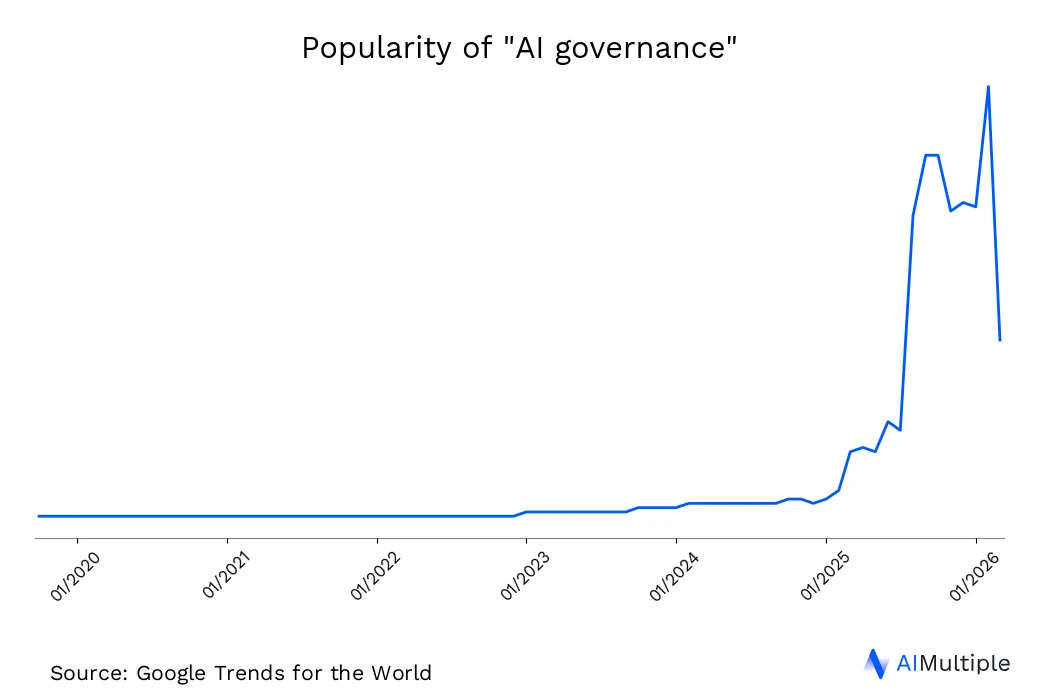
Ethical AI needs to be a priority for enterprises due to the EU AI Act that came into force in August 2024. Some of its provisions are enforced, and all of them are expected to be enforced by the end of 2026.
These factors led to an increased interest in AI governance:
Data and algorithm biases can harm an enterprises’ reputation and finances, which can be prevented by adopting AI governance platforms. These tools help companies developing and implementing AI by improving:
- Ethical and responsible AI: Ensures AI systems are designed, trained, and used ethically, preventing biased or harmful outcomes. Learn more on ethical AI and generative AI ethics.
- Transparency and accountability: Promotes transparency in AI algorithms and decisions, making developers and organizations accountable for actions that AI systems take.
- Data privacy and compliance: Helps organizations comply with data privacy regulations like GDPR and HIPAA, ensuring that data is collected and used legally and ethically.
- Risk assessment and mitigation: Identifies and mitigates various risks associated with AI, including legal, financial, and reputational risks, before they lead to negative consequences.
- Fairness and equity: Identifies and addresses AI bias in AI models to promote equal treatment across diverse users and groups.
- Model performance and reliability: Continuously monitors AI models to maintain reliability by detecting model drift and performing model retraining as needed, reducing errors and improving user satisfaction.
- Public trust: Builds public trust in AI technologies by emphasizing ethical behavior and transparency.
- Alignment with organizational values: Allows organizations to align AI practices with their mission and values, demonstrating a commitment to ethics and responsibility.
- Discover more on AI compliance solutions.
- Competitive advantage: Ethical AI and responsible governance can provide a competitive edge by attracting customers, partners, and investors who value ethical AI solutions.
FAQs
AI governance software employs common techniques to streamline building and deploying AI/ML models, such as:
Explainability and interpretability: AI governance software employs visualizations and explanations for AI model outputs to provide insights into how AI models make decisions. These tools allow users to understand and predict complex model behavior.
Transparency and accountability: AI governance provides clear documentation of model training data and processes, which enables monitoring of model decisions for accountability.
Fairness and bias detection: AI governance practices mainly focus on identifying and quantifying biases in AI models and data. For example, AI governance tools can monitor model performance across different demographic groups, allowing to mitigate biases in real-time or during training. Two main ways to detect bias in the model is to ensure compliance with ethics and law:
Ethical AI compliance: AI governance primarily aligns AI behavior with ethics by implementing guidelines and constraints. As a result, a data scientist can customize AI behavior to avoid harmful and offensive outputs of AI systems.
Regulatory compliance: A major AI governance practice is to ensure adherence to legal and regulatory requirements, meet data privacy and security standards and help business users comply with industry-specific regulations.
Model lifecycle management: Once a model is ready, AI governance techniques can manage the deployment of the model in the production environment by monitoring models for drift, degradation, or unexpected behavior. Two features that can facilitate AI deployment include:
Model validation and testing: Some AI governance tools can contain model validator features to test and verify models against benchmark datasets. Deploy these tools before production to detect potential issues.
Model risk management: AI governance techniques provide insights to assess and mitigate risks for AI systems.
Continual monitoring and auditing: Another common practice is tracking the model performance in production and behavior to ensure compliance and reliability in AI systems.
1. Identify your objective and scale: Consider the scale of your AI initiatives and the types of AI models and applications you are developing.
2. Research and evaluate available tools in the market:
– Look for vendors that specialize in the areas most relevant to your needs.
– Create a shortlist of promising tools based on their features, capabilities, and user reviews.
3. Benchmark the shortlisted tools based on the following:
– Each tool’s features: Assess its ability to detect bias, ensure data privacy, provide transparency, and monitor compliance.
– Ease of integration: Assess how well the AI governance tool integrates with your existing AI development and deployment pipeline.
– Compatibility with your organization: Check for compatibility with the programming languages, frameworks, and platforms you use for AI development. Ensure the tool can work seamlessly with your data sources, storage solutions, and cloud providers.
– User-friendly interface: How intuitive the tool is for seamless interaction.
– Customization and flexibility: The extent to which the tool can be customized to match your requirements, allowing you to adjust settings and configurations.
– Scalability: Consider the tool’s scalability to accommodate your organization’s growth in AI initiatives, such as increasing data volumes and workloads as your projects grow.
– Quality of vendor support: Investigate the level of customer support, response time and assistance provided.
– Training and resources: Review how comprehensive is the documentation, tutorials, user guides, online sources and training materials. Remember that adequate resources to help your team learn how to use the tool effectively.
– Cost and budget: Evaluate the cost structure of the AI governance tool, including licensing fees, subscription costs, and implementation expenses. Calculate the long-term costs and benefits of the tool to ensure it provides value based on your financial resources.
– Data security and privacy: Check compliance with data protection regulations, including encryption and access controls. Ensure the security and confidentiality of sensitive information.
3. Seek free trial and proof of concept (if applicable): Conduct a trial or proof of concept (PoC) with the selected AI governance software. You may use real or simulated AI projects to assess how well the tool addresses your governance needs. Involve key stakeholders, data scientists, and AI developers in the PoC to gather feedback on usability and effectiveness.
Disclaimers
This is an emerging domain, and most of these tools are embedded in platforms offering other services like MLOps. Therefore, AIMultiple has not had a chance to examine these tools in detail and relied on public vendor statements in this categorization. AIMultiple will improve our categorization as the market matures.
Products, except the products of sponsors, are sorted alphabetically on this page since AIMultiple doesn’t currently have access to more relevant metrics to rank these companies.
The vendor lists are not comprehensive.
Further reading
Explore more on AIOps, MLOps, ITOPs and LLMOps by checking out our comprehensive articles:
- Comparing 10+ LLMOps Tools: A Comprehensive Vendor Benchmark
- Top 10+ IT Process Automation Tools
- MLOps Tools & Platforms Landscape: In-Depth Guide
Cite this research
Pick the format that matches where you're publishing. Pasting the link version into your CMS preserves the backlink.
@misc{imek2026,
  author = {Şimşek, Hazal},
  title  = {{Top 30 AI Governance Tools Benchmarked}},
  year   = {2026},
  month  = jun,
  howpublished    = {\url{https://aimultiple.com/ai-governance-tools}},
  note   = {AIMultiple. Retrieved June 3, 2026}
}
Reference Links







Be the first to comment
Your email address will not be published. All fields are required. Comments are left in their original language.