


Explore Top 11 Privacy Enhancing Technologies

Even with regulations like GDPR and CCPA, consumer data is often exposed to hackers, companies, and governments. As businesses share data with third parties to improve network visibility, the risk of leaks grows.
Privacy Enhancing Technologies (PETs) help companies use this data while keeping personal or sensitive information private.
Explore the top 10 PET tools and their use cases to see how they can protect data and enhance business operations:
What are privacy-enhancing technologies (PETs)?
Privacy-enhancing technologies (PETs) are a broad range of technologies (hardware or software solutions) to ensure privacy and data protection while allowing organizations to extract value from data and unleash its full commercial, scientific and social potential. These technologies use various methods, including cryptography, anonymization, and obfuscation, to secure data during data processing.
By implementing PETs, organizations can help companies by
- Maximizing data security by reducing the risk of data breaches or leaks
- Preventing bad actors by rendering the data useless for malicious purposes
- Facilitating safe data collaboration across departments and even organizations.
To leverage an automated tool, here is a list of the top data loss prevention software.
Why are privacy-enhancing technologies (PETs) important now?
PETs address three specific business requirements:
- Regulatory compliance: Data protection laws such as GDPR and CCPA are forcing organizations to preserve consumer data. Businesses can pay serious fines for non-compliance.
- A real-life example: European data protection authorities issued €1.2 billion (~$1.4 billion) in GDPR fines, with daily breach notifications averaging 400+ per day, highlighting growing compliance risks. 1 PETs can provide a reliable way to comply with these regulations, avoiding legal and financial penalties.
- Last year, the CJEU held in EDPS v SRB (C-413/23 P) that pseudonymised data is not automatically personal data for everyone holding it.2The same dataset can be personal for the sender but anonymous for a recipient who cannot reasonably re-identify anyone. So a PET can change which rules apply.
- Secure data sharing: Data may need to be tested by third-party organizations due to the lack of your business’ self-sufficiency in analytics and application testing. PETs enable privacy protection while data sharing.
- Recently this became an AI problem. Apple’s Private Cloud Compute and Meta’s WhatsApp Private Processing run inference on user data inside TEEs, so the provider cannot read what it processes.
- Preventing Data Breaches: Privacy breaches can harm your business’ reputation, businesses or customers (depending on your business model) may want to stop interacting with your brand. PETs help safeguard sensitive information, reducing the risk of breaches that expose personal data, such as credit card details.
- A real-life example is the share price loss of Facebook after Cambridge Analytica scandal.3
Top 10 privacy-enhancing technology examples
Cryptographic algorithms
1. Homomorphic encryption
Homomorphic encryption (HE) allows a third party, like a cloud provider, to run computations on encrypted data without decrypting it (i.e., plaintext4). The data owner keeps the key, receives the encrypted results, and decrypts them locally. This makes HE perfect for outsourcing data analysis securely. It is also quantum-resistant.
However, HE fits poorly when multiple parties want to compute shared data using different private inputs. Because HE relies on a single decryption key, whoever holds that key can see all the raw data. Solving that multi-party scenario requires secure multi-party computation (MPC) instead.
Some common types of homomorphic encryption are:
- Partial homomorphic encryption: can perform one type of operation on encrypted data, such as additions or multiplications but not both.
- Somewhat homomorphic encryption: can perform more than one type of operation (e.g. addition, multiplication) but enables a limited number of operations.
- Fully homomorphic encryption: can perform more than one type of operation and there is no restriction on the number of operations performed.
2. Secure multi-party computation (SMPC)
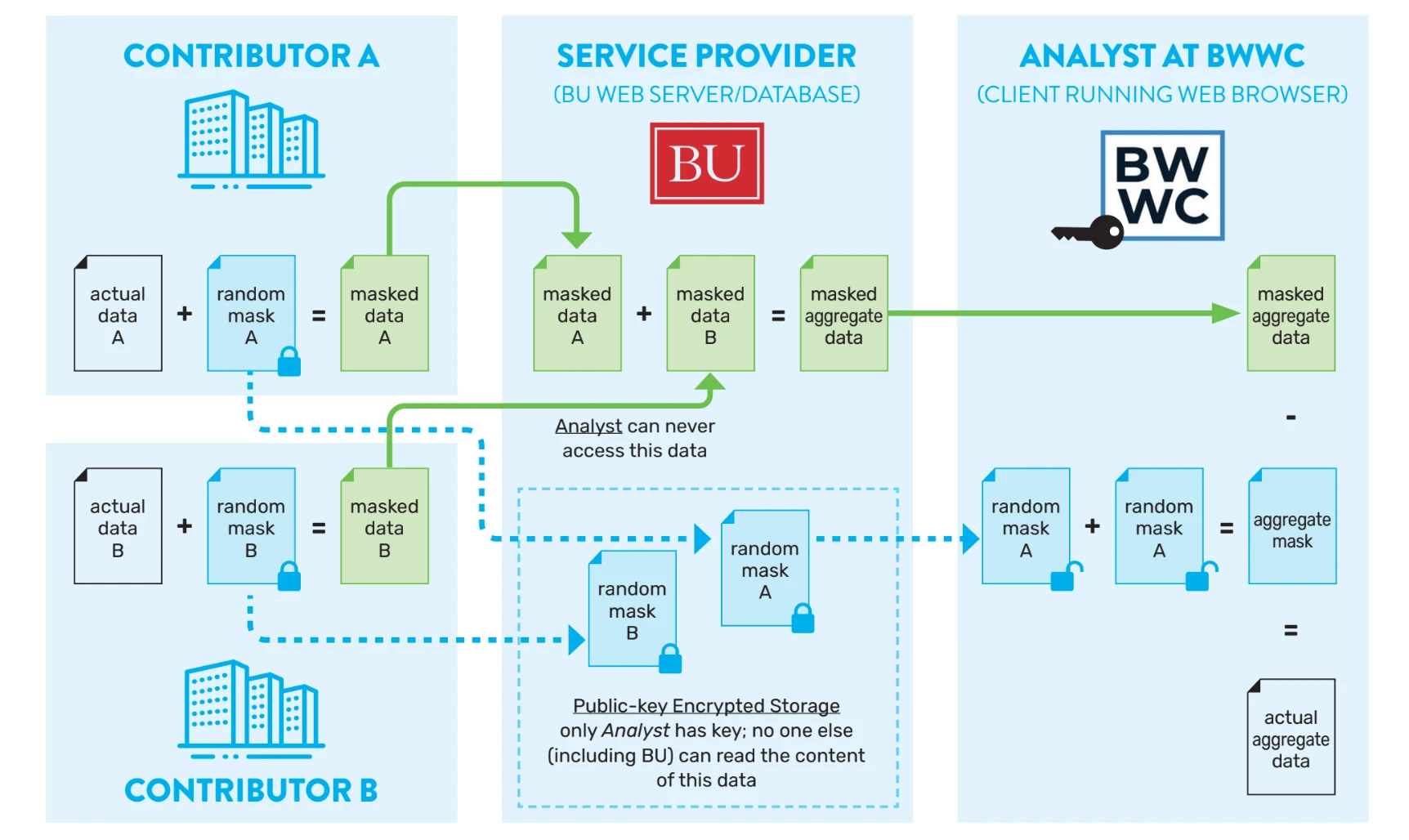
Like homomorphic encryption (HE), secure multi-party computation (SMPC) enables computation on encrypted data. Yet, SMPC allows multiple independent parties to jointly compute a function over their collective inputs. SMPC allows organizations to train models on combined datasets without exposing their private raw data to one another.
SMPC case study
The Boston Women’s Workforce Council (BWWC) seeks to eliminate gender and racial wage gaps in Boston through a public-private partnership, with over 250 employers pledging to address these disparities by signing the “100% Talent Compact.”
To measure the city-wide wage gap, the BWWC used SMPC from 2015 to 2023, analyzing salary data from one-sixth of local employees without revealing individual salaries. Employers shared payroll data with BWWC and Boston University researchers, who accessed aggregated statistics. A user-friendly web application was developed for easy data entry by participating organizations.
Based on these applications, the BWWC found that:
- Collaboration with usability experts is essential, as the privacy features of sMPC can complicate data entry processes and recovery from errors.
- sMPC is a quicker and safer alternative to establishing trust relationships with sensitive data.5
3. Differential privacy
Differential privacy protects against sharing information about individuals. The cryptographic algorithm adds a statistical noise6 layer to the dataset which enables to describe patterns of groups within the dataset while maintaining the privacy of individuals.
4. Zero-knowledge proofs (ZKP)
Zero-knowledge proofs use a set of cryptographic algorithms that allow information to be validated without revealing data that proves it.
Google added ZKP age verification to Google Wallet with Bumble as the launch partner and open sourced the libraries.7 The EU followed in April 2026 with a ZKP based age verification app piloting in seven member states, and eIDAS 2.0 requires every member state to offer a digital identity wallet by the end of 2026.8
5. Trusted execution environment (TEE)
A Trusted Execution Environment (TEE) is a secure vault built directly into a computer’s main processor. It keeps the programs and data inside it completely isolated, meaning even if the main operating system gets hacked, the vault remains locked. Proving this vault is genuine to external users relies on a verification process called “attestation,” which is exactly where these secure systems have been breaking lately.
Recently, researchers bypassed these secure connections using “relay attacks,” where verification messages are intercepted and forwarded. This vulnerability, tracked as CVE-2026-33697, affected the Cocos AI framework, with similar flaws found in Meta’s WhatsApp Private Processing and Edgeless Systems’ Contrast.9 The underlying chips and math held; the failure was in the protocol design logic. Because standard security audits missed this flaw, organizations should ensure vendors use “formally verified” (mathematically proven) protocols.
The way it operates:
- The TEE provides a protected execution environment where sensitive data and operations, such as cryptographic processes or secure authentication, can be performed without interference from the main system or potential attackers.
- It keeps sensitive data isolated and computes operations in a secure environment, protecting against threats like malware or unauthorized access.
- TEEs are widely used in mobile devices, IoT systems, and cloud environments for performing tasks like encryption, digital rights management (DRM), and securing payment systems.
- Recently TEEs moved beyond CPUs onto GPUs. For instance, NVIDIA introduced GPU confidential computing on H100 and advanced it through Hopper and Blackwell.10
TEE Case study
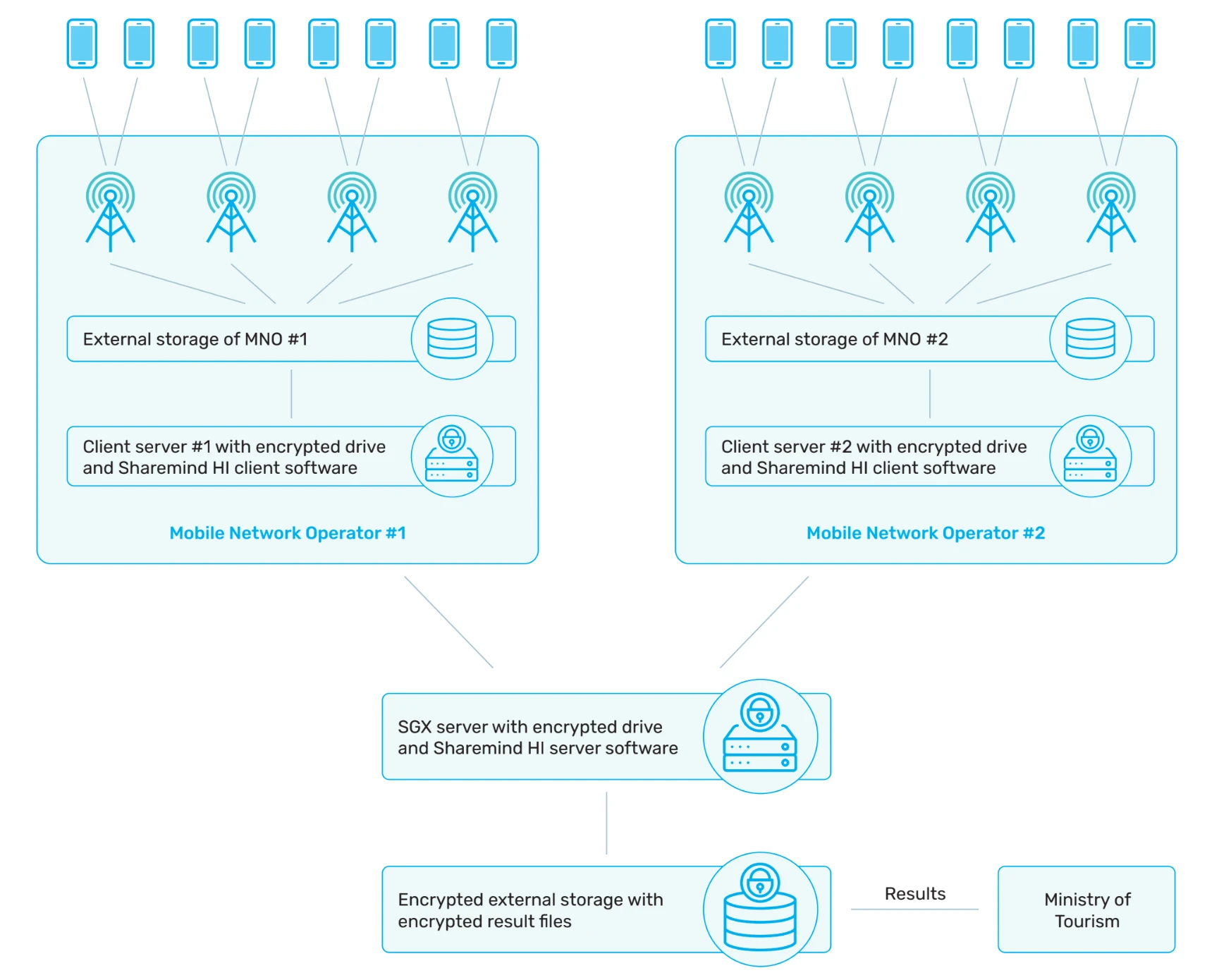
Indonesia’s Ministry of Tourism aimed to generate accurate tourism statistics from mobile roaming data while addressing privacy concerns when sharing datasets from two mobile network operators (MNOs). The technology used was a Trusted Execution Environment (TEE), specifically Intel SGX, to securely process uniformly hashed IMSIs through the Sharemind HI platform.
As a result, the ministry:
- Enabled accurate calculation of roaming market share.
- Provided monthly tourism statistics based on mobile phone data.
- Established a framework for confidential data sharing among stakeholders.
- Remains the single known solution for analyzing cross-roaming subscriber overlap.
- Performance is efficient even on commercial hardware.11
Data masking techniques
Some privacy enhancing technologies are also data masking techniques that are used by businesses to protect sensitive information in their data sets.
6. Obfuscation
Obfuscation is a data masking technique that complicates data to impede reverse-engineering while preserving functionality for authorized users.
7. Pseudonymization
Identifier fields (fields that contain information specific to an individual) are replaced with fictitious data such as characters or other data. Pseudonymization is frequently used by businesses to comply with GDPR.
8. Data minimisation
Collecting minimum amount of personal data that enables the business to provide the elements of a service.
9. Communication anonymizers
Anonymizers replace online identity (IP address, email address) with disposal/one-time untraceable identity.
AI-based privacy methods
10. Synthetic data generation
Synthetic data is an artificially created data by using different algorithms including ML algorithms. If you are interested in privacy-enhancing technologies because you need to transform your data into a testing environment where third-party users have access, generating synthetic data that has the same statistical characteristics is a better option.
11. Federated learning
Federated learning is a machine learning technique that trains an algorithm across multiple decentralized edge devices or servers holding local data samples, without exchanging them. With the decentralization of servers, users can also achieve data minimization by reducing the amount of data that must be retained on a centralized server or in cloud storage.
Federated learning case study
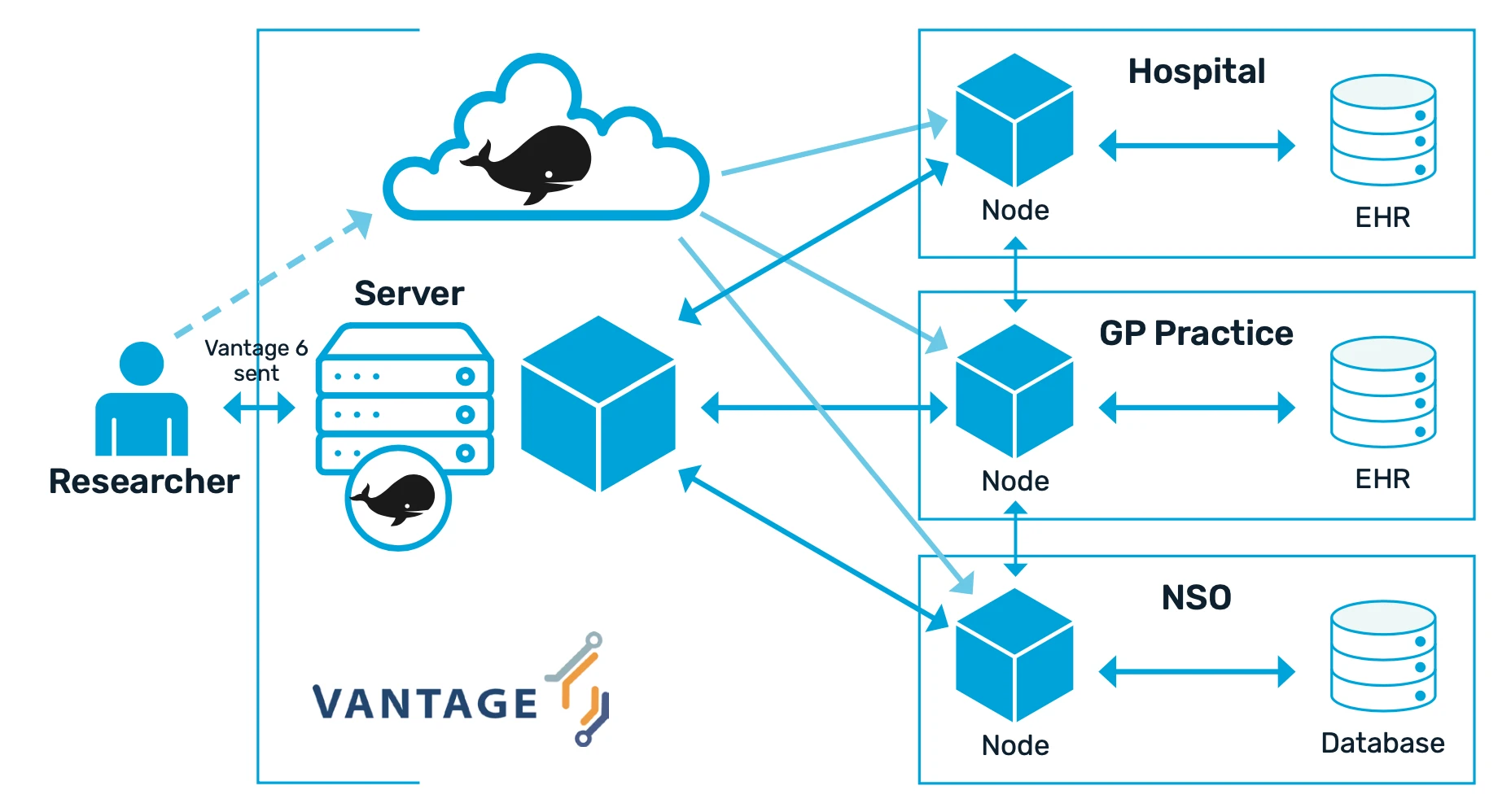
The CARRIER project uses secondary processing of medical, lifestyle, and personal data to estimate risks and enable early detection and intervention for coronary artery disease. However, it must ensure compliance with legal standards and protect against re-identification risks when linking datasets from different organizations, adhering to national laws and the European GDPR.
To overcome this challenge, the project employed federated learning that controls the execution of approved Docker images, allowing secure data processing without direct data sharing.
As a result, the project could:
- Develop a robust legal data governance framework to support federated learning procedures.
- Ensured privacy and data security during the development of the prognostic model, facilitating continuous research.
- Identified the need for ongoing governance to maintain ethical and legal compliance during project phases.12
PETs market overview
The PETs market encompasses a diverse array of tools, models, and libraries designed to safeguard data privacy. For instance, each category, such as synthetic data generators or data masking tools, boasts over 20 distinct tools.
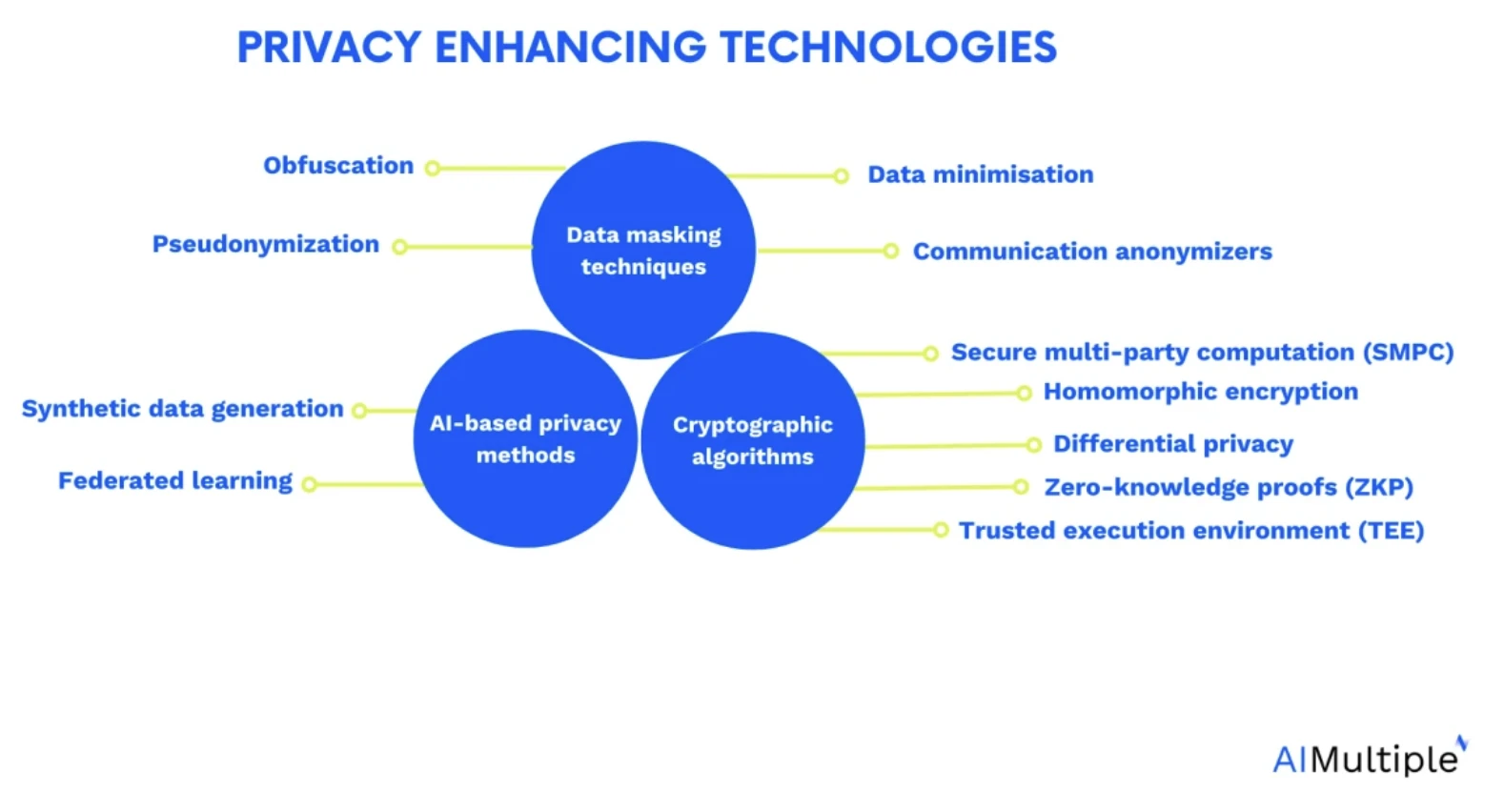
These tools are challenging to shortlist individually due to their vast diversity. To enhance clarity, we’ve grouped them, providing a comprehensive overview on the cover image above.
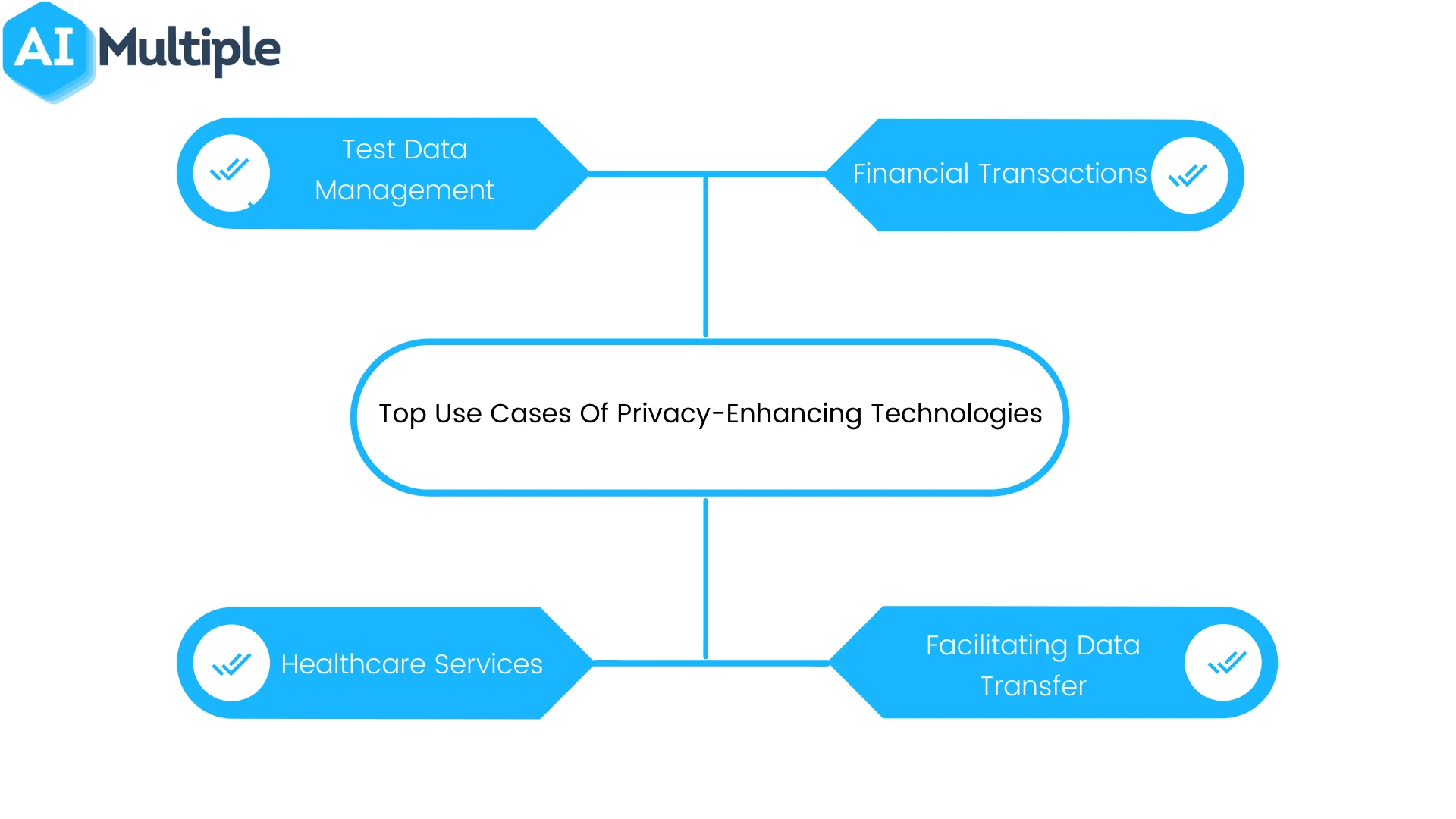
What are the top use cases of PETs?
- Test data management: Application testing and data analysis are sometimes handled by third-party providers. Even when they are handled in-house, companies should minimize internal access to customer data. Using a suitable PET that doesn’t significantly affect test results is important for organizations.
- Financial transactions: Financial institutions are responsible for protecting the privacy of the customers due to citizens’ freedom to conduct private deals and transactions with other parties.
- Healthcare services: Healthcare industry collects and shares (when needed) electronic health records (EHR) of patients. For example, clinical data can be used for searching for adverse effects of various drug combinations. Healthcare companies ensure the privacy of patients’ data in such cases by using PETs.
- Facilitating data transfer between multiple parties including intermediaries: For businesses that work as a middle man between two parties, the usage of PETs is crucial since these businesses are responsible for protecting the privacy of both parties’ information.
 Add as preferred source
FAQs
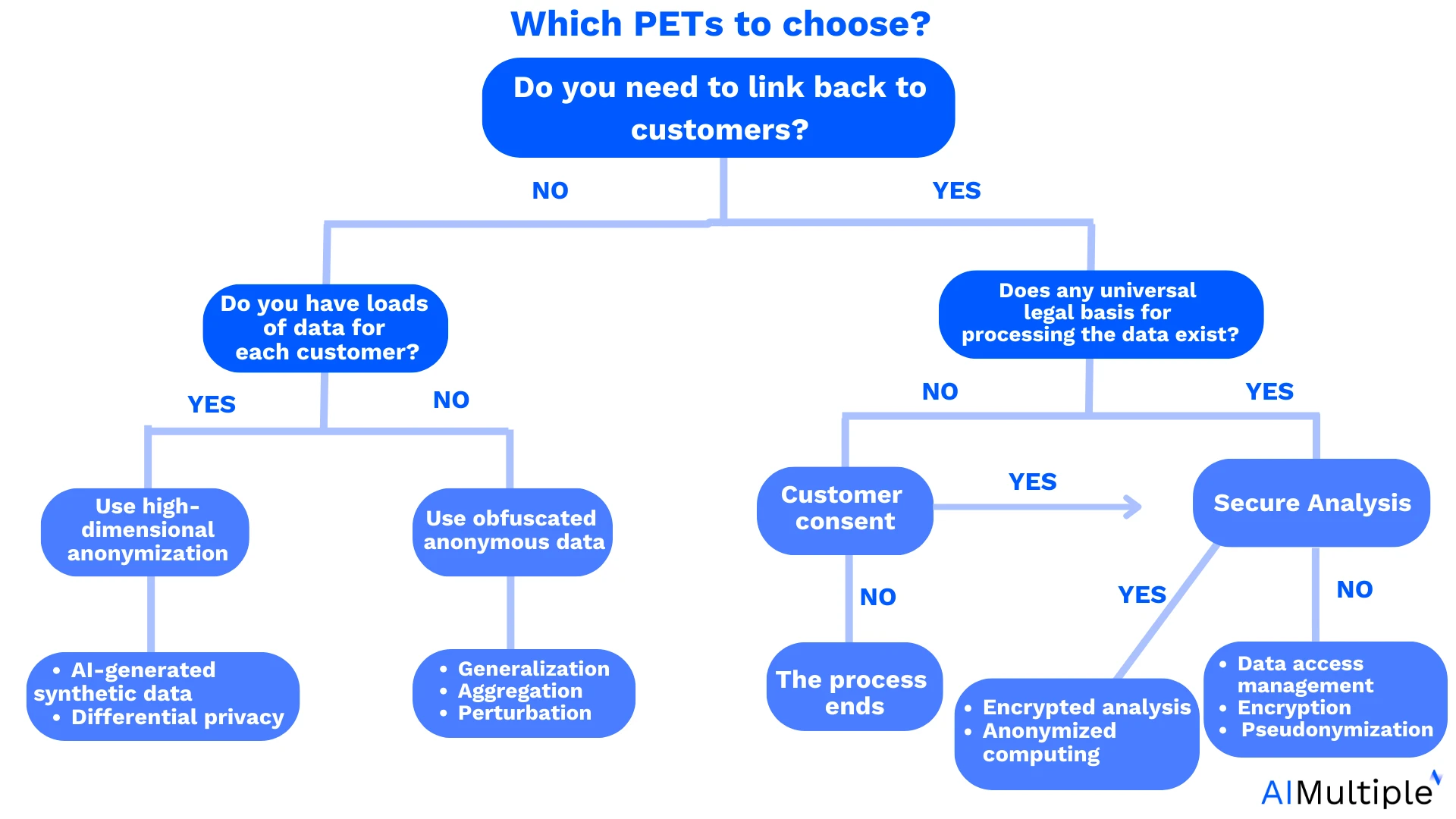
Navigating the array of privacy-enhancing tools (PETs) in the market requires a strategic approach tailored to your unique business needs. To ensure optimal integration and alignment with your software stack and IT infrastructure, consider the following steps:
1. Identify your needs and goals
You must identify issues you aim to solve by deploying a PET. To do this you may:
a.) Assess your data landscape: Identify the volume and nature of the data your business manages. Determine if it is predominantly structured or unstructured, as this influences the choice of PETs that best suit your requirements.
b.) Map third-party data sharing: Understand the intricacies of third-party data sharing. If your data traverses external channels, prioritize solutions like homomorphic encryption to maintain security and confidentiality during transit.
c.) Define data access needs:
Clearly distinguish the level of access required to the dataset, assessing whether full access is essential or if accessing the result/output suffices. Additionally, consider the ability to obfuscate personally identifiable information for enhanced privacy.
d.)Determine data utilization: Check you aim to use data for statistical analysis, market insights, machine learning model training, or similar purposes.
2. Evaluate different types of PETs:
Consider the three main categories of PETs which are cryptographic tools, data masking techniques, and AI-based solutions like synthetic data generators. Identify which type aligns best with your privacy objectives and data protection needs.
3. Shortlist tools based on categories:
Once you’ve identified the PET categories relevant to your needs, shortlist specific tools within each category. Consider aspects such as functionality, scalability, and compatibility with your existing infrastructure.
4. Evaluate IT infrastructure:
Conduct a thorough evaluation of your IT infrastructure, taking into account network and computational capabilities. This assessment will guide you in selecting PETs that seamlessly integrate with your enterprise resources. Identify areas that may require upgrades for compatibility.
5. Consider budgetary allocations:
Be proactive in budget planning, recognizing that PETs can vary in cost. Allocate resources based on your specific privacy requirements and financial capacity. Consider factors such as scalability, maintenance, and potential additional costs associated with the chosen PET solution.
Cite this research
Pick the format that matches where you're publishing. Pasting the link version into your CMS preserves the backlink.
@misc{dilmegani2026,
  author = {Dilmegani, Cem},
  title  = {{Explore Top 11 Privacy Enhancing Technologies}},
  year   = {2026},
  month  = aug,
  howpublished    = {\url{https://aimultiple.com/privacy-enhancing-technologies}},
  note   = {AIMultiple. Retrieved August 20, 2026}
}Results and timestamps of 31 data points. Download the summary data shown in this article's charts and tables as a ZIP file containing 2 CSV files.
Want the granular data behind it? Join Premium
Changelog
6 updatesAdded Google Wallet's zero-knowledge proof age verification with Bumble to the Zero-knowledge proofs section.
Removed a link from the "Choosing the right privacy-enhancing tool for your business" section.
Reference Links
Cem's work at AIMultiple has been cited by leading global publications including Business Insider, Forbes, Morning Brew, and Washington Post, global firms like Deloitte and HPE, NGOs like World Economic Forum, and supranational organizations like European Commission. [1], [2], [3], [4], [5]
Throughout his career, Cem served as a tech consultant, tech buyer and tech entrepreneur. He advised enterprises on their technology decisions at McKinsey & Company and Altman Solon for more than a decade. He also published a McKinsey report on digitalization.
He led technology strategy and procurement of a telco while reporting to the CEO. He has also led commercial growth of deep tech company Hypatos that reached a 7 digit annual recurring revenue and a 9 digit valuation from 0 within 2 years. Cem's work in Hypatos was covered by leading technology publications like TechCrunch and Business Insider.
Cem regularly speaks at international technology conferences. He graduated from Bogazici University as a computer engineer and holds an MBA from Columbia Business School.







Be the first to comment
Your email address will not be published. All fields are required. Comments are left in their original language.