


Top 11 SEO AI Use Cases with Case Studies

AI SEO tools can handle keyword clustering, technical audits, content drafting, and tracking how brands appear in AI-generated answers. Below are 11 use cases, each with tools or case studies showing what teams actually do.
1. Agentic SEO
Agentic SEO tools pull data from sources like Search Console, decide what to change, and make the change: clustering keywords, adding schema markup, fixing internal links, running audits. They don’t replace backlinks or domain authority, and their output still needs human review.
Frase AI Agent
Frase’s AI agent handles research, writing, optimization, and tracking through natural-language prompts. It can:
- Research keywords, competitors, and content gaps
- Write content briefs and outlines
- Audit sites for SEO issues
- Track brand visibility in ChatGPT, Perplexity, and Gemini
- Organize topic clusters
- Optimize text for both search rankings and AI answers (GEO)
- Publish directly to WordPress and Webflow
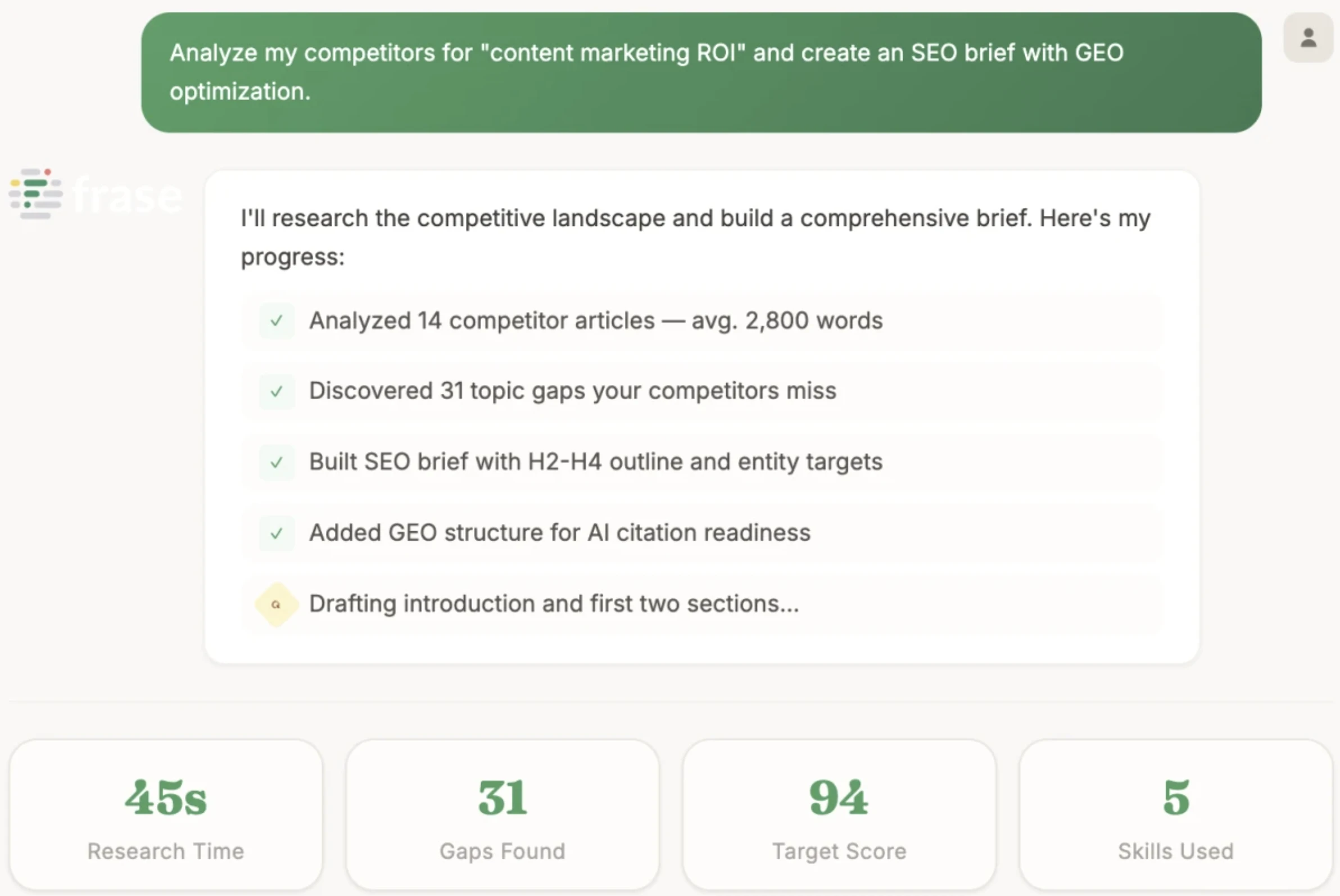
Figure 1: Frase AI agent competitor analysis example.1
OTTO SEO (Search Atlas)
OTTO is Search Atlas’s SEO automation tool.2
- Fixes technical issues such as titles, schema, broken links, redirects, and indexing
- Edits meta tags, headings, alt text, and internal links
- Creates topic maps, articles, and landing pages
- Automates link building and press release distribution
- Manages Google Business Profile posts, reviews, and Q&A
- Reports on completed fixes, site health, and ROI
- Adjusts strategy based on competitor and search data
Ahrefs Letaido
Ahrefs Letaido is an agent-powered marketing workspace built to automate repetitive work, execute multi-step workflows and let teams collaborate around AI-generated tasks in one shared environment. Letaido connects to tools already in the stack, including Notion, Slack, HubSpot, Google Ads and WordPress.
From a single hub, teams can connect their marketing tools, build custom dashboards and reports, monitor websites and competitors, and automate recurring workflows with native access to Ahrefs’ marketing and search intelligence data.3
2. Generative Search Optimization (GEO)
GEO aims to get content cited in AI-generated answers rather than ranked on a results page.
Google officially states that traditional SEO best practices continue to govern eligibility for AI features, because its generative AI features in Search are rooted in the core Search ranking and quality systems and pages must be indexable and eligible for regular Search snippets to appear.
For commercial visibility, Google recommends using Merchant Center and Google Business Profile so products and services can surface in both AI responses and other Search results.
It also explicitly says site owners do not need to create new machine-readable files, AI text files, markup or Markdown to appear in Google Search including its generative AI capabilities, and that llms.txt files neither help nor harm visibility.4
Gradial
Gradial’s GEO agent identifies gaps in how a brand appears in generative search results and automatically executes the changes needed to improve visibility.
Gradial GEO implements recommended fixes directly in content management systems for enterprise clients including AWS and T-Mobile.5
BrightEdge AI Hyper Cube
BrightEdge’s AI Hyper Cube maps the prompt universe across every major AI engine to reveal which prompts mention a brand, which sources AI systems rely on for citations, where competitors are winning answers, and whether AI-generated narratives are positive, neutral or negative.6
The suite currently contains three agents: Site Agent for internal linking to priority pages, Schema Agent for JSON-LD structured data, and Publishing Agent for pushing approved title, meta title and H1 changes into CMS platforms.
Profound
Profound tracks how brands appear in ChatGPT, Perplexity, Claude, Gemini, Microsoft Copilot, and Google AI Overviews. Its monitoring products are Answer Engine Insights, Prompt Volumes, and Agent Analytics. For execution, it offers Profound Agents and Aim, an always-on agent launched in July 2026 that turns AI search data into a prioritized task list.
Profound also runs an invite-only beta of Ads Studio, which creates, scores, and optimizes ad campaigns inside AI search. It measures results with Paid Share of Voice and Ads Relevance Score.7
Peec AI
Peec AI, based in Berlin, tracks brand visibility at the prompt level. For each prompt, it reports visibility, position, sentiment, and share of voice against chosen competitors across ChatGPT, Perplexity, and Gemini.8
Ahrefs Brand Radar
Brand Radar tracks where a brand appears in AI answers and across the web:
- AI visibility: how often the brand appears in AI-generated responses
- Branded search demand: changes in searches for the brand name
- Web mentions: where the brand is cited online
- Video and Reddit: brand presence in videos and subreddit discussions
- Competitor benchmarking: visibility compared with competitors9
Semrush AI Visibility Toolkit
Semrush offers an AI Visibility Toolkit that helps businesses measure and improve how their brand appears in AI-generated search results across platforms like ChatGPT and Google’s AI.
- AI Visibility Score: a benchmark of how often the brand appears in AI answers
- Competitor research: prompts where competitors appear, and you don’t
- Prompt research: AI search topics ranked by priority
- Brand performance: sentiment and share of voice in AI responses
- Prompt tracking: visibility for specific prompts over time
- AI site audit: technical issues that block AI crawlers10
Surfer AI Tracker
Surfer has introduced AI Tracker, an add-on that helps marketing teams measure their brand’s presence in AI search results across ChatGPT, Gemini, Perplexity, Google AI Mode and Google AI Overviews.
For each tracked prompt, it shows the full AI answer, every domain and URL the answer cites, sentiment analysis of those cited sources. Fan-out queries reveals what the model searched before answering, and a Mention Gap report lists the sources that name a competitor but not you, refreshed daily or weekly depending on plan.11
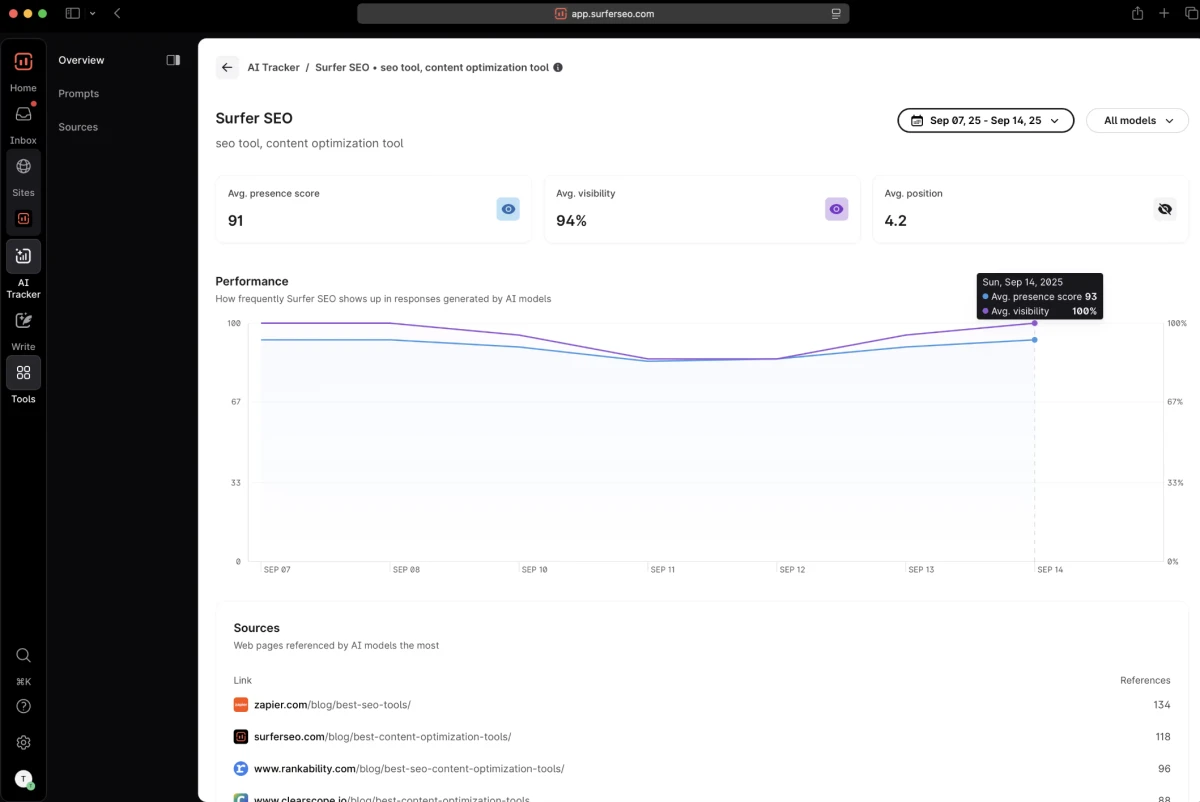
Figure 2: Surfer’s AI Tracker feature dashboard.
Bing Webmaster Tools: AI Performance
Microsoft added an AI Performance report to Bing Webmaster Tools. It shows how often your pages are cited as sources in Copilot, Bing’s AI summaries, and some partner products:
- Total citations: times your content was cited in AI answers
- Average cited pages: daily average of unique pages used as sources
- Grounding queries: sample queries that led the AI to retrieve your content
- Page-level citations: citation counts per URL
- Trends: citation activity over time12
3. Keyword research
AI keyword tools group terms by topic and intent. They also surface long-tail and question-based queries that competitors rank for.
BrightEdge Instant
Instant takes a seed list of keywords and returns up to 100 times as many related suggestions. You can benchmark keywords by country to target specific markets.13
Rocky Brands with BrightEdge
Rocky Brands, a footwear retailer, used BrightEdge to grow organic search revenue. The team used:
- Data Cube to find keywords that would drive organic traffic
- BrightEdge recommendations to rewrite page titles and meta tags
- Storybuilder to connect optimization work to revenue
- Keyword and page reporting to track performance per page
Results include search revenue up 30%, year-over-year revenue up 74%, and new users up 13%.14
4. Content generation
AI tools draft blog posts, product descriptions, meta descriptions, content briefs, and schema markup. Drafts need an editor to check accuracy and readability.
Fugue with Frase
Fugue sells cloud security posture management (CSPM) software, a crowded search category. The team used Frase to find topics missing from its CSPM page and compare the page against top-ranking competitors. The page moved from 10th to 1st in search results.15
5. A/B testing and reporting
SEO A/B tests split similar pages into groups, change one element (a title, meta description, or call to action), and measure the difference in organic traffic.
Flight Centre with SearchPilot
Flight Centre, an Australian travel agency, focused most of its web effort on conversion. That left little budget for testing high-value landing pages for search. Using SearchPilot, the team ran structured tests on those pages and rolled out the winning changes. As a result, organic traffic rose 26%.16
SearchPilot also supports GEO A/B testing, applying the same statistical rigor used for SEO split testing to generative engines. Because its experiments split similar pages into control and variant groups, a single test can measure the impact of a change on both LLM referral sessions and Google organic sessions at the same time.17
Tests are typically run across templated page groups such as product detail and product listing pages to establish which formats earn AI citations and the final click.
SEO Scout
SEO Scout compares your content with competitors’ using natural language processing. It also tests titles and meta descriptions to find which version gets more clicks at the same ranking position.18
6. Content personalization
AI can change content based on a visitor’s location, behavior, or device. Common uses are localized pages and tailored product descriptions and category pages for eCommerce.
Yotpo Discover
Yotpo Discover tracks how an eCommerce brand’s products surface across ChatGPT, Gemini and Google AI Mode, then shows where those products are missing from AI recommendations.
Rather than stopping at monitoring, it runs three agents that act on the gaps:
- An Onsite Agent for technical and structural AI readiness,
- A Content Agent that produces SEO-ready pages from shopper reviews,
- An Activation Agent that mobilizes reviewers across retail marketplaces and publisher sites.19
7. Prioritization with analytics
AI tools rank fixes by expected traffic impact. These fixes include broken links, indexing errors, and outdated content.
Google Search Console
Google added an experimental AI configuration feature to the Search Console Performance report. You describe the analysis you want in plain language, and it applies the filters, date comparisons, and metrics (clicks, impressions, CTR, position) for you.20
STACK Media with BrightEdge
STACK Media publishes training content for athletes. With BrightEdge, the team:
- Found high-volume keywords in the fitness category
- Checked how visible those keywords were in search results
- Studied the topics and page structures of top-ranking competitor URLs
As a result, site visits rose 61%, and average bounce rate per page fell 73%.21
 Add as preferred source
8. Automated SEO audit
AI audit tools scan for:
- Missing meta tags and duplicate content
- Slow pages, broken links, and orphan pages
- Crawl errors and weak internal linking
SEO.AI
SEO.AI analyzes the top-ranking articles for a query. It shows where competitors’ content is stronger or weaker than yours.22
9. Search trends prediction
AI models forecast demand using historical search volume, seasonality, and emerging topics. This allows teams publish before demand peaks and before competitors cover the topic.
TikTok Insight Spotlight
TikTok’s Insight Spotlight lets brands filter trending content by audience demographics and industry. It then suggests ad ideas based on trending videos and keywords.
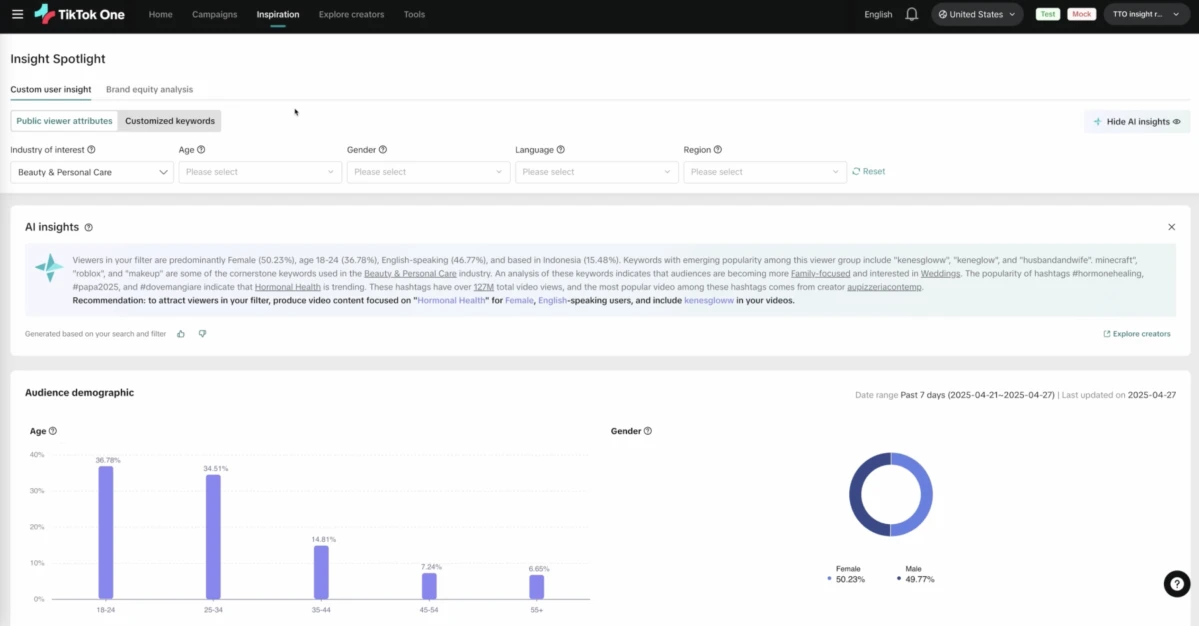
Figure 3: TikTok’s AI-powered insights on user data.23
10. Image and video optimization
AI writes alt text, captions, and tags for images. It also transcribes video, which gives search engines text to index.
Leadsagna with Pictory
Leadsagna is a Canadian digital marketing agency that produces social posts, blogs, and landing pages for clients’ SEO. It rarely had original footage from clients, and custom video production was too expensive to do often. The team used Pictory to:
- Turn existing blog posts into videos with script-to-video
- Fill those videos with visuals from Pictory’s stock library instead of filming
- Publish the videos on YouTube and embed them in clients’ blog posts and landing pages
The agency says the embedded videos improved clients’ search rankings. Pictory reports a 500% increase in budget efficiency and a 250% increase in reach.24
11. SERP feature targeting
AI tools show which SERP features competitors hold, such as featured snippets, “People also ask” boxes, and image carousels. They also show how to format content to compete, for example with question-and-answer sections or schema markup.
The Search Initiative
The Search Initiative grew organic traffic for a U.S. B2B marketing firm by more than 3,000%. The team:
- Built clusters of supporting articles around core topics
- Optimized on-page elements
- Restructured the site architecture so it was easier to crawl
- Added structured data for rich results
- Ran a targeted link-building campaign
- Matched each page’s format to the top-ranking results for its keyword25
Cite this research
Pick the format that matches where you're publishing. Pasting the link version into your CMS preserves the backlink.
@misc{dilmegani2026,
  author = {Dilmegani, Cem and Ermut, Sıla},
  title  = {{Top 11 SEO AI Use Cases with Case Studies}},
  year   = {2026},
  month  = nov,
  howpublished    = {\url{https://aimultiple.com/seo-ai}},
  note   = {AIMultiple. Retrieved November 12, 2026}
}
Changelog
5 updatesExpanded the "Top 10 use cases" section to "Top 12 use cases" and added two new use cases: Agentic SEO and Generative Search Optimization (GEO).
Reference Links
Cem's work at AIMultiple has been cited by leading global publications including Business Insider, Forbes, Morning Brew, and Washington Post, global firms like Deloitte and HPE, NGOs like World Economic Forum, and supranational organizations like European Commission. [1], [2], [3], [4], [5]
Throughout his career, Cem served as a tech consultant, tech buyer and tech entrepreneur. He advised enterprises on their technology decisions at McKinsey & Company and Altman Solon for more than a decade. He also published a McKinsey report on digitalization.
He led technology strategy and procurement of a telco while reporting to the CEO. He has also led commercial growth of deep tech company Hypatos that reached a 7 digit annual recurring revenue and a 9 digit valuation from 0 within 2 years. Cem's work in Hypatos was covered by leading technology publications like TechCrunch and Business Insider.
Cem regularly speaks at international technology conferences. He graduated from Bogazici University as a computer engineer and holds an MBA from Columbia Business School.

She previously worked as a recruiter in project management and consulting firms. Sıla holds a Master of Science degree in Social Psychology and a Bachelor of Arts degree in International Relations.





Be the first to comment
Your email address will not be published. All fields are required. Comments are left in their original language.