


Compare Top 12 SAP Utility Solutions

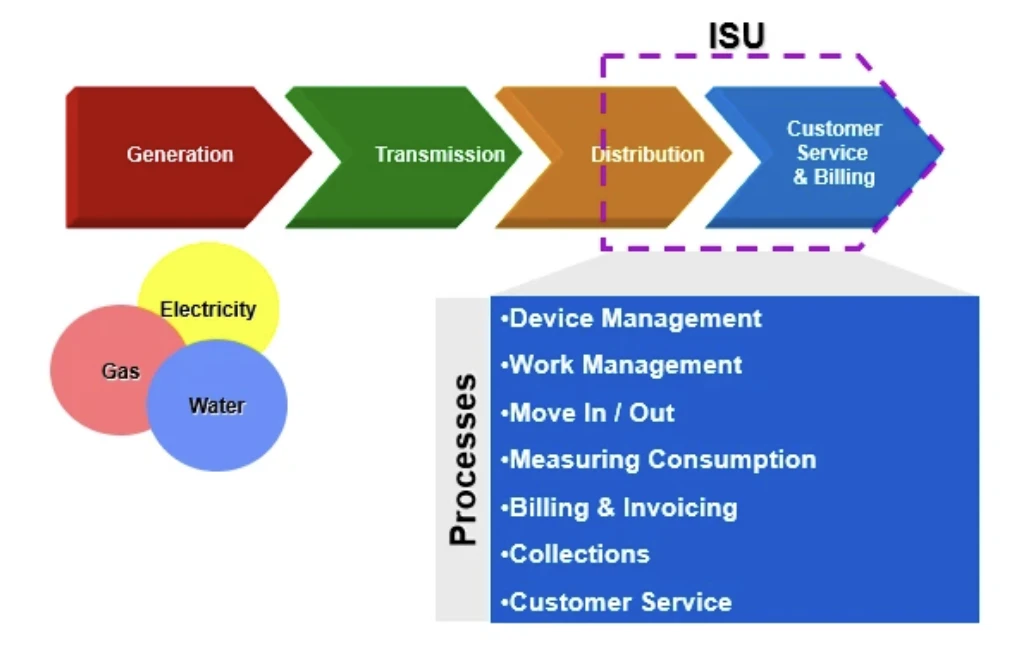
1,500+ companies utilize SAP utility solutions like SAP IS-U, one of the leaders in utility Customer Information Systems (CIS). 1 Yet, adoption still faces significant challenges, primarily due to integration issues. The main hurdles include:
- Poor integration with third-party applications
- Complex integration processes
- Specialized skills requirement for SAP developers.
Therefore, we recommend users to implement SAP utility solution that can integrate with SAP utilities module. Explore and compare such tools to automate and manage your SAP utility processes:
Tool Name | Solution Type | Review & Score |
|---|---|---|
Workload automation and job scheduling software | 4.8 based on 127 reviews | |
RunMyJobs | Workload automation and job scheduling software | 4.8 based on 167 reviews |
ActiveBatch | Workload automation and job scheduling software | 4.4 based on 280 reviews |
JAMS Scheduler | Workload automation and job scheduling software | 4.5 based on 218 reviews |
Informatica | MDM | 4.3/5.0 based on 17 reviews |
TIBCO EBX | MDM | 4.4 based on 69 reviews |
Infosys Utilities | BPM | 4.0 based on 13 reviews |
Uipath Business automation platform | BPM | 4.6 based on 7,954 reviews |
Alteryx | GIS | 4.6 based on 760 reviews |
Esri ArcGIS | GIS | 4.5 based on 534 reviews |
Note that The table above lists SAP utility solutions in alphabetical order for each category except the subscribers. The review data is gathered from top B2B user review platforms
Comparing selected SAP utility solutions
SAP utility solutions include various tools with different functionalities and capabilities, challenging business users to understand landscape. These tools can be summarized under two major categories with several other sub-categories:
- Process automation and management tools
- WLA & job scheduling
- BPM tools
- Infrastructure management tools
- Geographic Information System (GIS)
- Master data management
- IoT devices & sensors.
Here are the categories with top SAP utility tools in each category.
Process automation & management
Top workload automation & job scheduling tools
Workload automation (WLA) can integrate into SAP utility solutions such as SAP IS-U to:
- Orchestrate and precisely schedule core business processes, facilitating the seamless flow of intricate workflows
- Automate batch processes such as billing, meter readings, and data uploads, ensuring efficiency, timely scheduling, and successful completion monitoring
- Streamline end-to-end workflows through seamless cross-system integration, enhancing overall operational coherence.
- Optimize resource allocation and respond to specific conditions or changes in a given environment Manage dependencies effectively by sequencing activities, ensuring that downstream processes are triggered in the correct order. This ensures a synchronized and efficient execution of tasks within the SAP IS-U environment.
Some of these workload automation tools that can integrate with SAP include:
1.) Stonebranch
Stonebranch is an enterprise-grade automation platform designed to optimize and automate complex IT processes, offering seamless integration with various systems, including SAP. It assists in SAP utility management by features like:
- Stonebranch integrates with SAP, enabling the automation of SAP job workflows and improving operational efficiency.
- Centralized job monitoring that provides a unified view of job statuses and results across SAP and other systems, making it easier to manage SAP utility processes.
Compare Stonebranch against its top alternatives.
2.) RunMyJobs by Redwood
RunMyJobs is a workload automation (WLA) and job scheduling software that is certified as part of SAP’s Industry Cloud Portfolio for Utilities, including SAP IS-U and SAP S/4HANA. RunMyJobs’ SAP certifications also include SAP Integration Suite, SAP Cloud Platform Integration and SAP Data Services.
RunMyJobs is also an SAP Endorsed App – Premium Certified, a recognition given to a few solutions globally that can meet SAP’s high standards for security, performance, and integration. The platform’s workflows and pre-built templates facilitate quick setup and integration, enhancing utility providers’ capabilities for a modernized and efficient operational landscape.
By integrating to SAP utility environment, RunMyJobs can ensure efficiency, reducing manual intervention and enhancing resource management. RunMyJobs by Redwood can deliver:
- Efficient meter-to-cash process management from meter data collection to customer billing and payments
- A clean core by avoiding customization and integrate with S/HANA and other SAP platforms without special software or infrastructure
- Automation of complex operations like large-scale transactions in utility operations
- Real-time visibility into billing and cash flow, offering control and optimization with up-to-date information
- Improved security and protection for sensitive data by leveraging full encryption and single-tenant architecture.
Real-life example
For example, Stadtwerke München (SWM), a municipal utility provider of electricity, natural gas, district heating and cooling and drinking water to Munich residents in Germany integrated RunMyJobs with its SAP platform to automate and orchestrate its critical processes such as meter-to-cash. The company could gain full control over their utility billing, reduce customer support inquiries and optimize their cash flow.
For more details, explore the Redwood SAP partnership.
Utilities choose Redwood for its SAP integration capabilities, simplicity, SaaS flexibility, and specialized support. For example, American Water streamlined operations and modernized its technology stack by consolidating automation and managed file transfer (MFT) tools into Redwood’s SaaS platform. Check out for more detail:
3.) ActiveBatch
ActiveBatch is a workload automation (WLA) solution which can be applied to SAP utility environments to enhance operational efficiency, reduce costs, and facilitate digital transformation. ActiveBatch provides a single dashboard for all integrated workflows, systems, and tasks across the entire hybrid environment. The way ActiveBatch can empower utility providers include:
- Automating a multitude of energy-industry-specific workflows from a centralized point of control, such as meter-to-cash operations, smart meter readings, or IoT data handling.
- Building end-to-end automations for customer-facing processes such as chatbots and appointment notifications
- Integrating with common utility tools such as SAP NetWeaver, SAP BusinessObjects DataServices
- Reducing the likelihood of human errors, which minimizes manual intervention, save time to focus on strategic initiatives.
- Ensuring real-time end-to-end visibility with its policy-driven framework.
- Enhancing the security by delivering a multi-tenant architecture that allows administrators to define access and permissions based on organizational needs.
4.) JAMS Scheduler
JAMS Scheduler is a job scheduling and automation tool designed to streamline workflows by automating complex processes and managing jobs across various platforms.It offers:
- JAMS supports SAP integrations, enabling automated scheduling and management of SAP jobs without manual intervention.
- Cross-platform automation that allows automated workflows across SAP and other enterprise systems, providing centralized job management.
Top BPM tools
Business Process Management (BPM) tools orchestrate and optimize end-to-end workflows within SAP utility solutions such as SAP IS-U. Utility companies may leverage BPM platforms for comprehensive process management. Two notable BPM tools are:
5.) Infosys Utilities
Infosys is an SAP certified BPM tool that offers a diverse range of services and solutions tailored for the utilities sector, addressing various aspects of the energy and power industry. Their utility services encompass the following key areas:
- Asset management by tracking asset information, maintenance schedules, and performance metrics for power plants, transmission lines, and distribution networks.
- Utility theft, leakage and fraud management by analyzing and monitoring the irregularities in consumption patterns or billing discrepancies
- Customer Information System (CIS) by managing and storing customer information, including billing details, consumption history, and contact information
- Contact center, providing a centralized platform for handling customer inquiries, service requests, and issue resolutions.
- Meter-to-cash management by optimizing and automating the billing cycle from capturing meter data to generating invoices and processing payments.
- Net metering by tracking energy production, consumption, and the exchange of excess energy with the grid for efficient management and monitoring of renewable energy sources integrated to the smart grids.
6.) UiPath process automation platform: UiPath automation suite offers robotic process automation (RPA) solutions to automate repetitive tasks, which can easily integrate with SAP utility solutions as a part of SAP certified ecosystem. UiPath’s RPA software excels in:
- Automating data entry tasks, ensuring accurate and timely input of critical information like customer details, meter readings, and billing data into SAP IS-U.
- Streamlining invoice processing by automating data extraction from invoices, verification against SAP IS-U records, and seamless updates with payment details.
- Facilitating invoice generation based on predefined rules and customer data, enhancing billing efficiency.
Infrastructure management tools
Utility infrastructure management systematically plan, monitor and optimize essential facilities such as power lines, water pipes, and equipment. These tools help establish the reliability, safety, and efficiency of utility services by tracking assets, coordinating workforce coordination and ensuring compliance. Some of these tools include:
Geographic Information System (GIS)
Geographic Information System (GIS) tools help utilities enhance their spatial analysis and infrastructure management by
- Enhancing asset management and network planning
- Facilitating real-time monitoring and spatial-enabled customer services
- Optimizing emergency response planning
- Ensuring compliance with regulatory requirements.
7.) Alteryx
Alteryx is a data analytics and data blending platform, recognized for its capabilities in data preparation, blending, and advanced analytics. Altered platform allow utility firms to:
- Derive valuable insights from various data sources, providing a comprehensive approach to data analytics and spatial intelligence for effective decision-making in utility operations
- Perform spatial analytics by overlaying geographic information with operational data, enabling a deeper understanding of spatial relationships.
- Optimize network planning by uncovering patterns, trends and correlations, leading to enhanced infrastructure management
- Increase efficiency in utility customer experience by monitoring real-time spatial-enabled customer services
8.) Esri ArcGIS
Esri ArcGIS is a Geographic Information System (GIS) software designed for mapping and spatial analysis. It provides advanced tools for creating, managing, and analyzing geographic data, enabling users to make informed decisions based on spatial insights. Esri’s ArcGIS can connect to SAP utility environment through connectors. With ArcGIS, utility providers can
- Facilitate spatial-enabled customer services
- Improve their real-time monitoring and emergency response planning within utility operations
- Enhance asset management and networking planning, ensuring infrastructure reliability, safety, efficiency and compliance with regulatory requirements.
Master Data Management (MDM)
Master Data Management (MDM) is critical for maintaining consistent and accurate master data across an organization. When integrated with SAP IS-U, MDM tools can:
- Contribute to data consistency and quality
- Support cross-system integration
- Enforce data governance policies.
Top MDM Tools are:
9.) Informatica MDM
Informatica MDM provides a comprehensive platform for managing master data across diverse systems. It offers features for data quality management and data governance. Integrated with SAP IS-U, Informatica MDM contributes significantly to:
- Data consistency by harmonizing and standardizing master data across the entire organizational landscape, improving data-driven decision-making.
- Cross-system integration, enhancing interoperability of data, promoting a unified approach to data management.
- Data governance compliance by establishing, enforcing, and monitoring data governance practices, regulatory requirements and internal policies.
10.) TIBCO EBX
It is an enterprise data management platform developed by TIBCO Software manage, govern, and share master data across an organization. Integrated with SAP utility tools like SAP IS-U, TIBCO EBX enables organizations to create a centralized and consistent view of their master data. This way, TIBCO can provide:
- A centralized repository for master data with accurate and up-to-date information essential for customer interaction, operational efficiency and decision-making
- Robust mechanism to validate, cleanse, and standardize master data, preventing inconsistencies and errors to maintain data integrity throughout the utility landscape
- Cross-system integration, enabling seamless data exchange and interoperability across diverse systems within the utility infrastructure
- Tools and frameworks to establish, enforce, and monitor data governance policies, improving compliance with regulatory requirements and internal standards and fostering a controlled data environment.
IoT devices and sensors
IoT devices(e.g. smart meters) and sensors can help utility companies by
- Capturing real-time data on energy consumption data, monitor usage patterns and optimize energy distribution
- Facilitating utility asset management via continuous monitoring, predictive maintenance and proactive maintenance scheduling
- Optimizing smart grid performance by detecting faults and disruptions in real-time
- Achieving efficient service management by delivering personalized service such as energy efficiency recommendations and real-time billing information.
IoT players include:
11.) IBM Watson IoT
The tool offers advanced analytics and device management capabilities by supporting the integration of IoT data into ERP systems. This integration enables utilities to:
- Optimize operations by employing advanced analytics to process and analyze the vast amount of data generated by IoT devices to improve energy distribution and identify areas of efficiency.
- Implement predictive maintenance strategies for enhanced equipment reliability by continuously monitoring the condition and performance of equipment through IoT sensors, preventing unplanned downtime and ensuring enhanced equipment reliability
- Improve customer experiences by collecting and analyzing customer behaviors, preferences, and usage patterns, and tailoring the service to anticipate customer needs, like
12.) Microsoft Azure IoT
It is a comprehensive platform, facilitates the integration of IoT data into third party systems like SAP. It empowers utilities to
- Optimize operations by harnessing real-time insights for efficient resource allocation such as preventing equipment failures and streamlining workforce scheduling
- Enhance customer service by responding proactively to potential issues, emerging patterns and trends In data.
Identify the right tool for SAP Utility Integration
Selecting the most suitable tools for integrating with SAP utility solutions involves considering various factors that align with organizational needs.
Among the available options, WLA and job scheduling tools emerge as standout solutions. These tools, such as Redwood, deliver extensive automation features for orchestrating critical business processes and offer a unique advantage by encompassing analytics and data management capabilities within their functionalities.
This comprehensive approach ensures that utilities can streamline operations, optimize workflows, and derive valuable insights, making WLA tools a compelling choice for organizations seeking a well-rounded integration solution with SAP.
FAQs
SAP for utilities refer to a SAP business technology platform tailored for utility companies managing electricity, gas, water, and heat services. With SAP for Utilities, organizations enhance operational efficiency, customer satisfaction, and adaptability to industry changes, providing a comprehensive platform to address the unique requirements of the utility sector.
SAP utilities module include various tools but mainly SAP Industry Solution for Utilities (IS-U). It covers areas such as customer service, billing, invoicing, contract management, and asset management specific to the utilities industry. The other major SAP tools in this module include:
1.) SAP Customer Relationship Management (CRM): SAP CRM is often integrated with IS-U to manage customer interactions, marketing, sales, and service processes. It helps utility companies improve customer satisfaction and loyalty.
2.) SAP S/4HANA for Utilities: As organizations transition to SAP’s next-generation ERP system, S/4HANA, utilities can leverage industry-specific functionalities within this platform. S/4HANA offers improved performance, a simplified data model, and enhanced analytics.
3.) SAP Business Warehouse (BW): This enterprise data warehousing solution facilitate advanced analytics and informed decision-making by consolidating customer billing and meter data, performing in-depth analysis, creating standardized reports, and ensuring data accuracy.
Implementing SAP for Utilities brings a host of benefits to organizations in the utility sector, including:
1.) Integrated processes: SAP utility solutions streamline all business processes, from customer service to regulatory compliance, reducing complexity and enhancing overall efficiency.
2.) Billing accuracy: SAP utility solutions, such as WLA tools can ensure precise billing processes, calculating charges accurately based on consumption, rates, and agreements, minimizing billing errors and disputes.
3.) Efficient asset management: SAP’s Work and digital asset management modules can enable utilities to optimize maintenance schedules, reduce downtime, and improve the performance and reliability of their infrastructure and equipment.
4.) Regulatory compliance: SAP helps utilities navigate complex regulations, ensuring adherence to legal requirements and industry standards.
5.) Data management and analytics: SAP integrated tools can handle large data volumes, allowing utilities to derive insights for better resource management.
6.) Financial transparency: SAP’s FICO module or any other integrated tool can provide robust financial tools, offering transparency into budgeting, cost tracking, and financial reporting.
7.) Scalability: SAP solutions are scalable, enabling utilities to grow and adapt as their business evolves, providing flexibility for expanding services or adopting new technologies.
8.) Digital transformation: SAP supports utilities in their digital transformation journey, integrating advanced technologies to enhance operational efficiency and responsiveness.
9.) Renewable energy sources: SAP facilitates the seamless integration and management of renewable energy sources, helping utilities embrace sustainable practices and contribute to environmental goals.
10.) Compliant revenue management: SAP ensures compliant revenue management, helping utilities effectively manage revenue streams while adhering to industry regulations and standards.
1.) Customer management: SAP utilities module can efficiently manage customer accounts, billing, and invoicing processes. The tools under this category can handle various rate structures, tariff calculations, and billing determinants.
2. Asset and work optimization: SAP for utilities can be useful to optimize maintenance schedules for utility assets, and manage work orders, inspections, and repairs to enhance asset performance.
3. Device and meter management: Sap utility solutions can track and manage utility devices, including meters, from installation to retirement. This way, they support processes related to device replacement, maintenance, and readings.
4. Data management: Tools like meter data management (MDM) or energy data management (EDM) can collect, validate, process data or energy-related data from smart meters to forecast and manage loads.
5. Regulatory compliance: SAP for utilities can applied to ensure compliance industry regulations and standards.It can facilitate reporting and documentation required by regulatory bodies.
6.) Financial Management (FI-CA): SAP for utilities can ease managing transactions related to customer accounts, increasing transparency in accounting for receivables and payables.
7. Analytics and reporting: Some of these tools can be deployed in advanced analytics for actionable insights. They can help generate reports for decision-making, performance monitoring, and strategic planning.
8.) Integration: SAP utility solutions can integrate seamlessly with smart grid technologies, supporting real-time monitoring and control. These tools can also integrate other SAP tools and SAP certified third-party systems
9. Mobile workforce efficiency: SAP for utilities enable field personnel to access and update information on the go. As a result, it can improve efficiency in field operations, inspections, and service delivery.
10. Environmental, Health, and Safety (EHS): SAP for utilities can address EHS concerns and comply with environmental regulations, ensuring safety in operations and managing environmental impact.
 Add as preferred source
Disclaimer
AIMultiple acknowledges that this categorization may exclude various specific tools that can help SAP utility automation and management. These categories are identified based on the most relevant and comprehensive ones. However, AIMultiple aims to improve these issues.
Further reading
If you want to transform your utility services, check out other top tools and technologies:
Cite this research
Pick the format that matches where you're publishing. Pasting the link version into your CMS preserves the backlink.
@misc{simsek2026,
  author = {Şimşek, Hazal},
  title  = {{Compare Top 12 SAP Utility Solutions}},
  year   = {2026},
  month  = aug,
  howpublished    = {\url{https://aimultiple.com/sap-utility-solutions}},
  note   = {AIMultiple. Retrieved August 16, 2026}
}Results and timestamps of 17 data points. Download the summary data shown in this article's charts and tables as a ZIP file containing 2 CSV files.
Want the granular data behind it? Join Premium
Changelog
5 updatesAdded Stonebranch to the list of workload automation tools.
Reference Links




Be the first to comment
Your email address will not be published. All fields are required. Comments are left in their original language.