


En İyi 10 AIOps Platformunun Karşılaştırması

AIOps platformları, makine öğrenimini ve ajan tabanlı BT yaklaşımını anomali tespiti, olay korelasyonu ve kök neden analizi gibi BT operasyonu görevlerine uygular. En iyi 10 AIOps platformunu temel ve ayırt edici özelliklerine, fiyatlandırma planlarına ve başlıca kullanım alanlarına göre karşılaştırdık.
AIOps platformlarının temel özellikleri
Ürün | ML ile anomali tespiti | Otomatik düzeltme | Olay korelasyonu / gürültü azaltma | Otomatik / yapay zekâ destekli kök neden analizi | Öngörücü analitik |
|---|---|---|---|---|---|
Sınırlı | ✓ | Sınırlı | Sınırlı | Sınırlı | |
BigPanda | Sınırlı | Sınırlı | ✓ | ✓ | Sınırlı |
Datadog | ✓ | ✓ | ✓ | ✓ | Sınırlı |
Dynatrace | ✓ | ✓ | ✓ | ✓ | ✓ |
IBM Instana | ✓ | Sınırlı | ✓ | ✓ | Sınırlı |
LogicMonitor | ✓ | Sınırlı | ✓ | ✓ | ✓ |
New Relic | ✓ | Sınırlı | ✓ | ✓ | Sınırlı |
OpenText OpsBridge | ✓ | ✓ | ✓ | ✓ | ✓ |
Splunk ITSI | ✓ | ✓ | ✓ | ✓ | ✓ |
Zenoss Cloud | ✓ | Sınırlı | ✓ | ✓ | ✓ |
Not: Tüm tablolar alfabetik olarak sıralanmıştır. Abonelerimiz en başta listelenmiştir.
AIOps araçlarının ayırt edici özellikleri
En iyi 10 AIOps platformunun karşılaştırması
NinjaOne
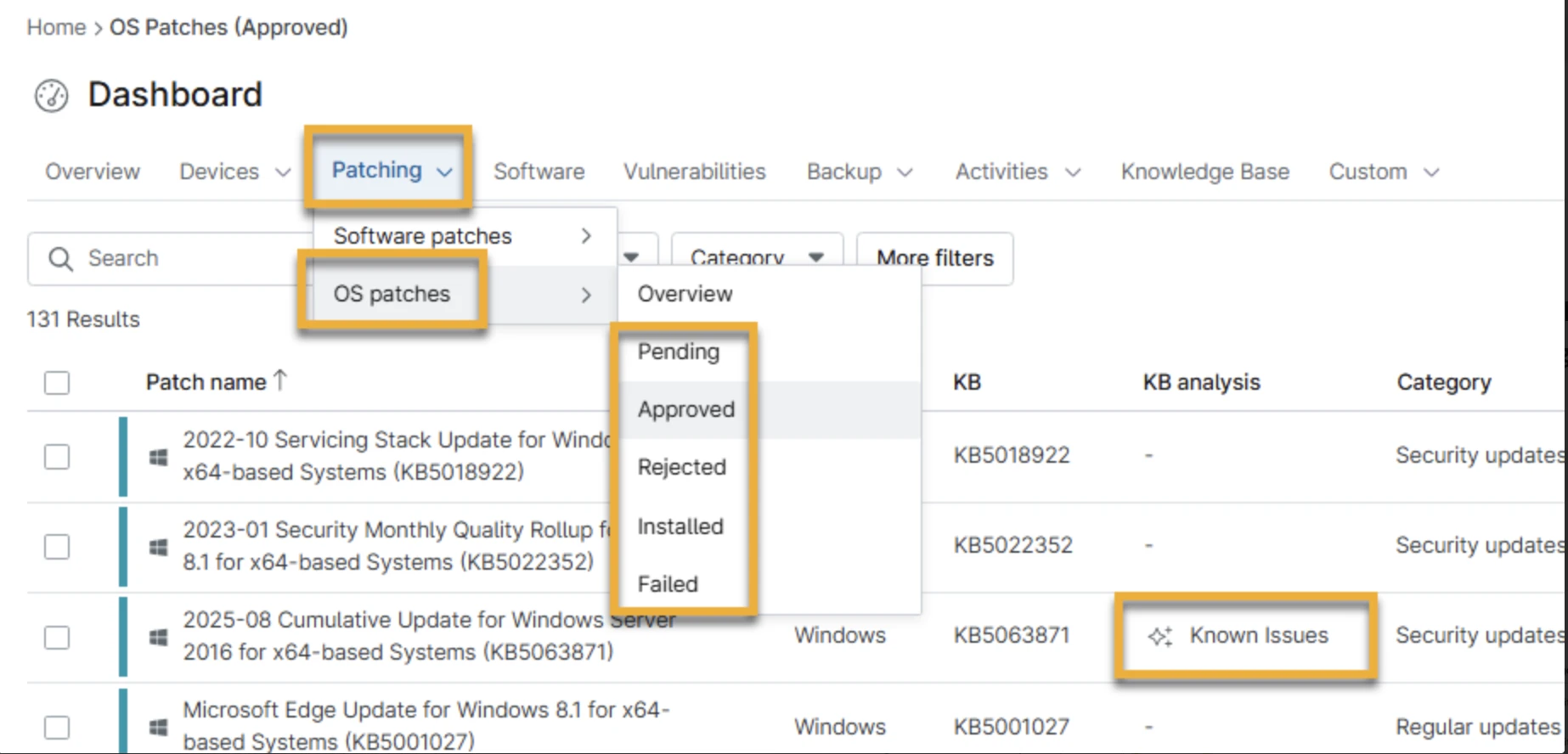
NinjaOne’ın Patch Intelligence AI çözümü, üretken yapay zekâyı, üçüncü taraf yama bilgilerini ve anonimleştirilmiş NinjaOne hata/geri alma telemetrisini bir araya getirir. Yama durumunu altı saatte bir yeniden değerlendirir ve bilinen sorunları ya da yüksek hata/geri alma oranlarını tespit ettiğinde, onaylanmış bir yamayı otomatik olarak Manuel veya Reddet durumuna çevirebilir.
Erken Erişim aşamasındaki Katana AI, RBAC ve acil durdurma anahtarı içeren, ürün içi bir ajandır.
Şekil 1: Patch Intelligence AI verilerinin Yama Yönetimi altındaki KB Analizi sütununda nasıl göründüğünü gösteren görsel.
BigPanda
BigPanda’nın L1 Agent çözümü, önceden tanımlanmış müşteri çalışma kılavuzlarını (runbook) şirket içi konteyner tabanlı bir çalışan aracılığıyla yürütür. Çalışan, dışa doğru mTLS bağlantıları kurar, kalıcı kimlik bilgisi tutmaz, kısa ömürlü kimlik bilgilerini müşterinin tanımladığı bir hizmet rolü üzerinden alır ve önceden kaydedilmiş iş akışlarını yürütür. Salt okunur tanılama adımları onay olmadan çalışabilir; bir hizmeti yeniden başlatmak gibi düzeltici eylemler ise açık onay gerektirir.
Datadog
Datadog’un Bits Investigation özelliği yinelemeli bir döngü çalıştırır: kök neden hipotezi oluşturur, telemetriyi sorgular, kanıtları değerlendirir, ardından hipotezleri revize eder veya eler.
Metrikleri, günlükleri, izleri, izleyici durumunu, RUM'u, Synthetics'i, hizmet bağımlılıklarını, olayları, panoları ve Confluence gibi harici kaynakları inceleyebilir. Arayüz, incelemeyi hem kronolojik bir adım günlüğü hem de bir hipotez ağacı olarak kaydeder.
Dynatrace
Dynatrace, Smartscape topolojisini Grail içinde düğümler ve ilişkiler olarak depolar. DQL bu topolojiyi arayabilir ve hizmetler, süreçler, sunucular, bulut kaynakları ve Kubernetes bileşenleri arasındaki ilişkileri takip edebilir.
Dynatrace’in Davis motoru, çıkarımla belirlenen ortak bir kök nedeni paylaşan olayları tek bir problemde ilişkilendirir ve belirlenen kök neden Smartscape varlığını ve etkilenen varlıkları depolar. Grail topolojiyi günlükler, span'ler, metrikler ve olaylarla birlikte depoladığı için DQL sorguları bağımlılıkları dolaşabilir ve telemetriyi varlık bağlamıyla zenginleştirebilir.
IBM Instana
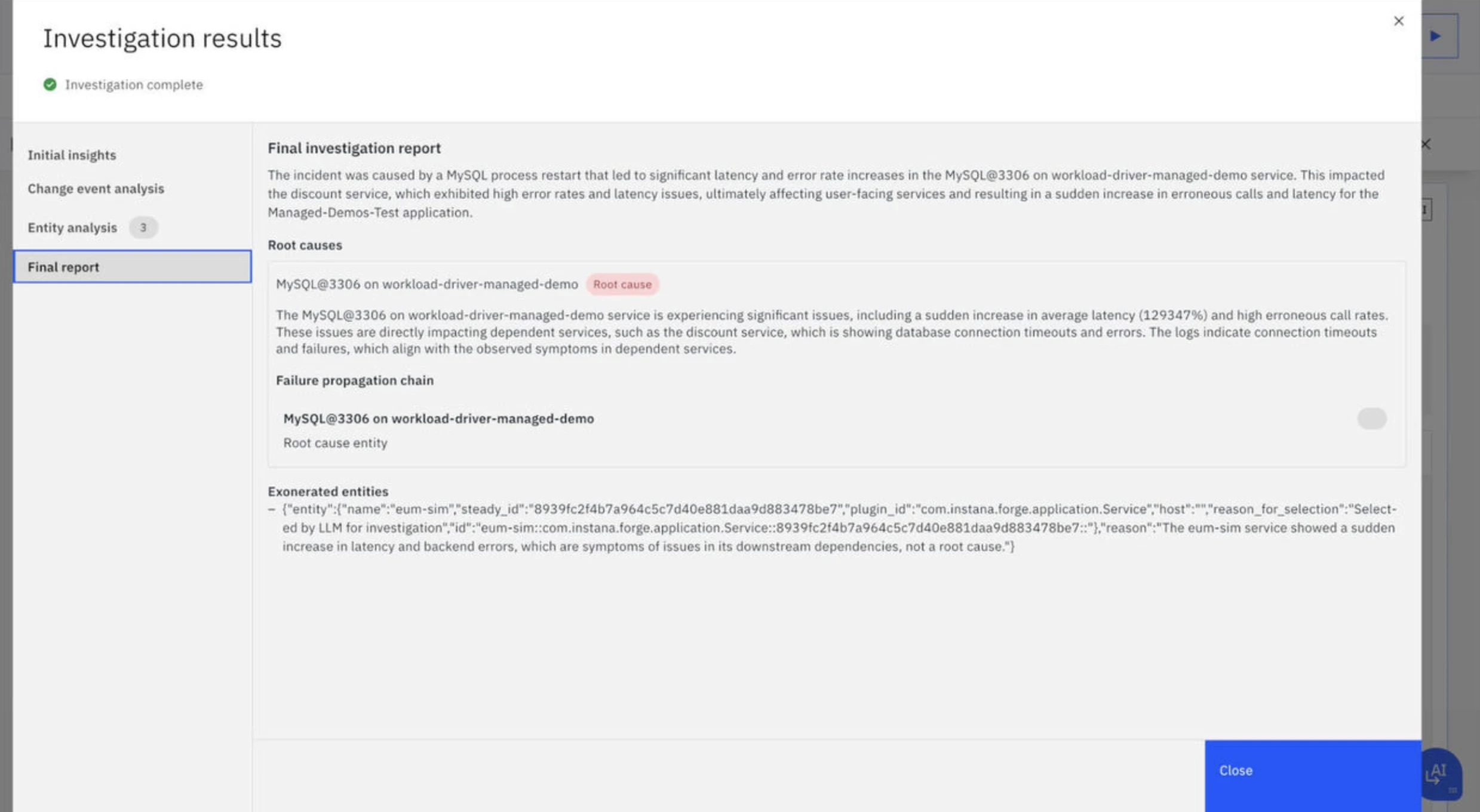
Instana’nın Intelligent Incident Investigation özelliği, izlenen ortama karşı hipotezler oluşturur ve test eder. İnceleme, hangi hipotezleri test ettiğini, hangi kanıtları topladığını ve hangi bileşenleri incelediğini kaydeder.
Bir neden kabul edildiğinde Instana, adım adım bir düzeltme çalışma kılavuzu oluşturabilir, tek düzeltme adımları için Bash betiği veya Ansible playbook'u üretebilir, ardından bunu inceleme ve dağıtım için dışa aktarır.
Şekil 2: IBM Instana Agentic AI inceleme panosu.1
LogicMonitor
LogicMonitor’ün Edwin AI Investigation özelliği, bir olay zaman çizelgesi, etki analizi ve olası neden oluşturmak için uyarıları, metrikleri, günlükleri, değişiklik taleplerini, tanılama sonuçlarını ve düzeltme çıktılarını kullanır.
Edwin, uyarıları “Insights” altında ilişkilendirir ve ajanı küresel olarak ya da belirli bir uyarı/Insight bağlamında çalışabilir. İnceleme sistemi, LogicMonitor’ün ilişkilendirilmiş olay nesneleri ve ilgili meta veriler üzerinde çalışır.
New Relic
New Relic’in MCP sunucusu, harici yapay zekâ ajanlarına belirli gözlemlenebilirlik işlevlerine erişim sağlar. Mevcut araçlar arasında doğal dildeki soruları NRQL'e dönüştürme, uyarı ve kullanıcı etkisi raporları oluşturma, dağıtım etkisini analiz etme, izleri arama, anormal izleri tespit etme ve yukarı ve aşağı akış hizmet bağımlılıklarını haritalama yer alır.
OpenText OpsBridge
BT operasyonları için OpenText’in Aviator çözümü; OpenText gözlemlenebilirlik, hizmet yönetimi, otomasyon, CMDB ve varlık yönetimi ürünleriyle çalışabilir.
OpenText ayrıca özel ajanlar oluşturmak ve dağıtmak için Aviator Studio'yu sunar; Service Management Aviator ise destek ve hizmet yönetimi kullanım senaryoları için özel üretken yapay zekâ iş akışlarını yürütür.
Splunk ITSI
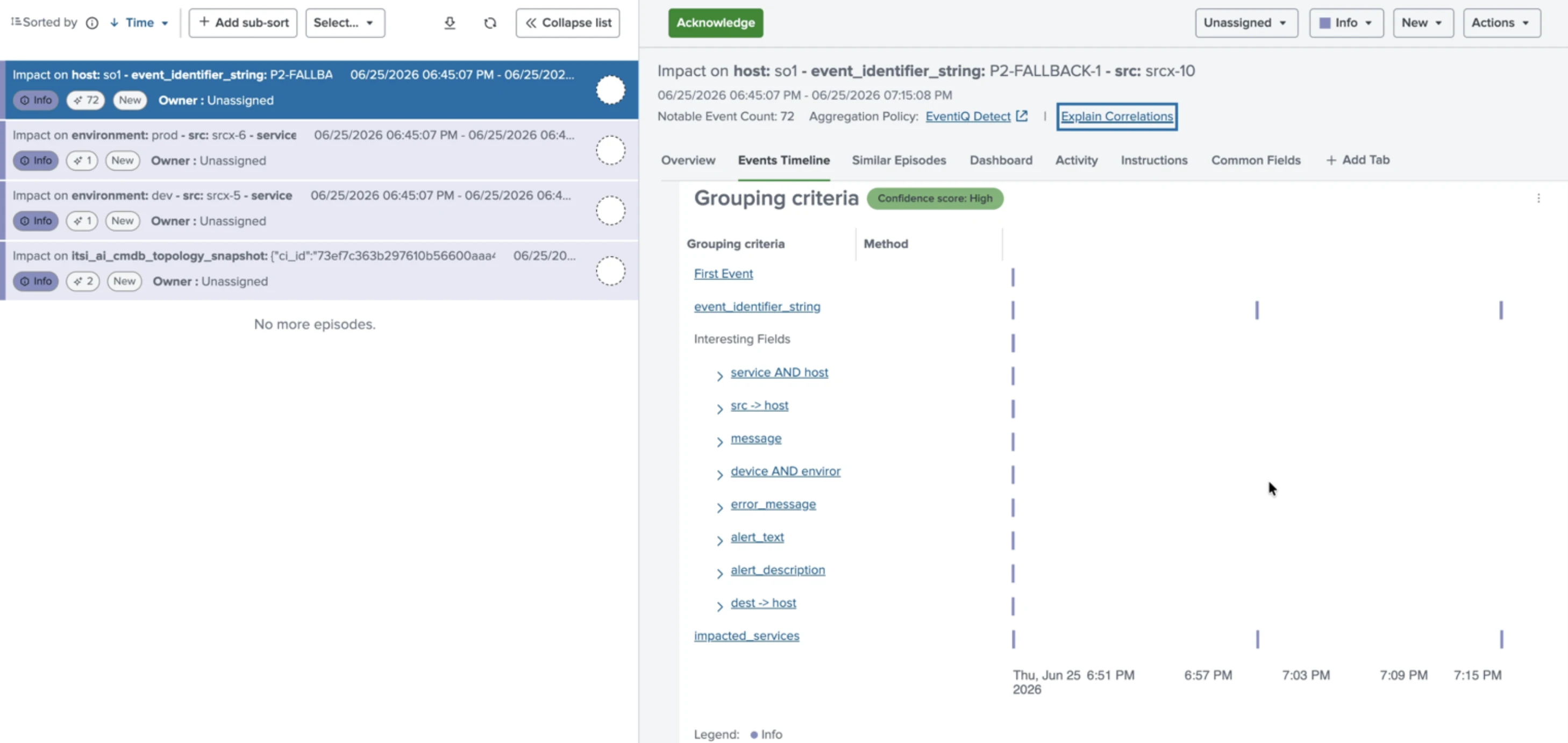
Event iQ Detect, uyarıları bölümler halinde gruplamak için hangi alanların kullanılması gerektiğini önermek üzere geçmiş önemli olay verilerini analiz eder.
Mevcut korelasyon; tam eşleştirmeyi, normalleştirilmiş eşleştirmeyi, örüntü çıkarmayı, bulanık eşleştirmeyi, anlamsal benzerliği, paylaşılan hizmet topolojisini ve üst/alt CMDB ilişkilerini destekler. Anlamsal benzerlik yapılandırılabilir güven eşikleri kullanırken, toplama politikaları alanları sıralayabilir ve bunları AND/OR mantığıyla birleştirebilir.
Şekil 3: ITSI içindeki Event iQ Detect'ten uyarı gruplama örneği.2
Zenoss Cloud
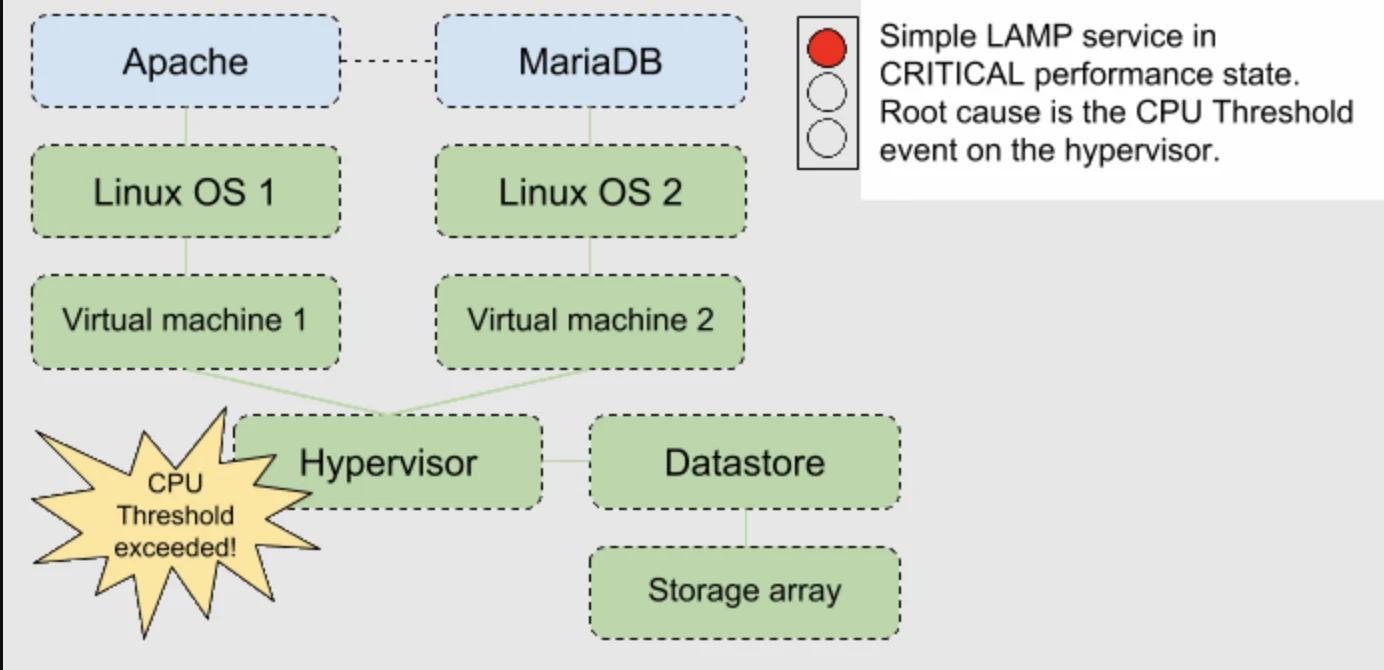
Zenoss Service Impact, hizmetleri bağımlı oldukları altyapıya bağlayan bir bağımlılık modeli tutar: örneğin uygulama süreçleri → işletim sistemi → sanal makine → hipervizör → veri deposu/depolama. Model, izlenen altyapı taşındığında veya değiştiğinde güncellenir.
Bir bağımlılık durum veya eşik olayı ürettiğinde Service Impact, bunun etkisini bağımlılık modeli üzerinden yayar ve hizmet düzeyindeki durumdan sorumlu olan altyapı olayını belirleyebilir.
Şekil 4: Zenoss Service Impact'ten bir hipervizör olayı örneği.3
Gerçek hayattan örneklerle AIOps kullanım senaryoları
Anomaly tespiti
Anomaly tespiti, kesintiler yaşanmadan önce normal davranıştan sapmaları işaretler. Datadog Watchdog, beklenen davranışın temel çizgisini proaktif olarak hesaplar ve manuel uyarı yapılandırması olmadan anormal örüntüleri tespit eder; mevsimselliği hesaba katmak için üç haftaya kadar geriye bakar.
Watchdog ayrıca alınan günlükleri girişte analiz ederek uyarı veya hata durumundaki ani artışlar gibi anormal örüntüleri arar.4
Otomatik kök neden analizi
Otomatik kök neden analizi, bir olayı dağıtık sistemler genelinde kaynaklandığı asıl arızaya kadar izler. Dynatrace’in Davis AI nedensellik motoru, bir olay tetiklendiğinde yatay yığın boyunca tüm dağıtık izleri toplar ve çağrılan bir hizmet de sağlıksız olarak işaretlendiğinde analize otomatik olarak devam eder.5
Uyarı gürültüsünü azaltma
Uyarı gürültüsünü azaltma, operasyonel yorgunluğu düşürmek için ilişkili uyarıları gruplar. PagerDuty’nin Intelligent Alert Grouping özelliği, makine öğrenimi kullanarak ilişkili uyarıları tek bir olayda birleştirir.6
BigPanda, uyarıları olaylar halinde birleştirmek için tam, zamansal ve örüntü tabanlı yinelenenleri ayıklama mekanizmaları uygular.7
Altyapı sağlığı izleme
Öngörücü altyapı sağlığı izleme, uç noktaları ve cihazları hedefler. NinjaOne, CPU yükü, bellek kullanımı ve disk sağlığı dahil cihaz düzeyindeki metrikler için gerçek zamanlı görünürlük sağlar; eşik tabanlı uyarılar ise son kullanıcılar sorun bildirmeden önce tetiklenir.
Yapay zekâ destekli düzeltme
Otomatik veya yapay zekâ destekli düzeltme, tespitten eyleme geçişi sağlar. Dynatrace Davis CoPilot for Workflows, problemleri otomatik özetlemek, düzeltme adımları önermek ve GitHub otomasyonları aracılığıyla otomatik ölçeklendirme için Kubernetes manifest dosyalarını özerk biçimde düzenlemek amacıyla üretken yapay zekâyı bünyesine katar. 8
 Tercih edilen kaynak olarak ekle
Bu araştırmayı kaynak gösterin
Yayınlayacağınız yere uygun formatı seçin. Bağlantılı sürümü CMS'inize yapıştırmak, geri bağlantıyı korur.
@misc{ermut2026,
  author = {Ermut, Sıla},
  title  = {{En İyi 10 AIOps Platformunun Karşılaştırması}},
  year   = {2026},
  month  = oct,
  howpublished    = {\url{https://aimultiple.com/aiops-platforms}},
  note   = {AIMultiple. Erişim tarihi: 2 Ekim 2026}
}30 veri noktasının sonuçları ve zaman damgaları. Bu makaledeki grafik ve tablolarda gösterilen özet verileri, 3 CSV dosyası içeren ZIP dosyası olarak indirin.
Arkasındaki ayrıntılı veriyi ister misiniz? Premium'a katılın
Referans Linkleri
Daha önce proje yönetimi ve danışmanlık firmalarında işe alım uzmanı olarak çalıştı. Sıla, Sosyal Psikoloji alanında yüksek lisans derecesine ve Uluslararası İlişkiler alanında lisans derecesine sahiptir.
Sıradaki Okunma
Kişisel Yapay Zeka Ajanları Oluşturma + 18 Ajan Platformları ve Araçları


En İyi 9 Agentic CRM Platformu
20+ Sorumlu Yapay Zeka Platformunu ve Kütüphanelerini Karşılaştırın



Yorum yapan ilk kişi olun
E-posta adresiniz yayınlanmayacak. Tüm alanlar gereklidir. Yorumlar orijinal dilinde bırakılır.