


Top 10 AIOps-Plattformen im Vergleich

AIOps-Plattformen setzen maschinelles Lernen und Agentic IT für IT-Betriebsaufgaben wie Anomalieerkennung, Ereigniskorrelation und Ursachenanalyse ein. Wir haben die Top 10 AIOps-Plattformen anhand ihrer wichtigsten und differenzierenden Funktionen, Preispläne und primären Anwendungsfälle verglichen.
Kernfunktionen von AIOps-Plattformen
Produkt | ML-Anomalieerkennung | Automatisierte Behebung | Ereigniskorrelation / Rauschreduzierung | Automatisierte / KI-RCA | Prädiktive Analysen |
|---|---|---|---|---|---|
Eingeschränkt | ✓ | Eingeschränkt | Eingeschränkt | Eingeschränkt | |
BigPanda | Eingeschränkt | Eingeschränkt | ✓ | ✓ | Eingeschränkt |
Datadog | ✓ | ✓ | ✓ | ✓ | Eingeschränkt |
Dynatrace | ✓ | ✓ | ✓ | ✓ | ✓ |
IBM Instana | ✓ | Eingeschränkt | ✓ | ✓ | Eingeschränkt |
LogicMonitor | ✓ | Eingeschränkt | ✓ | ✓ | ✓ |
New Relic | ✓ | Eingeschränkt | ✓ | ✓ | Eingeschränkt |
OpenText OpsBridge | ✓ | ✓ | ✓ | ✓ | ✓ |
Splunk ITSI | ✓ | ✓ | ✓ | ✓ | ✓ |
Zenoss Cloud | ✓ | Eingeschränkt | ✓ | ✓ | ✓ |
Hinweis: Alle Tabellen sind alphabetisch sortiert. Unsere Abonnenten werden zuerst aufgeführt.
Differenzierende Funktionen von AIOps-Tools
Top 10 AIOps-Plattformen im Vergleich
NinjaOne
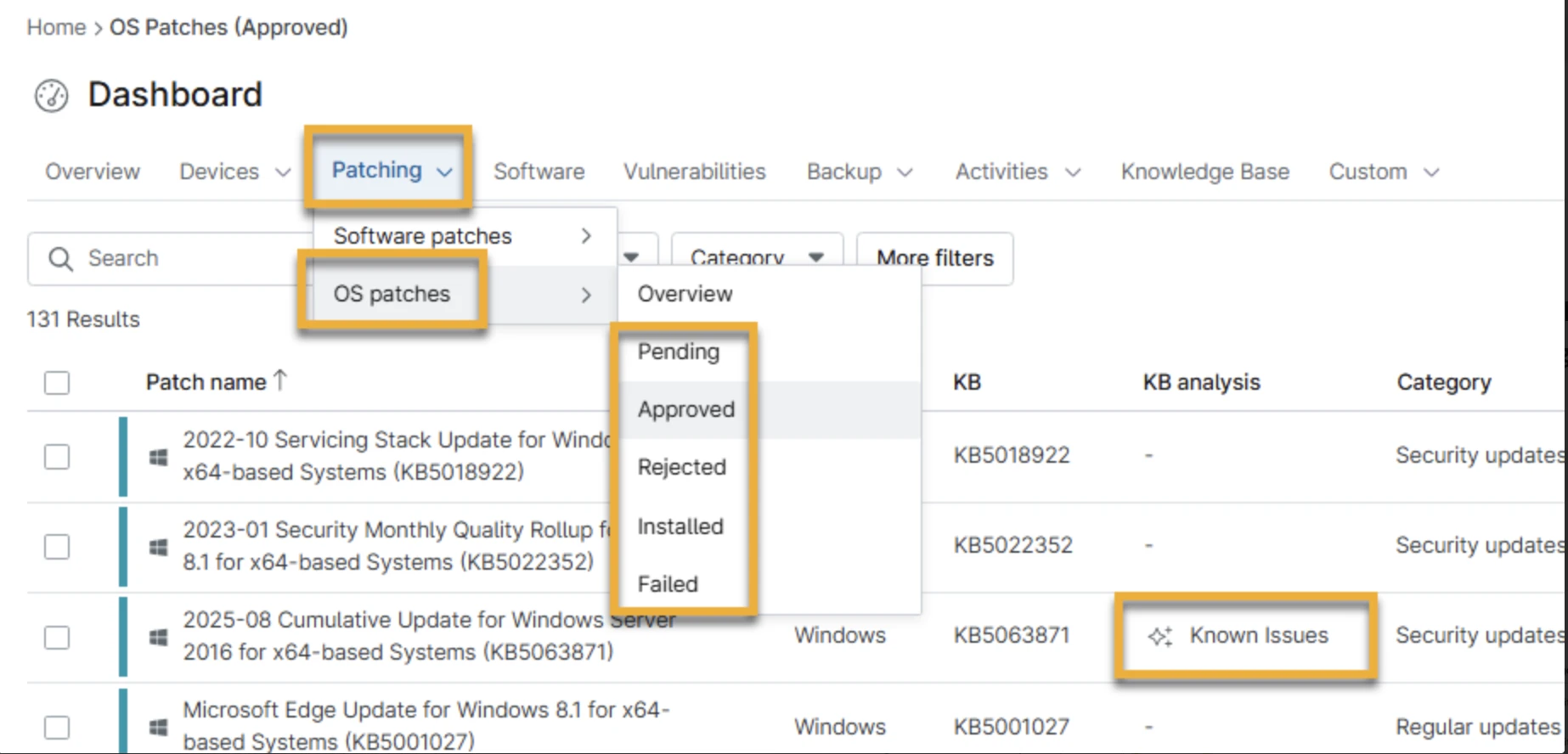
NinjaOnes Patch Intelligence KI kombiniert generative KI, Patch-Informationen von Drittanbietern und anonymisierte NinjaOne-Telemetriedaten zu Fehlschlägen und Rollbacks. Die Lösung bewertet den Patch-Status alle sechs Stunden neu und kann einen ansonsten genehmigten Patch automatisch auf „Manuell“ oder „Ablehnen“ umstellen, wenn sie bekannte Probleme oder erhöhte Fehlschlag- bzw. Rollback-Raten erkennt.
Katana KI, das sich im Early Access befindet, ist ein produktinterner Agent mit RBAC und Kill Switch.
Abbildung 1: Bild, das zeigt, wie Daten von Patch Intelligence KI in der Spalte KB-Analyse unter Patching erscheinen.
BigPanda
Der L1 Agent von BigPanda führt vordefinierte Kunden-Runbooks über einen containerisierten On-Premises-Worker aus. Der Worker baut ausgehende mTLS-Verbindungen auf, speichert keine dauerhaften Zugangsdaten, bezieht kurzlebige Zugangsdaten über eine vom Kunden definierte Servicerolle und führt vorab registrierte Workflows aus. Schreibgeschützte Diagnoseschritte können ohne Genehmigung laufen; Korrekturmaßnahmen wie der Neustart eines Dienstes erfordern eine ausdrückliche Genehmigung.
Datadog
Die Bits Investigation von Datadog arbeitet in einer iterativen Schleife: Sie bildet eine Ursachenhypothese, fragt Telemetriedaten ab, bewertet die Belege und überarbeitet oder verwirft anschließend Hypothesen.
Sie kann Metriken, Logs, Traces, Monitor-Status, RUM, Synthetics, Service-Abhängigkeiten, Incidents, Dashboards und externe Quellen wie Confluence prüfen. Die Benutzeroberfläche protokolliert die Untersuchung sowohl als chronologisches Schrittprotokoll als auch als Hypothesenbaum.
Dynatrace
Dynatrace speichert seine Smartscape-Topologie als Knoten und Beziehungen in Grail. Mit DQL lässt sich diese Topologie durchsuchen und Beziehungen zwischen Services, Prozessen, Hosts, Cloud-Ressourcen und Kubernetes-Komponenten nachverfolgen.
Davis von Dynatrace korreliert Ereignisse mit einer gemeinsamen abgeleiteten Ursache zu einem einzigen Problem und speichert die identifizierte Smartscape-Entität der Ursache sowie die betroffenen Entitäten. Da Grail die Topologie zusammen mit Logs, Spans, Metriken und Ereignissen speichert, können DQL-Abfragen Abhängigkeiten durchlaufen und Telemetriedaten mit Entitätskontext anreichern.
IBM Instana
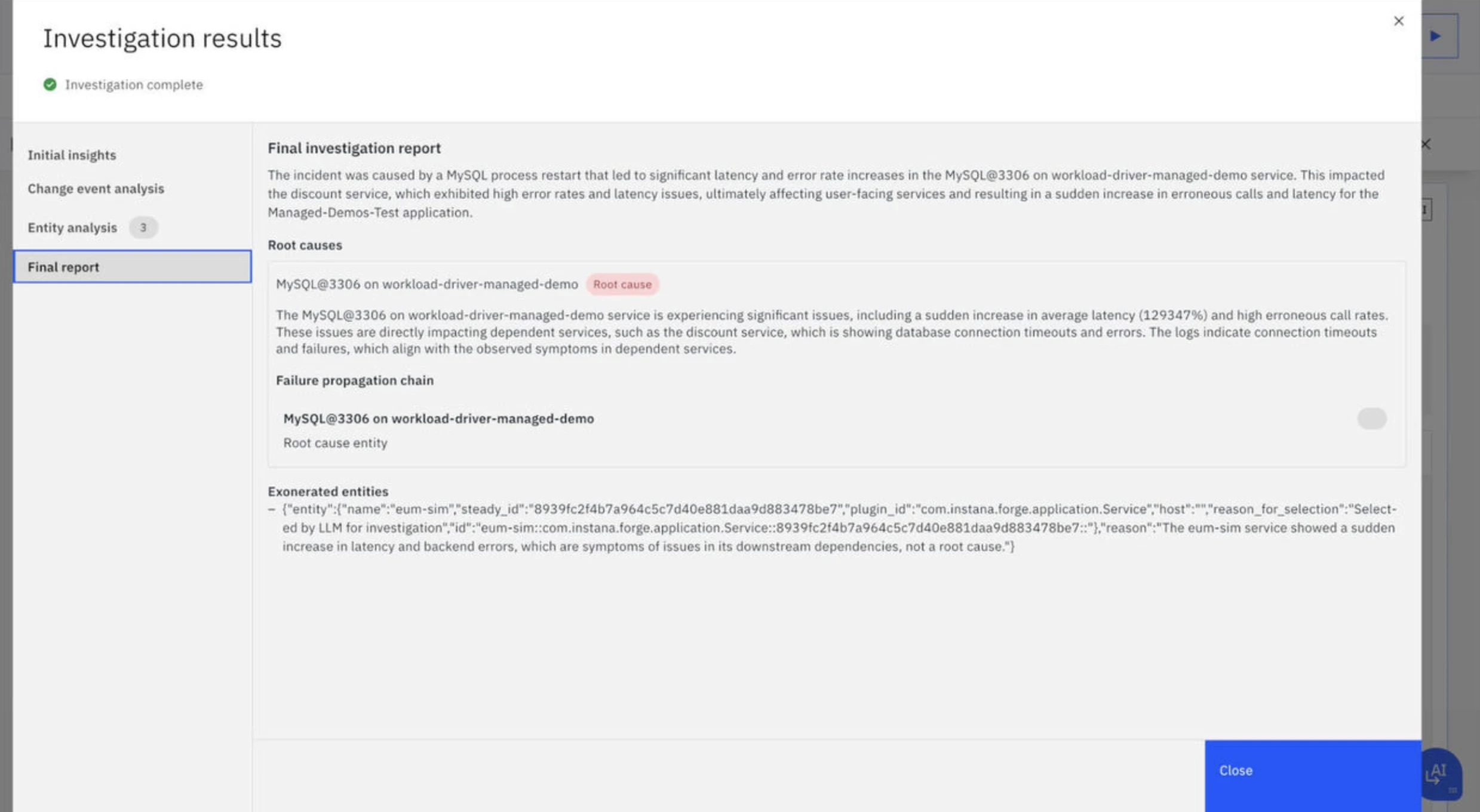
Die Intelligent Incident Investigation von Instana erstellt Hypothesen und prüft sie gegen die überwachte Umgebung. Die Untersuchung protokolliert, welche Hypothesen getestet, welche Belege gesammelt und welche Komponenten geprüft wurden.
Sobald eine Ursache akzeptiert ist, kann Instana ein schrittweises Behebungs-Runbook erstellen und für einzelne Behebungsschritte ein Bash-Skript oder Ansible-Playbook erzeugen, das anschließend zur Prüfung und Bereitstellung exportiert wird.
Abbildung 2: IBM Instana Agentic AI Dashboard für Untersuchungen.1
LogicMonitor
Die Edwin KI Investigation von LogicMonitor verarbeitet Alerts, Metriken, Logs, Änderungsanforderungen, Diagnoseergebnisse und Behebungsausgaben, um eine Incident-Zeitleiste, eine Auswirkungsanalyse und die wahrscheinliche Ursache zu erstellen.
Edwin korreliert Alerts zu „Insights“, und sein Agent kann entweder global oder im Kontext eines bestimmten Alerts bzw. Insights arbeiten. Das Untersuchungssystem arbeitet auf den korrelierten Incident-Objekten von LogicMonitor und den zugehörigen Metadaten.
New Relic
Der MCP-Server von New Relic gibt externen KI-Agenten Zugriff auf bestimmte Observability-Funktionen. Zu den verfügbaren Tools gehören die Umwandlung von Fragen in natürlicher Sprache in NRQL, die Erstellung von Alert- und Nutzerauswirkungsberichten, die Analyse der Auswirkungen von Deployments, die Suche nach Traces, die Erkennung anomaler Traces sowie die Abbildung vor- und nachgelagerter Service-Abhängigkeiten.
OpenText OpsBridge
Für den IT-Betrieb kann OpenText Aviator mit OpenText-Produkten für Observability, Service-Management, Automatisierung, CMDB und Asset-Management zusammenarbeiten.
OpenText bietet außerdem Aviator Studio zum Erstellen und Bereitstellen individueller Agenten, während Service Management Aviator private generative KI-Workflows für Support- und Service-Management-Anwendungsfälle abdeckt.
Splunk ITSI
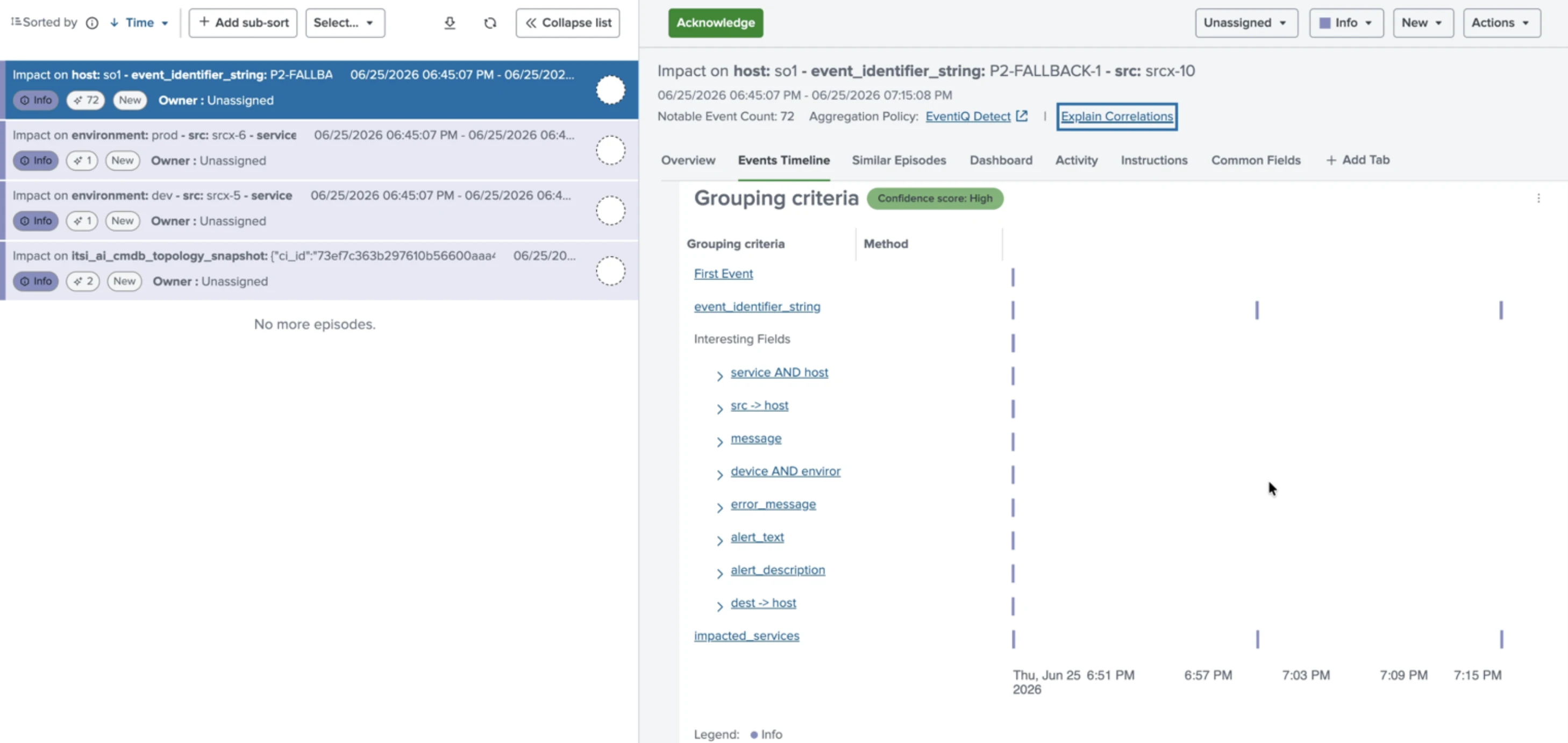
Event iQ Detect analysiert historische Daten zu bemerkenswerten Ereignissen, um zu empfehlen, welche Felder zur Gruppierung von Alerts in Episoden verwendet werden sollten.
Die aktuelle Korrelation unterstützt exakten Abgleich, normalisierten Abgleich, Mustererkennung, unscharfen Abgleich, semantische Ähnlichkeit, gemeinsame Service-Topologie sowie CMDB-Beziehungen zwischen übergeordneten und untergeordneten Elementen. Die semantische Ähnlichkeit verwendet konfigurierbare Konfidenzschwellen, während Aggregationsrichtlinien Felder gewichten und mit AND/OR-Logik kombinieren können.
Abbildung 3: Beispiel für Alert-Gruppierung mit Event iQ Detect in ITSI.2
Zenoss Cloud
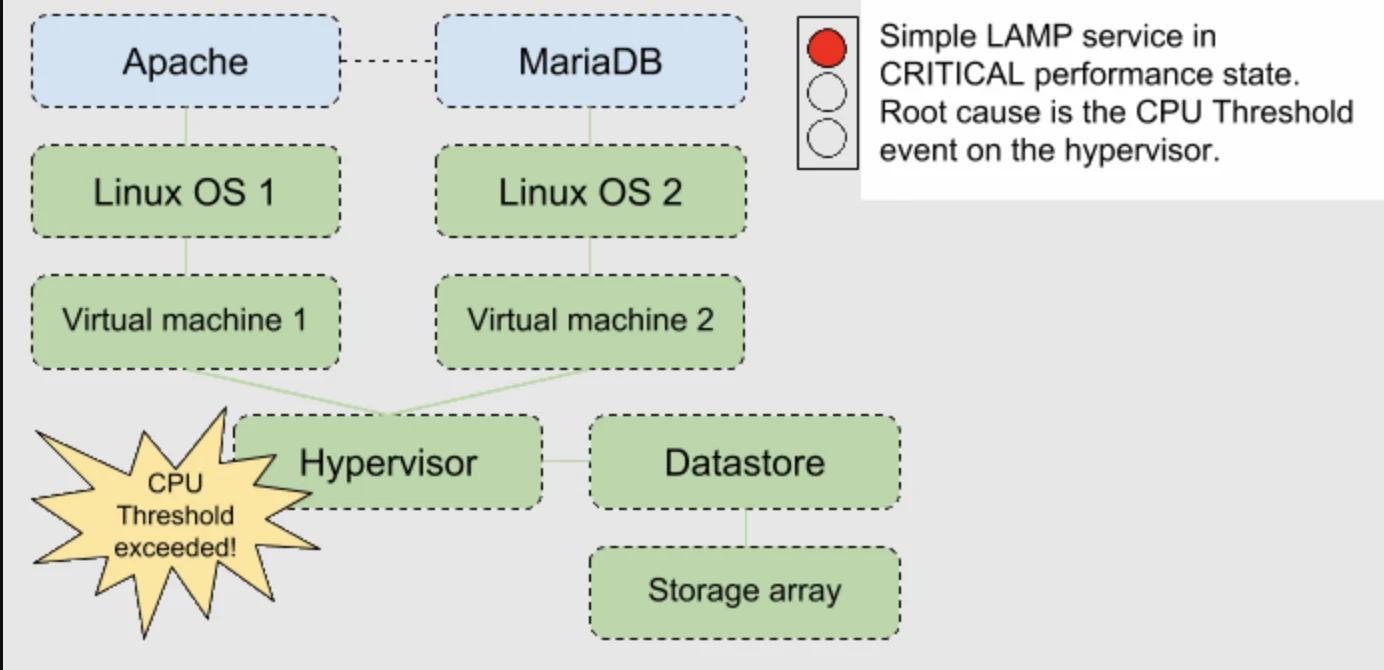
Zenoss Service Impact pflegt ein Abhängigkeitsmodell, das Services mit der Infrastruktur verknüpft, von der sie abhängen: zum Beispiel Anwendungsprozesse → Betriebssystem → VM → Hypervisor → Datastore/Speicher. Das Modell wird aktualisiert, wenn sich die überwachte Infrastruktur verschiebt oder ändert.
Wenn eine Abhängigkeit ein Status- oder Schwellenwertereignis erzeugt, propagiert Service Impact dessen Auswirkung durch das Abhängigkeitsmodell und kann das zugrunde liegende Infrastrukturereignis identifizieren, das für den Status auf Service-Ebene verantwortlich ist.
Abbildung 4: Beispiel für ein Hypervisor-Ereignis aus Zenoss Service Impact.3
AIOps-Anwendungsfälle mit Praxisbeispielen
Anomaly-Erkennung
Die Anomaly-Erkennung markiert Abweichungen vom Normalverhalten, bevor Ausfälle auftreten. Datadog Watchdog berechnet proaktiv eine Baseline des erwarteten Verhaltens und erkennt anomale Muster ohne manuelle Alert-Konfiguration; dabei blickt es bis zu drei Wochen zurück, um Saisonalität zu berücksichtigen.
Watchdog analysiert außerdem aufgenommene Logs bereits bei der Erfassung auf anomale Muster, etwa plötzliche Anstiege bei Warn- oder Fehlerstatus.4
Automatisierte Ursachenanalyse
Die automatisierte Ursachenanalyse führt einen Incident über verteilte Systeme hinweg auf den ursprünglichen Fehler zurück. Die Kausalitätsengine Davis KI von Dynatrace sammelt bei einem auslösenden Ereignis alle verteilten Traces entlang des horizontalen Stacks und setzt die Analyse automatisch fort, wenn auch ein aufgerufener Service als fehlerhaft markiert ist.5
Reduzierung von Alert-Rauschen
Die Reduzierung von Alert-Rauschen gruppiert zusammengehörige Alerts, um die Belastung im Betrieb zu senken. Die Intelligent Alert Grouping von PagerDuty fasst zusammengehörige Alerts mithilfe von maschinellem Lernen zu einem einzigen Incident zusammen.6
BigPanda wendet exakte, zeitbasierte und musterbasierte Deduplizierungsmechanismen an, um Alerts zu Incidents zusammenzuführen.7
Überwachung des Infrastrukturzustands
Die prädiktive Überwachung des Infrastrukturzustands richtet sich auf Endpunkte und Geräte. NinjaOne bietet Echtzeit-Einblick in Metriken auf Geräteebene wie CPU-Last, Speicherauslastung und Festplattenzustand, mit schwellenwertbasierten Alerts, die auslösen, bevor Endnutzer Probleme melden.
KI-gestützte Behebung
Automatisierte oder KI-gestützte Behebung führt von der Erkennung zur Handlung. Dynatrace Davis CoPilot for Workflows bettet generative KI ein, um Probleme automatisch-matisch zusammenzufassen, Behebungsschritte vorzuschlagen und Kubernetes-Manifeste für das automatisch-Scaling über GitHub-Automatisierungen autonom zu bearbeiten. 8
 Als bevorzugte Quelle hinzufügen
Diese Forschung zitieren
Wählen Sie das Format, das zu Ihrem Veröffentlichungsort passt. Wenn Sie die Link-Version in Ihr CMS einfügen, bleibt der Backlink erhalten.
@misc{ermut2026,
  author = {Ermut, Sıla},
  title  = {{Top 10 AIOps-Plattformen im Vergleich}},
  year   = {2026},
  month  = oct,
  howpublished    = {\url{https://aimultiple.com/aiops-platforms}},
  note   = {AIMultiple. Abgerufen am 2. Oktober 2026}
}Ergebnisse und Zeitstempel von 30 Datenpunkten. Laden Sie die Zusammenfassungsdaten aus den Diagrammen und Tabellen dieses Artikels als ZIP-Datei herunter, die 3 CSV-Dateien enthält.
Möchten Sie die granularen Daten dahinter? Premium beitreten
Referenzlinks
Zuvor arbeitete sie als Personalvermittlerin in Projektmanagement- und Beratungsunternehmen. Sıla hat einen Master of Science in Sozialpsychologie und einen Bachelor of Arts in Internationalen Beziehungen.





Seien Sie der Erste, der kommentiert
Ihre E-Mail-Adresse wird nicht veröffentlicht. Alle Felder sind erforderlich. Kommentare werden in ihrer Originalsprache belassen.