


Top 12+ Data-as-a-Service-Unternehmen

Data-as-a-Service (DaaS) ist ein Cloud-Modell, das Daten auf Abruf liefert, in der Regel im Abonnement. Unternehmen können die benötigten Datensätze kaufen, ohne die Daten selbst zu sammeln und zu speichern.
Sehen Sie die führenden Data-as-a-Service-Unternehmen und die von ihnen bereitgestellten Datentypen, die wichtigsten Funktionen wie Datenanalysen und die Vorteile des DaaS-Modells:
Top 13 DaaS-Anbieter
Anbieter | Grundpreis** | Kostenlose Testversion | Kostenlose Version | Datentypen |
|---|---|---|---|---|
$250 pro 100K Datensätze | ✓ (7 Tage) | ✕ | Web-Datensätze und Datenfeeds | |
ZoomInfo | N/A | ✓ | ✕ | Unternehmensdaten und -profile |
Coresignal | $49 | ✕ | ✕ | Unternehmens-, Mitarbeiter- und Stellenausschreibungsdaten |
Clearbit | N/A | ✕ | ✕ | B2B-Unternehmens- und Kontaktanreicherungsdaten |
Crunchbase | $49 | ✓ (7 Tage) | ✕ | Unternehmens- und Marktdaten |
D&B Connect | N/A | ✕ | ✕ | Finanz- und Unternehmensdaten |
Factiva | N/A | ✕ | ✕ | Unternehmensnachrichten und -profile |
FactSet | N/A | ✓ | ✕ | Finanz- und Unternehmensdaten |
S&P Global Market Intelligence | N/A | ✕ | ✕ | Finanz- und Unternehmensdaten |
PitchBook | N/A | ✓ | ✕ | Privatmarkt- und Investitionsdaten |
Ranking: Produkte werden nach der Gesamtzahl der Bewertungen eingestuft, mit Ausnahme der Abonnenten der Benchmarking-Dienste von AIMultiple, die an der Spitze stehen.
*Die Daten wurden von Anbieter-Websites sowie Bewertungsplattformen erhoben.
**Pro Monat und Benutzer. N/A bedeutet, dass der Anbieter seine Preisgestaltung nicht öffentlich mitteilt.
Wichtige Funktionen von Data-as-a-Service-Anbietern
Data-as-a-Service-Unternehmen sind auf das Sammeln, Verwalten und Liefern von Daten an Benutzer spezialisiert und ermöglichen ihnen den Zugriff auf und die Nutzung der Daten, ohne dass eine interne Cloud-Infrastruktur erforderlich ist.
DaaS-Unternehmen bieten verschiedene Funktionen, wie zum Beispiel:
1. Datenbereitstellung
Data-as-a-Service (DaaS)-Anbieter bieten Zugriff auf eine Vielzahl unterschiedlicher Datensätze, die häufig aus verschiedenen Quellen wie öffentlichen Datenbanken, proprietären Quellen oder Datenaggregatoren stammen. Dies deckt spezifische Datenanforderungen ab, die allein nur schwer zu erfüllen sind. Wenn einem Unternehmen die Werkzeuge, das Fachwissen oder der direkte Zugriff auf die benötigten Daten fehlen, übernimmt ein DaaS-Anbieter die Erfassung und Bereitstellung.
Diese Dienste beseitigen die Komplexität von Berechtigungen und Datenerfassung und ermöglichen es Unternehmen, sich darauf zu konzentrieren, Erkenntnisse und Mehrwert aus den erworbenen Datensätzen zu gewinnen.
2. Datenverwaltung
Data-as-a-Service-Unternehmen zeichnen sich durch die Verwaltung von Daten aus, indem sie Speicherung, Organisation und Pflege großer Datensätze übernehmen. Über diese grundlegenden Aspekte hinaus navigieren sie durch die komplexe Landschaft der Datenberechtigungen, stellen die Einhaltung von Vorschriften sicher und berücksichtigen die Feinheiten der Datenzugriffsrechte. Dazu gehört das Einholen der erforderlichen Genehmigungen und die Verwaltung der Daten in einer Weise, die den gesetzlichen Anforderungen entspricht.
Die DaaS-Plattform bewältigt auch die Datensicherheitsrisiken sensibler Daten auf effizientere Weise.
3. Datenanalyse
Einige DaaS-Anbieter bieten Datenanalysetools und -dienste an, mit denen Benutzer Erkenntnisse aus den Daten des Unternehmens gewinnen können, auf die sie zugreifen. Dazu können Tools für Business Intelligence, prädiktive Analysen und maschinelles Lernen gehören.
4. Programmierschnittstellen (APIs)
Data-as-a-Service-Unternehmen stellen häufig APIs bereit, mit denen Benutzer Geschäftsdaten direkt in ihre Anwendungen, Workflows oder Systeme integrieren können. Eine API ermöglicht es einem Unternehmen, Daten direkt in seine eigenen Anwendungen und Workflows zu übernehmen. Sie hält die Daten in den Systemen, die sie nutzen, aktuell – ohne manuelle Importe.
5. Skalierbarkeit
DaaS-Plattformen sind skalierbar. Ein Unternehmen kann die Datennutzung anpassen, wenn sich die Anforderungen ändern. Diese Flexibilität ist besonders vorteilhaft für Unternehmen mit sich ändernden Datenanforderungen. Darüber hinaus macht DaaS im Gegensatz zu anderen Datenerfassungsmethoden wie Web-Scraping-Tools ein eigenes IT-Team zur Verwaltung des Beschaffungsprozesses der benötigten Daten überflüssig.
Diese Dienste sparen Zeit, indem sie genau die Daten liefern, die ein Unternehmen benötigt.
6. Abonnementbasiertes Modell
DaaS wird in der Regel über ein abonnementbasiertes Modell angeboten, bei dem Benutzer für die von ihnen genutzten Datendienste bezahlen. Unternehmen können mit dem DaaS-Anbieter die Daten aushandeln, die ihren Anforderungen entsprechen, anstatt in eine eigene Dateninfrastruktur zu investieren und diese zu unterhalten. Dadurch können Benutzer nur für die spezifischen Datendienste bezahlen, die sie tatsächlich nutzen, was Kosteneinsparungen ermöglicht.
Vorteile von Data-as-a-Service-Unternehmen
DaaS senkt die Kosten für die Datenbeschaffung und verkürzt die Zeit bis zum Datenzugriff. Ein Unternehmen erhält einsatzbereite Datensätze, ohne eigene Erfassungs- und Speichersysteme aufbauen zu müssen.
1. Effiziente Datenspeicherung und -bereitstellung
DaaS nutzt Cloud-Infrastruktur zum Speichern und Bereitstellen von Daten und macht es für Unternehmen überflüssig, in umfangreiche interne Datenspeichersysteme zu investieren und diese zu unterhalten. Dieser Dienst erspart Unternehmen den Aufwand, sich mit Themen wie verfügbarem Cloud-Speicherplatz auseinanderzusetzen.
2. Datendemokratisierung
DaaS macht Daten für nicht-technische Mitarbeiter leichter zugänglich. Teams im gesamten Unternehmen können Datensätze über einfache Tools und APIs abfragen, anstatt jede Anfrage über ein Data-Engineering-Team leiten zu müssen.
3. Monetarisierungsmöglichkeiten
DaaS eröffnet Unternehmen Möglichkeiten, ihre Datenbestände zu monetarisieren.
- Direkte Monetarisierung bedeutet, Einnahmen durch den Verkauf von Daten an Dritte zu erzielen.
- Indirekte Monetarisierung ist die Nutzung der Daten zur Gewinnung wertvoller Geschäftserkenntnisse.
Dieser doppelte Ansatz ermöglicht es Unternehmen, Einnahmequellen zu diversifizieren und den inneren Wert ihrer Daten zu nutzen.
4. Automatisierte Wartung
Data-as-a-Service-Unternehmen übernehmen die Verantwortung für die automatisierte Datenpflege und stellen sicher, dass die Datensätze aktuell, korrekt und zuverlässig bleiben. Die Automatisierung der Wartung steigert die Effizienz der Datenverwaltungsprozesse und setzt zudem Ressourcen in den Unternehmen frei, damit diese sich auf Kerngeschäftsaktivitäten konzentrieren können.
5. Personalisierte Dienste
Die Fülle an Daten, die über DaaS verfügbar ist, ermöglicht es Unternehmen, personalisiertere und gezieltere Dienste zu entwickeln. Durch die Analyse von Verbraucherverhalten und -präferenzen können Unternehmen ihre Marketingansätze strategisch anpassen und so die Kundenbindung und -zufriedenheit steigern.
Das Verständnis individueller Kaufhistorien und Präferenzen ermöglicht es Unternehmen beispielsweise, individuelle Empfehlungen zu geben und so ein persönlicheres und zufriedenstellenderes Einkaufserlebnis für die Kunden zu schaffen.
6. Kosteneffiziente Datenbeschaffung
DaaS bietet eine kosteneffiziente Alternative zu herkömmlichen Methoden der Datenbeschaffung. Anstatt in große Datensätze mit übermäßigen Informationen zu investieren, können Unternehmen gezielt nur die spezifischen Daten erwerben, die sie benötigen. Dieser gezielte Ansatz minimiert die Kosten für Datenverarbeitung und -analyse und macht datengesteuerte Initiativen budgetfreundlicher.
Durch den Wegfall der Notwendigkeit, in umfangreiche interne Datenspeicher zu investieren und diese zu unterhalten, sinken auch die Kosten für Hardware und Wartung.
Herausforderungen des DaaS-Modells
Datensicherheit
Da die Zahl der Datenschutzverletzungen jedes Jahr zunimmt, sollten Cybersicherheitsmaßnahmen ernst genommen werden. Wenn die Sicherheitsmaßnahmen des DaaS-Anbieters nicht ausreichen, um potenzielle Datenschutzverletzungen zu verhindern, kann Ihr Unternehmen Millionen verlieren und einen Reputationsschaden erleiden. Bevor Sie sich für einen DaaS-Anbieter entscheiden, sollten Sie den Ansatz des Anbieters zur Datensicherheit verstehen.
Datenschutz
Die weitergegebenen Daten können vertrauliche bzw. personenbezogene Informationen enthalten. Unternehmen müssen sicherstellen, dass DaaS-Unternehmen die erforderlichen Maßnahmen ergreifen, um die Vertraulichkeit personenbezogener Daten zu gewährleisten.
Datensatzhygiene
Wenn ein Unternehmen mit einem DaaS-Anbieter zusammenarbeitet, kann es seine internen Daten mit dem Datensatz des Anbieters kombinieren. Allerdings stimmen die Regeln des Anbieters und des Unternehmens bei der Datenaufbereitung möglicherweise nicht überein, was zu schmutzigen Daten führt. Unternehmen sollten sicherstellen, dass der Anbieter versteht, wie sich Daten sauber mit anderen Datensätzen synchronisieren lassen.
Wie Data-as-a-Service-Unternehmen den B2B- und B2C-Sektor unterstützen
Data-as-a-Service (DaaS)-Plattformen geben Unternehmen Zugriff auf einsatzbereite Daten aus vielen Quellen wie sozialen Medien, Unternehmenssystemen oder öffentlichen Datenbanken. Sie erleichtern es Unternehmen, hochwertige, bedarfsgerechte Daten zu nutzen, ohne eine komplexe Infrastruktur verwalten zu müssen.
B2B-Sektor
Unternehmen nutzen DaaS-Plattformen, um ihre Daten zu verbessern und bessere Entscheidungen zu treffen. Diese Plattformen helfen bei:
- Marktsegmentierung: durch das Hinzufügen firmografischer Daten wie Unternehmensgröße, Finanzierungsrunden und neue Filialeröffnungen.
- Echtzeit-Einblicke: durch automatische Aktualisierungen aus öffentlichen Registern und verifizierten Datenbanken.
- Bessere Analysen: durch die Kombination verschiedener Datenquellen für genauere Prognosen und strategische Planung.
B2C-Sektor
In Verbrauchermärkten helfen DaaS-Tools Unternehmen, Kunden besser zu verstehen und einzubinden.
- Sie liefern frische, zeitnahe Erkenntnisse, die Personalisierung und das Kundenerlebnis verbessern.
- Marketingfachleute nutzen sie, um das Targeting zu verfeinern, das Engagement zu verbessern und sinnvollere Interaktionen mit Kunden zu schaffen.
DaaS als Quelle für KI-Trainingsdaten
Das Trainieren und Feinabstimmen eines KI-Modells erfordert große, saubere, gekennzeichnete Datensätze. Für die meisten Unternehmen dauert der interne Aufbau eines solchen Datensatzes zu lange und ist zu teuer. DaaS-Plattformen sind eine praktische Alternative geworden. Sie decken zwei unterschiedliche Bedürfnisse ab.
- Trainings- und Feinabstimmungsdaten: Einige Anbieter liefern kuratierte, vorbeschriftete Datensätze für bestimmte Bereiche: juristische Dokumente, Finanzunterlagen und Gesundheitsdaten. Gesundheitsdatensätze sind in der Regel anonymisiert oder synthetisch und keine rohen Patientendaten, da diese Daten streng reguliert sind.
- Die Abrufdaten: Viele DaaS-Anbieter bieten inzwischen kontinuierlich aktualisierte Datenfeeds für RAG-Pipelines an. RAG (Retrieval-Augmented Generation) ist eine Methode, bei der ein KI-Modell im Moment der Fragestellung aktuelle externe Daten abruft, anstatt sich auf das während des Trainings Gelernte zu verlassen. Damit dies funktioniert, müssen die externen Daten aktuell bleiben. Statische Datensätze reichen nicht aus.
Beide Anwendungsfälle werfen dieselbe praktische Frage auf: Woher stammen diese Daten, und sind sie ordnungsgemäß dokumentiert?
Dies ist heute wichtiger als noch vor einem Jahr. Die Pflichten des EU-KI-Gesetzes für Anbieter von Allzweck-KI-Modellen gelten seit dem 2. August 2025.1 Anbieter müssen eine technische Dokumentation führen und eine Zusammenfassung der für die Entwicklung ihrer Modelle verwendeten Trainingsinhalte veröffentlichen. DaaS-Anbieter stehen unter wachsendem kommerziellen Druck, Informationen zu Herkunft, Lizenzierung und Aktualisierungsverlauf zusammen mit den Daten bereitzustellen, damit ihre Kunden diese Anforderungen erfüllen können.
So wählen Sie die beste Data-as-a-Service-Software für Ihr Unternehmen aus
Bei der Bewertung von Data-as-a-Service (DaaS)-Softwarelösungen für den Einsatz im Unternehmen betonen Branchenanalysten mehrere entscheidende Faktoren, die zur allgemeinen Eignung und Wirksamkeit der Plattform in einer Geschäftsumgebung beitragen.
1. Definieren Sie Ihre Anforderungen
Bevor Sie sich auf die Suche nach einem Anbieter von Datenlösungen machen, ist es wichtig, Ihre spezifischen Datenanforderungen und Geschäftsziele zu definieren. Bestimmen Sie, mit welcher Art von Daten Sie arbeiten möchten, verstehen Sie die wichtigsten Herausforderungen und legen Sie die Ziele fest, die Sie mit Datenlösungen erreichen möchten. Diese Klarheit rationalisiert den Auswahlprozess und ermöglicht es Ihnen, Data-as-a-Service-Unternehmen zu identifizieren, die Ihren individuellen Anforderungen entsprechen.
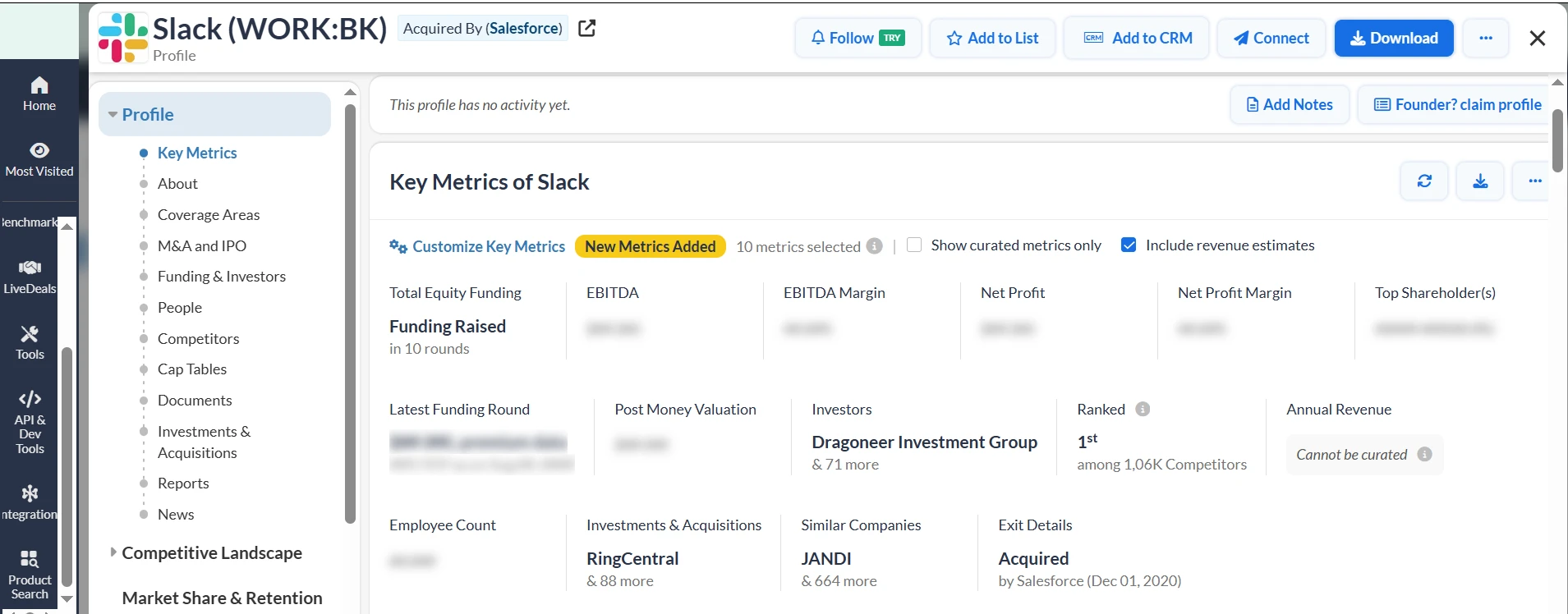
Abbildung 1. Beispiel für Geschäftsdaten von Tracxn
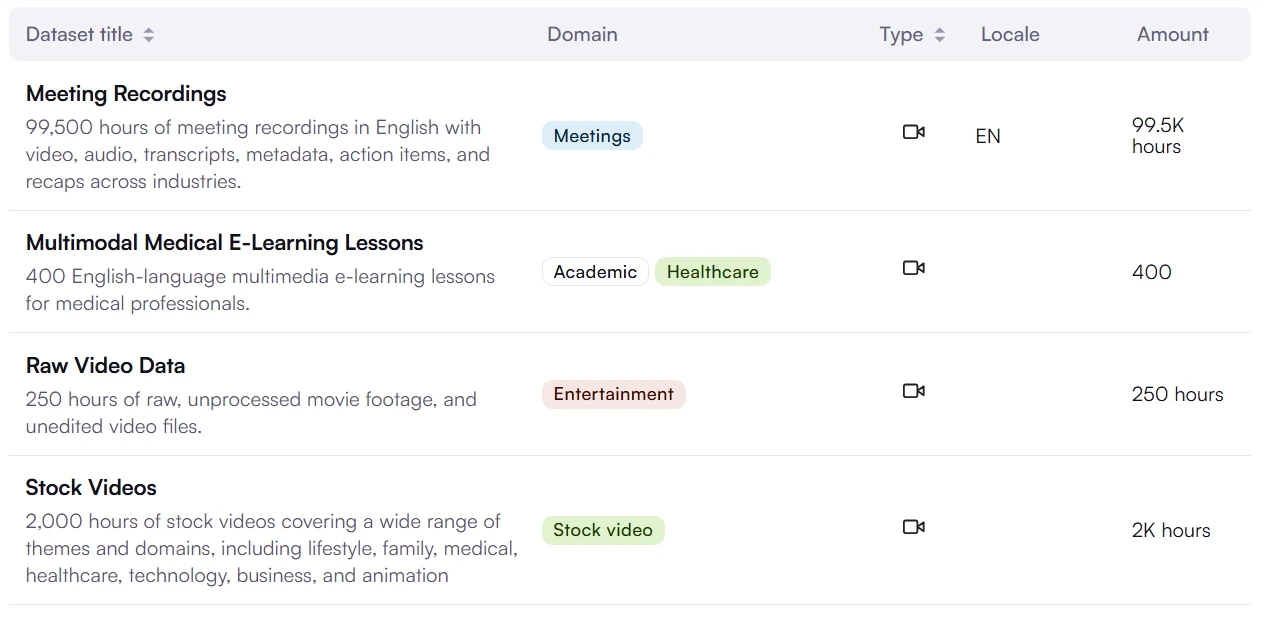
Obwohl einige DaaS-Unternehmen wie Tracxn Geschäftsdaten anbieten, verkaufen andere, wie Defined.KI, möglicherweise Trainingsdaten für KI.
Abbildung 2. Beispiel für KI-Trainingsdaten von Defined.KI
Weitere Informationen zu Finanzforschungsdaten finden Sie unter KI-Finanzforschungsplattformen für Investoren.
2. Benutzererfahrung prüfen
Ein weiterer wichtiger Schritt bei der Entscheidung für die beste DaaS-Lösung für Ihr Unternehmen ist die Prüfung der Benutzererfahrungen. Benutzererfahrung und Bewertungen spielen eine wichtige Rolle bei der Beurteilung der allgemeinen Benutzerfreundlichkeit und Wirksamkeit von DaaS-Lösungen. Die Bewertung der allgemeinen Benutzerfreundlichkeit, Leistung und Flexibilität der DaaS-Software hilft dabei festzustellen, wie gut sie sich in Ihre bestehenden Workflows integrieren lässt.
3. Einfachheit und Bedienkomfort des Produkts prüfen
Wenn Sie sich für eine Data-as-a-Service (DaaS)-Lösung entscheiden, legen Sie Wert auf Einfachheit und suchen Sie nach einer vollständig verwalteten Plattform, die Bedenken hinsichtlich Systemen, Anwendungen und Benutzeroberflächen reduziert. Ein Faktor, der die beste DaaS-Lösung für Ihr Unternehmen bestimmt, ist die Wahl einer benutzerfreundlichen Oberfläche, die intuitiv und für eine Vielzahl von Benutzern leicht zu bedienen ist.
4. Kundenservice bewerten
Ein effektiver Kundenservice ist ein entscheidender Faktor bei der Wahl der besten DaaS-Plattform für Ihr Unternehmen. Er gewährleistet zeitnahen technischen Support, unterstützt bei Anpassung und Integration, bietet Schulungs- und Onboarding-Hilfe, löst Probleme umgehend und schätzt Kundenfeedback für kontinuierliche Verbesserungen.
Ein starkes Kundenservicesystem verbessert die allgemeine Erfahrung bei der Nutzung von DaaS und bietet wichtige Unterstützung für eine reibungslose Implementierung und optimale Nutzung.
 Als bevorzugte Quelle hinzufügen
DaaS-Anbieter nach Datentyp
DaaS-Anbieter sind in der Regel auf die Art von Daten spezialisiert, die sie verkaufen. Die Gruppierung des Marktes nach Datentyp erleichtert es, einen Anbieter einem bestimmten Bedarf zuzuordnen.
Webdaten. Anbieter sammeln öffentliche Informationen von Websites und liefern sie als einsatzbereite Datensätze oder Live-Feeds. Die Daten umfassen Einträge, Preise, Bewertungen und andere Seiten, die sich häufig ändern.
B2B-Unternehmens- und Kontaktdaten. Diese Daten beschreiben Unternehmen und die Menschen, die in ihnen arbeiten: Firmografien (Unternehmensgröße, Branche, Standort), Berufsbezeichnungen und geschäftliche Kontaktdaten. Einige Anbieter reichern auch vorhandene Datensätze eines Unternehmens an, füllen fehlende Felder zu Unternehmen und Kontakten aus und können Mitarbeiterprofile und Stellenausschreibungen hinzufügen.
Startup-, Finanzierungs- und Privatmarktdaten. Diese Datensätze verfolgen private Unternehmen, Finanzierungsrunden, Bewertungen und Investorenaktivitäten. Analysten und Investoren nutzen sie, um Deals zu finden und Märkte zu untersuchen, die anhand öffentlicher Unterlagen schwer zu recherchieren sind.
Finanz- und Marktdaten. Diese Gruppe liefert Preise, Unternehmensfinanzdaten und Geschäftskreditinformationen zu Aktien, Anleihen und anderen Vermögenswerten. Handels-, Risiko- und Research-Teams sind für Analysen und Berichte darauf angewiesen. Lesen Sie auch KI-Finanzforschungsplattformen für Investoren.
Wirtschaftsnachrichtendaten. Diese Anbieter bündeln Artikel und Unternehmensprofile aus vielen Publikationen in einer durchsuchbaren Quelle. Teams nutzen sie, um Märkte, Wettbewerber und bestimmte Unternehmen zu beobachten.
Digitale und Web-Intelligenz. Diese Daten messen Website-Traffic, Besucherinteraktion und digitale Marktanteile. Marketing- und Strategieteams nutzen sie, um ihre Reichweite mit der von Wettbewerbern zu vergleichen.
Verbraucher- und Marketingdaten. Diese Daten umfassen demografische Merkmale, Interessen und Kaufverhalten von Einzelpersonen. Marketingfachleute nutzen sie, um Zielgruppensegmente zu bilden und Kampagnen auszurichten.
Verbraucher- und Kreditdaten. Diese Daten umfassen die Kredithistorie und finanzielle Identität. Kreditgeber und Risikoteams nutzen sie für Kreditentscheidungen und Betrugsprüfungen.
Vergütungsdaten. Diese Datensätze enthalten Gehaltsbenchmarks und Gehaltsspannen nach Rolle, Branche und Standort. HR-Teams nutzen sie, um Vergütungen festzulegen und wettbewerbsfähig zu bleiben.
Gesundheits- und Pharmadaten. Diese Daten umfassen Verschreibungsmengen, Verkaufszahlen und klinische Informationen für den Life-Sciences-Sektor. Patientenbezogene Datensätze sind streng reguliert, daher sind die Daten in der Regel anonymisiert.
KI-Trainingsdaten. Dies sind kuratierte Datensätze, die häufig gekennzeichnet (getaggt) sind, damit ein Modell daraus lernen kann, und die zum Trainieren und Feinabstimmen von Machine-Learning-Modellen erstellt werden. Zu den gängigen Formaten gehören Sprach-, Text- und Bilddaten, die für eine bestimmte Aufgabe vorbereitet wurden.
Nonprofit-Daten. Diese Daten umfassen gemeinnützige Organisationen, Stiftungen und Zuschüsse einschließlich Finanzen und öffentlicher Unterlagen. Forscher und Geldgeber nutzen sie, um den Sektor zu untersuchen und Fördermittelaktivitäten zu verfolgen.
Was ist Data-as-a-Service (DaaS)?
DaaS ist ein cloudbasiertes Modell, das Daten auf Abruf über Machine-to-Machine (M2M)-Verbindungen oder APIs bereitstellt. Es macht lokale Software oder manuelle Datenverwaltung überflüssig.
Es gibt zwei Haupttypen von DaaS-Anbietern:
- Datenanbieter: Bieten anderen Unternehmen bestimmte Datensätze über APIs an.
- Technologieanbieter: Ermöglichen es anderen Unternehmen, ihre eigenen Daten als Service bereitzustellen.
DaaS macht es möglich, Daten aus vielen Quellen an einem Ort abzurufen, zu integrieren und zu analysieren. Zu den gängigen Technologien gehören:
- Datenmodellierungs-, Datenqualitäts- und Transformationswerkzeuge
- Content-Management-Systeme
- Lösungen für das Informationslebenszyklusmanagement
Die meisten DaaS-Plattformen verwenden eine volumenbasierte Preisgestaltung, einige berechnen jedoch basierend auf Datentyp oder Abonnementstufe.
FAQs
Als intern in einem Unternehmen eingesetzte Technologie ist die Data-as-a-Service-Plattform eine End-to-End-Lösung und kann als Vermittler zwischen verschiedenen Datenquellen und Tools wie Self-Service-Reporting, BI, Microservices und Anwendungen betrachtet werden. Nach der Bereitstellung der Plattform können Endbenutzer jederzeit auf Daten zugreifen, indem sie Standard-SQL über ODBC, JDBC oder REST verwenden.
Unternehmen können auch externe DaaS-Dienste nutzen, um auf Daten zuzugreifen. Zahlreiche Unternehmen bieten DaaS-Dienste über einfache APIs an.
Diese Forschung zitieren
Wählen Sie das Format, das zu Ihrem Veröffentlichungsort passt. Wenn Sie die Link-Version in Ihr CMS einfügen, bleibt der Backlink erhalten.
@misc{dilmegani2026,
  author = {Dilmegani, Cem and Arslan, Ezgi},
  title  = {{Top 12+ Data-as-a-Service-Unternehmen}},
  year   = {2026},
  month  = sep,
  howpublished    = {\url{https://aimultiple.com/data-as-a-service-companies}},
  note   = {AIMultiple. Abgerufen am 10. September 2026}
}Ergebnisse und Zeitstempel von 13 Datenpunkten. Laden Sie die Zusammenfassungsdaten aus den Diagrammen und Tabellen dieses Artikels als ZIP-Datei herunter, die eine CSV-Datei enthält.
Möchten Sie die granularen Daten dahinter? Premium beitreten
Änderungsprotokoll
5 AktualisierungenEinen Abschnitt hinzugefügt, der DaaS-Anbieter nach Datentyp auflistet.
Zwei Abbildungen mit Beispieldaten von Tracxn und Defined.ai im Abschnitt „Define your needs“ hinzugefügt.
Abschnitt "DaaS als Quelle für KI-Trainingsdaten" hinzugefügt, der Training, Feinabstimmung, RAG-Abrufdaten und Herkunftsanforderungen des EU-KI-Gesetzes behandelt.
FAQs am Ende des Artikels hinzugefügt.
Referenzlinks
Cems Arbeit bei AIMultiple wurde von führenden globalen Publikationen wie Business Insider, Forbes, Morning Brew und Washington Post, von globalen Unternehmen wie Deloitte und HPE, von NGOs wie dem World Economic Forum und von supranationalen Organisationen wie der European Commission zitiert. [1], [2], [3], [4], [5]
Im Laufe seiner Karriere war Cem als Tech-Berater, Tech-Einkäufer und Tech-Unternehmer tätig. Er beriet Unternehmen bei ihren Technologieentscheidungen bei McKinsey & Company und Altman Solon über mehr als ein Jahrzehnt. Er veröffentlichte außerdem einen McKinsey-Bericht zur Digitalisierung.
Er leitete Technologiestrategie und -beschaffung eines Telekommunikationsunternehmens und berichtete dabei direkt an den CEO. Außerdem verantwortete er das kommerzielle Wachstum des Deep-Tech-Unternehmens Hypatos, das innerhalb von zwei Jahren von 0 einen siebenstelligen jährlich wiederkehrenden Umsatz und eine neunstellige Bewertung erreichte. Cems Arbeit bei Hypatos wurde von führenden Technologiepublikationen wie TechCrunch und Business Insider aufgegriffen.
Cem spricht regelmäßig auf internationalen Technologiekonferenzen. Er absolvierte die Bogazici University als Computeringenieur und hat einen MBA von der Columbia Business School.

Als nächstes lesen
Top 12 UEM-Software im Vergleich: Funktionen und Preisleitfaden
Beste Discord-Proxys: Kostenlose Pläne, Funktionen & Einrichtung

Disaster-Recovery-Benchmark: Acronis vs Comet vs MSP360


Seien Sie der Erste, der kommentiert
Ihre E-Mail-Adresse wird nicht veröffentlicht. Alle Felder sind erforderlich. Kommentare werden in ihrer Originalsprache belassen.