


Sinais de Expansão Descontrolada de Agentes de IA & Lista de Verificação para Gerenciá-la

Quase 80% das organizações implantaram IA agêntica.1 No entanto, apenas 21% têm um model de governança maduro para esses sistemas. A lacuna se manifesta na prática como expansão descontrolada de agentes, um acúmulo de agentes de IA redundantes, sem governança e conflitantes em toda a empresa. Estima-se que 40% dos projetos de IA agêntica fracassem até 2027 devido à fraca governança de agentes de IA e a controles de risco inadequados.2
Abordamos os sinais e as causas da expansão descontrolada de agentes, bem como plataformas e uma lista de verificação de governança para lidar com ela.
O que é a expansão descontrolada de agentes de IA?
A expansão descontrolada de agentes de IA é a proliferação sem controle de agentes de IA em uma organização, sem uma forma central de rastreá-los, atribuir responsabilidade ou governá-los. Quando equipes diferentes criam e implantam agentes autônomos de forma independente, pode haver o problema de agentes duplicados. Nenhuma equipe isolada sabe quantos agentes existem, quem é o responsável por cada um ou quais dados cada um pode acessar.
Sinais de expansão descontrolada de agentes de IA
A expansão descontrolada de agentes provavelmente já está em andamento se várias das seguintes situações forem verdadeiras:
- Não há governança centralizada para a implantação de agentes.
- As ferramentas de criação de agentes variam de equipe para equipe.
- Os agentes entram em produção sem revisão de segurança.
- Novos agentes tendem a aparecer somente após uma falha ou durante uma auditoria.
- Nada define como ou quando um agente é desativado.
- Duas ou mais equipes criaram o mesmo recurso sem saber.
Por que a expansão descontrolada de agentes de IA acontece
A expansão descontrolada de agentes de IA ocorre quando as equipes de segurança experimentam e depois escalam sem um plano compartilhado. Algumas causas se destacam.
Criar um agente agora está ao alcance de quase qualquer pessoa
Plataformas no-code e low-code como Creatio Studio e n8n permitem a criação de agentes para pessoas que nunca escreveram uma linha de código. Um grupo de produto pode lançar um chatbot para dúvidas de clientes. Um grupo de operações pode configurar um agente para aprovar faturas. Um grupo de recrutamento pode automatizar a triagem inicial. Nenhum deles consulta os outros.
Não existe um registro compartilhado
Poucas empresas mantêm uma única lista autoritativa de seus agentes. A nomenclatura é ad hoc e não há um local comum que registre quem criou cada agente, o que ele faz ou o que ele pode acessar. Assim, um agente lançado por um grupo geralmente fica invisível para os demais.
A implantação pula os controles
Os agentes tendem a passar diretamente do experimento para o uso em produção, ignorando aprovação formal, verificações de segurança e qualquer plano acordado para desativá-los posteriormente.
As ferramentas são fragmentadas
As equipes de TI também criam com base em stacks diferentes. Um grupo pode usar o LangChain, enquanto outro trabalha com CrewAI ou AutoGen. O Relatório de Benchmark de Conectividade de 2026 da Salesforce coloca a empresa típica em uma dúzia ou mais de agentes, com cerca de metade operando isoladamente, e não como um sistema conectado.3 O número da IBM é igualmente revelador: apenas 18% das organizações mantêm uma lista atualizada e completa dos agentes que executam.4
A trajetória é acentuada. O Gartner prevê que, até o final de 2026, 40% dos aplicativos empresariais serão fornecidos com agentes específicos para tarefas, contra menos de 5% no ano anterior.5
Os cinco padrões da expansão descontrolada de agentes
A expansão descontrolada não aparece de uma única forma. Ela tende a seguir cinco padrões, cada um com seu próprio custo de negócios. A tabela abaixo os apresenta.1
A maioria das organizações vê mais de um desses ao mesmo tempo. A duplicação funcional desperdiça dinheiro, os agentes sombra ocultam riscos de segurança, os agentes órfãos permanecem, o aumento progressivo de permissões amplia o raio de impacto e a delegação não monitorada dificulta o rastreamento de falhas. Identificar quais padrões você tem é um primeiro passo útil antes de escolher uma solução.
Plataformas para controlar a expansão descontrolada de agentes
Gravitee IA Agent Management (Agent Mesh)
Esta plataforma reúne agentes, models e ferramentas em um único catálogo que abrange hosts como AWS Bedrock e GCP Vertex AI, e frameworks como LangChain e CrewAI. Ela adiciona análises de uso, controles de gastos e aplicação de políticas para conter agentes fora de controle e custos descontrolados.
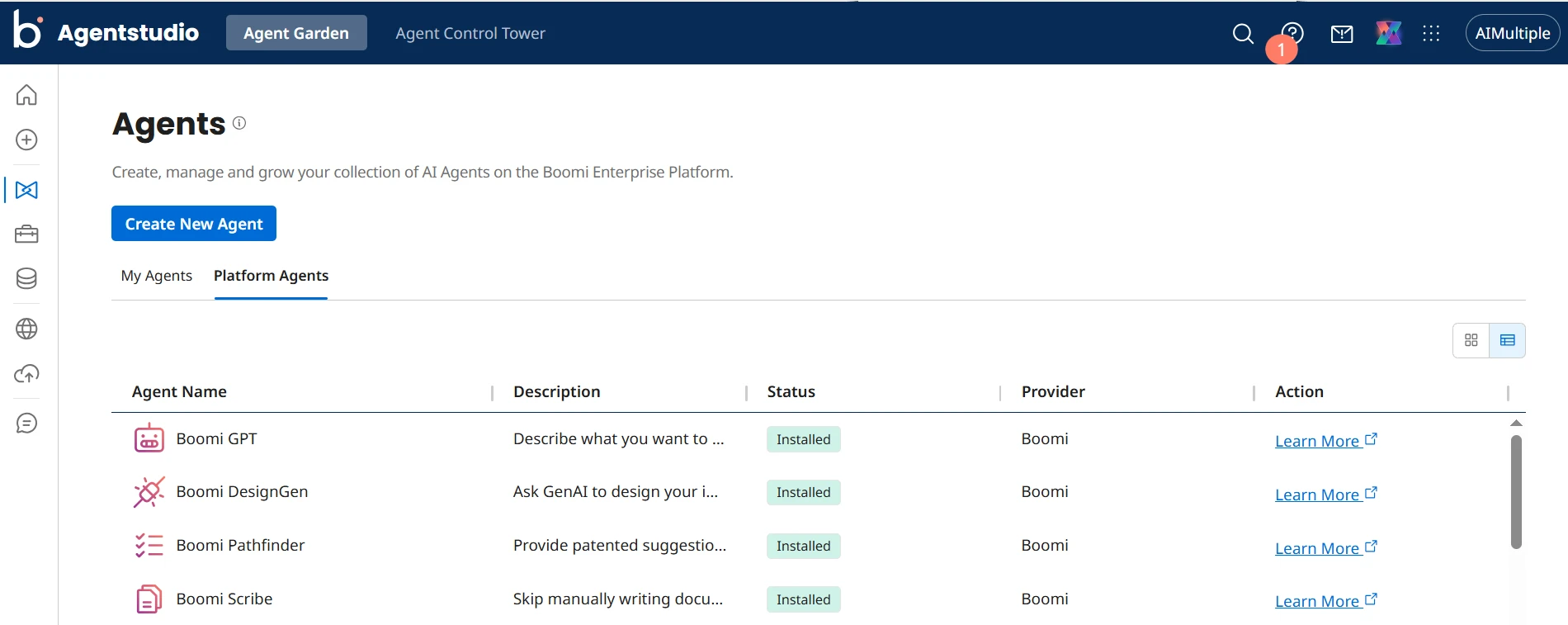
Boomi Agentstudio
O Boomi Agentstudio detecta agentes por conta própria em configurações de nuvem, on-premises e híbridas e governa tanto agentes criados com Boomi quanto agentes externos, como os do Amazon Bedrock. Ele oferece um registro central, permissões baseadas em funções, monitoramento ao vivo com detecção de anomalias e trilhas de auditoria completas.
Okta for IA Agents
O Okta for IA Agents trata cada agente como sua própria identidade, assim como faz com os logins de funcionários. Ele pode encontrar agentes em execução em um ambiente, incluindo os não aprovados, atribuir um responsável humano a cada um e rastrear a que ele se conecta. Quando um agente começa a se comportar mal, os administradores podem cortar seu acesso com um kill switch e revisar um registro completo de sua atividade.
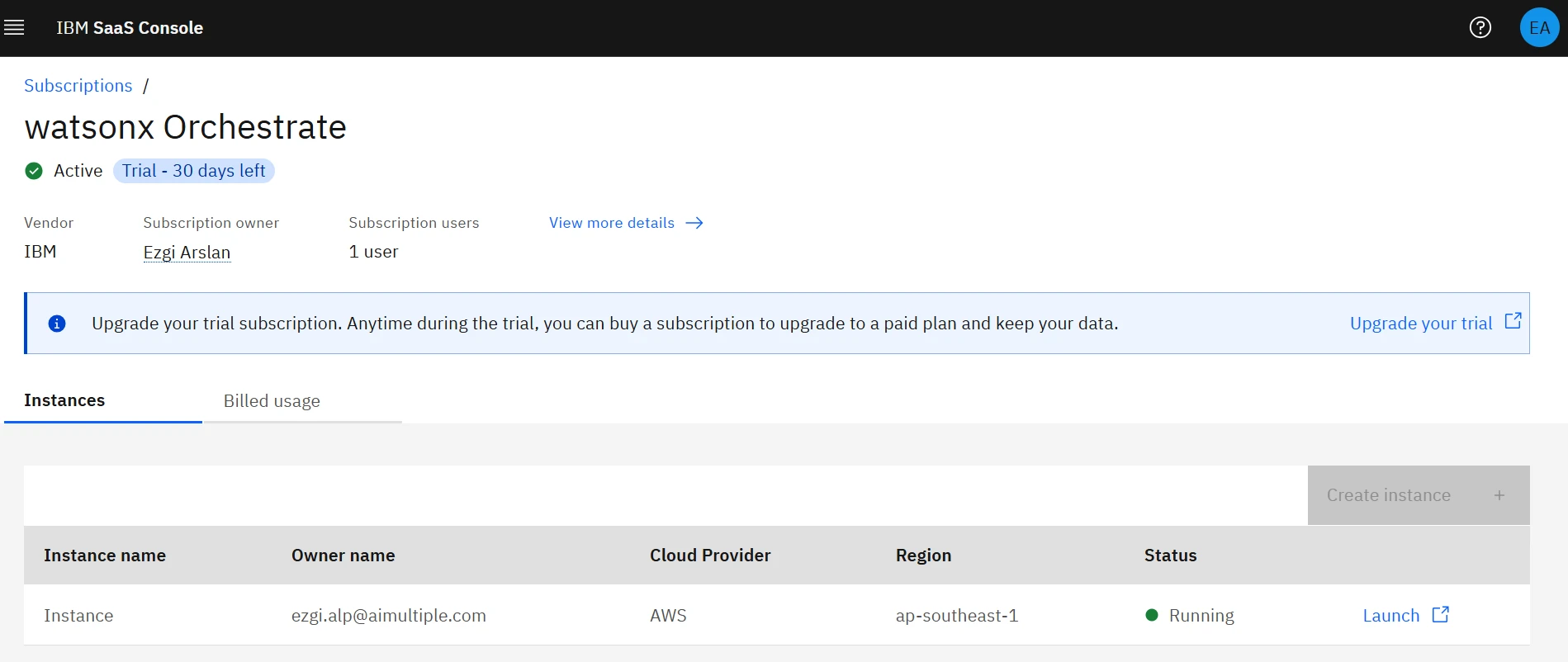
IBM watsonx Orchestrate
O watsonx Orchestrate funciona como um plano de controle que reúne agentes de IA dispersos em um só lugar para gerenciar. As equipes podem ver o que cada agente faz, definir regras de como os agentes são executados e coordená-los em aplicativos e fluxos de trabalho. Ele também se conecta com agentes e ferramentas já em uso, portanto não é preciso reconstruí-los para colocá-los sob controle.
 Adicionar como fonte preferencial
Lista de verificação prática em 7 etapas para governança de agentes de IA
Até 2028, prevê-se que as empresas da Fortune 500 usem mais de 150.000 agentes. 6 Governar agentes para gerenciar a expansão descontrolada de agentes de IA se torna mais desafiador do que a situação atual. Criamos uma lista de verificação de 7 etapas e 22 pontos para governança de agentes de IA:
Etapa 1: Gerenciamento de demanda
- Triagem de cada solicitação antes da aprovação. Nem toda tarefa precisa de um agente. Um framework simples de decisão ajuda: use automação fixa e baseada em regras para trabalho determinístico e de alto volume, como roteamento de faturas, validação de dados ou sinalização de conformidade, e reserve agentes para trabalhos que realmente exijam raciocínio, adaptação ou saída probabilística.
- Verifique se um agente existente já realiza a tarefa antes de encomendar um novo.
Etapa 2: Descoberta
- Execute uma descoberta sistemática em todo o ambiente. Faça o inventário de cada agente, junto com seu propósito, herança de identidade e permissões e caminhos de acesso a dados, e inclua tanto agentes sancionados quanto a IA sombra encontrada organicamente entre as equipes.
- Descubra o que existe antes da adoção de um novo agente de IA. As equipes não podem gerenciar o que não conseguem ver, portanto localize primeiro todos os agentes existentes em cada departamento.
- Torne a descoberta contínua, não uma auditoria pontual, já que novos agentes continuam surgindo.
- Crie um registro central. Crie um único local para o registro de agentes, incluindo suas funções e responsáveis, para evitar desenvolvimento duplicado e esclarecer responsabilidades.
Etapa 3: Identidade e segurança dos agentes
- Dê a cada agente sua própria identidade. Trate os agentes como identidades de primeira classe e aplique a mesma gestão de acesso usada para contas de funcionários e de serviço.
- Imponha o princípio do menor privilégio. A corrida inicial deu aos agentes chaves de API de alto nível e permissões amplas de fontes de dados confidenciais para torná-los sem atrito, o que cria um enorme raio de impacto quando um agente de IA com privilégios excessivos interpreta mal um prompt ou encontra uma dependência comprometida.
- Use permissões com prazo definido que expiram em vez de persistirem indefinidamente.
- Defina antecipadamente o ciclo de vida e o permission model. Gerencie a identidade do agente, o permission model e os controles de acesso; depois revise e desative agentes redundantes para evitar a expansão descontrolada.
Etapa 4: Governança e política
- Defina regras claras sobre quem pode criar e compartilhar agentes. Defina quem pode criar agentes, quem pode compartilhá-los e quais conectores são permitidos.
- Exija aprovação antes da implantação. Impeça que as equipes implantem agentes sem aprovação, permitindo que trabalhem em projetos aprovados, equilibrando inovação e supervisão.
- Faça a governança da camada de dados. Controle quais informações cada agente pode acessar, mantenha esses dados atualizados, gerencie permissões para evitar compartilhamento excessivo e arquive dados quando estiverem obsoletos.
- Mapeie por onde fluem os dados pessoais e regulados, para que a conformidade com GDPR, HIPAA e regras semelhantes permaneça auditável.
Etapa 5: Estratégia de plataforma
- Escolha uma plataforma padrão de criação desde cedo. Escolha uma plataforma padrão para novos agentes e comece a desembaraçar os legados criados em outros lugares, porque a expansão descontrolada só piora com o tempo, e impor o padrão desde cedo evita pagar o custo depois.
- Coloque a governança acima de qualquer fornecedor individual. As pilhas empresariais são multivendor por padrão, portanto é necessária uma camada de controle unificada, padrões de comunicação compartilhados e orquestração independente de fornecedor, em vez de controles por ferramenta.
- Ofereça modelos aprovados para que criar dentro dos limites seja mais fácil do que contorná-los.
Etapa 6: Operações
- Estabeleça visibilidade contínua sobre o comportamento dos agentes. Monitore o uso dos agentes, verifique a conformidade com as políticas, detecte comportamentos anômalos e corrija agentes que excedam o escopo pretendido ou a tolerância a riscos.
- Monitore as integrações de SaaS e as conexões OAuth, pois detectar agentes não autorizados exige descoberta contínua de aplicações em todo o ambiente SaaS.
- Desative agentes de forma programada. Crie um processo documentado de desativação para que agentes órfãos não continuem executando e gerando custos sem necessidade.
Etapa 7: Responsabilização organizacional
- Atribua um responsável pela gestão do ciclo de vida de cada agente.
- Construa uma cultura de uso responsável. Apoie a força de trabalho com treinamento e uma comunidade de prática para impulsionar a adoção e disseminar bons hábitos de gestão de agentes por toda a organização.
- Forme um grupo de governança multifuncional abrangendo TI, segurança, jurídico, conformidade e negócio.
Cite esta pesquisa
Escolha o formato adequado ao local onde você vai publicar. Colar a versão com link no seu CMS preserva o backlink.
@misc{phd2026,
  author = {PhD., Ezgi Arslan,},
  title  = {{Sinais de Expansão Descontrolada de Agentes de IA & Lista de Verificação para Gerenciá-la}},
  year   = {2026},
  month  = jun,
  howpublished    = {\url{https://aimultiple.com/ai-agent-sprawl}},
  note   = {AIMultiple. Acessado em 5 junho 2026}
}Resultados e carimbos de data/hora de 5 pontos de dados. Baixe os dados resumidos exibidos nos gráficos e tabelas deste artigo como um arquivo ZIP contendo um arquivo CSV.
Quer os dados granulares por trás disso? Assine o Premium
Links de referência
A seguir, leia
Compare 10+ ferramentas empresariais de gerenciamento de senhas: recursos, preços


Top 12 Softwares de Gerenciamento de Privilégios de Endpoint (EPM)
Top 10 softwares MSP tudo-em-um comparados: recursos e preços



Seja o primeiro a comentar
Seu endereço de e-mail não será publicado. Todos os campos são obrigatórios. Os comentários são deixados em seu idioma original.