


Anzeichen für KI-Agenten-Sprawl & Checkliste zum Management von Sprawl

Nahezu 80 % der Unternehmen haben agentische KI implementiert.1 Doch nur 21 % verfügen über ein ausgereiftes Governance-Modell für diese Systeme. Die Lücke zeigt sich in der Praxis als Agenten-Sprawl – eine Anhäufung redundanter, unkontrollierter und widersprüchlicher KI-Agenten im gesamten Unternehmen. 40 % der agentischen KI-Projekte werden Schätzungen zufolge bis 2027 aufgrund schwacher Governance von KI-Agenten und unzureichender Risikokontrollen scheitern.2
Wir behandeln die Anzeichen und Ursachen von Agenten-Sprawl sowie Plattformen und eine Governance-Checkliste, um dagegen vorzugehen.
Was ist KI-Agenten-Sprawl?
KI-Agenten-Sprawl ist die unkontrollierte Ausbreitung von KI-Agenten in einem Unternehmen, ohne zentrale Möglichkeit, sie zu verfolgen, Zuständigkeiten zuzuweisen oder zu steuern. Wenn verschiedene Teams autonome Agenten unabhängig voneinander erstellen und bereitstellen, kann es zu Problemen mit doppelten Agenten kommen. Kein einzelnes Team weiß, wie viele Agenten existieren, wem jeder einzelne gehört oder auf welche Daten jeder zugreifen kann.
Anzeichen für KI-Agenten-Sprawl
Agenten-Sprawl ist wahrscheinlich bereits im Gange, wenn mehrere der folgenden Punkte zutreffen:
- Es gibt keine zentrale Governance für die Bereitstellung von Agenten.
- Agenten-Build-Tools unterscheiden sich von Team zu Team.
- Agenten gehen ohne Sicherheitsüberprüfung live.
- Neue Agenten tauchen oft erst nach einem Ausfall oder während eines Audits auf.
- Es ist nicht festgelegt, wie oder wann ein Agent außer Betrieb genommen wird.
- Zwei oder mehr Teams haben ohne gegenseitiges Wissen dieselbe Fähigkeit entwickelt.
Warum KI-Agenten-Sprawl entsteht
KI-Agenten-Sprawl entsteht, wenn Sicherheitsteams experimentieren und dann ohne gemeinsamen Plan skalieren. Einige Ursachen stechen hervor.
Einen Agenten zu bauen, ist heute für fast jeden erreichbar
No-Code- und Low-Code-Plattformen wie Creatio Studio und n8n ermöglichen die Erstellung von Agenten für Menschen, die noch nie eine Codezeile geschrieben haben. Eine Produktgruppe könnte einen Chatbot für Kundenfragen starten. Eine Operations-Gruppe könnte einen Agenten einrichten, um Rechnungen zu klären. Eine Recruiting-Gruppe könnte die erste Screening-Runde automatisieren. Keiner von ihnen stimmt sich mit den anderen ab.
Es gibt kein gemeinsames Register
Nur wenige Unternehmen führen eine einzige verbindliche Liste ihrer Agenten. Die Benennung erfolgt ad hoc, und es gibt keinen gemeinsamen Ort, der festhält, wer jeden Agenten erstellt hat, was er tut oder was er erreichen kann. Daher ist ein von einer Gruppe gestarteter Agent für den Rest oft unsichtbar.
Bereitstellung umgeht die Kontrollen
Agenten gelangen oft direkt vom Experiment in den Live-Betrieb und umgehen dabei formelle Freigaben, Sicherheitsprüfungen und jeden vereinbarten Plan, sie später abzuschalten.
Die Tool-Landschaft ist fragmentiert
IT-Teams bauen außerdem auf unterschiedlichen Stacks. Eine Gruppe könnte LangChain verwenden, während eine andere mit CrewAI oder AutoGen arbeitet. Der Connectivity Benchmark Report 2026 von Salesforce beziffert das typische Unternehmen auf ein Dutzend oder mehr Agenten, von denen etwa die Hälfte isoliert und nicht als vernetztes System läuft.3 Die Zahl von IBM ist ebenso aussagekräftig: Nur 18 % der Unternehmen führen eine aktuelle, vollständige Liste der von ihnen betriebenen Agenten.4
Die Entwicklung ist steil. Gartner prognostiziert, dass bis Ende 2026 40 % der Unternehmensanwendungen mit aufgabenspezifischen Agenten ausgeliefert werden, verglichen mit weniger als 5 % im Jahr zuvor.5
Die fünf Muster von Agenten-Sprawl
Sprawl tritt nicht nur in einer Form auf. Er folgt in der Regel fünf Mustern, jedes mit eigenen Geschäftskosten. Die folgende Tabelle stellt sie dar.1
Die meisten Unternehmen erleben mehrere davon gleichzeitig. Funktionale Duplizierung verschwendet Geld, Schatten-Agenten verbergen Sicherheitsrisiken, verwaiste Agenten bleiben bestehen, die Ausweitung von Berechtigungen vergrößert den Explosionsradius, und unüberwachte Delegation erschwert die Rückverfolgung von Fehlern. Zu erkennen, welche Muster bei Ihnen vorliegen, ist ein nützlicher erster Schritt, bevor Sie eine Lösung wählen.
Plattformen zur Kontrolle von Agenten-Sprawl
Gravitee KI Agent Management (Agent Mesh)
Diese Plattform führt Agenten, Modelle und Tools in einem Katalog zusammen, der Hosts wie AWS Bedrock und GCP Vertex AI sowie Frameworks wie LangChain und CrewAI umfasst. Sie ergänzt Nutzungsanalysen, Ausgabenkontrollen und Richtliniendurchsetzung, um unkontrollierte Agenten und ausufernde Kosten einzudämmen.
Boomi Agentstudio
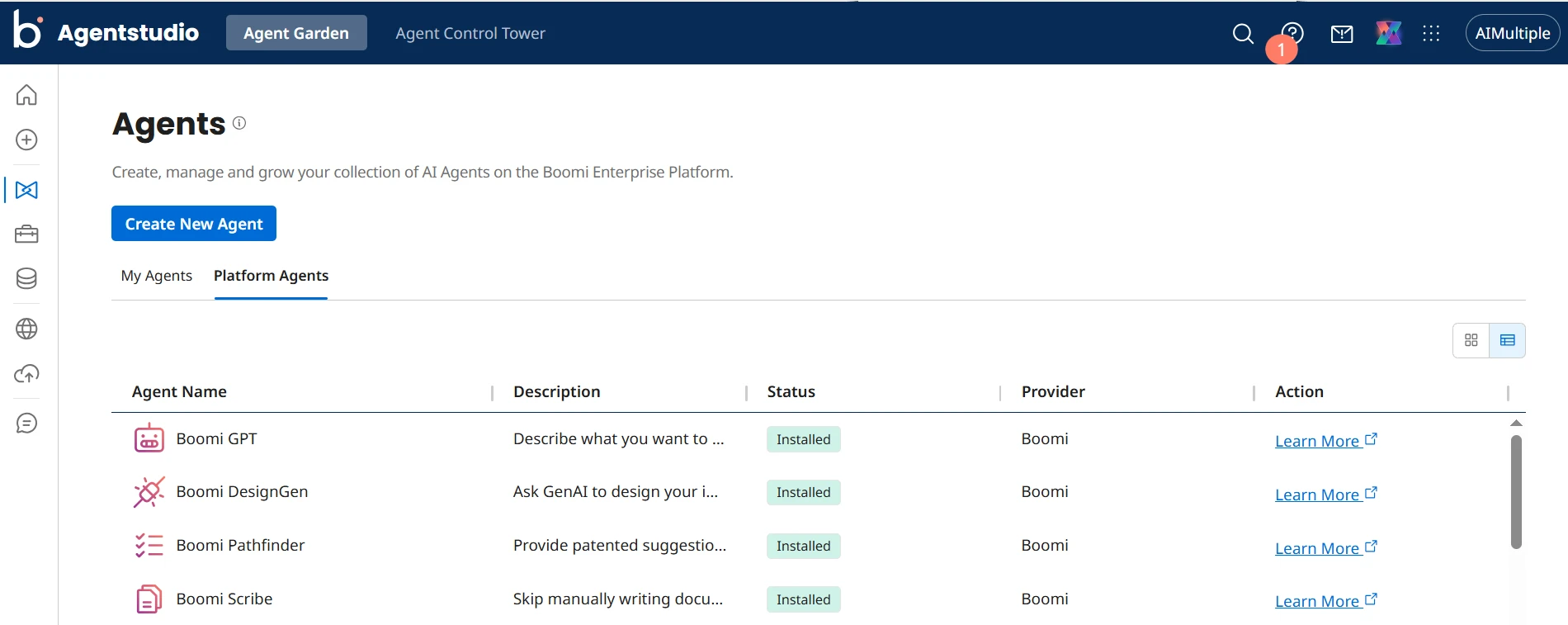
Boomi Agentstudio erkennt Agenten eigenständig in Cloud-, On-Premises- und Hybridumgebungen und steuert sowohl selbst erstellte Boomi-Agenten als auch externe Agenten, etwa solche von Amazon Bedrock. Es bietet ein zentrales Register, rollenbasierte Berechtigungen, Live-Monitoring mit Anomalieerkennung und vollständige Audit-Protokolle.
Okta für KI-Agenten
Okta für KI-Agenten behandelt jeden Agenten als eigene Identität, genau wie bei Mitarbeiter-Logins. Es kann Agenten in einer Umgebung finden, auch nicht genehmigte, und jedem einen menschlichen Verantwortlichen zuweisen und verfolgen, womit er sich verbindet. Wenn ein Agent auffällig wird, können Administratoren seinen Zugriff mit einem Kill-Switch trennen und eine vollständige Aufzeichnung seiner Aktivität prüfen.
IBM watsonx Orchestrate
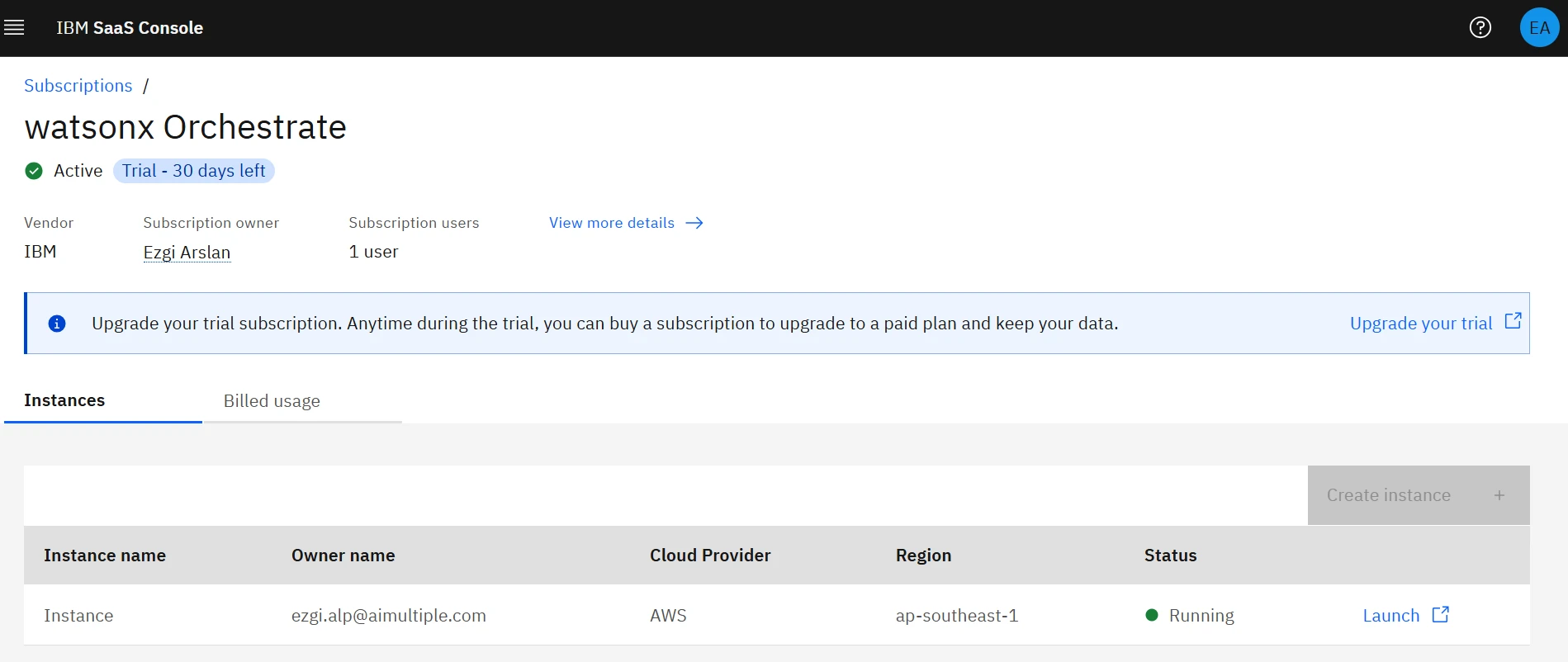
watsonx Orchestrate fungiert als Control Plane, die verstreute KI-Agenten an einem Ort zur Verwaltung zusammenführt. Teams können sehen, was jeder Agent tut, Regeln für die Ausführung von Agenten festlegen und sie über Apps und Workflows hinweg koordinieren. Es verbindet sich außerdem mit bereits verwendeten Agenten und Tools, sodass diese nicht neu erstellt werden müssen, um sie unter Kontrolle zu bringen.
 Als bevorzugte Quelle hinzufügen
7-Schritte-Praxis-Checkliste für die KI-Agenten-Governance
Bis 2028 werden Fortune-500-Unternehmen voraussichtlich mehr als 150.000 Agenten einsetzen. 6 Die Governance von Agenten zur Bewältigung von KI-Agenten-Sprawl wird anspruchsvoller als die aktuelle Situation. Wir haben eine 7-Schritte-, 22-Punkte-Checkliste für KI-Agenten-Governance erstellt:
Stufe 1: Anforderungsmanagement
- Prüfen Sie jede Anfrage vor der Genehmigung. Nicht jede Aufgabe benötigt einen Agenten. Ein einfaches Entscheidungsraster hilft: Nutzen Sie feste, regelbasierte Automatisierung für deterministische, volumenstarke Arbeiten wie Rechnungsweiterleitung, Datenvalidierung oder Compliance-Kennzeichnung, und reservieren Sie Agenten für Arbeiten, die wirklich logisches Denken, Anpassung oder probabilistische Ergebnisse erfordern.
- Prüfen Sie, ob ein vorhandener Agent die Aufgabe bereits erledigt, bevor Sie einen neuen beauftragen.
Stufe 2: Erkennung
- Führen Sie eine systematische Erkennung im gesamten Bestand durch. Inventarisieren Sie jeden Agenten samt Zweck, Identitätsvererbung sowie Datenzugriffsberechtigungen und -pfaden, und schließen Sie sowohl genehmigte Agenten als auch organisch in Teams gefundene Schatten-KI ein.
- Finden Sie heraus, was vorhanden ist, bevor ein neuer KI-Agent eingeführt wird. Teams können nicht verwalten, was sie nicht sehen können; ermitteln Sie daher zuerst alle vorhandenen Agenten in jeder Abteilung.
- Gestalten Sie die Erkennung kontinuierlich, nicht als einmaliges Audit, da ständig neue Agenten auftauchen.
- Erstellen Sie ein zentrales Register. Schaffen Sie einen einzigen Ort für das Agentenregister, einschließlich seiner Funktionen und Verantwortlichen, um doppelte Entwicklungen zu verhindern und Zuständigkeiten zu klären.
Stufe 3: Agentenidentität und -sicherheit
- Geben Sie jedem Agenten eine eigene Identität. Behandeln Sie Agenten als Identitäten erster Klasse und wenden Sie dasselbe Zugriffsmanagement an wie für Mitarbeiter- und Servicekonten.
- Setzen Sie das Prinzip der geringsten Rechte durch. Der anfängliche Ansturm gab Agenten hochrangige API-Schlüssel und weitreichende Berechtigungen für sensible Datenquellen, um sie reibungslos zu machen, was einen massiven Explosionsradius schafft, wenn ein überprivilegierter KI-Agent einen Prompt falsch interpretiert oder auf eine kompromittierte Abhängigkeit trifft.
- Verwenden Sie zeitgebundene Berechtigungen, die ablaufen, statt unbegrenzt zu bestehen.
- Definieren Sie Lebenszyklus und Berechtigungsmodell im Voraus. Verwalten Sie Agentenidentität, Berechtigungsmodell und Zugriffskontrollen und überprüfen und entfernen Sie dann redundante Agenten, um unkontrollierten Sprawl zu verhindern.
Stufe 4: Governance und Richtlinien
- Legen Sie klare Regeln fest, wer Agenten erstellen und teilen darf. Definieren Sie, wer Agenten erstellen darf, wer sie teilen darf und welche Konnektoren zulässig sind.
- Verlangen Sie eine Genehmigung vor der Bereitstellung. Hindern Sie Teams daran, Agenten ohne Freigabe bereitzustellen, während sie weiterhin an genehmigten Projekten arbeiten können, und balancieren Sie Innovation mit Kontrolle.
- Steuern Sie die Datenschicht. Kontrollieren Sie, auf welche Informationen jeder Agent zugreifen kann, halten Sie diese Daten aktuell, verwalten Sie Berechtigungen, um übermäßiges Teilen zu verhindern, und archivieren Sie Daten, wenn sie veraltet sind.
- Erfassen Sie, wo personenbezogene und regulierte Daten fließen, damit die Einhaltung von DSGVO, HIPAA und ähnlichen Vorschriften prüfbar bleibt.
Stufe 5: Plattformstrategie
- Wählen Sie früh eine Standard-Build-Plattform. Entscheiden Sie sich für eine Standardplattform für neue Agenten und beginnen Sie, die anderweitig erstellten Legacy-Agenten zu entwirren, denn Sprawl wird mit der Zeit nur schlimmer, und eine frühe Durchsetzung des Standards vermeidet spätere Kosten.
- Stellen Sie Governance über einen einzelnen Anbieter. Unternehmens-Stacks sind standardmäßig multivendor, daher sind eine einheitliche Steuerungsebene, gemeinsame Kommunikationsstandards und anbieterunabhängige Orchestrierung erforderlich statt Kontrollen pro Tool.
- Bieten Sie genehmigte Vorlagen an, damit das Bauen innerhalb der Leitplanken einfacher ist als sie zu umgehen.
Stufe 6: Betrieb
- Sorgen Sie für kontinuierliche Transparenz über das Verhalten von Agenten. Überwachen Sie die Nutzung von Agenten, prüfen Sie die Einhaltung von Richtlinien, erkennen Sie anomales Verhalten und korrigieren Sie Agenten, die ihren vorgesehenen Umfang oder ihre Risikotoleranz überschreiten.
- Beobachten Sie SaaS-Integrationen und OAuth-Verbindungen, denn die Erkennung nicht genehmigter Agenten erfordert eine kontinuierliche Anwendungserkennung in der gesamten SaaS-Umgebung.
- Nehmen Sie Agenten planmäßig außer Betrieb. Erstellen Sie einen dokumentierten Stilllegungsprozess, damit verwaiste Agenten nicht weiterlaufen und unnötig Kosten verursachen.
Stufe 7: Organisatorische Verantwortlichkeit
- Benennen Sie eine Person für das Lebenszyklusmanagement jedes Agenten.
- Schaffen Sie eine Kultur der verantwortungsvollen Nutzung. Unterstützen Sie die Belegschaft mit Schulungen und einer Community of Practice, um die Akzeptanz zu fördern und gute Agentenmanagement-Gewohnheiten im gesamten Unternehmen zu verbreiten.
- Bilden Sie eine funktionsübergreifende Governance-Gruppe aus IT, Sicherheit, Recht, Compliance und Fachbereichen.
Diese Forschung zitieren
Wählen Sie das Format, das zu Ihrem Veröffentlichungsort passt. Wenn Sie die Link-Version in Ihr CMS einfügen, bleibt der Backlink erhalten.
@misc{phd2026,
  author = {PhD., Ezgi Arslan,},
  title  = {{Anzeichen für KI-Agenten-Sprawl & Checkliste zum Management von Sprawl}},
  year   = {2026},
  month  = jun,
  howpublished    = {\url{https://aimultiple.com/ai-agent-sprawl}},
  note   = {AIMultiple. Abgerufen am 5. Juni 2026}
}Ergebnisse und Zeitstempel von 5 Datenpunkten. Laden Sie die Zusammenfassungsdaten aus den Diagrammen und Tabellen dieses Artikels als ZIP-Datei herunter, die eine CSV-Datei enthält.
Möchten Sie die granularen Daten dahinter? Premium beitreten
Referenzlinks




Seien Sie der Erste, der kommentiert
Ihre E-Mail-Adresse wird nicht veröffentlicht. Alle Felder sind erforderlich. Kommentare werden in ihrer Originalsprache belassen.